Have any questions? Contact us!
Join our team!
Request a free quote or consultation

How Much Does 3D Architectural Visualization Cost? A Clear Breakdown for Every Project Type
Whether you’re planning a residential build, marketing a commercial space, or presenting a development to investors, 3D architectural visualization helps bring ideas to life. But the price can vary a lot depending on what you need: simple still images, animations, virtual tours, or complex modeling. Here’s a breakdown of what you can expect to pay and what affects those numbers.
What Affects the Cost of 3D Architectural Visualization

The cost of 3D architectural visualization can range from a few hundred to several thousand dollars. That’s because pricing isn’t based on just the type of service whether it’s an interior render, exterior view, animation, or virtual tour but also on a wide set of factors like complexity, urgency, resolution, number of views, and the level of detail.
To understand what your project might cost, it’s important to consider its scale, technical requirements, and how much reference material you can provide upfront. In this article, we’ll break down what influences pricing, show average price ranges, and explain how to keep costs in check without compromising quality.
Visualizing Architecture with Powerkh: From Plans to Impact

Powerkh is a UK-based company with offices in the USA and Ukraine, delivering expert 3D architectural visualization services powered by BIM modeling.
We transform 2D plans and shop drawings into detailed and accurate 3D models that showcase architectural design, dimensions, materials, and systems. Our company specializes in creating powerful and memorable first impressions for future buildings by emphasizing exterior design, which is vital to a project’s overall aesthetic appeal. We incorporate architectural features, facades, and color schemes to highlight the unique character of each project.
With Powerkh’s high-quality 3D rendering services, every detail is captured to showcase the project’s full potential, attracting prospective buyers and investors. Additionally, our cloud-based tools enable real-time collaboration among architects, engineers, designers, and clients, ensuring efficient updates and decision-making.
Factors That Determine 3D Visualization Costs

The cost of 3D architectural visualization depends on more than just the type of service, with advanced tools and workflows potentially reducing costs by streamlining texture creation and modeling processes. Below are the main pricing drivers that influence how much you’ll pay for a rendering project.
Project Complexity
Simple shapes and clean lines are quicker to render than complex designs with intricate geometry or advanced materials. A basic house will take less time and cost less than a modern office center with layered facades, curved surfaces, or custom architectural features.
Project Scale
Smaller projects such as a single room, kitchen, or house exterior are at the lower end of the price spectrum. Larger projects like multi-story buildings, commercial complexes, or masterplans require more modeling time and often involve landscaping, surrounding structures, and urban elements.
Level of Detail
The level of realism you’re aiming for directly impacts cost. Detailed textures, lighting variations, shadows, reflections, and atmospheric effects like fog or sunlight require additional setup and render time. High-end visualizations often involve post-production to enhance mood and realism.
Number of Views
Most visualization projects include multiple camera angles or images. Each additional view whether of a different room, facade, or perspective requires separate rendering and sometimes modeling adjustments. More images mean more cost.
Revisions and Feedback
Studios usually include one or two revision rounds in the base price. If your project requires more back-and-forth, additional rounds are often billed separately. Clear feedback helps avoid unnecessary changes and keeps costs predictable.
Turnaround Time
Faster delivery usually means higher pricing. Urgent projects require reallocation of resources, overtime work, or use of external render farms. If the timeline is flexible, the price can often be lower.
Render Resolution
Standard resolution (3K or 4K) is suitable for web or presentations. However, 6K or 8K renders, which are needed for printing or large displays, take longer to process and cost more due to the computing power required.
Client-Provided Materials
When clients supply detailed CAD drawings, 3D models, material references, and mood boards, studios can skip time-consuming prep work. In contrast, incomplete or vague input often leads to more revisions and extended timelines raising the price.
3D Architectural Visualization Pricing by Type
The cost of 3D visualization depends heavily on the type of service requested. Below are the most common categories used in architectural projects, along with average price ranges based on industry data.
1. Residential Exterior Rendering
Used to visualize single-family houses, small buildings, or villas. Typically includes the structure’s facade, surrounding landscape, and lighting environment. Ideal for client presentations or real estate listings.
- Price range:$600 – $950 per image
2. Interior Rendering (Residential or Commercial)
Covers rooms such as kitchens, bedrooms, lobbies, and offices. Costs vary based on room complexity, furnishings, lighting setup, and surface materials.
- Price range: $650 – $1,800 per image
3. Commercial / Large-Scale Exterior Rendering
Designed for office buildings, apartment blocks, malls, or public spaces. Often includes site context like streets, cars, greenery, and adjacent structures. May involve semi-aerial views or distant perspectives.
- Price range: $1,000 – $2,800 per image
4. Aerial Architectural Rendering
Bird’s-eye views used to present an entire development site or masterplan. Often includes terrain, nearby buildings, roads, and landscape details.
- Price range: $1,000 – $1,600 per image
5. 3D Floor Plans
Visual layouts that present the spatial arrangement of rooms from above. Useful in marketing materials and presentations where structure and flow need to be easily understood.
- Price range: $400 – $1,500 per image
6. 360-Degree Views / Virtual Tours
Interactive panoramic scenes for immersive exploration. Users can navigate space virtually, often used in real estate, hotel previews, or public exhibitions.
- Price range: $750 – $2,000 per space
7. Architectural Animation
Short videos that simulate walkthroughs or flythroughs. Requires detailed modeling, camera work, lighting, and post-production. Best suited for presentations and marketing campaigns.
- Price range: $5,000 – $12,000 per minute, with high-end projects potentially reaching $16,000
Understanding Project Complexity Levels
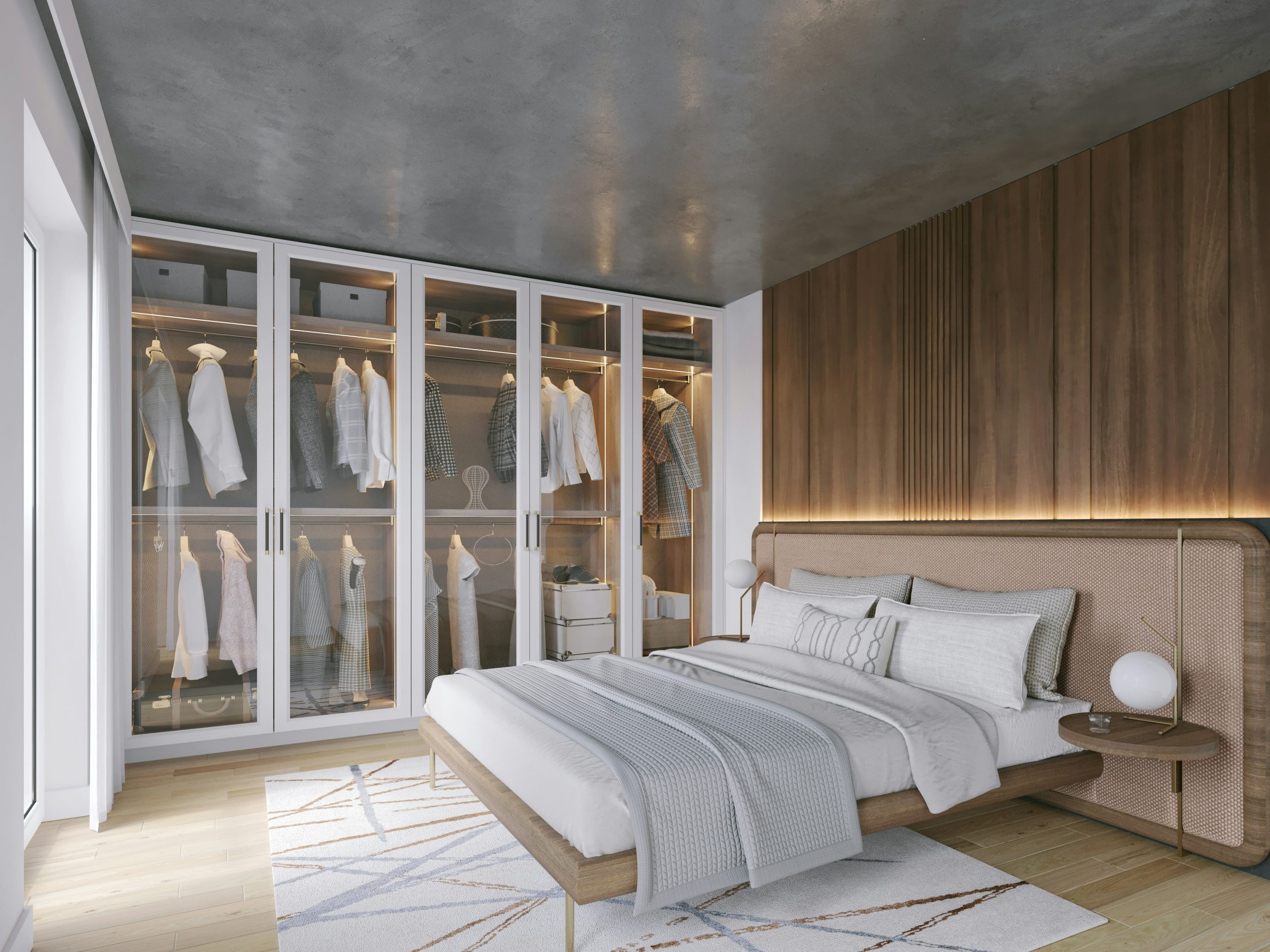
Not all architectural visualizations are created equal. The complexity of a project plays a major role in determining both the price and production time. Even within the same category like exterior or interior rendering some projects are significantly more demanding due to design features, scale, or visual requirements. Here’s how complexity is typically categorized:
1. Low Complexity
Applies to simple and minimal designs with a limited number of elements. These scenes are quicker to model and render because they don’t involve rich textures, complex geometry, or large environments.
Examples include:
- Bathrooms, hallways, or basic bedrooms
- Simple facades of small homes or villas
- Clean, modern designs with few materials or objects
- Impact on cost: Low (entry-level pricing)
2. Medium Complexity
These projects involve a moderate level of detail and typically cover standard residential or commercial spaces. They include multiple materials, furnishings, and lighting sources but remain manageable in scale.
Examples include:
- Kitchens, living rooms, or office spaces
- Apartment exteriors or small commercial buildings
- Interiors with varied textures and natural lighting setups
- Impact on cost: Moderate (standard pricing range)
3. High Complexity
These visualizations are large-scale or rich in visual and technical detail. They often require advanced modeling, intricate lighting, detailed surroundings, and post-production work. These are typically used in premium marketing, investor presentations, or competitive bids.
Examples include:
- Public interiors (lobbies, hotel lounges, conference halls)
- Skyscrapers, urban developments, or multi-building views
- Aerial renders with terrain, roads, cars, trees, and pedestrians
- Scenes set in non-standard environments (e.g. night, snow, rain)
- Impact on cost: High (top-tier pricing)
What Else Can Affect the Final Price?
Beyond the core factors like project type or complexity, there are several additional elements that can influence the total cost of 3D architectural visualization. These often come into play depending on how the visuals will be used, the delivery expectations, or the technical challenges involved.
1. Rush Delivery or Tight Deadlines
When a project needs to be completed quickly, studios often apply a rush fee. This covers the cost of prioritizing resources, working overtime, or using external render farms to speed up the process.
- Possible cost increase: +10-30%
2. High-Resolution Output
Standard resolution is usually sufficient for digital use, but large-format print, exhibitions, or billboards require 6K or 8K renders. These take more time and computing power to process.
- Possible cost increase: +20-40%
3. Post-Production and Retouching
Some clients request cinematic enhancements, mood adjustments, color grading, or added visual effects during post-processing. These extras require more editing time and specialized skills.
- Possible cost increase: Varies based on complexity
4. Seasonal or Night Scenes
Renders set in winter, at night, or during golden hour lighting are harder to simulate realistically. They require additional lighting work, atmosphere settings, and sometimes custom shaders.
- Possible cost increase: +10-25%
5. People, Cars, and Custom Objects
Adding human figures, vehicles, or custom-modeled elements (like bespoke furniture or signage) increases scene complexity. These may be sourced from asset libraries or created from scratch.
- Possible cost increase: $50-$300 per asset
6. Incomplete or Missing Project Data
If the client provides limited or low-quality input like rough sketches instead of CAD drawings the studio may need to spend time reconstructing the model or filling in gaps.
- Possible cost increase: Varies depending on rework needed
When Is 3D Visualization Worth the Investment
3D architectural visualization becomes especially valuable when visual clarity, stakeholder alignment, or marketing performance directly impacts the success of a project. For real estate developers, it helps pre-sell properties before construction even begins by showing buyers exactly what they’re investing in. For architects and designers, it’s a tool to test ideas, present concepts, and gain faster client approvals by eliminating guesswork.
Visualization is also a smart investment in competitive or high-stakes contexts like architectural competitions, investor pitches, or public planning proposals where first impressions matter. When used strategically, even a relatively expensive rendering can prevent costly misunderstandings, speed up the decision-making process, and help projects secure funding or permits. The clearer the visual communication, the smoother the project workflow becomes.
Conclusion
The cost of 3D architectural visualization depends on many factors, from the type of service and project scale to the level of detail, urgency, and number of views. A simple residential render might cost a few hundred dollars, while large-scale commercial animations can reach tens of thousands. Understanding what influences pricing helps clients make better decisions, plan budgets more accurately, and communicate clearly with visualization providers.
By defining project goals early, providing detailed references, and choosing the right level of realism and resolution, you can control costs while still achieving professional, high-quality results. Whether for presentations, marketing, or internal design development, 3D visualization is a practical investment when clarity and impact matter.
FAQ
1. How much does a typical 3D architectural render cost?
Most still images cost between $450 and $2,800 depending on whether the subject is a small home, a detailed interior, or a large commercial building.
2. Why do prices vary so much between studios?
Pricing reflects the studio’s experience, the quality of their portfolio, the artists’ skill levels, and how much post-production or client support is included in the service.
3. Is animation more expensive than static renders?
Yes. Architectural animations range from $6,000 to $16,000 per minute, as they involve advanced modeling, camera paths, lighting, and editing.
4. What affects the final cost the most?
Key factors include project complexity, number of views, realism level, resolution, and urgency. Additional charges may apply for extra revisions or missing source materials.
5. Can I reduce costs without lowering quality?
Yes. You can save by providing clean input files, limiting revision rounds, avoiding rush deadlines, and choosing standard resolution or fewer viewpoints.
6. Is 3D visualization worth it for small projects?
If visual clarity is important for client approvals, marketing, or pre-sales it can be worth the investment even for compact residential projects.
7. How long does a 3D visualization project usually take?
Depending on scope, team size, availability of input data, and project complexity, delivery timelines range from 1-3 days for single images to several weeks for animations or multi-view render sets.
Our Case Studies
We have handled 200+ BIM & VDC projects for commercial, industrial, and residential sectors.
Our work includes:
Formwork design automation
Our client from
California, USA
Suspended ceiling design automation
Our client from
New York, USA
Wall framing design automation
Our client from
California, USA