Have any questions? Contact us!
Join our team!
Request a free quote or consultation

A truss is a rigid structural framework made of interconnected members arranged in triangular patterns to efficiently support loads. These engineered components use tension and compression forces to span long distances while minimizing material use, making them essential in construction for roofs, bridges, and buildings.
Walk through any construction site, and there’s a good chance trusses are doing the heavy lifting—literally. These triangular frameworks have been around since at least the mid-1800s, with some designs patented in the 1850s, but they’re still the backbone of modern construction.
So what makes trusses so special? The answer lies in geometry and physics working together.
Understanding Truss Fundamentals
A truss is a structural framework composed of interconnected elements, typically arranged in triangular units, that work together to support loads and distribute forces efficiently. Unlike solid beams, trusses use a web-like design that maximizes strength while minimizing weight.
The magic happens through triangulation. Each triangular unit creates a rigid shape that can’t deform under load without actually breaking a member. This geometric stability makes trusses incredibly efficient at spanning large distances with minimal material.
Trusses are designed to span large distances with minimal material, providing stability and strength to various types of structures, including bridges, roofs, and buildings.
How Forces Work in Trusses
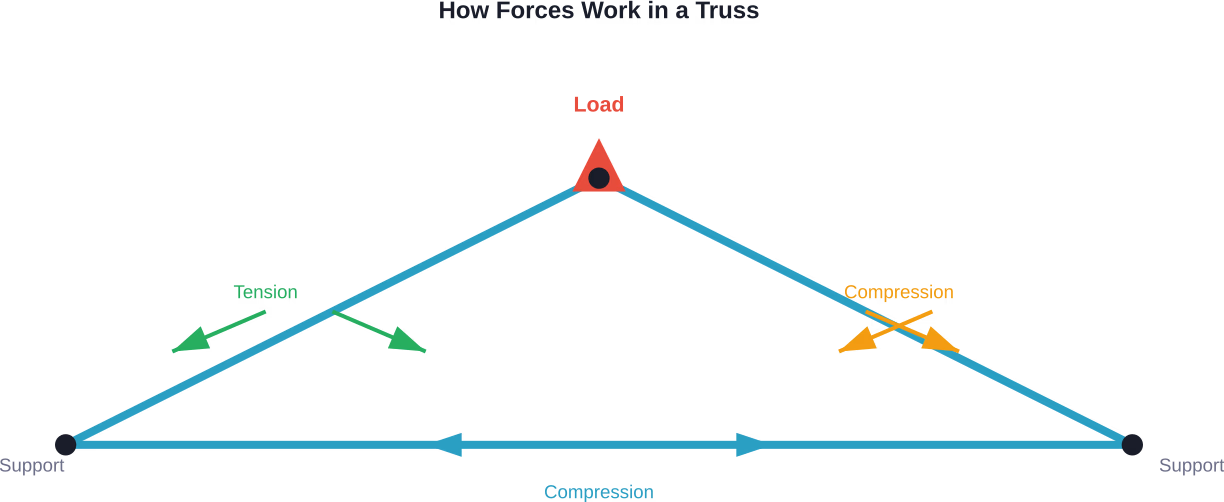
Trusses handle two primary forces: tension and compression. When a load presses down on a truss, some members stretch (tension) while others squeeze (compression). The triangular arrangement ensures these forces travel through the framework predictably.
Here’s the thing though—this force distribution is what allows trusses to be so lightweight compared to solid structural members. The material only goes where it’s actually needed to resist forces.
Key Components of a Truss
Understanding truss anatomy helps explain why they work so well. Each component plays a specific structural role.
Top Chord
The top chord forms the upper boundary of the truss. In roof applications, this member typically sits directly beneath the roof sheathing and experiences compression forces from the roof load pushing downward.
Bottom Chord
Running along the lower edge, the bottom chord usually experiences tension as the truss deflects under load. In residential construction, this chord often serves double duty as ceiling joist support.
Web Members
These diagonal and vertical pieces connect the top and bottom chords. Web members transfer loads between chords and provide the truss with its characteristic triangulated appearance. Their arrangement varies by truss type.
Joints and Connections
According to AISC Engineering Journal research, connections are critical points in truss design. Hollow structural section (HSS) three-branch connections frequently occur in modified Warren trusses, though their design complexity requires specialized engineering attention.
For wood trusses, metal connector plates join members at each joint. Steel trusses typically use welded or bolted gusset plates.
Common Types of Trusses in Construction
Different truss configurations suit different structural needs. Here are the most frequently used types.
King Post Truss
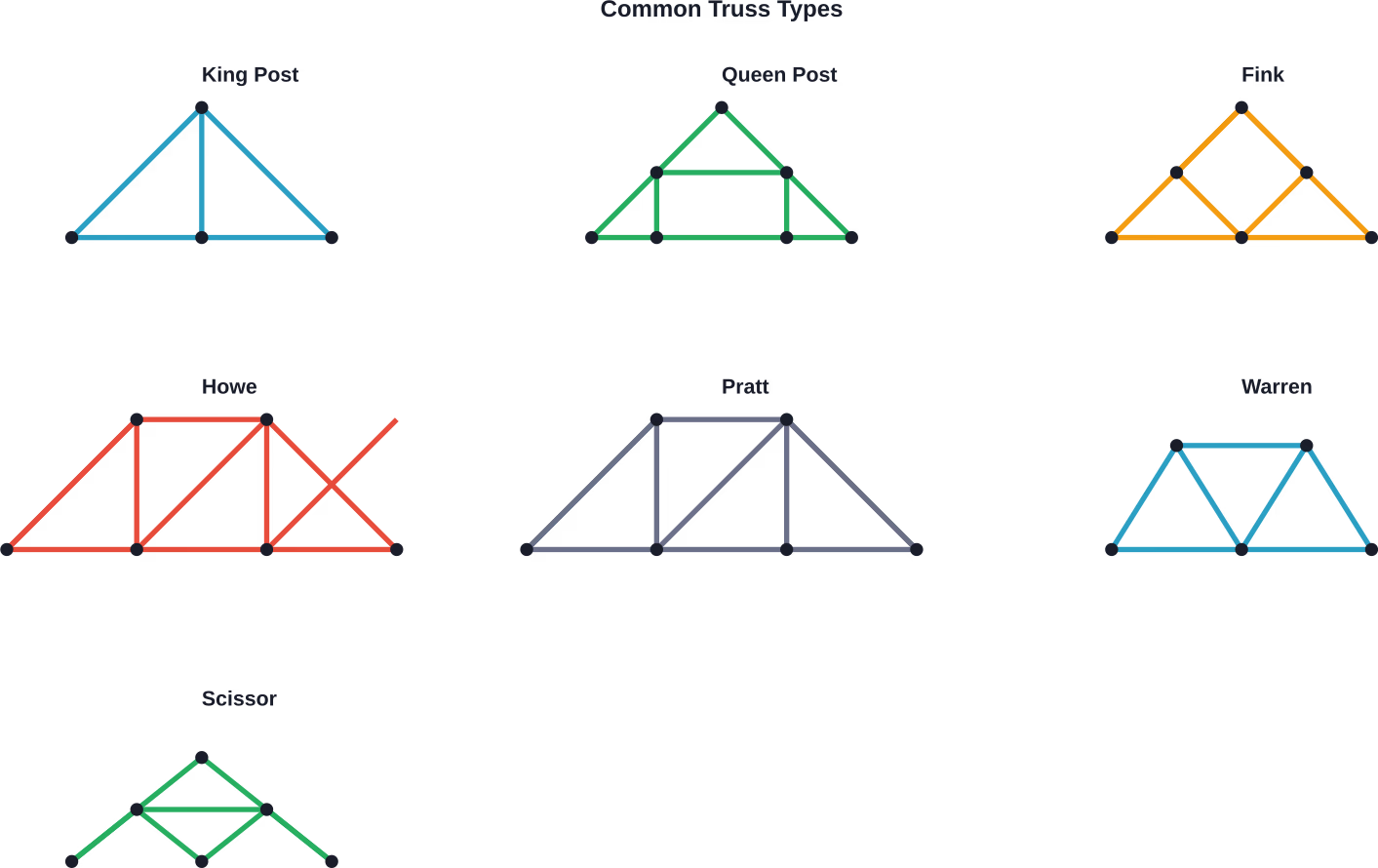
The simplest truss design features one central vertical member. Best suited for shorter spans (typically under 20 feet), king post trusses appear in small residential structures and shed roofs.
Queen Post Truss
Similar to the king post but with two vertical posts instead of one, creating a flat center section. According to FHWA research, there are approximately 101 bridges supported by queenpost trusses, or slightly more than 10 percent of all the surviving covered bridges in the United States, with spans ranging from 7.6 to 39.6 m (25 to 130 ft).
Fink Truss
One of the most common residential roof trusses, the Fink design uses a web pattern that resembles a “W” shape. It’s economical and handles standard roof loads efficiently for spans up to about 50 feet.
Howe Truss
Featuring vertical compression members and diagonal tension members, the Howe truss was historically popular for bridge construction. The design places steel or iron under tension and timber under compression.
Pratt Truss
The inverse of the Howe truss, with diagonal members in compression and verticals in tension. This configuration became especially popular for steel trusses because it minimizes material in compression members.
Warren Truss
Characterized by equilateral triangles, the Warren truss distributes loads evenly across all members. Modified Warren trusses, which include vertical members, are common in modern construction.
Scissor Truss
Used where vaulted ceilings are desired, scissor trusses have bottom chords that slope upward toward the center rather than running flat. They’re popular in residential great rooms and cathedral ceilings.
Trusses vs. Rafters: Key Differences
When it comes to roof framing, trusses compete with traditional rafter construction. Each approach has distinct characteristics.
| Feature | Trusses | Rafters |
|---|---|---|
| Construction | Factory-built, arrive as complete units | Site-built from individual lumber pieces |
| Installation Speed | Much faster (hours vs. days) | Slower, labor-intensive |
| Span Capability | Can span 60+ feet without interior support | Limited to 20-30 feet typically |
| Attic Space | Limited due to web members | Open attic space available |
| Design Flexibility | Less flexible once manufactured | Easier to modify on-site |
| Cost | Lower material and labor costs | Higher labor costs |
| Engineering | Pre-engineered for specific loads | Designed by builder or architect |
The choice often comes down to project scope and budget. Trusses dominate residential construction because they’re faster and more economical for standard designs.
Applications Beyond Roofs
While roof framing is the most visible application, trusses serve multiple structural purposes.
Bridge Construction
Truss bridges have been spanning rivers and valleys since the 1800s. The Fink Deck Truss Bridge, built in 1870 and now located in Lynchburg, Virginia, represents a unique survivor of Albert Fink’s patented truss system widely used between 1854 and 1875.
NIST research has focused extensively on steel truss bridge gusset plate connections, developing practical design procedures through comprehensive analytical and experimental studies.
Floor Systems
Floor trusses create strong, lightweight floor systems that allow for longer joist spans and easier routing of mechanical systems through the web openings. According to OSHA guidance documents, installing floor trusses requires specific fall protection measures during residential construction.
Commercial and Industrial Buildings
Large open spaces like warehouses, gymnasiums, and aircraft hangars rely on trusses to eliminate interior columns. Some commercial projects use massive steel trusses—the Honorable Frank J. Guarini Justice Complex in Jersey City features steel trusses measuring 700 feet long by 35 feet tall to help protect against blast-induced progressive collapse.
Material Considerations
Trusses can be constructed from different materials, each with specific advantages.
Wood Trusses
According to ASCE continuing education materials, metal plate connected wood (MPCW) trusses are engineered structural components assembled from lumber and metal connector plates. They’re the standard for residential construction due to cost-effectiveness and ease of handling.
Steel Trusses
Hollow structural sections (HSS) or open steel sections create trusses for larger spans and heavier loads. Steel trusses require specialized welded or bolted connections at joints.
NIST statistical analysis of steel truss temperature data during fire resistance tests shows that composite floor steel truss performance in fires directly relates to steel temperatures within the trusses—critical data for fire safety design.
Engineered Wood and Composites
Modern engineered lumber products like laminated veneer lumber (LVL) sometimes replace solid sawn timber in truss construction, offering more consistent material properties.
Safety Considerations During Installation
Truss installation presents specific safety challenges that construction crews must address.
OSHA Standard 1926.501(b)(13) specifically addresses fall protection requirements during roof truss and rafter erection. Workers aren’t permitted to erect these components without proper fall protection systems unless alternative protection measures are in place.
According to OSHA’s residential construction fall protection guidance, installing roof trusses requires either conventional fall protection (guardrails, safety nets, or personal fall arrest systems) or a site-specific fall protection plan.
The complexity of three-dimensional truss assembly, combined with working at height, makes proper safety planning essential. Many incidents occur when trusses aren’t properly braced during installation.
Design and Engineering Requirements
Modern trusses aren’t just thrown together—they require proper engineering.
From the wood truss industry’s perspective, specialty engineers play a crucial role. These professionals design trusses to meet specific load requirements, building codes, and architectural specifications.
Graphic statics, once a significant structural analysis tool, provided the historical foundation for understanding how forces move through truss systems. The intuition gained from graphical methods still informs modern computer-aided truss design.
Each truss receives engineered drawings showing member sizes, connection details, and placement instructions. Building inspectors typically require these stamped engineering documents before approving construction.
Advantages of Truss Construction
Why have trusses become so dominant in modern construction? Several factors explain their popularity.
Material efficiency is a key advantage. Trusses use less lumber than comparable rafter systems while achieving greater spans. This efficiency translates directly to cost savings.
Speed matters too. A crew can install factory-built trusses for an entire house in a single day—work that would take a week or more with traditional framing.
Consistency is another benefit. Factory-controlled manufacturing produces trusses with predictable performance characteristics, reducing field errors and callbacks.
Long clear spans eliminate interior load-bearing walls, giving architects and homeowners more flexibility in interior layouts.
Limitations and Considerations
But trusses aren’t perfect for every situation.
The web members that make trusses strong also consume attic space. Homeowners wanting future attic conversions or extensive storage might prefer rafter framing.
Design changes become expensive once trusses are manufactured. Unlike site-built rafters that can be modified during construction, trusses require reordering if specifications change.
Transportation has constraints on truss dimensions, with very large trusses requiring special arrangements.
Complex roof designs with multiple valleys, dormers, and irregular shapes sometimes make conventional framing more practical than trying to coordinate numerous custom trusses.
Get Trusses Installed Without Delays

Trusses are usually designed correctly – problems start when they arrive on site. Deliveries don’t match readiness, lifting windows are missed, and crews wait because something doesn’t line up. That’s where time and cost go. Powerkh checks how the truss package will actually be installed in real site conditions before erection starts. Instead of reacting during lifts, you know in advance what will hold the installation back and what needs to be fixed before cranes are booked.
Catch Truss Installation Problems Early
Where Powerkh makes a difference:
- Reveals clashes between truss geometry and built supports
- Highlights sequencing conflicts before lifting begins
- Spots installation blockers tied to incomplete coordination
- Shows where site readiness doesn’t match delivery timing
Bring Powerkh in before erection and keep your truss installation moving without stops.
Future of Truss Technology
Truss design continues evolving with new materials and methods.
Computer modeling now allows engineers to optimize every member for exact load conditions, squeezing even more efficiency from designs. Building Information Modeling (BIM) integration helps coordinate truss placement with other building systems before construction begins.
Advanced connection systems, including proprietary metal plates and structural adhesives, improve joint performance and streamline manufacturing.
Some manufacturers are experimenting with hybrid trusses that combine wood chords with steel webs, or incorporate engineered lumber throughout for enhanced performance.
Sustainability concerns are driving interest in trusses made from rapidly renewable materials or optimized for deconstruction and reuse at end-of-life.
Conclusion
Trusses represent one of construction’s most elegant solutions—using geometry and engineering to create strong, efficient structures from relatively modest materials. From simple king post designs to massive steel assemblies spanning hundreds of feet, these triangulated frameworks continue proving their worth across virtually every building type.
Understanding what a truss is and how it works helps explain why modern construction looks the way it does. Those triangular patterns aren’t just aesthetic—they’re fundamental structural logic made visible.
Whether framing a house, spanning a river, or supporting a warehouse roof, trusses deliver performance that solid members simply can’t match at comparable cost and weight. That’s why they’ve remained essential to construction for over 150 years and will likely continue that role well into the future.
Frequently Asked Questions
What is the main purpose of a truss in construction?
The main purpose of a truss is to efficiently support loads over long spans using minimal material. Trusses distribute weight through a triangulated framework where members work in either tension or compression, creating a strong yet lightweight structural system for roofs, bridges, and floors.
How long do trusses typically last?
Wood trusses in residential construction typically last 40-60 years or longer when properly designed, installed, and maintained. Steel trusses can last 75-100+ years. Lifespan depends on environmental conditions, load exposure, and protection from moisture, corrosion, or pests.
Can you modify trusses after installation?
No, trusses should not be cut, modified, or altered without consulting a structural engineer. Each component is designed to carry specific loads, and changes can compromise the entire system and lead to structural failure.
Are trusses cheaper than traditional rafters?
In most cases, trusses are more cost-effective than traditional rafter framing. Factory production and faster installation reduce labor costs. However, highly customized truss designs can increase costs and may approach or exceed rafter framing in some cases.
What’s the maximum span for a wood truss?
Standard wood trusses can span 60-80 feet in many residential applications, with specialized designs reaching 100 feet or more. The exact span depends on design, materials, loading conditions, and deflection limits defined by engineering requirements.
Do trusses need to be designed by an engineer?
Yes, trusses must be engineered. Building codes require trusses to be designed by qualified engineers to meet specific load requirements and safety standards. Manufacturers typically provide stamped design drawings for approval and inspection.
What happens to trusses during a fire?
Wood trusses can lose strength relatively quickly in fires due to smaller member sizes that burn through faster. Steel trusses weaken as temperatures rise. Fire-rated assemblies use protective materials like gypsum board or fireproof coatings to delay structural failure and allow time for evacuation.

Our Case Studies
We have handled 200+ BIM & VDC projects for commercial, industrial, and residential sectors.
Our work includes:
Formwork design automation
Our client from
California, USA
Suspended ceiling design automation
Our client from
New York, USA
Wall framing design automation
Our client from
California, USA