Have any questions? Contact us!
Join our team!
Request a free quote or consultation

A purlin is a horizontal structural member in roof construction that spans between rafters or trusses to support roof decking and distribute loads. Typically made from wood, steel, or cold-formed metal, purlins create a stable framework that prevents sagging and transfers weight to the main structural supports.
Walk into most construction sites, and you’ll hear crews tossing around terms like rafters, joists, and purlins. But what exactly is a purlin, and why does it matter so much to roof stability?
Purlins form the skeletal framework that keeps roofing materials securely in place. They’re not the flashy part of construction—no one photographs purlins for architectural magazines—but remove them, and the entire roof system falls apart.
This guide breaks down everything about purlins: what they do, which types exist, how they differ from rafters, and when each material works best. Whether planning a metal building or renovating a residential roof, understanding purlins helps make smarter structural decisions.
What Exactly Is a Purlin?
A purlin is a horizontal structural member positioned perpendicular to rafters or trusses in roof construction. These beams create a secondary support system that holds up the roof deck, sheathing, or metal panels.
Think of purlins as the bridge between the main structural frame and the roofing material. Rafters run from the ridge to the eave at an angle. Purlins run horizontally across those rafters, creating attachment points for whatever covers the roof.
According to academic research on cold-formed steel structural elements, purlins are critical to the structure of the roof because they support the weight of the roof deck and aid to make the entire roof structure more rigid. Without them, roofing materials would need impossibly strong rafters spaced inches apart.
Where Purlins Fit in the Roof Structure
In a typical roof assembly, the load path flows downward: roofing material → purlins → rafters or trusses → walls → foundation. Purlins distribute weight evenly across multiple rafters rather than concentrating stress on individual points.
This distribution matters tremendously during snow loads, wind events, or when maintenance crews walk on the roof. The horizontal orientation of purlins allows them to transfer lateral forces effectively, which is why building codes like the International Building Code include specific purlin specifications in Section 2308.7.7 for wood construction.
Primary Functions of Purlins in Construction
Purlins serve multiple structural roles that go beyond simply holding up roof panels:
- Load Distribution: Purlins spread concentrated loads across multiple rafters. A single point load—say, from a rooftop HVAC unit—gets distributed horizontally along the purlin, then vertically down through several rafters instead of overstressing one.
- Structural Rigidity: Horizontal members prevent lateral movement of rafters. Without purlins, rafters could twist, bow, or shift under asymmetric loads like drifting snow on one side of the roof.
- Attachment Surface: Roof decking, metal panels, or shingles need something to attach to. Purlins provide consistent, evenly-spaced fastening points that keep roofing materials secure during wind events.
- Span Reduction: Purlins allow builders to use smaller, less expensive roofing materials. A metal panel that can only span 4 feet unsupported becomes practical for any roof size when purlins are spaced at 4-foot intervals.
Common Purlin Materials
Material selection depends on building type, span requirements, budget, and local code requirements.
Wood Purlins
Wood remains the traditional choice for residential construction and smaller buildings. Dimensional lumber—typically 2x4s through 2x8s—works for most residential applications with moderate spans.
Wood purlins cost less upfront than metal alternatives and work with standard carpentry tools. They’re easy to cut, notch, and modify on-site. But wood has limitations: susceptibility to rot, insect damage, warping over time, and lower strength-to-weight ratios than steel.
The International Building Code specifies lumber grades and species for purlin applications. Higher grades like Select Structural or No. 1 provide better load capacity but cost more than No. 2 or lower grades.
Steel and Cold-Formed Metal Purlins
Metal purlins dominate commercial construction, pre-engineered buildings, and larger structures. Cold-formed steel purlins offer several advantages: higher strength-to-weight ratios, longer spans without intermediate support, resistance to rot and pests, and dimensional stability over time.
Academic research on cold-formed steel hat purlins indicates that steel purlins are lightweight and more economical than wood alternatives for many applications, particularly when factoring in long-term maintenance and replacement costs.
Metal purlins commonly come in C-shaped and Z-shaped sections. Both start as flat steel sheets that get rolled-formed into specific shapes that maximize strength while minimizing material use.
Types of Purlins: C vs Z Profiles
The shape of a metal purlin dramatically affects its structural performance and appropriate applications.
C Purlins
C purlins have a cross-section resembling the letter C, with a flat web, two flanges, and lips on the flanges. This shape excels at resisting bending in one direction, making C purlins ideal for simple roof slopes.
C purlins typically handle moderate spans and straightforward loading conditions. They’re easier to manufacture than Z shapes and generally cost less. The profile works well when purlins run continuously from eave to ridge without lapping.
C purlin sizes vary in depth and thickness (gauges) depending on load requirements. Higher gauge numbers mean thinner material—14-gauge is thicker than 18-gauge.
Z Purlins
Z purlins have a cross-section shaped like the letter Z, with the flanges offset from the web centerline. This geometry provides better strength characteristics for certain applications, particularly when purlins need to overlap at supports.
The offset flanges allow Z purlins to nest when lapping over supports, creating continuous structural members that can handle longer spans. This lapping capability makes Z purlins the preferred choice for larger buildings with extended roof spans.
Z purlins also perform better under combined loading conditions—simultaneous gravity loads and lateral forces. The shape resists twisting more effectively than C sections in many configurations.
| Feature | C Purlins | Z Purlins |
|---|---|---|
| Cross-Section | Symmetrical C shape | Offset Z shape with angled web |
| Best For | Simple roof slopes, moderate spans | Long spans, continuous runs, lapping |
| Lapping Ability | Limited, requires special connectors | Excellent, sections nest together |
| Typical Cost | Lower | Slightly higher |
| Strength Under Combined Loads | Good | Better |
| Installation Complexity | Simpler | More complex alignment |
Purlins vs Rafters: Understanding the Difference
These terms get confused constantly, but they describe distinct structural elements with different functions.
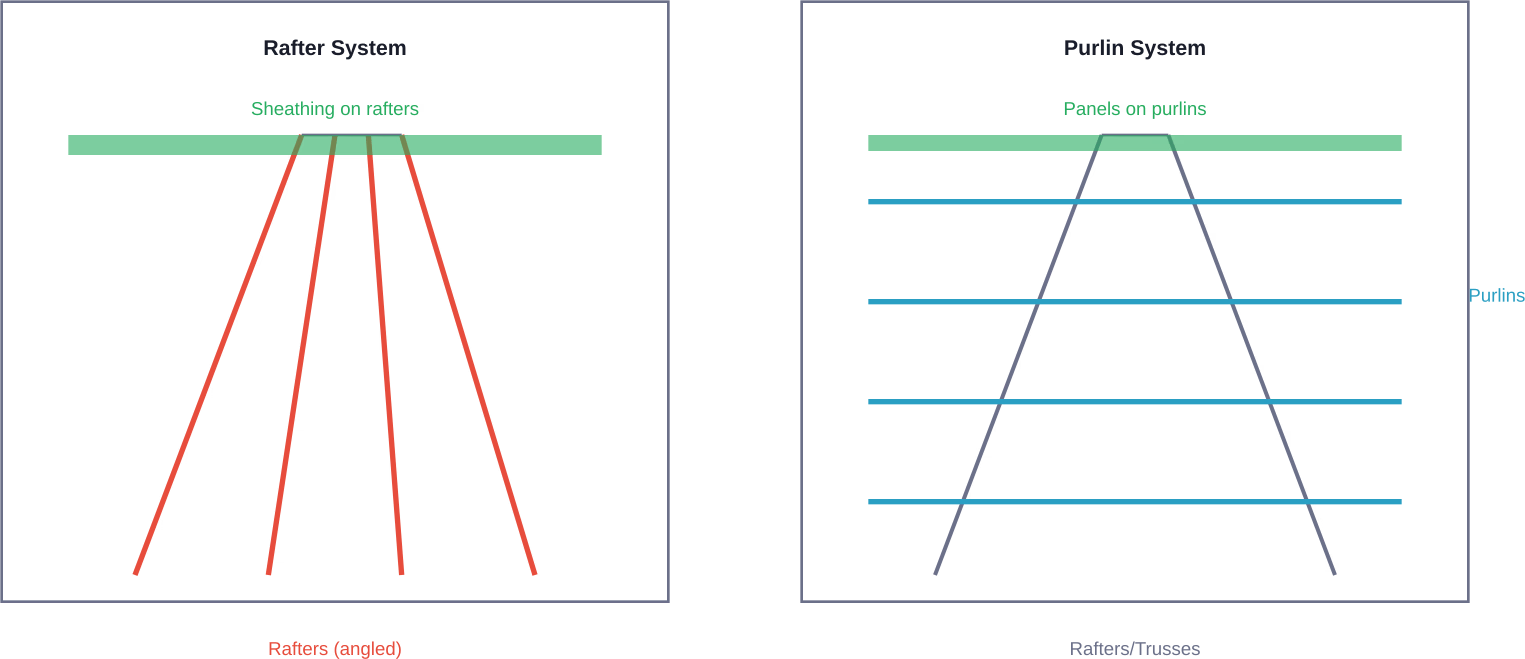
Rafters are the primary sloped structural members that run from the ridge of the roof down to the eaves. They form the main load path from roof to walls and carry the weight of everything above them.
Purlins are secondary horizontal members that span between rafters. They run perpendicular to the rafter direction and support roofing materials rather than transferring loads directly to walls.
Here’s the thing though—some roof systems use only rafters with sheathing applied directly to them. Others use purlins without traditional rafters, instead relying on columns or posts to support the purlin ends. Terminology varies by region and building type, which adds to the confusion.
Applications of Purlins in Different Building Types
Different construction methods use purlins in distinct ways.
Metal Buildings and Pre-Engineered Structures
Metal buildings rely heavily on purlin systems. The primary frame consists of rigid frames or columns with rafters, and cold-formed steel purlins span between these frames to support metal roof panels.
This approach allows longer clear spans without interior columns. Purlins commonly span 20-30+ feet between frames in commercial warehouses, agricultural buildings, or retail structures. The metal panels attach directly to purlins with self-tapping screws.
Residential Construction
Residential roofs sometimes use purlins, particularly in post-frame construction or when metal roofing covers living spaces. Wood purlins spanning between timber rafters create an economical support system for metal roof panels on barns, workshops, or modern farmhouse designs.
Traditional stick-framed homes typically use roof sheathing applied directly to rafters instead of purlins. But timber frame homes often incorporate purlins as both structural elements and aesthetic features—exposed wood beams that add character while supporting the roof.
Industrial and Commercial Projects
Large-span industrial facilities depend on purlin systems to economically cover vast areas. Manufacturing plants, distribution centers, and airplane hangars use heavy-duty Z purlins that can span 40+ feet between primary structural members.
The ability to lap Z purlins over supports means these buildings can achieve continuous structural action across multiple bays, reducing deflection and improving overall roof performance.
Purlin Spacing and Design Considerations
Proper purlin spacing balances structural requirements, material costs, and roofing panel capabilities.
Standard purlin spacing ranges from 2 to 6 feet on center, depending on roofing material and expected loads. Metal panels with lower gauge numbers (thicker material) can span farther, allowing wider purlin spacing. Thinner panels require closer spacing to prevent oil-canning (visible waviness between supports).
Snow loads dramatically affect purlin design in northern climates. A building in Minnesota needs heavier, more closely spaced purlins than an identical structure in Arizona. Wind loads matter tremendously in coastal areas where hurricane-force winds create uplift that tries to pull the roof off the building.
Building codes mandate minimum design standards, but actual purlin sizing requires engineering calculations that account for dead loads (roof weight), live loads (snow, maintenance access), wind loads, seismic requirements, and deflection limits.
According to research on purlin design specifications, rational buckling analysis methods help engineers optimize purlin sections for specific loading conditions, balancing strength against excessive deflection that could damage roofing materials or create ponding issues.
Girts: The Wall Equivalent of Purlins
While purlins support roofs, girts serve a parallel function for walls. Girts are horizontal structural members that span between wall columns to support wall panels or siding.
The same C and Z profiles used for roof purlins work for wall girts, though loading conditions differ. Girts primarily resist wind loads pushing against or pulling away from the wall surface, while purlins deal mainly with gravity loads pushing down.
Understanding both purlins and girts helps grasp the complete structural system of metal buildings, where both elements work together to create a rigid, weather-resistant enclosure.
Installation Best Practices
Proper purlin installation matters as much as correct design:
- Spacing Accuracy: Maintain consistent purlin spacing within tolerance. Roofing panel manufacturers specify maximum span capabilities based on specific spacing—exceeding those spans by even a few inches can void warranties.
- Alignment: Purlins must align perpendicular to rafters or parallel to each other. Misalignment creates stress concentrations and can cause premature fastener failure.
- Overlapping: When lapping Z purlins at supports, ensure proper overlap distance per engineering drawings. Insufficient overlap reduces structural continuity and load transfer.
- Fastening: Use specified fastener types, sizes, and spacing. Under-fastening allows movement; over-tightening distorts purlin sections and reduces capacity.
- Bracing: Add anti-roll clips or bridging where specified to prevent lateral-torsional buckling. Purlins can twist under load without proper bracing, especially during construction before roof panels are installed.
| Installation Aspect | Why It Matters | Common Mistake |
|---|---|---|
| Purlin Spacing | Affects panel support and load capacity | Exceeding designed spacing “just slightly” |
| Lap Length | Ensures structural continuity | Cutting overlaps short to save material |
| Fastener Placement | Transfers loads between components | Missing fasteners at critical connections |
| Bracing | Prevents twisting and buckling | Skipping bracing before panels installed |
| Alignment | Ensures even load distribution | Accepting “close enough” alignment |
Get Purlins Ready For Roofing

Purlins are what the roof actually sits on. If they are out of line, uneven, or inconsistent, roofing doesn’t go in clean. Sheets shift, fixings don’t land where expected, and crews start adjusting on site. That’s where delays and extra work begin. Powerkh gives you a clear on-site read of how purlins are set before roofing starts. You’re not working off drawings or assumptions. You see whether the base is ready to take the roofing system as planned.
Approve The Roof Base Before Installation
Powerkh shows you:
- Whether purlins are set consistently across the roof
- Where alignment will affect roofing installation
- Where fixings will not land as expected
- What will slow down or block roofing works
- What must be corrected before installation starts
Contact Powerkh now and make sure your purlins are ready before roofing begins.
Cost Factors for Purlin Systems
Several variables influence total purlin system costs.
Material selection makes the biggest difference. Wood purlins cost less per linear foot than cold-formed steel, but may require closer spacing or larger sections that offset initial savings. Steel purlins cost more upfront but last longer and need less maintenance.
Purlin depth and gauge affect pricing significantly. Deeper sections and heavier gauges use more material and cost more, but allow wider spacing that reduces the total number of purlins needed. Sometimes spending more per purlin reduces overall project costs.
Shipping costs matter for steel purlins, which are typically manufactured at specialized facilities and delivered to job sites. Remote locations may see significant freight charges that favor locally-sourced wood alternatives.
Labor costs vary by system complexity. Simple C purlin layouts with standard spacing install quickly. Complex roof geometries with multiple slopes, valleys, and penetrations require more cutting, custom pieces, and installation time.
Common Purlin Problems and Solutions
Even properly designed purlin systems can develop issues:
- Deflection and Sagging: Over time, undersized purlins deflect visibly, creating wavy roof lines. This usually results from inadequate design for actual loads. Solution: add additional purlins between existing ones or install supplemental supports.
- Corrosion: Steel purlins in humid or corrosive environments can rust, particularly at fastener penetrations where coatings get disrupted. Solution: use galvanized or painted purlins with proper coatings for the environment, and maintain a roof to prevent water accumulation.
- Connection Failures: Fasteners can loosen, strip, or pull through purlin material. Solution: use appropriate fastener types with adequate pull-through resistance, and inspect/tighten connections periodically.
- Thermal Movement: Long metal purlins expand and contract with temperature changes. Solution: use slotted holes or proper connection details that allow movement without overstressing connections.
Making the Right Purlin Choice for Your Project
Purlins might not be the most glamorous construction element, but they’re absolutely fundamental to roof system performance. These horizontal structural members create the framework that keeps roofing materials stable, distributes loads effectively, and maintains structural integrity through decades of service.
The right purlin system depends on building type, span requirements, budget constraints, and local environmental conditions. Wood purlins work beautifully for residential and light commercial applications with moderate spans. Cold-formed steel C and Z purlins excel in metal buildings and larger structures where long spans and durability justify higher material costs.
Understanding purlin functions, types, and design considerations helps make informed decisions whether you’re planning new construction, evaluating existing buildings, or just trying to understand what contractors are talking about. These seemingly simple beams carry significant responsibility in the overall structural system.
Need help determining the right purlin system for your project? Consult with a structural engineer who can analyze your specific loads, spans, and requirements to design an optimized solution. Proper purlin selection and installation ensures your roof stays exactly where it belongs—overhead and problem-free—for the life of the building.
Frequently Asked Questions
What’s the difference between a purlin and a joist?
Joists are horizontal framing members that support floors or ceilings, while purlins support roofs. Joists typically run parallel to the shorter dimension of a building and support vertical loads. Purlins run perpendicular to rafters or trusses and create attachment points for roofing materials. The terms sometimes get used interchangeably in certain regions, but they describe structurally distinct elements.
Can purlins be used in residential homes?
Absolutely. Purlins work well in residential construction, particularly for homes with metal roofing, timber frame designs, or post-frame construction. Many modern farmhouse styles feature exposed wood purlins as both structural and aesthetic elements. Traditional stick-framed homes use roof sheathing instead, but there’s no reason purlins can’t work in residential applications when properly designed.
How far can a purlin span without support?
Span capability depends on purlin material, cross-section size, expected loads, and deflection limits. Wood purlins typically span 4-6 feet. Light-gauge C purlins might span 15-25 feet. Heavy Z purlins in commercial applications can reach 35-40+ feet. Every project needs engineering calculations based on specific conditions—there’s no universal answer that covers all situations.
Do metal purlins rust?
Bare steel purlins will rust when exposed to moisture. That’s why manufacturers apply protective coatings—typically galvanization (zinc coating) or paint systems. G-90 galvanized purlins resist corrosion well in most environments. Highly corrosive locations like coastal areas or chemical plants may require heavier coatings or stainless steel. Proper roof maintenance that prevents water accumulation extends purlin life significantly.
What gauge metal purlin should I use?
Gauge selection depends on span length, spacing, loads, and deflection requirements. Common gauges range from 12-gauge (heavier) to 20-gauge (lighter). Longer spans and heavier loads require lower gauge numbers (thicker material). An engineer should specify purlin gauge based on project-specific calculations rather than rules of thumb. Using too heavy a gauge causes excessive deflection; unnecessarily light gauges waste money.
Can I install purlins myself?
DIY purlin installation is feasible for small projects if you have appropriate tools, help lifting materials, and follow engineered plans. Metal purlins require specialized skills for proper alignment and fastening. Wood purlins are more forgiving for experienced DIYers comfortable with carpentry. Commercial or large residential projects should involve professional installers. Regardless of who installs them, purlins must be designed by a qualified engineer to meet building codes.
What’s the purpose of purlin bracing?
Bracing prevents purlins from twisting or rolling under load—a failure mode called lateral-torsional buckling. Before roofing panels are installed, purlins are particularly vulnerable to this twisting. Anti-roll clips, X-bracing, or through-purlin bridging keeps sections properly oriented. Once roof panels are attached, they provide bracing effect, but temporary bracing during construction and permanent bracing at specific locations remain necessary per engineering requirements.

Our Case Studies
We have handled 200+ BIM & VDC projects for commercial, industrial, and residential sectors.
Our work includes:
Formwork design automation
Our client from
California, USA
Suspended ceiling design automation
Our client from
New York, USA
Wall framing design automation
Our client from
California, USA