Herhangi bir sorunuz var mı? Bize ulaşın!
Ekibimize katılın!
Ücretsiz fiyat teklifi veya danışmanlık talep edin

Sheathing is the structural covering installed over a building’s framing—on walls, roofs, and floors—before final finishes are applied. It provides structural rigidity, a base for attaching siding or roofing materials, and protection against weather elements.
Walk past any residential construction site and there’s a good chance the structure looks wrapped in flat panels. That’s sheathing—the unsung hero between framing and finished surfaces.
Sheathing isn’t just protective covering. It’s what keeps walls from racking during windstorms, provides a nailing surface for siding, and creates the first line of defense against moisture intrusion. Without proper sheathing, even the strongest framing won’t perform as intended.
But what exactly qualifies as sheathing, and how does it differ across applications? Here’s the breakdown.
Understanding What Sheathing Does
Sheathing serves as the rough covering applied directly to framing members—wall studs, roof rafters, or floor joists. According to the American Wood Council, this structural layer transfers loads into the wall studs while providing a nailing base for exterior finishes.
The functions break down into three categories:
- Structural support: Sheathing ties framing studs together, making walls resistant to twisting and bending. This becomes critical in high-wind zones or seismic areas where lateral forces try to deform the structure.
- Weather protection: It creates a barrier against rain, snow, and wind-driven moisture before final roofing or siding installation. Proper sheathing prevents water infiltration that leads to rot and mold.
- Attachment base: Exterior finishes need something solid to anchor into. Sheathing provides that stable substrate for nails, screws, and adhesives.
Research from Virginia Tech studying light-frame shear walls found that sheathing material choice directly impacts a wall’s racking performance under both monotonic and cyclic loading conditions.
Work With a BIM and VDC Services Team

Powerkh provides BIM modeling, coordination, Scan to BIM, BIM automation, and structural detailing. The company supports construction teams with models, drawings, and technical documentation used in real projects.
Need BIM Support for a Project?
Talk with Powerkh to:
- build BIM models and construction documentation
- prepare drawings for fabrication and site use
- support coordination across project teams
👉 Contact Powerkh for a project review and consultation.
Types of Sheathing Materials
Not all sheathing performs identically. Material selection depends on structural requirements, climate conditions, and budget constraints.
Oriented Strand Board (OSB)
OSB dominates modern residential construction. Manufactured from waterproof heat-cured adhesives and rectangularly shaped wood strands arranged in cross-oriented layers, it delivers consistent performance at a lower cost than plywood.
Common panel size: 4 feet by 8 feet. The cross-orientation provides strength in multiple directions, though OSB takes longer to dry if it gets wet during construction. While this size remains standard, 4×9 and 4×10 panels have become the baseline for modern energy-efficient residential construction to eliminate horizontal seams at top plates.
Plywood Sheathing
Plywood consists of whole sheets of wood that are cross-laminated, giving boards strength and stiffness. It is approximately 15 to 19 percent lighter than OSB and has better moisture resistance.
Plywood dries faster when exposed to weather during construction. However, it may contain weak spots that cause core voids in panels, and typically costs more than OSB.
Fiberboard Sheathing
Fiberboard offers moderate structural capacity with some insulation value. Research on light-frame shear walls examined performance of fiberboard, gypsum wallboard, OSB, and hardboard under racking loads.
It’s lightweight and easy to cut, making installation faster. The trade-off? Lower structural strength means it’s often paired with let-in bracing or other reinforcement.
Gypsum Sheathing
Gypsum sheathing provides fire resistance and some moisture protection. ASTM standards C1280 and C79 govern specifications for both treated-core and non-treated core gypsum sheathing board applications.
Virginia Tech research examined the effects of using overturning anchors and investigated the contribution of gypsum in walls with dissimilar sheathing materials on opposite sides of the wall.
Structural vs Non-Structural Sheathing
This distinction matters for code compliance and building performance.
- Structural exterior wall sheathing ties framing studs together and resists lateral forces. OSB, plywood, and certain engineered panels fall into this category. They’re designed to handle shear loads and prevent wall racking.
- Non-structural sheathing provides weather protection and a substrate for finishes but doesn’t contribute to lateral load resistance. Foam insulation boards and some fiberboards fit here. Walls using non-structural sheathing require additional bracing methods.
According to Building Science Corporation guidance on IRC wall bracing requirements, insulating sheathing can be installed in lieu of plywood on exterior walls for some portions—but proper bracing must still be provided.
| Sheathing Type | Structural Capacity | Moisture Resistance | Cost Level |
|---|---|---|---|
| OSB | High | Moderate | Low |
| Plywood | High | Good | Orta |
| Fiberboard | Moderate | Fair | Low |
| Gypsum | Low | Fair | Orta |
Installation Considerations
Proper installation determines whether sheathing performs as designed. OSHA guidance documents on fall protection in residential construction address safe practices during roof sheathing and wall sheathing operations.
Panels are commonly installed with orientation that maximizes strength and minimizes joints.
Panels require spacing to allow for expansion and contraction with temperature and humidity changes. Tight-butted panels can buckle.
Fastener selection impacts performance too. Research on fastener-sheathing rotational capacity shows that nail type, size, and spacing all affect how well the connection transfers loads from sheathing to framing.
Where Sheathing Gets Applied
Three primary applications exist in residential construction:
- Wall sheathing: Applied over wall studs before exterior finish. Provides racking resistance and weather protection. Building codes specify required thickness based on stud spacing and wind exposure.
- Roof sheathing: Installed over rafters or trusses as the base for roofing materials. Must support dead loads, live loads, and wind uplift forces. According to ICC building codes, roof assembly specifications detail required attachment methods.
- Floor sheathing (subfloor): Goes over floor joists to create the walking surface and distribute loads. Tongue-and-groove edges are common to prevent squeaking and create a stiffer floor system.
Code Requirements and Standards
Multiple standards govern sheathing installation. The International Building Code references several ASTM specifications including C1705 for structural cementitious panels and various standards for gypsum products.
Building Science Corporation notes that code language around vented and unvented roof assemblies can get confusing, particularly regarding where sheathing sits in relation to insulation layers in hybrid assemblies.
According to research on hybrid assemblies, code requirements now recognize that not all insulation needs to go above roof sheathing to control condensation—just enough to keep sheathing moisture content below 20 percent by weight.
Sonuç
Sheathing represents one of those construction elements that’s easy to overlook but impossible to skip. It determines structural performance, weather resistance, and how well exterior finishes attach and perform long-term.
Material selection depends on project requirements, climate, and budget. OSB delivers solid performance at lower cost. Plywood offers superior moisture handling. Specialty products provide specific benefits like fire resistance or insulation value.
The key? Understanding how sheathing functions in the overall building envelope and ensuring proper installation per manufacturer specifications and local building codes.
For any construction or renovation project, consult with structural engineers or experienced contractors to select appropriate sheathing for your specific application and climate zone.
Sıkça Sorulan Sorular
What’s the difference between sheathing and siding?
Sheathing is the structural layer attached directly to the framing, while siding is the exterior finish installed over it. Sheathing adds strength and basic protection, while siding provides appearance and the final weather barrier.
Can a house be built without sheathing?
It is technically possible using alternative bracing methods, but modern construction relies on sheathing for strength, durability, and easier installation of exterior finishes.
Is OSB or plywood better for sheathing?
Both materials perform similarly in structural applications. OSB is more affordable and consistent, while plywood handles moisture exposure better and dries faster.
How thick should wall sheathing be?
Wall sheathing is typically 7/16 inch to 1/2 inch thick, depending on framing spacing, wind conditions, and local building code requirements.
Does sheathing need to be waterproof?
Sheathing is water-resistant but not fully waterproof. It is designed to handle short-term moisture exposure, while a weather barrier installed over it provides long-term protection.
Can foam board be used as structural sheathing?
Most foam boards are not structural and cannot replace traditional sheathing. If used, additional bracing is required to provide the necessary strength.
What happens if sheathing gets wet during construction?
Short-term exposure to rain usually doesn’t cause damage, but prolonged moisture can lead to swelling or reduced strength. Proper protection and drying are important during construction.

Vaka Çalışmalarımız
Ticari, endüstriyel ve konut sektörleri için 200'den fazla BIM ve VDC projesi gerçekleştirdik.
Çalışmalarımız şunları içermektedir:
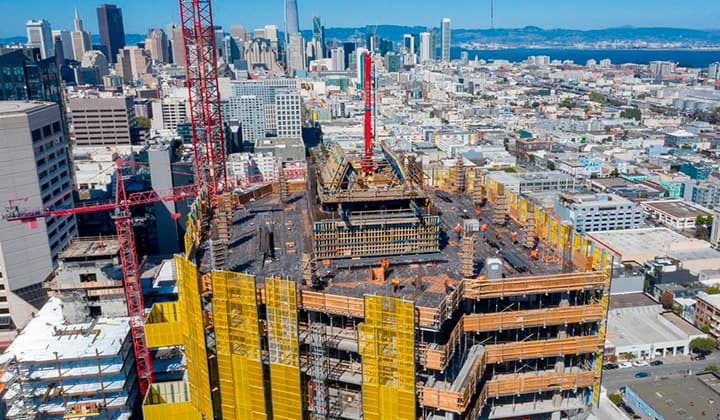
Kalıp tasarım otomasyonu
Our client from
California, USA
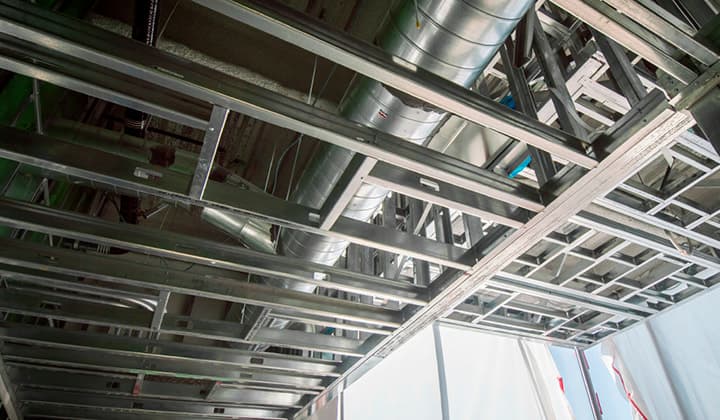
Asma tavan tasarım otomasyonu
Our client from
New York, USA
Duvar çerçeveleme tasarım otomasyonu
Our client from
California, USA