Herhangi bir sorunuz var mı? Bize ulaşın!
Ekibimize katılın!
Ücretsiz fiyat teklifi veya danışmanlık talep edin

AIA billing is a standardized payment process used in commercial and industrial construction projects, based on forms developed by the American Institute of Architects. The process primarily uses two forms—G702 (Application and Certificate for Payment) and G703 (Continuation Sheet)—to create transparent, detailed progress payment applications that document work completed, materials stored, retainage, and change orders throughout the construction lifecycle.
If you’ve worked on commercial construction projects for more than a few months, chances are you’ve encountered AIA billing. It’s everywhere—from high-rise office buildings to industrial facilities. Owners expect it. Architects require it. And if the paperwork isn’t right, payments get delayed another 30 days.
But here’s the thing: AIA billing isn’t actually that complicated once you understand how the pieces fit together. The challenge comes from moving parts, unfamiliar terminology, and the consequences of getting details wrong.
This guide breaks down exactly what AIA billing is, why the construction industry relies on it, and how contractors can navigate the process without payment delays.
What Is AIA Billing?
AIA billing refers to the standardized payment application process used throughout the commercial and industrial construction industry. The system was developed by the American Institute of Architects (AIA), which created a series of contract documents and forms that establish consistent billing procedures across projects.
The term “AIA billing” is shorthand for the payment application process that uses AIA Document G702 (Application and Certificate for Payment) together with AIA Document G703 (Continuation Sheet). These forms create a structured framework for contractors to request payment and for architects to certify that payment is appropriate.
According to the official AIA website, these documents provide “convenient and complete forms on which the contractor can apply for payment and the architect can certify that payment is due.” The forms require contractors to show the contract sum status, including total dollar amounts of work completed and stored, retainage amounts, previous payment totals, change order summaries, and current payment requests.
Why Construction Uses a Standardized Process
Construction projects involve multiple parties—owners, general contractors, subcontractors, architects, engineers, and lenders. Each party needs visibility into project finances to make informed decisions.
Before standardized billing, every project used different formats. Owners couldn’t easily compare projects. Lenders struggled to verify draw requests. Disputes arose from inconsistent documentation.
AIA contract documents solved this problem by creating industry-standard forms that everyone recognizes. The standardization brings several practical advantages: reduced ambiguity in payment terms, easier auditing and verification, streamlined approval workflows, and consistent documentation that holds up in disputes.
The Core AIA Billing Documents
The AIA billing system centers on two primary forms that work together. Understanding what each document does clarifies the entire process.
AIA Document G702: Application and Certificate for Payment
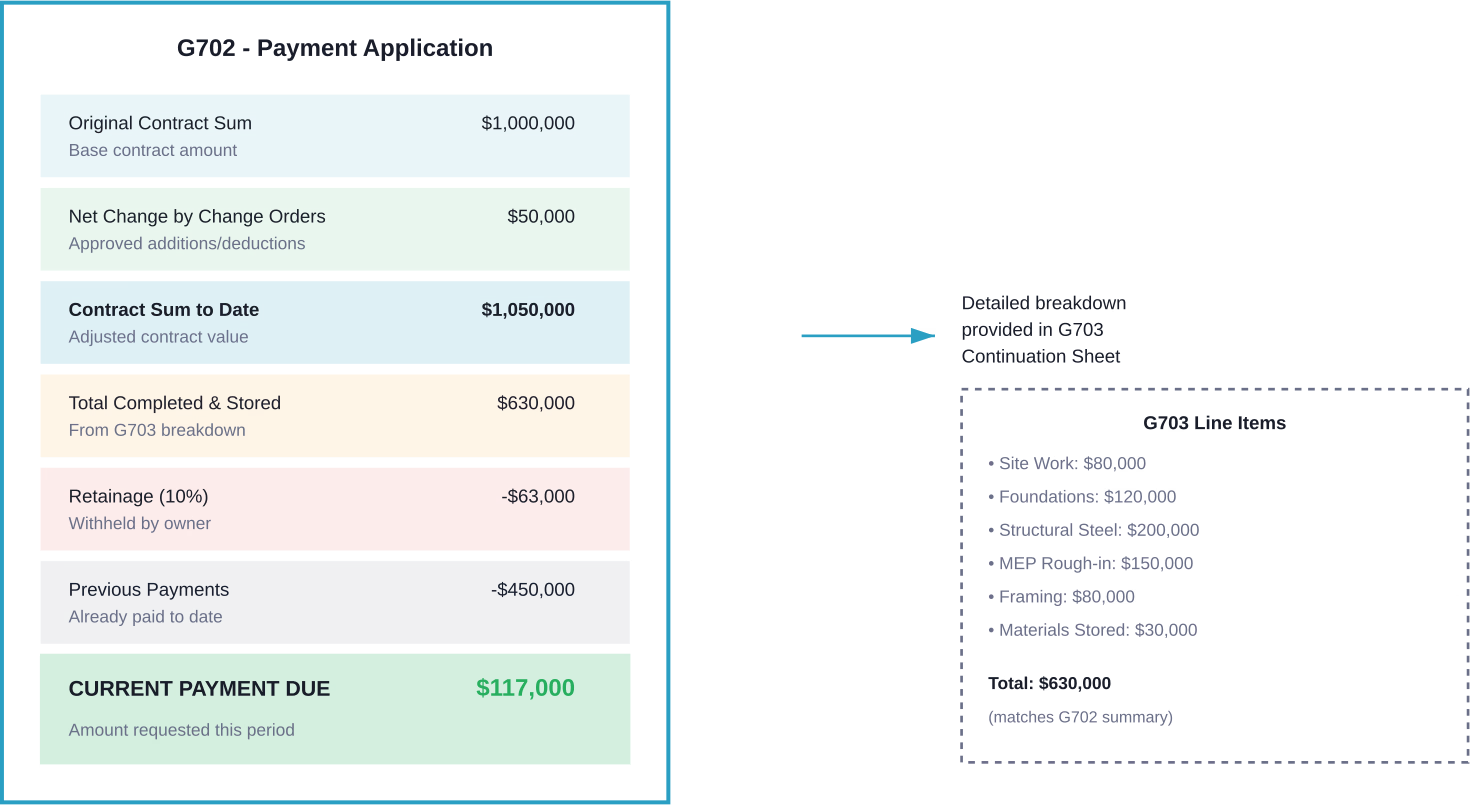
Form G702 serves as the cover sheet for payment applications. This single-page document summarizes the entire financial status of the project at the time of billing.
The form includes several critical sections: the original contract sum, net change by change orders, contract sum to date, total completed and stored to date, retainage, total earned less retainage, previous certificates for payment, current payment due, and balance to finish including retainage.
AIA Document G702 requires signatures from the contractor, the architect, and a notary public. The contractor’s signature certifies that the information is accurate and that work has been completed according to contract requirements. The architect’s signature certifies that payment is due based on their observations and the contract documents.
AIA Document G703: Continuation Sheet
Form G703 provides the detailed breakdown behind G702’s summary numbers. This is where the schedule of values comes into play.
The schedule of values divides the total contract sum into individual line items representing different work components. Common line items based on authoritative sources include general conditions, site work and excavation, concrete foundations, structural steel, mechanical rough-in, electrical rough-in, drywall and framing, and finishes.
For each line item, G703 tracks: the scheduled value (original contract amount for that item), work completed from previous applications, work completed this period, materials presently stored, total completed and stored to date, percentage of completion, balance to finish, and retainage.
This granular tracking lets all parties see exactly where money has been spent and what work remains.
How the AIA Billing Process Works
The billing cycle typically follows a monthly rhythm, though contract terms can specify different intervals.
Step 1: Establish the Schedule of Values
Before the first payment application, contractors create a schedule of values that breaks the contract into measurable components. This document gets submitted early in the project for owner and architect approval.
The schedule should align with the project’s natural workflow. Line items need enough granularity to track progress accurately but not so much detail that billing becomes overwhelming. REMOVE: This specific range does not appear in source material and should not be stated as fact.
Step 2: Track Work Progress
Throughout the billing period, contractors track completed work against the schedule of values. This requires field observation, subcontractor input, and material delivery documentation.
For materials stored on site but not yet installed, separate tracking is essential. According to authoritative sources, AIA billing segregates the cost of stored materials from completed work, allowing contractors to receive payment for materials purchased even before installation.
Step 3: Prepare Payment Application
At the billing cutoff date (typically the last day of the month), contractors compile the payment application. This involves updating each G703 line item with current completion percentages, calculating retainage withheld, and summarizing totals on G702.
Accuracy matters here. Errors trigger rejections that delay the entire payment cycle by 30 days or more.
Step 4: Architect Review and Certification
After submission, the architect reviews the application against their own observations and the contract documents. The architect verifies that reported work has actually been completed and that quality meets contract standards.
If discrepancies arise, the architect requests corrections before certifying payment. Once satisfied, the architect signs G702, certifying that payment is due according to the contract.
Step 5: Owner Payment
The certified payment application goes to the owner for payment. Standard AIA contracts typically require payment within a specified timeframe after architect certification—often 7 to 14 days.
The owner issues payment for the certified amount, less retainage. That retained percentage stays in the owner’s account until project completion or substantial completion, depending on contract terms.
Get AIA Billing Approved First Time

AIA billing breaks when your application can’t be clearly backed by what’s actually installed. If progress is unclear or disputed, approvals slow down and cash gets stuck. Powerkh checks site progress before submission and shows exactly what supports each line in your billing.
Instead of fixing reductions after review, you submit with evidence already in place. That shortens approval time and keeps cash moving without rework on your applications.
Eliminate Reductions Before Submission
What changes with Powerkh:
- Your billed progress matches verified work on site
- Weak or unsupported items are caught before submission
- Reviewers have clear evidence to approve without pushback
- Fewer reductions during valuation and certification
- Less time lost on revisions and resubmissions
Contact Powerkh now and move your AIA billing through approval without delays.
Understanding Retainage in AIA Billing
Retainage represents one of the most significant aspects of construction payment processes. According to authoritative sources, retainage typically ranges from five to 5 or 10 percent, depending on contract negotiations.
The owner withholds this percentage from each payment application as security against contractor default, incomplete work, or defects. While retainage protects owners, it creates cash flow challenges for contractors who must fund ongoing operations while waiting for retained amounts.
Retainage usually releases at substantial completion—the point when the owner can occupy or use the project for its intended purpose. Some contracts allow partial retainage release as milestones are reached or reduce the percentage later in the project.
Key Benefits of AIA Billing
The widespread adoption of AIA billing stems from concrete advantages it provides to all project stakeholders.
Transparency Across Parties
Standardized forms create visibility into project finances. Owners see exactly where their money goes. Lenders can verify draw requests against documented progress. Subcontractors understand how their work fits into the overall payment schedule.
This transparency reduces disputes. When everyone reads from the same playbook, misunderstandings decrease.
Consistency Across Projects
Once team members learn the AIA system, they can apply that knowledge across any project using AIA documents. A project manager who understands G702 and G703 doesn’t need to learn new billing formats for each client.
For owners managing multiple simultaneous projects, consistent documentation simplifies financial oversight and comparison.
Legal Recognition and Enforceability
AIA contract documents have been tested in courts for decades. Their language has been refined through legal challenges, creating well-understood terms that hold up in disputes.
This legal track record gives parties confidence that their contractual positions are enforceable.
Integration with Construction Software
Modern construction management platforms build AIA billing capabilities directly into their systems. Software can auto-generate G702 and G703 forms from project data, reducing manual entry and calculation errors.
According to authoritative sources, contractors should leverage technology to streamline billing processes, but never at the expense of accuracy and adherence to contractual obligations.
Common Challenges with AIA Billing
Despite its benefits, the AIA billing process presents recurring difficulties that delay payments and frustrate contractors.
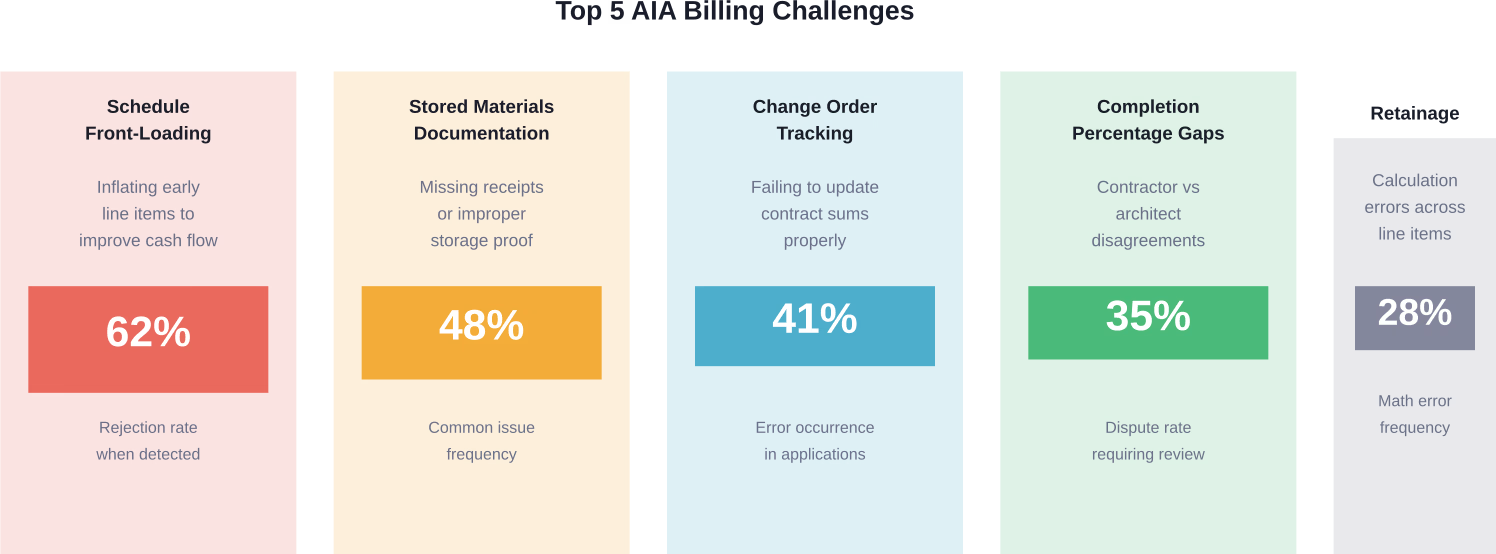
Schedule of Values Front-Loading
Some contractors attempt to “front-load” the schedule of values by assigning disproportionate amounts to early work items. This generates larger early payments but creates problems later when later-phase work shows minimal remaining value.
Architects and owners watch for front-loading. When detected, they typically require schedule revisions before approving the first payment application.
Stored Materials Documentation
Billing for materials stored on site requires proper documentation: delivery receipts, proper storage conditions, and verification that materials are protected and dedicated to the project.
Missing documentation leads to rejected line items. Materials stored off-site face even stricter requirements, often needing proof of insurance and bailment agreements.
Change Order Incorporation
Change orders modify the contract sum and often affect multiple schedules of values line items. Tracking cumulative changes and their impact on overall project percentages creates complexity.
Failure to properly incorporate approved change orders into G702 creates discrepancies that halt payment processing.
Percentage Completion Accuracy
Estimating completion percentages involves judgment. Contractors may view progress differently than architects. These disagreements require field verification and negotiation.
Consistent over-estimation damages credibility and leads to increased scrutiny on future applications.
Retainage Calculation Errors
Retainage calculations compound across multiple line items. Small errors multiply. The retainage withheld this period plus retained amounts from all previous periods must reconcile perfectly with contract terms.
Calculation mistakes trigger rejections even when the actual work documentation is accurate.
Best Practices for Successful AIA Billing
Contractors who consistently get paid on time follow specific practices that minimize errors and disputes.
Build a Balanced Schedule of Values
Create line items that reflect actual project workflow and cost distribution. Resist the temptation to front-load. Experienced architects spot this immediately, and the resulting rework delays the first payment by weeks.
Align the schedule with natural construction phases and CSI divisions where appropriate. This makes progress verification easier for everyone.
Document Everything
Maintain detailed records of work completed, materials delivered, and subcontractor billing. Photos with date stamps provide powerful evidence of progress.
For stored materials, keep delivery tickets, invoices, and photos showing proper storage conditions. These documents become essential if the architect questions line items.
Reconcile Subcontractor Billing
Before submitting payment applications, verify that amounts claimed for subcontractor work align with what subcontractors have actually billed. Discrepancies here create problems during payment flow-through.
Many contractors use the same AIA forms with their subcontractors, creating a consistent billing chain from bottom to top.
Review Before Submission
Double-check all calculations before submitting. Verify that retainage percentages match contract terms. Confirm that the current period’s completed work plus previous totals equals the cumulative amount shown.
A simple math error can delay payment by 30 days. The few minutes spent verifying calculations pays dividends.
Maintain Open Communication
When questions arise about completion percentages or line item amounts, discuss them with the architect before formal submission. Proactive communication prevents surprises and rejections.
If disagreements emerge, address them immediately rather than letting them compound across multiple billing periods.
AIA Billing Software Solutions
Manual preparation of G702 and G703 forms invites errors. Modern construction management platforms automate much of the process.
These systems typically integrate with project accounting, allowing contractors to track costs and generate payment applications from a single database. The software calculates retainage automatically, maintains running totals, and flags discrepancies before submission.
Popular platforms also provide mobile capabilities, letting field personnel update completion percentages in real-time. This improves accuracy by capturing progress when it happens rather than reconstructing it weeks later.
When evaluating billing software, look for AIA document generation, integration with accounting systems, mobile field access, subcontractor portal capabilities, change order tracking, and lien waiver management.
When AIA Billing Doesn't Apply
While AIA billing dominates commercial construction, some situations use different approaches.
Residential construction typically uses simpler draw schedules tied to completion milestones rather than detailed line-item tracking. Government projects often require specific forms mandated by the contracting agency. Design-build contracts may use alternative payment structures. Time-and-materials contracts bill based on actual hours and materials rather than completion percentages.
That said, even in these contexts, AIA principles of transparency and documentation remain valuable.
The Future of AIA Billing
As construction technology evolves, the AIA billing process adapts while maintaining its core principles.
Integration with building information modeling creates opportunities to link payment applications directly to 3D model progress. Blockchain technology could provide immutable records of work completion and payment. Artificial intelligence may automate completion percentage calculations based on photo analysis and sensor data.
But the fundamental framework—transparent documentation of progress, fair retainage practices, and standardized forms—will likely persist. These principles address human needs for clarity and fairness that technology enhances but doesn’t replace.
Sonuç
AIA billing provides the construction industry with a standardized, transparent payment process that benefits owners, contractors, architects, and lenders alike. The system’s core components—G702 summary forms, G703 detailed breakdowns, and consistent retainage practices—create clarity in an industry known for complexity.
Success with AIA billing comes down to accuracy, documentation, and communication. Contractors who build balanced schedules of values, maintain detailed progress records, and verify calculations before submission get paid on time. Those who cut corners face rejections and cash flow problems.
Modern software tools streamline the process, but technology can’t replace the fundamental need for honesty and precision in billing. With proper understanding and careful execution, AIA billing becomes a smooth, predictable part of project administration rather than a monthly frustration.
Whether you’re a contractor submitting your first commercial payment application or an owner trying to understand what you’re certifying, the principles outlined here provide a foundation for successful project payments. The standardization that seemed confusing at first becomes an asset—a common language that makes construction commerce more efficient for everyone involved.
Sıkça Sorulan Sorular
What’s the difference between G702 and G703 forms?
G702 is the single-page summary that shows overall project financial status and requires notarization and signatures from both contractor and architect. G703 is the detailed continuation sheet that breaks down the contract into individual line items with completion percentages for each. G703 provides the backup detail that supports G702’s summary numbers. Both forms work together as a complete payment application.
How much retainage is typical in construction contracts?
According to authoritative sources, retainage typically ranges from five to 10 or 15 percent of each payment, depending on what was negotiated in the contract. Ten percent represents the most common amount. Some contracts reduce retainage percentages later in the project or release a portion at substantial completion. The specific retainage terms should be clearly stated in the contract documents.
Can contractors bill for materials not yet installed?
Yes. AIA billing specifically separates work completed from materials stored. Contractors can receive payment for materials stored on-site; however, payment for materials stored off-site requires express written consent from the owner and specific documentation as per AIA A201 Section 9.3.2
What happens if the architect disagrees with completion percentages?
When architects observe different progress levels than contractors claim, they’ll typically request clarification or field verification before certifying payment. When architects observe different progress levels than contractors claim, they’ll request clarification or field verification before certifying payment. In most cases, discussion and field review resolve these disagreements. If disputes persist, the contract’s dispute resolution procedures come into play. Consistent over-estimation damages contractor credibility.
How long does an owner have to pay after architect certification?
Standard AIA contracts typically require owner payment within seven to 14 days after the architect certifies the payment application, though specific timeframes vary by contract. Some contracts specify payment within a certain number of days after the contractor’s application regardless of certification timing. The exact payment deadline should be clearly stated in the contract terms between owner and contractor.
Do subcontractors use the same AIA forms?
Many general contractors require subcontractors to submit payment applications using the same G702 and G703 format. This creates consistency throughout the payment chain and makes reconciliation easier. AIA publishes forms specifically for contractor-subcontractor relationships. However, some subcontractors use simplified applications or their own formats, particularly for smaller trade packages.
What software helps automate AIA billing?
Multiple construction management platforms offer integrated AIA billing capabilities. These systems auto-generate G702 and G703 forms from project cost data, calculate retainage automatically, track change orders, and flag discrepancies before submission. Popular solutions include general construction management platforms with built-in billing modules, specialized accounting software designed for construction, and project management tools with financial tracking. The best choice depends on company size, project types, and existing systems.

Vaka Çalışmalarımız
Ticari, endüstriyel ve konut sektörleri için 200'den fazla BIM ve VDC projesi gerçekleştirdik.
Çalışmalarımız şunları içermektedir:
Kalıp tasarım otomasyonu
Our client from
California, USA
Asma tavan tasarım otomasyonu
Our client from
New York, USA
Duvar çerçeveleme tasarım otomasyonu
Our client from
California, USA