Herhangi bir sorunuz var mı? Bize ulaşın!
Ekibimize katılın!
Ücretsiz fiyat teklifi veya danışmanlık talep edin

A submittal in construction is a formal submission of documents, samples, product data, or shop drawings from contractors to architects and engineers for review before installation. These materials verify that proposed products and methods meet project specifications and design intent.
Submittals are contractually required and serve as quality control checkpoints throughout the construction process.
Construction projects run on specifications and plans. But here’s the thing—those plans don’t tell the whole story. Before a single beam gets installed or a piece of equipment gets ordered, contractors need approval. That’s where submittals come in.
Submittals are the bridge between design intent and actual construction. They’re formal documents that contractors submit to architects, engineers, and project owners to demonstrate that what they plan to install matches what the design team specified.
Without proper submittals, projects face delays, rework, and potential safety issues. Understanding how they work isn’t optional for anyone involved in construction management.
What Exactly Is a Construction Submittal?
A submittal is a formal package of information that contractors provide to the design team for review and approval before proceeding with specific work. These aren’t casual communications—they’re contractually required documents that serve as checkpoints throughout the construction process.
Submittals demonstrate compliance. When a contractor submits product data sheets for HVAC equipment, they’re showing the architect that the proposed system meets the engineering requirements spelled out in the contract documents. The design team reviews these materials to confirm alignment with project specifications.
Think of submittals as quality control gates. Projects move forward in stages, and submittals ensure each component gets vetted before installation begins. This prevents costly mistakes and keeps everyone accountable to the original design vision.
Common Types of Construction Submittals
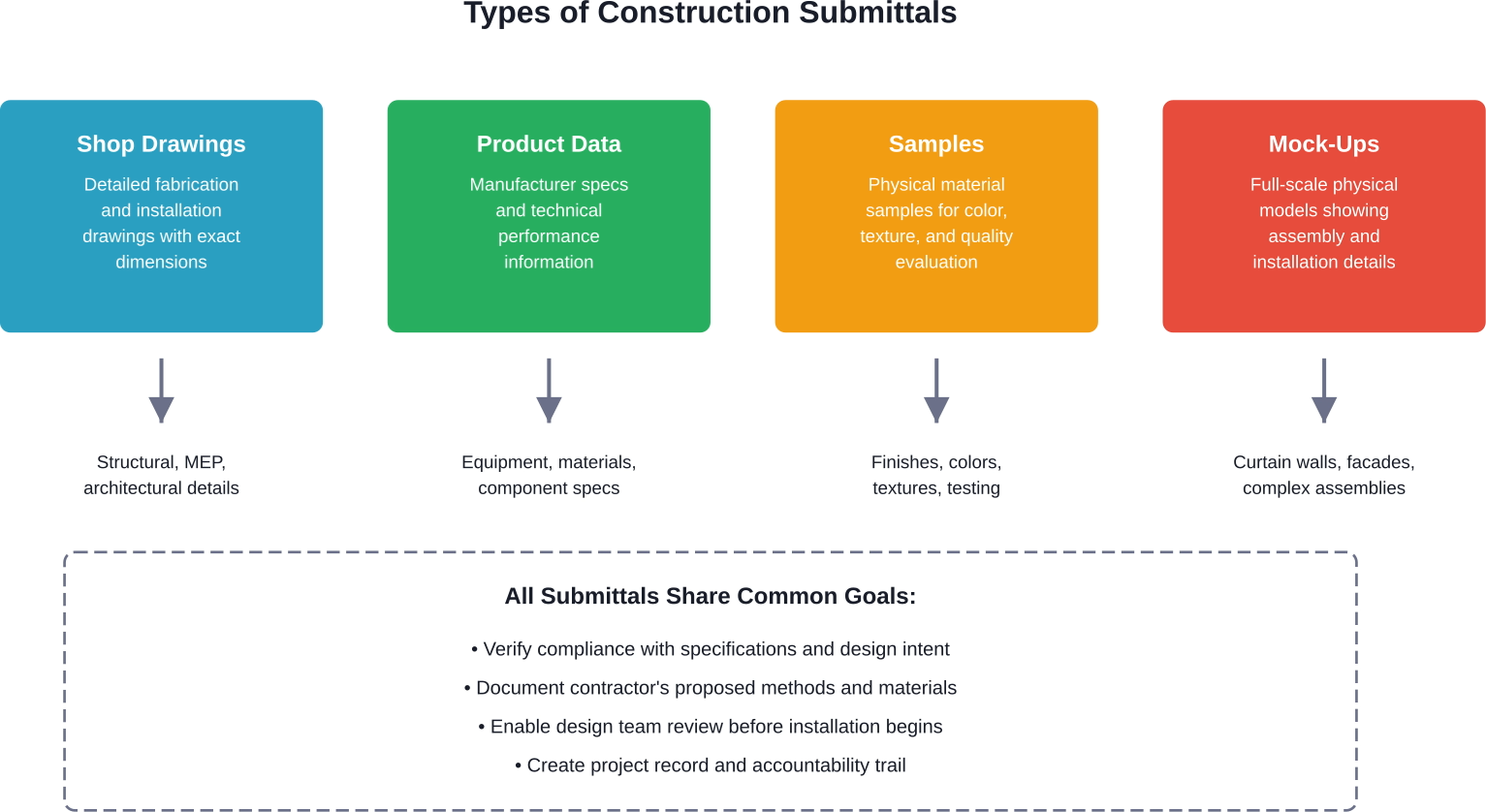
Submittals come in several distinct categories, each serving a specific purpose in the review process.
İmalat Çizimleri
Shop drawings are detailed fabrication and installation drawings created by contractors, subcontractors, or manufacturers. These go far beyond the design drawings—they show exact dimensions, materials, connections, and installation methods for specific building components.
A steel fabricator might create shop drawings showing every beam, connection plate, and bolt location for a building’s structural frame. These drawings get reviewed by the structural engineer to verify everything meets the design intent and building codes.
Product Data
Product data submittals include manufacturer specifications, catalog cuts, performance data, and technical information about materials and equipment proposed for the project. This might be a spec sheet for light fixtures, technical data for a fire sprinkler system, or material properties for concrete.
The design team reviews product data to confirm the proposed products meet the performance requirements, aesthetic standards, and quality levels specified in the contract documents.
Samples
Physical samples let the design team evaluate materials before full-scale installation. These might include brick samples showing color and texture, flooring samples, paint chips, or fabric swatches for furnishings.
Concrete compression tests are standard quality control procedures, but they are typically categorized as Material Testing Reports or Field Quality Control Reports in the submittal sense. Physical samples in submittals refer to aesthetic or tactile items (like color charts or finish mock-ups), while structural integrity tests are separate technical compliance records.
Mock-Ups
Mock-ups are full-scale physical models of building assemblies constructed on-site or at a fabrication facility. These demonstrate how multiple components work together—like a section of curtain wall showing the glazing, framing, and weatherproofing details.
Mock-ups reveal constructability issues and aesthetic outcomes before committing to full installation across the entire project.
The Construction Submittal Process
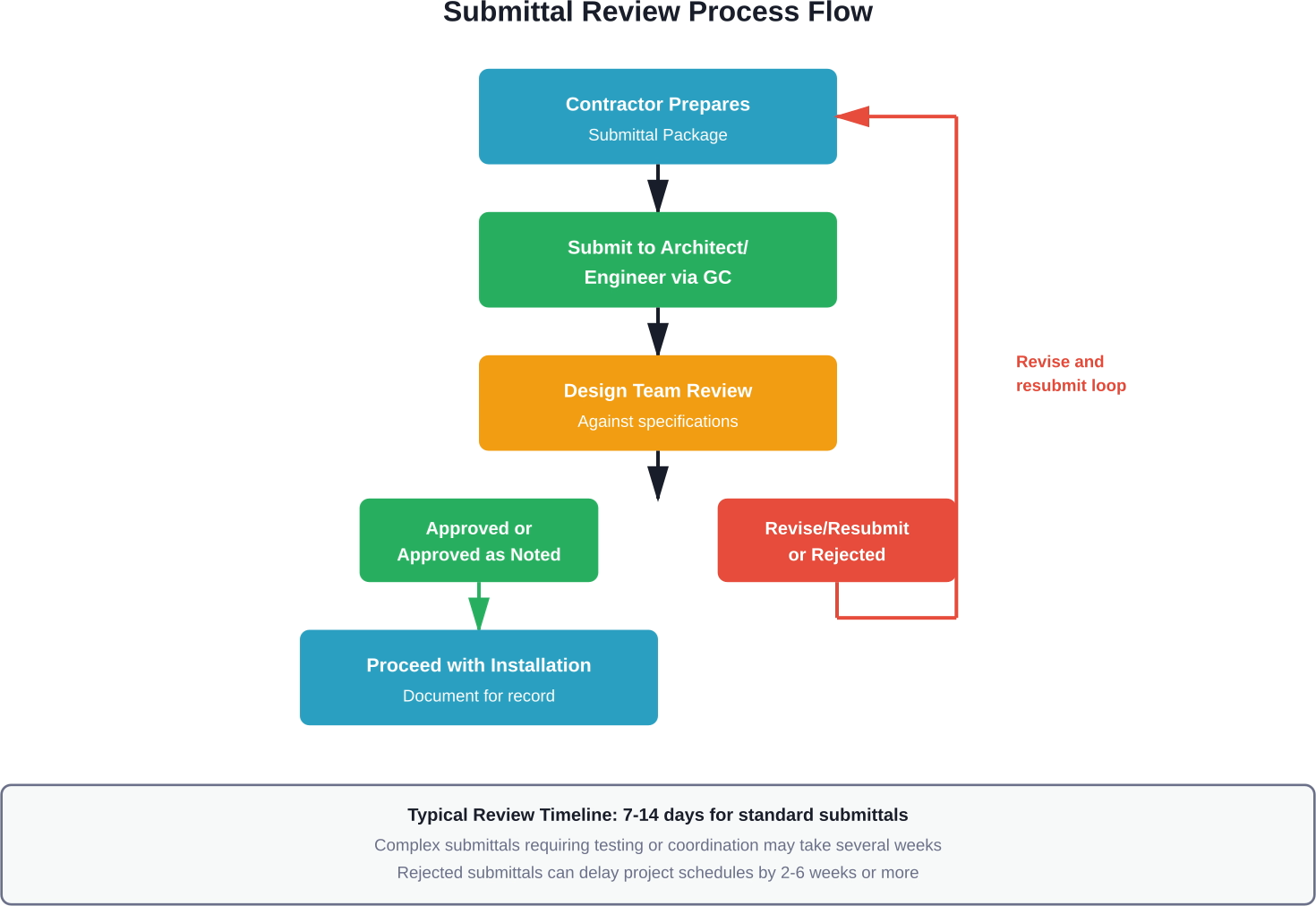
The submittal process follows a structured workflow with defined roles and responsibilities.
Step 1: Contractor Preparation
The general contractor or subcontractor prepares the submittal package. This involves gathering product data from manufacturers, creating shop drawings, or obtaining physical samples. The contractor reviews these materials internally before formal submission to ensure they meet specification requirements.
Step 2: Formal Submission
The contractor submits the package to the architect or engineer of record, typically through the general contractor if a subcontractor is involved. Submittals are logged and tracked—each one receives an identification number and enters the project’s document management system.
Step 3: Design Team Review
Architects and engineers review the submittal against the contract documents. They check for compliance with specifications, coordination with other building systems, and alignment with design intent. According to discussions in the AIA Community Hub, consultants often review submittals in their discipline areas, with the architect coordinating overall responses.
The design team can respond in several ways. Common response stamps include “Approved,” “Approved as Noted,” “Revise and Resubmit,” or “Rejected.” The “Make Corrections Noted” response indicates the contractor should proceed with specific modifications.
Step 4: Contractor Action
Based on the review response, the contractor either proceeds with the work, makes required corrections, or prepares a revised submittal. Rejected submittals require starting over with compliant products or methods. This can cause significant schedule delays.
Step 5: Documentation
Approved submittals become part of the project record. They document what actually got installed and serve as reference material for future maintenance, renovations, or warranty work.
Why Submittals Matter for Project Success
Submittals serve multiple critical functions that directly impact project outcomes.
They ensure quality control. By reviewing submittals before installation, the design team catches mismatches between specified products and what contractors propose to install. This prevents substandard materials from entering the building.
Submittals facilitate coordination. When reviewing shop drawings for mechanical ductwork, the engineer can identify conflicts with structural elements or electrical conduits before fabrication begins. Catching these clashes on paper is far cheaper than discovering them during installation.
They create accountability. Approved submittals document what the contractor committed to install. If issues arise later, project teams can reference the submittal record to determine whether installed materials match what was approved.
Submittals protect project schedules. While the review process takes time, it prevents far more costly delays from installing incorrect materials that need removal and replacement.
Get Your Submittals Approved Hassle-Free

Submittals don’t fail because of paperwork – they fail because the design behind them isn’t fully resolved. Powerkh works before and during submission stages to make sure what you send for approval is already coordinated, buildable, and aligned with site conditions. That means fewer comments, fewer resubmissions, and faster approvals.
Send Submittals That Pass First Time
What Powerkh does to support clean approvals:
- Prepare coordination-ready models that reduce review comments
- Validate critical details before they are issued for approval
- Check that design assumptions match real installation constraints
- Support technical queries with clear engineering input
- Flag risks that would trigger revisions before submission
If you want your submittals to move without repeated reviews, contact Powerkh and fix the issues before they get rejected.
Submittals vs. RFIs: Understanding the Difference
Construction teams sometimes confuse submittals with Requests for Information, but these serve different purposes.
An RFI is a formal question from the contractor seeking clarification about the design documents. When drawings are unclear or specifications conflict, contractors submit RFIs asking the design team to resolve the issue. RFIs request information or decisions.
Submittals, on the other hand, provide information. They don’t ask questions—they present the contractor’s proposed solution for review. The contractor is saying “Here’s what we plan to install” rather than “What should we install?”
That said, the processes sometimes overlap. A contractor might submit an RFI asking which of three acceptable manufacturers the owner prefers, then follow up with product data submittals for the selected manufacturer.
Common Submittal Challenges
Despite their importance, submittals frequently cause project friction.
Late submissions disrupt schedules. Contractors sometimes delay submittal preparation, compressing the review timeline and putting pressure on the design team. This can force rushed reviews or delay subsequent work that depends on approved submittals.
Incomplete packages waste time. When contractors submit partial information or low-quality shop drawings, the design team can’t perform adequate review. This triggers resubmission cycles that extend the approval timeline.
Inadequate review by contractors creates problems. Some contractors submit products that obviously don’t meet specifications, suggesting they didn’t review the submittal against the contract documents before submission. This shifts the burden to the design team and increases rejection rates.
The volume can be overwhelming. Large projects generate hundreds or thousands of submittals. Managing this flow requires robust tracking systems and clear procedures to prevent items from falling through cracks.
Best Practices for Managing Submittals
Effective submittal management requires discipline from all parties:
- Establish clear procedures early: During pre-construction meetings, define submittal requirements, review timelines, submission formats, and approval processes. Document these procedures and distribute them to all subcontractors.
- Create a submittal schedule: The contractor should develop a submittal log identifying all required submittals, responsible parties, planned submission dates, and required approval dates based on construction sequencing. This schedule gets updated throughout the project.
- Use submittal management software: Digital platforms streamline submittal tracking, routing, review, and documentation. These systems maintain version control, track review status, and provide audit trails—critical capabilities for complex projects.
- Build in adequate review time: Contract documents typically specify review periods—commonly 10 to 14 days for standard submittals. Schedule accordingly and avoid last-minute submissions that pressure the design team.
- Review submittals thoroughly before submission: Contractors should verify compliance with specifications before sending submittals to the design team. This reduces rejection rates and revision cycles.
| Submittal Stage | Responsible Party | Key Activities | Common Timeline |
|---|---|---|---|
| Preparation | Contractor/Subcontractor | Gather data, create drawings, obtain samples | 1-3 weeks |
| Internal Review | Contractor | Verify spec compliance before submission | 2-5 days |
| Submission | Contractor | Submit via proper channels with tracking number | 1 day |
| Tasarım İncelemesi | Architect/Engineer | Check compliance, coordination, design intent | 7-14 days |
| Response | Design Team | Issue approval, corrections, or rejection | 1-2 days |
| Resubmission (if needed) | Contractor | Revise and resubmit per comments | 1-2 weeks |
The Role of Submittals in AIA Contract Documents
Standard AIA contract documents address submittal requirements and procedures. According to the AIA Community Hub, these contracts establish that submittals are not contract documents themselves—they’re supplementary materials demonstrating how the contractor will fulfill contract obligations.
The distinction matters. Contract documents define what must be built. Submittals show how the contractor proposes to meet those requirements. If a submittal conflicts with contract documents, the contract documents govern.
Even in DBIA (Design-Build Institute of America) standard forms, such as DBIA 535, submittals and shop drawings are explicitly excluded from the definition of ‘Contract Documents’. They are considered ‘Submittals’ used to demonstrate how the contractor intends to conform to the Contract Documents.
Moving Forward with Submittals
Submittals are fundamental to construction quality control and project coordination. They transform design intent into buildable reality while creating accountability and documentation throughout the construction process.
Success requires commitment from all parties. Contractors must prepare thorough, compliant submittals and submit them with adequate lead time. Design teams need to perform timely, comprehensive reviews. Project owners should understand the process and support adequate time for proper submittal management.
When handled well, submittals prevent problems rather than create delays. They catch mismatches before installation, coordinate complex building systems, and ensure the finished building matches the design vision. That’s not bureaucracy—it’s smart project management.
Sıkça Sorulan Sorular
Who is responsible for preparing construction submittals?
The contractor or subcontractor performing the work prepares submittals. Manufacturers often provide product data and technical specifications that contractors incorporate into submittal packages. The general contractor typically coordinates submittal flow from subcontractors to the design team.
How long does the submittal review process take?
Standard submittal review periods typically range from 10 to 14+ days, though contract documents specify exact timelines. Complex submittals requiring consultant coordination, testing, or extensive analysis may take several weeks. Rejected submittals that require resubmission can extend the process by several additional weeks.
What happens if a contractor installs materials before submittal approval?
Installing materials without approved submittals violates contract requirements. The design team may require removal and replacement of the installed work, regardless of whether it actually complies with specifications. This creates schedule delays and cost overruns entirely at the contractor’s expense.
Can submittals change the contract requirements?
No. Submittals demonstrate compliance with existing contract requirements—they don’t modify those requirements. If a submittal proposes something different from the specifications, it requires a formal change order or substitution request, not just submittal approval. The design team’s review doesn’t waive specification requirements.
Are digital submittals acceptable for construction projects?
Yes, digital submittals have become standard practice. Most projects use electronic submittal management platforms that handle document routing, review tracking, and approval documentation. Contract documents should specify acceptable formats and submission methods to ensure all parties use compatible systems.
What’s the difference between submittal approval stamps?
“Approved” means proceed as submitted. “Approved as Noted” means proceed but incorporate the marked corrections. “Revise and Resubmit” requires preparing a revised submittal addressing noted deficiencies before proceeding. “Rejected” means the submittal doesn’t meet requirements and the contractor must start over with compliant products or methods.
Do submittals require owner approval or just design team approval?
Typically, the architect or engineer of record reviews and approves submittals without requiring separate owner approval. However, certain submittals affecting aesthetics, functionality, or long-term operations may require owner review. The contract documents specify which submittals need owner involvement.

Vaka Çalışmalarımız
Ticari, endüstriyel ve konut sektörleri için 200'den fazla BIM ve VDC projesi gerçekleştirdik.
Çalışmalarımız şunları içermektedir:
Kalıp tasarım otomasyonu
Our client from
California, USA
Asma tavan tasarım otomasyonu
Our client from
New York, USA
Duvar çerçeveleme tasarım otomasyonu
Our client from
California, USA