Herhangi bir sorunuz var mı? Bize ulaşın!
Ekibimize katılın!
Ücretsiz fiyat teklifi veya danışmanlık talep edin

Quick Summary: A Potential Change Order (PCO) in construction is an informal tracking document used to log work conditions or scope items that may exceed the original contract. Unlike formal change orders, PCOs don’t create binding agreements but establish a chain of events leading to potential contract modifications, subject to negotiation and pricing review.
Construction projects rarely go exactly as planned. Unexpected site conditions pop up. Design clarifications emerge mid-build. Material specifications change. When these situations arise, contractors and project owners need a way to track potential changes before they become official contract modifications.
That’s where PCOs come in. But what exactly are they, and how do they differ from regular change orders?
Understanding Potential Change Orders in Construction
A PCO—or Potential Change Order—is a tentative or informal change order created to track a work condition that has potential to be over and above the base contract. It’s essentially a placeholder that documents work items or conditions that may require additional compensation or time.
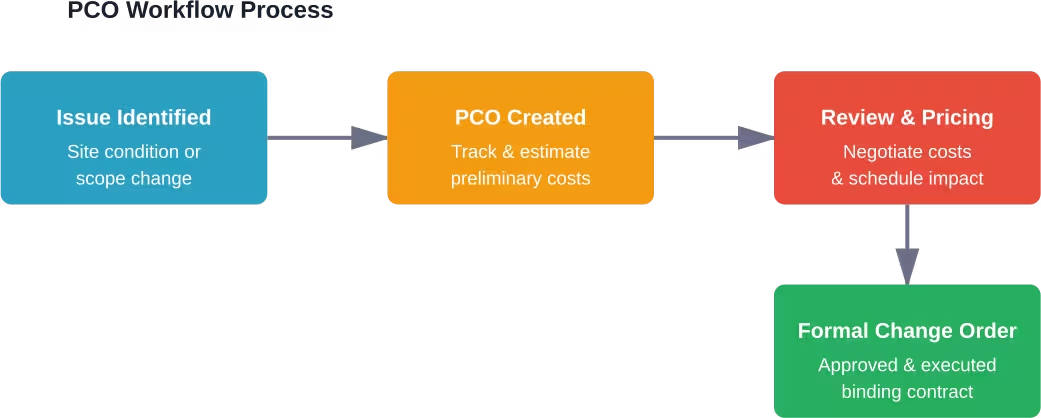
Here’s the thing though—a PCO doesn’t create a legal and binding contract between the project owner and contractor. Its main purpose is to establish a chain of events leading to contract modifications. The PCO remains subject to negotiation and modifications before becoming a formal change order.
Think of it as an early warning system. When site conditions deviate from drawings, or when the owner requests additional work, the contractor submits a PCO. This tracks the issue, estimates costs, and begins the review process.
How PCOs Differ From Change Orders
Are potential change orders and change orders the same thing? Not quite. The distinction matters.
A formal change order is a legally binding document that modifies the original contract. It includes approved pricing, revised schedules, and signatures from both parties. Once executed, it becomes part of the contract.
A PCO, by contrast, is informal. It documents potential changes but doesn’t authorize work or commit anyone to specific costs. Teams use PCOs to track items under review, get preliminary pricing, and maintain visibility into possible scope adjustments.
| Aspect | PCO (Potential Change Order) | Change Order |
|---|---|---|
| Legal Status | Informal, non-binding | Formal, legally binding |
| Amaç | Track and estimate potential changes | Modify contract with approved changes |
| Pricing | Preliminary estimates | Final negotiated costs |
| Onay | Under review | Fully approved and executed |
| Work Authorization | No authorization to proceed | Authorizes contractor to proceed |
When Contractors Use PCOs
PCOs serve multiple purposes throughout a project’s lifecycle. Contractors typically create them when encountering unforeseen site conditions, receiving clarification requests that affect scope, or when owners request additional work that wasn’t in the original drawings.
The PCO process helps construction teams maintain accurate budget tracking. Instead of letting potential changes slip through the cracks, teams document each item as it arises. This creates a paper trail showing how the project scope evolved from original plans to final execution.
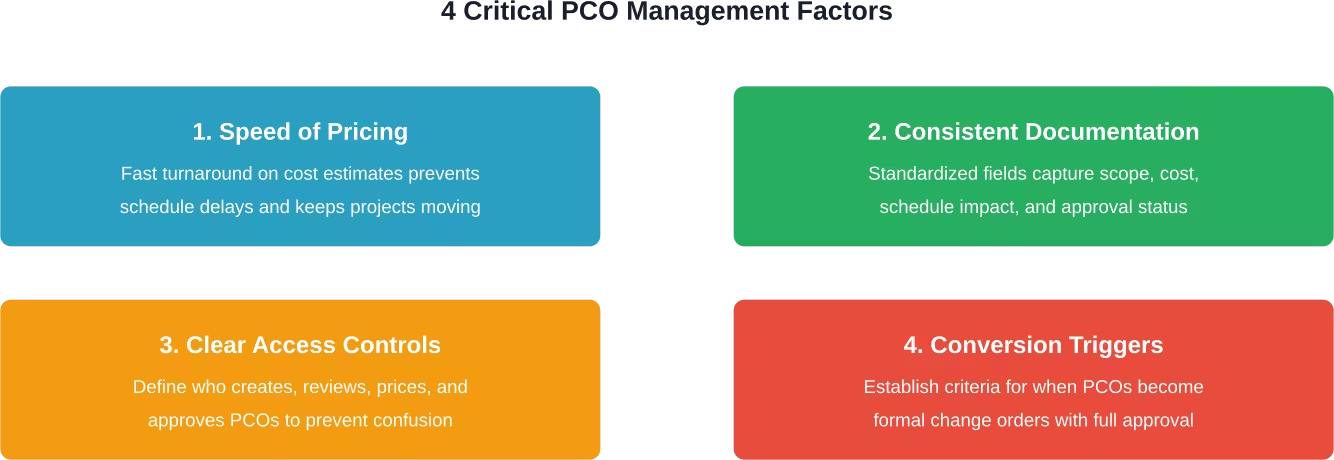
Managing PCO access is important. Project teams need clear workflows defining who can create PCOs, who reviews them, and who has authority to approve conversion to formal change orders. Without proper controls, the PCO list can become cluttered with items that should have been closed or consolidated.
Key Considerations When Managing PCOs
Several factors affect how well PCOs work for a project. First, timing matters. The faster a team can price and review a PCO, the less it disrupts the schedule. Delayed pricing often means delayed approvals, which can halt critical work.
Second, documentation standards need consistency. Each PCO should capture the same core information: description of the change, reason for the change, cost impact, schedule impact, and current status. This standardization makes tracking and reporting significantly easier.
Third, the conversion process from PCO to change order needs clear triggers. Teams should define when a PCO moves from preliminary review to formal pricing, and what conditions must be met before it becomes a change order.
How PCOs Support Project Cost Control
Real talk: change orders are common in construction. According to data from educational institutions analyzing construction management roles, entry-level project management positions may start around $60,000 annually, while senior positions managing complex projects like data centers can reach $161,500 to $190,000.
These salary ranges reflect the value organizations place on effective change management. PCOs contribute to this by providing early visibility into potential cost overruns. Instead of discovering budget problems late in the project, teams spot them during the PCO review phase.
When pricing a PCO, contractors typically request quotes from subcontractors and suppliers. This process can slow projects down if not managed efficiently. Request for Quotation (RFQ) workflows need to tie directly into the PCO system to avoid duplication and miscommunication.
Approval delays present another challenge. When PCOs sit in review for weeks, contractors face tough decisions: proceed with work at risk, or halt progress until approval arrives. Neither option is ideal. Streamlined review processes help teams make faster decisions.
Fix PCO Issues Before They Hit Your Budget

If PCOs keep showing up, it usually means something is breaking between design, coordination, and what’s built on site. Powerkh helps project teams stop PCOs at the source – by keeping design intent intact from design through coordination and construction. They review coordinated models, focus on high-risk interfaces, and verify what’s being built against the design using real site data so issues are caught before they turn into cost changes.
Catch Risks Early
Here’s how Powerkh directly reduces PCO risk:
- Identify coordination issues in critical zones before construction starts
- Check design against real site conditions using scan data and engineering review
- Detect and classify deviations that typically lead to cost changes
- Support RFIs and technical queries with coordinated model context
- Verify installed work to avoid disputes during valuation and close-out
Contact Powerkh to stop PCOs before they turn into cost.
Sıkça Sorulan Sorular
What does PCO stand for in construction?
PCO stands for Potential Change Order. It is used to track possible changes in scope, cost, or schedule before they become formal change orders.
Is a PCO legally binding?
No. A PCO is not legally binding. It is only a tracking and documentation tool. A change becomes legally binding only after a formal change order is approved and signed.
When should a contractor submit a PCO?
A PCO should be submitted when unforeseen conditions arise, when scope clarifications impact cost or schedule, or when additional work is requested by the owner.
How long does PCO approval typically take?
Approval timelines vary. Simple PCOs may be reviewed within days, while complex ones requiring pricing and approvals can take weeks.
Can a PCO be rejected?
Yes. Owners may reject PCOs if the work is already included in the original scope, if pricing is unreasonable, or if the change is unnecessary.
What’s the difference between a PCO and an RFI?
An RFI requests clarification about design or contract documents, while a PCO tracks potential changes that could affect cost or schedule. RFIs can often lead to PCOs.
Do all construction projects use PCOs?
No. Larger and more complex projects commonly use PCO tracking, while smaller projects may proceed directly to formal change orders.
Sonuç
Potential Change Orders provide construction teams with a critical tool for tracking scope changes before they become formal contract modifications. By documenting potential changes early, estimating preliminary costs, and maintaining clear review workflows, PCOs help prevent budget surprises and schedule disruptions.
Effective PCO management requires standardized documentation, clear approval processes, and fast turnaround on pricing. When these elements work together, teams can convert legitimate scope changes into approved change orders efficiently while filtering out items that don’t warrant contract modifications.
Understanding how PCOs fit into the broader change management process helps contractors, owners, and project managers maintain better cost control throughout construction projects.

Vaka Çalışmalarımız
Ticari, endüstriyel ve konut sektörleri için 200'den fazla BIM ve VDC projesi gerçekleştirdik.
Çalışmalarımız şunları içermektedir:
Kalıp tasarım otomasyonu
Our client from
California, USA
Asma tavan tasarım otomasyonu
Our client from
New York, USA
Duvar çerçeveleme tasarım otomasyonu
Our client from
California, USA