Herhangi bir sorunuz var mı? Bize ulaşın!
Ekibimize katılın!
Ücretsiz fiyat teklifi veya danışmanlık talep edin

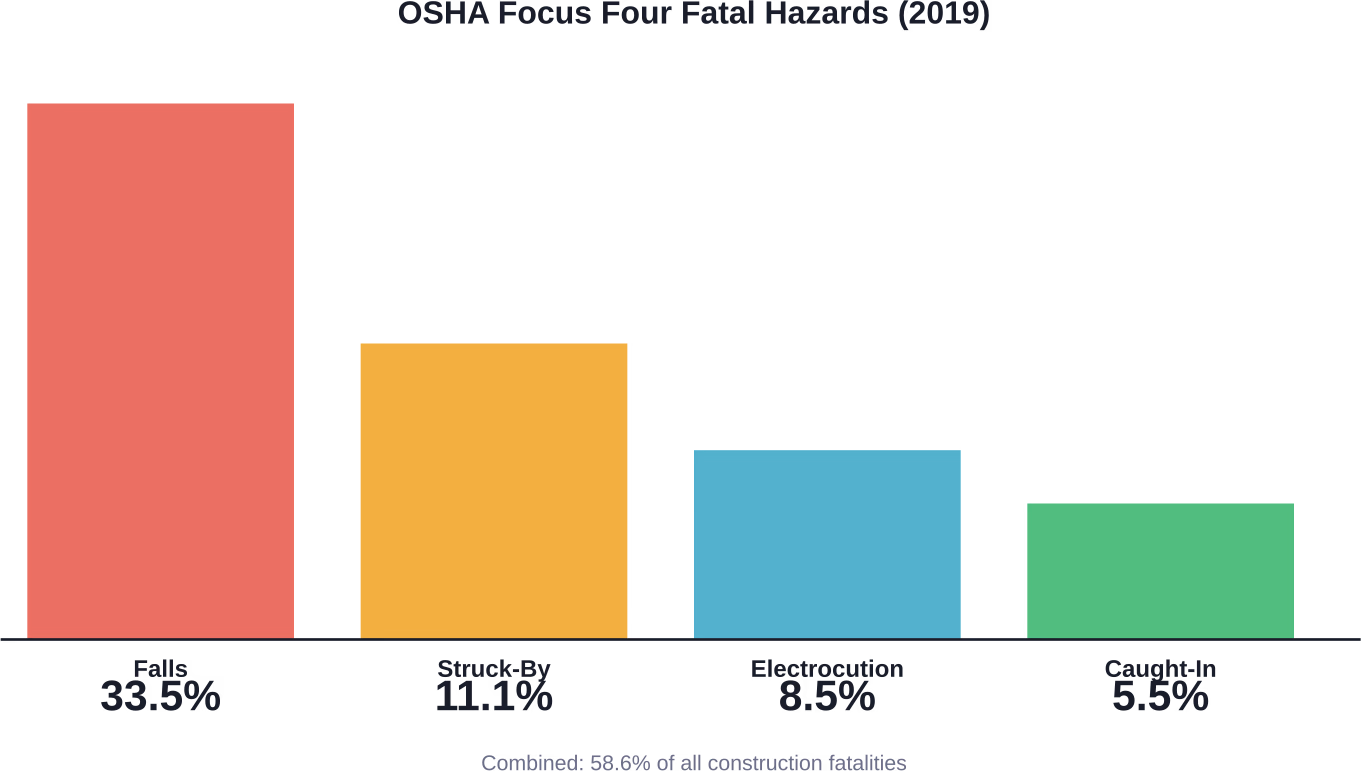
Construction sites present numerous hazards including falls (33.5% of fatalities), struck-by incidents, electrocution, and caught-in/between accidents. According to OSHA, construction accounts for approximately 20% of all work-related fatalities despite employing a smaller percentage of the workforce. Workers face risks from heavy equipment, scaffolding, electrical systems, hazardous materials, and environmental factors that require comprehensive safety protocols and continuous training to prevent injuries.
Construction ranks among the most hazardous industries in the United States. According to the CDC, construction is a high-hazard sector where workers engage in activities that expose them to serious dangers daily.
The statistics tell a sobering story. In 2019, the construction industry accounted for approximately 20% of all work-related fatalities in the United States. That’s a significant proportion considering construction workers represent a much smaller percentage of the overall workforce.
But these aren’t just numbers. Behind each statistic stands a worker who didn’t make it home, a family forever changed, and a community that lost one of its own.
Understanding construction site risks isn’t optional—it’s essential for everyone involved in construction projects. Contractors, project managers, safety officers, and workers themselves need comprehensive knowledge of hazards and prevention strategies.
The Four Deadliest Construction Hazards
OSHA identifies four primary hazards responsible for the majority of construction fatalities. These are known as the “Focus Four” or “Fatal Four,” and understanding them is the first step toward prevention.
Falls: The Leading Killer
Falls accounted for 33.5% of construction fatalities in 2019, making them the single deadliest hazard in the industry. According to the CDC, falls are the leading cause of death in the construction sector.
Here’s what makes falls particularly dangerous: they can happen from any height. Workers fall from scaffolding, ladders, roofs, steel beams, and even ground-level surfaces.
The CDC reports that small employers with fewer than 20 employees accounted for 75% of fatal falls between 2015 and 2017, despite making up only 39% of construction payroll employment. This disparity suggests smaller operations may lack the resources or protocols to implement adequate fall protection.
Common fall scenarios include:
- Working on scaffolding without proper guardrails
- Ladder accidents due to improper setup or use
- Roof work without fall arrest systems
- Walking on unprotected edges or openings
- Slip and trip hazards from debris or wet surfaces
Struck-By Incidents
Struck-by injuries occur when workers are hit by falling objects, flying debris, or moving equipment. According to 2019 data, these incidents caused 11.1% of construction fatalities.
According to CDC research, struck-by injuries caused 150 deaths and 14,000 nonfatal construction sector injuries in 2020, with direct workers’ compensation costs totaling $1.4 billion for non-fatal claims with more than 5 days away from work.
The financial toll represents just one dimension of the problem. Workers suffer serious injuries ranging from concussions and fractures to permanent disabilities.
Common struck-by scenarios:
- Falling tools or materials from elevated work areas
- Moving vehicles and heavy equipment
- Swinging loads from cranes
- Collapsing walls or structures
- Flying debris from power tools
Caught-In or Between Hazards
These accidents occur when workers are compressed, caught, or crushed between objects or equipment. According to 2019 data, they accounted for 5.5% of construction fatalities.
Caught-in incidents typically involve:
- Trench collapses burying workers
- Being caught in machinery with moving parts
- Compression between equipment and fixed objects
- Cave-ins during excavation work
Trench collapses are particularly deadly. The weight of soil exerts enormous pressure—a cubic yard of soil can weigh as much as a car. When a trench wall collapses, workers have virtually no chance of escape without immediate rescue.
Electrocution
According to 2019 data, electrical hazards caused 8.5% of construction fatalities. Construction sites are filled with electrical dangers, from overhead power lines to temporary wiring.
Electrocution risks include:
- Contact with overhead power lines
- Improper use of extension cords
- Damaged electrical tools and equipment
- Working in wet conditions with electrical equipment
- Failure to de-energize circuits before work
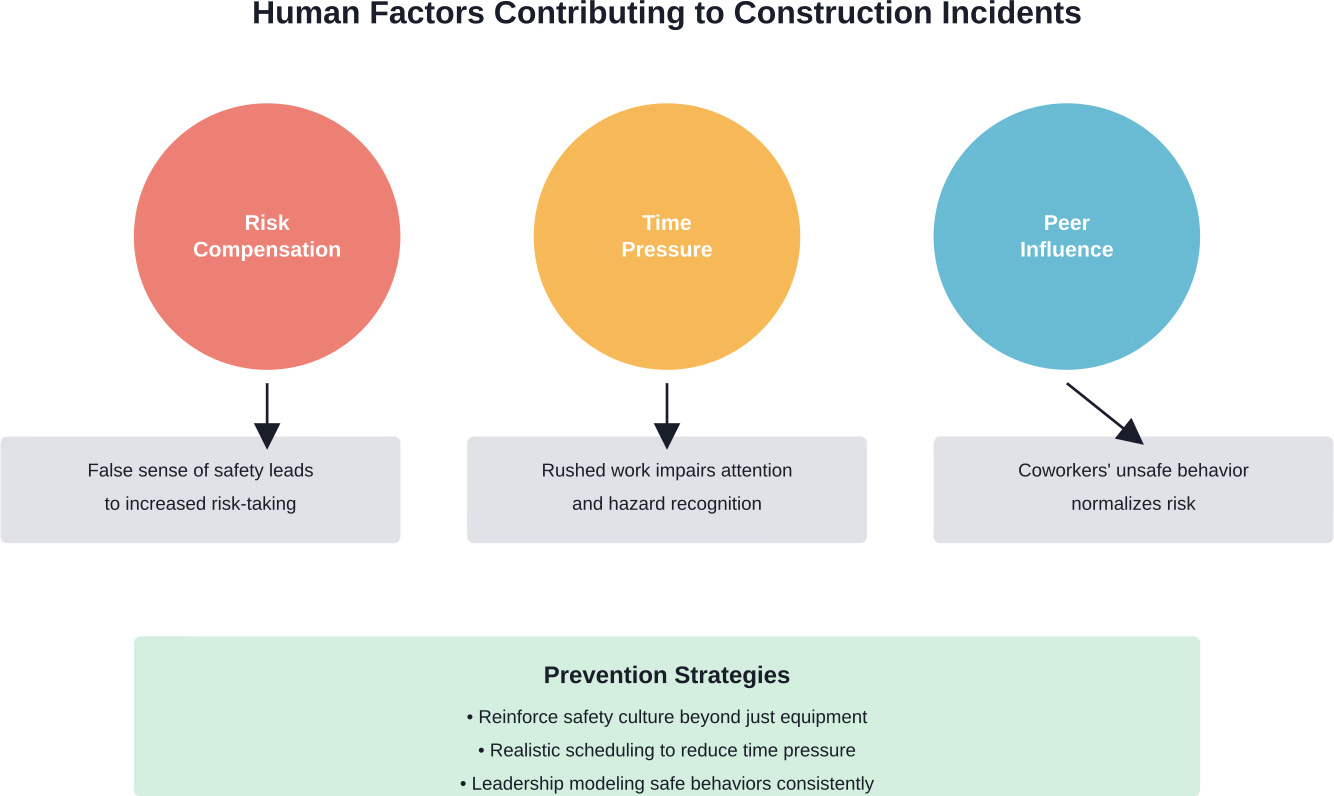
Research on construction safety shows that providing more protection can sometimes produce a false sense of invulnerability, leading to risk-compensation behavior where workers take additional risks.
Additional Major Construction Risks
Beyond the Focus Four, construction sites harbor numerous other hazards that can cause serious injuries or fatalities.
Heavy Equipment and Machinery
Construction equipment poses significant danger to operators and nearby workers. Cranes, forklifts, excavators, and bulldozers require skilled operation and constant awareness.
Equipment-related accidents happen when:
- Operators have inadequate training or certification
- Equipment isn’t properly maintained
- Workers enter blind spots around vehicles
- Communication between operators and ground crews breaks down
Scaffolding Hazards
Scaffolding combines multiple risks—falls, struck-by incidents, and structural collapse. Improperly erected or maintained scaffolding creates extreme danger for workers at height.
Critical scaffolding issues include missing guardrails, inadequate planking, unstable foundations, and overloading beyond rated capacity.
Hazardous Materials Exposure
Construction workers encounter numerous hazardous substances:
- Asbestos in older buildings
- Lead paint during renovation
- Silica dust from cutting concrete or masonry
- Chemical solvents and adhesives
- Welding fumes
Long-term exposure to these materials causes respiratory diseases, cancer, and other chronic health conditions. According to available data, full-time construction workers missed 24.2 million hours of work due to injury or illness in 2022.
Noise and Vibration
Chronic exposure to loud noise causes permanent hearing loss. Power tools, heavy equipment, and impact devices generate dangerous sound levels daily on construction sites.
Hand-arm vibration from power tools can lead to vibration white finger and other circulatory problems.
Environmental and Weather Hazards
According to CDC research, heat exposure and subsequent heat stress increase the risk of injury through physical discomfort, fatigue, and reduced vigilance. These factors influence worker emotional state and risk perception, leading to cognitive failure and neglecting precautionary behavior.
Environmental risks include:
- Heat stress and dehydration
- Cold exposure and hypothermia
- Lightning during storms
- High winds affecting stability and crane operations
- Poor visibility in rain or fog
The Human Factors Behind Construction Accidents
Understanding physical hazards tells only part of the story. Human behavior and decision-making play crucial roles in construction safety.
Risk Compensation Behavior
Research shows workers may fall prey to risk compensation—a cognitive bias where individuals adjust their at-risk behaviors to balance potential risks and benefits, maintaining a target level of risk.
Here’s how this manifests on construction sites: When safety protections improve, some workers unconsciously take additional risks, potentially negating the benefits of the safety intervention.
Research on risk compensation in construction found that providing workers with more protection can produce a false sense of invulnerability, potentially leading to additional risk-taking behavior.
Time Pressure and Cognitive Load
Studies demonstrate that productivity demands and cognitive demands negatively influence worker safety performance. When workers are pressed to work faster, safety interventions decrease in effectiveness.
Time pressure and mental demand disrupt attention and require greater cognitive resources. The resulting risk-taking behaviors migrate toward higher boundaries where safety interventions become counterproductive.
High stress levels triggered by task demands adversely affect cognitive processes, including attention distribution. Excessive stress leads workers to miss surrounding hazards, causing impaired risk perception, cognitive tunneling, and increased risk-taking behaviors.
Social Influence and Peer Effects
Research drawing on social influence and behavioral intention theories shows that coworker risk-taking serves as an “extra motive” for risk-taking behavior among workers. Construction workers operate in groups where coworker behavior significantly influences safety-related decisions.
Workers more susceptible to peer effects may comply with safety procedures only at the surface level, pretending to adhere to safety behaviors rather than genuinely committing to them.
Prevention Through Design
The CDC emphasizes Prevention through Design (PtD) as a critical approach to construction safety. PtD is the process of designing OUT a hazard early in a project’s life cycle.
This approach sits at the top of the hierarchy of controls—eliminating hazards entirely rather than relying on personal protective equipment or administrative controls.
Examples of PtD in construction include:
- Installing embedded anchor points during building construction to prevent falls during future maintenance
- Designing parapet walls that eliminate fall hazards
- Using prefabricated staircase systems instead of ladders
- Designing structures that allow ground-level assembly before lifting
According to the CDC, PtD is also referred to as “design for safety,” “design for construction safety,” and “safety by design.”
OSHA's Role and Most Cited Violations
The Occupational Safety and Health Administration establishes and enforces construction safety standards. Understanding OSHA’s most frequently cited violations helps identify where the industry struggles most with compliance.
OSHA publishes annual lists of the most frequently cited standards following inspections. These citations represent commonly found violations that employers should prioritize fixing.
OSHA penalties vary significantly by violation type. In FY 2020, the average penalty for a serious violation was approximately $3,923, while willful violations could reach up to $134,937 per violation.
| Hazard Category | Common Violations | Prevention Focus
|
|---|---|---|
| Fall Protection | Missing guardrails, inadequate personal fall arrest systems | Proper equipment, training, and enforcement |
| Scaffolding | Improper construction, missing access, overloading | Competent person oversight, regular inspections |
| Ladders | Improper setup, wrong ladder type, poor condition | Ladder selection training, maintenance programs |
| Respiratory Protection | No fit testing, wrong respirator type, lack of program | Hazard assessment, medical clearance, training |
| Electrical | Improper grounding, damaged cords, inadequate GFCI use | Daily equipment inspections, lockout/tagout procedures |
Building a Comprehensive Safety Program
Effective construction safety requires more than following regulations. It demands a culture where safety is genuinely valued and continuously improved.
Essential Program Elements
Strong safety programs include these components:
- Management commitment demonstrated through actions, not just words
- Worker participation in safety planning and hazard identification
- Systematic hazard identification and assessment
- Hazard prevention and control measures
- Safety education and training programs
Toolbox Talks and Daily Planning
Daily toolbox talks allow crews to discuss specific hazards for that day’s work. These brief meetings keep safety top-of-mind and allow workers to voice concerns.
Job hazard analysis breaks down tasks into steps, identifies associated hazards, and determines appropriate controls before work begins.
Incident Investigation and Learning
When incidents occur, thorough investigation identifies root causes—not to assign blame, but to prevent recurrence. Near-miss reporting creates opportunities to address hazards before they cause injuries.
Check Your Project Before Risks Reach The Site

Site risks rarely start on site –- they build up earlier, when design decisions don’t fully hold through coordination and construction. Powerkh helps teams step into that gap and review how the project is actually coming together.
They focus on keeping design intent intact, checking how different systems interact in real conditions, and using verification to see what is already drifting off plan. This gives a more practical view of risk, not just what could go wrong, but where it is already starting.
👉 Get in touch with Powerkh to go through your project and spot the issues that usually stay hidden until it is too late.
The Financial Impact of Construction Injuries
Construction injuries carry enormous costs beyond human suffering. Direct costs include medical expenses and workers’ compensation claims.
But indirect costs often exceed direct costs by four to ten times. These include:
- Lost productivity from injured workers and disrupted crews
- Training and onboarding replacement workers
- Damaged equipment and materials
- Project delays and schedule impacts
- Increased insurance premiums
- Legal fees and potential litigation
- Damage to company reputation
It’s estimated that the annual cost of construction-related deaths is substantial, though exact figures vary. According to CDC research, struck-by injuries caused 150 deaths and 14,000 nonfatal construction sector injuries in 2020, with direct workers’ compensation costs totaling $1.4 billion for non-fatal claims with more than 5 days away from work.
Special Considerations for Small Contractors
Small construction companies face unique safety challenges. The CDC data showing that small employers with fewer than 20 employees accounted for 75% of fatal falls reveals a critical problem.
Small contractors often lack:
- Dedicated safety personnel
- Resources for comprehensive training programs
- Purchasing power for the latest safety equipment
- Administrative capacity for detailed safety documentation
But size doesn’t exempt anyone from safety obligations. Small contractors can leverage industry associations, OSHA’s free consultation services, and partnerships with larger firms to improve their safety programs.
Emerging Technologies and Future Trends
Technology offers new tools for construction safety management:
- Wearable sensors that detect falls, heat stress, or proximity to hazards
- Drones for site inspections and monitoring
- Virtual reality for safety training
- Building Information Modeling (BIM) for hazard identification during planning
- Real-time location systems tracking workers in hazardous areas
These innovations supplement—not replace—fundamental safety practices. Technology works best when integrated into a comprehensive safety culture.
Conclusion: Building a Safer Construction Industry
Construction site risks are substantial, varied, and well-documented. Falls, struck-by incidents, electrocution, and caught-in hazards account for more than half of all construction fatalities.
But these aren’t inevitable consequences of construction work. With proper planning, adequate resources, comprehensive training, and genuine commitment to safety culture, these risks can be managed and significantly reduced.
The path forward requires addressing both physical hazards and human factors. Understanding how time pressure, cognitive load, and social influence affect worker behavior allows for more effective interventions.
Prevention through Design offers the most robust solution—eliminating hazards during the planning phase rather than managing them during construction. When combined with strong safety programs, regular training, and consistent enforcement, construction can become substantially safer.
Every construction professional has a role to play. Project owners must allocate adequate resources and realistic schedules. Contractors must implement comprehensive safety programs. Workers must speak up about hazards and follow established protocols.
The statistics show that construction remains a high-hazard industry. But they also show where to focus prevention efforts. Take action now—review your site’s hazard controls, ensure workers have proper training, and foster a culture where safety is everyone’s responsibility.
Sıkça Sorulan Sorular
What is the most common cause of death on construction sites?
Falls are the leading cause of death in construction, often occurring from scaffolding, ladders, roofs, and other elevated surfaces. They remain the most significant safety challenge on job sites.
How many construction workers are injured each year?
Construction injuries number in the tens of thousands each year. These include incidents from equipment, falls, and struck-by hazards, leading to significant lost work time across the industry.
What are OSHA’s Focus Four hazards?
OSHA’s Focus Four hazards include falls, struck-by incidents, caught-in or between accidents, and electrocution. These categories account for the majority of construction-related fatalities.
Why do small construction companies have higher accident rates?
Small companies often lack dedicated safety staff, structured training programs, and formal safety systems. This can lead to higher accident rates compared to larger organizations with more established safety practices.
What is risk compensation in construction safety?
Risk compensation is when workers change their behavior after safety measures are introduced, sometimes taking additional risks because they feel more protected. This can reduce the effectiveness of safety improvements.
How much do construction injuries cost?
Construction injuries result in significant financial impact, including compensation claims, lost productivity, and regulatory penalties. Even a single serious incident can lead to substantial costs.
What is Prevention through Design?
Prevention through Design focuses on eliminating hazards during the design phase of a project. Instead of relying only on protective equipment, it aims to remove risks entirely through smarter planning and engineering.

Vaka Çalışmalarımız
Ticari, endüstriyel ve konut sektörleri için 200'den fazla BIM ve VDC projesi gerçekleştirdik.
Çalışmalarımız şunları içermektedir:
Kalıp tasarım otomasyonu
Our client from
California, USA
Asma tavan tasarım otomasyonu
Our client from
New York, USA
Duvar çerçeveleme tasarım otomasyonu
Our client from
California, USA