Herhangi bir sorunuz var mı? Bize ulaşın!
Ekibimize katılın!
Ücretsiz fiyat teklifi veya danışmanlık talep edin

A curtain wall is a non-structural, lightweight exterior building facade system that hangs from the main structural frame like a curtain. It’s designed to support only its own weight and resist wind and environmental loads, not the weight of the building itself. Modern curtain walls typically consist of glass panels set in aluminum or steel frames, providing weather protection, natural light, and architectural appeal.
Look up at any modern high-rise building with gleaming glass facades, and there’s a good chance you’re looking at a curtain wall system. These non-structural exterior walls have become synonymous with contemporary architecture, transforming skylines around the world.
But what exactly is a curtain wall in construction? The answer goes deeper than just aesthetics.
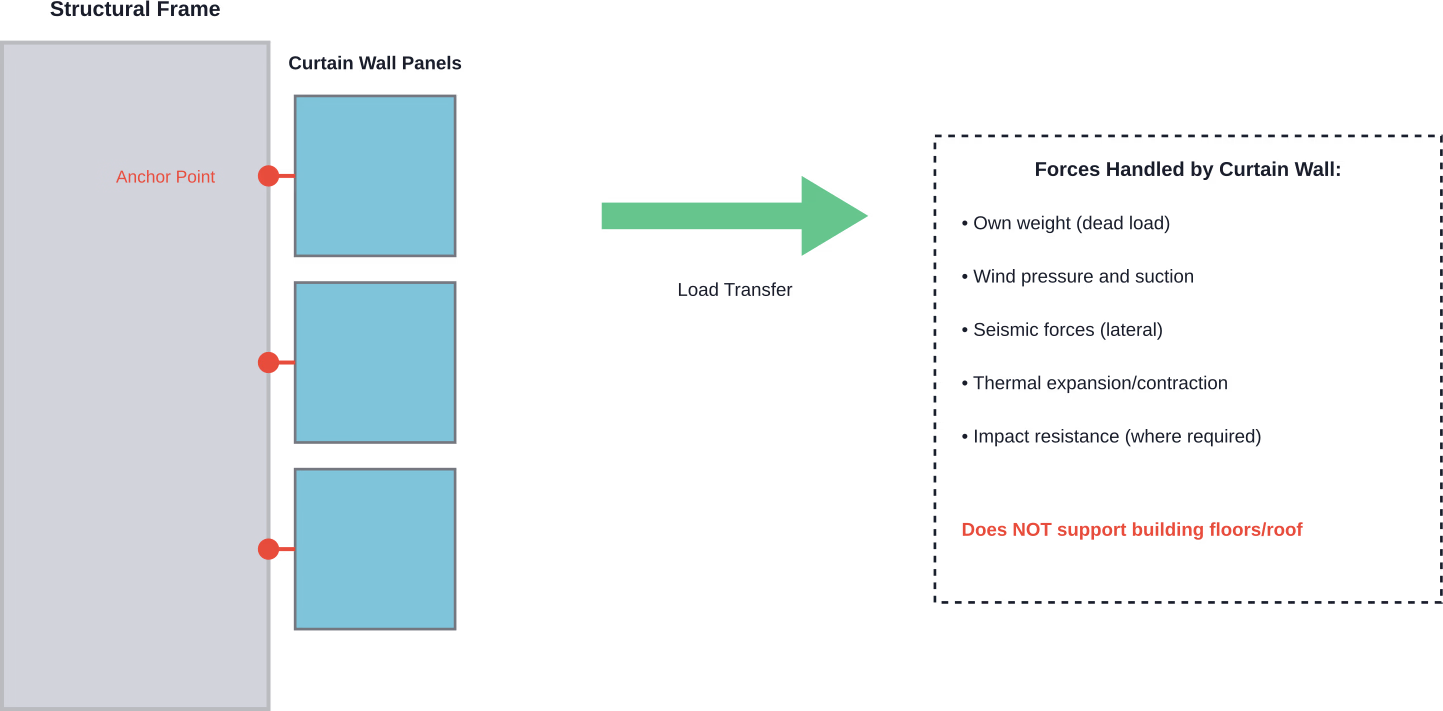
A curtain wall is an exterior building envelope that doesn’t carry structural loads from the building. Instead, it hangs from the main structure like a curtain—hence the name. The system transfers its own weight and environmental forces (wind loads, seismic forces) back to the building’s structural framework.
This fundamental distinction separates curtain walls from traditional load-bearing walls, which support the weight of floors and roofs above them.
How Curtain Wall Systems Work
The engineering principle behind curtain walls is straightforward yet ingenious. The building’s structural frame—typically steel or reinforced concrete—supports the entire weight of the structure. The curtain wall attaches to this frame at floor levels or at specific anchor points.
Because the curtain wall carries only its own weight, designers can use lightweight materials like aluminum and glass. This creates opportunities for expansive glazing that would be impossible with load-bearing walls.
The attachment system varies, but most curtain walls connect to the building structure through anchors that allow for building movement. Thermal expansion, wind sway, and seismic activity all cause buildings to move slightly. The curtain wall must accommodate this movement without cracking or failing.
Types of Curtain Wall Systems
Curtain wall construction comes in several distinct configurations, each with specific installation methods and performance characteristics.
Stick-Built Curtain Walls
Stick systems are assembled piece by piece on-site. Workers install vertical mullions (the framing members) first, then horizontal transoms, and finally the infill panels—typically glass.
This method offers maximum flexibility for complex building geometries and on-site adjustments. However, stick-built systems require more on-site labor and depend heavily on weather conditions during installation.
Unitized Curtain Walls
Unitized systems arrive at the construction site as pre-assembled panels, complete with glazing and weatherproofing. Crews simply lift each unit into position and connect it to adjacent panels and the building structure.
This approach dramatically reduces installation time and improves quality control since assembly happens in a controlled factory environment. The panels interlock with sophisticated joint systems that maintain weatherproofing while allowing for building movement.
Semi-Unitized Systems
These hybrid systems combine elements of both approaches. Large sections come pre-assembled, but final assembly and connections occur on-site. This balances factory precision with field flexibility.
| System Type | Installation Location | Hız | İçin En İyisi |
|---|---|---|---|
| Stick-Built | Assembled on-site | Slower | Complex geometries, renovations |
| Unitized | Factory pre-assembled | Fastest | High-rises, tight schedules |
| Semi-Unitized | Partial factory assembly | Moderate | Mid-rise buildings, custom designs |
Materials Used in Curtain Wall Construction
Modern curtain walls combine several materials, each chosen for specific performance properties.
Framing Materials
Aluminum dominates curtain wall framing for several reasons. It’s lightweight, doesn’t rust, extrudes easily into complex profiles, and accepts various finishes. The material’s natural oxide layer provides corrosion resistance without additional coatings.
Steel framing appears in some applications where structural strength requirements exceed aluminum’s capabilities. However, steel’s weight and corrosion susceptibility make it less common.
Thermal performance has driven significant framing innovation. Standard aluminum frames conduct heat readily, creating thermal bridges that waste energy. Thermally broken frames incorporate insulating materials between interior and exterior aluminum sections, dramatically improving energy efficiency.
Infill Panels and Glazing
Glass remains the most common infill material, and contemporary glazing technology offers remarkable performance. Insulated glazing units consist of multiple glass panes separated by air or gas-filled spaces that reduce heat transfer.
Low-emissivity (Low-E) coatings reflect infrared radiation while allowing visible light to pass through. This keeps heat out in summer and inside during winter. Some glazing systems can reduce energy consumption substantially compared to clear single-pane glass.
Opaque panels made from metal, stone, terracotta, or fiber-reinforced composites fill areas where transparency isn’t needed—typically at floor levels where they conceal structural elements.
Curtain Wall vs. Window Wall
These terms get used interchangeably, but the distinction matters for performance and cost.
A window wall system sits between the floor slabs, spanning from one floor to the ceiling below the next floor. The floor structure interrupts the facade at each level. This creates more thermal bridging since the floor slab penetrates the building envelope.
Curtain walls, by contrast, hang continuously past the floor slabs. The facade remains uninterrupted by the building structure, creating better thermal performance and weather resistance.
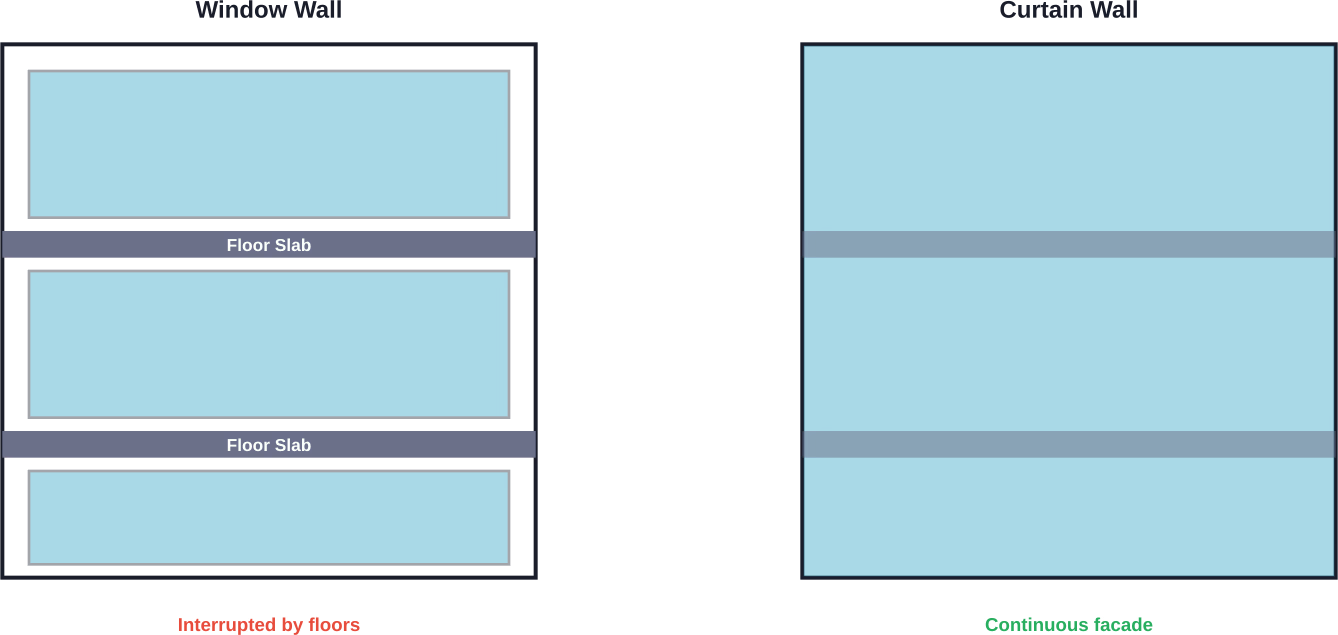
Window walls cost less to install but sacrifice some performance. Curtain walls provide superior energy efficiency and weather protection but require higher upfront investment. The choice depends on building height, climate, energy goals, and budget.
Performance Requirements and Testing
Curtain walls must meet rigorous performance standards. Air infiltration, water penetration, structural adequacy, and thermal performance all require testing and certification.
ASTM standards govern curtain wall testing. According to ASTM test methods, curtain wall systems undergo impact testing to verify resistance to windborne debris—critical in hurricane-prone regions. The ASTM E1886 standard specifically addresses performance of exterior windows, curtain walls, and doors when impacted by missiles and exposed to cyclic pressure differentials.
Water testing simulates driving rain conditions to ensure the system keeps water out of the building. Air infiltration testing measures how much air leaks through the assembly. Energy codes increasingly mandate maximum air leakage rates.
Wind load calculations determine the structural requirements for each project. Engineers must account for both positive pressure (wind pushing on the facade) and negative pressure (suction that can pull panels away from the building).
Enerji Verimliliği ve Sürdürülebilirlik
Curtain wall systems can reduce energy consumption significantly when properly designed. The building envelope accounts for major heat gain and loss, making facade performance critical to overall building energy use.
High-performance glazing, thermally broken frames, and proper installation details all contribute to energy efficiency. Some systems now integrate photovoltaic panels directly into the curtain wall, transforming the facade into an energy generator.
Research on building curtain wall integrated concentrating photovoltaic systems shows promising results. Academic studies have tested photovoltaic curtain wall systems that achieve generation efficiency of up to 26.5% while maintaining acceptable indoor lighting conditions and thermal insulation.
The environmental impact extends beyond operational energy. A comparative assessment of curtain wall materials shows that mullion material selection significantly affects life cycle impacts. The choice between aluminum, steel, or composite materials influences both embodied energy and long-term performance.
Fire Safety Considerations
Fire protection represents a critical curtain wall design consideration. Because curtain walls are non-structural and often lightweight, fire can spread between floors if proper safeguards aren’t implemented.
Spandrel areas—the opaque sections between vision glass—must include fire-resistant insulation. Fire stops at each floor level prevent flames and smoke from traveling up the cavity behind the curtain wall.
The NFPA maintains standards for fire protection and fire resistance ratings that apply to curtain wall assemblies. These standards ensure that exterior wall systems maintain their integrity during fire events and don’t contribute to fire spread.
NFPA 285 testing specifically evaluates multi-story exterior wall assemblies with combustible components. Buildings with certain occupancy types or heights must demonstrate compliance through this test method.
Installation and Construction Considerations
Successful curtain wall installation requires careful coordination between multiple trades. The structural frame must be complete and verified dimensionally accurate before curtain wall installation begins.
Tolerance is everything. Building structures are never perfectly plumb or level. Curtain wall systems must accommodate these variations while maintaining their own precise alignment. Adjustable anchors provide the necessary flexibility during installation.
Weather protection during construction matters too. Until the curtain wall is complete, the building envelope remains open. Contractors must sequence work to minimize exposure time and protect interior spaces from weather damage.
Quality control inspections verify proper installation of anchors, adequate sealant application, correct glazing procedures, and overall system performance. Water testing of installed sections catches problems before they cause damage.
Maintenance and Longevity
Curtain walls require ongoing maintenance to perform properly throughout their service life. Sealant joints deteriorate over time due to UV exposure and thermal cycling. Sealants typically require periodic replacement over the building’s service life depending on climate and product quality.
Glass cleaning represents the most visible maintenance activity. High-rise curtain walls typically require specialized equipment—window washing rigs or swing stages—for access.
Hardware components like operable window mechanisms need periodic adjustment and lubrication. Weep holes and drainage paths must remain clear to prevent water accumulation.
Properly maintained curtain walls can last decades, with aluminum framing potentially lasting the life of the building. However, building owners sometimes replace functioning curtain walls earlier for aesthetic updates or energy efficiency improvements.
Common Applications
While curtain walls are most visible on commercial high-rises, the technology appears in various building types.
Office buildings represent the largest curtain wall market. The systems provide the expansive glazing that creates desirable workspaces filled with natural light.
Healthcare facilities use curtain walls to bring daylight into patient rooms and common areas. Research consistently shows that natural light improves patient outcomes and staff satisfaction.
Institutional buildings—universities, government facilities, cultural centers—frequently incorporate curtain wall systems for both functional and symbolic reasons.
Residential applications are growing too. Luxury condominiums and apartments increasingly feature curtain wall facades that provide views and modern aesthetics. Some curtain wall systems have been specifically adapted for residential use with enhanced acoustic insulation and ventilation options.
Cost Factors
Curtain wall systems represent a significant portion of building cost.
Several factors influence cost. System type matters: unitized systems cost more per square foot than stick-built but may reduce overall project costs through faster installation. Custom designs cost more than standard systems.
Performance requirements drive costs up. High-performance glazing, blast resistance, hurricane protection, and enhanced thermal performance all add expense.
Building height affects installation costs since taller buildings require more sophisticated lifting equipment and longer installation time. Complex geometries—curved facades, irregular shapes—increase both material and labor costs.
| Cost Factor | Impact | Considerations |
|---|---|---|
| System Type | Moderate to High | Unitized costs more upfront, may reduce schedule |
| Performance Specs | High | Energy codes may mandate costly features |
| Building Height | Moderate | Taller requires specialized equipment |
| Glazing Type | High | High-performance glass costs significantly more than standard glazing |
| Custom Design | Very High | Standard systems offer significant savings |
Get Curtain Wall Panels That Fit

Curtain wall costs and delays often come from panels that don’t match real building conditions. When geometry, embeds, or tolerances are off, installation slows and rework follows. Powerkh checks facade geometry against actual structure before fabrication, so what you order is what will be installed. They use real measurements to align the system with the building, not just the drawings. That gives you certainty before production starts and keeps installation moving once panels arrive.
Make Fabrication Decisions With Confidence
What you gain with Powerkh:
- Panels that align with real structure, not assumed geometry
- Fewer remakes and last-minute adjustments on site
- Faster installation with less disruption to sequencing
- Reduced risk of tolerance failures during installation
- Clear corrections made before fabrication, not after delivery
Talk to Powerkh and make sure your curtain wall fits the first time it hits the site.
Future Trends
Curtain wall technology continues evolving. Smart glass that adjusts tint based on sunlight conditions is becoming more affordable. These electrochromic glazing systems optimize daylight while controlling heat gain.
Integration of building systems represents another frontier. Curtain walls that incorporate ventilation, heating, and cooling functions—often called double-skin facades—are gaining traction in energy-conscious projects.
Resilience has become a major focus, particularly in regions vulnerable to extreme weather. Building codes are incorporating tornado and hurricane resistance requirements. NIST research has informed the first building code provisions specifically addressing tornado resilience, which affects curtain wall design in tornado-prone areas.
Prefabrication and modular construction techniques promise to further improve curtain wall quality and installation speed. As manufacturing processes become more sophisticated, the gap between field-assembled and factory-built quality continues to widen.
Sonuç
Curtain wall systems have fundamentally changed how buildings interact with their environment. These non-structural facades provide weather protection, natural light, thermal performance, and architectural expression that define modern construction.
From stick-built systems assembled on-site to sophisticated unitized panels manufactured in controlled environments, curtain wall technology offers solutions for virtually any building type and climate. Performance continues improving as materials science advances and energy codes become more stringent.
Understanding what a curtain wall is in construction means recognizing both the engineering principles and the practical considerations that make these systems work. The distinction between structural and non-structural, the importance of proper installation, and the ongoing maintenance requirements all factor into successful curtain wall projects.
For anyone involved in commercial construction—whether as an owner, architect, engineer, or contractor—curtain wall knowledge is essential. These systems represent significant investment and long-term performance implications that affect building functionality, occupant comfort, and operating costs for decades.
Ready to explore curtain wall options for your next project? Consult with facade specialists early in the design process to optimize performance, aesthetics, and budget.
Sıkça Sorulan Sorular
What is the main difference between a curtain wall and a load-bearing wall?
A curtain wall is non-structural and only supports its own weight plus environmental loads like wind. Load-bearing walls support the building’s structural weight including floors and roofs above. This fundamental difference allows curtain walls to be much lighter and use materials like glass that wouldn’t work in load-bearing applications.
How long does a curtain wall system last?
With proper maintenance, curtain wall systems can last decades, with aluminum framing potentially lasting the life of the building. However, components like sealants require periodic replacement. Glazing units may need replacement if seal failures occur. Regular maintenance significantly extends system longevity.
Are curtain walls energy efficient?
Modern curtain wall systems can be highly energy efficient when designed properly. High-performance glazing, thermally broken frames, and tight construction details minimize heat transfer. However, older curtain wall systems with single glazing and continuous aluminum frames perform poorly. Energy efficiency depends entirely on the specific system specifications and installation quality.
Can curtain walls be used on residential buildings?
Yes, curtain walls are increasingly used on residential structures, particularly luxury condominiums and apartment buildings. Residential curtain wall systems often include enhanced features like better acoustic insulation and ventilation options. The same principles apply as in commercial construction, though residential applications may use smaller panel sizes and different aesthetic treatments.
What causes curtain wall failures?
Common failure modes include water infiltration due to deteriorated sealants or improper installation, structural problems from inadequate anchoring or wind load miscalculations, thermal stress from poor design, and glass breakage. Manufacturing defects in insulated glazing units can cause seal failures leading to fogging between glass panes. Proper design, quality installation, and regular maintenance prevent most failures.
How much does a curtain wall system cost?
Costs vary widely based on system type, performance requirements, and project complexity. Generally, curtain wall systems range from moderate to high cost per square foot compared to other facade options. High-performance systems with specialized glazing and custom designs cost significantly more than standard commercial systems. Building height and installation complexity also impact total project costs.
Do curtain walls require special maintenance?
Curtain walls need regular inspection and maintenance to perform properly. This includes periodic sealant replacement, glass cleaning, drainage system clearing, and hardware adjustment. High-rise applications require specialized access equipment for maintenance activities. Establishing a maintenance schedule from the beginning ensures the system continues performing as designed throughout its service life.

Vaka Çalışmalarımız
Ticari, endüstriyel ve konut sektörleri için 200'den fazla BIM ve VDC projesi gerçekleştirdik.
Çalışmalarımız şunları içermektedir:
Kalıp tasarım otomasyonu
Our client from
California, USA
Asma tavan tasarım otomasyonu
Our client from
New York, USA
Duvar çerçeveleme tasarım otomasyonu
Our client from
California, USA


