Herhangi bir sorunuz var mı? Bize ulaşın!
Ekibimize katılın!
Ücretsiz fiyat teklifi veya danışmanlık talep edin

A lien waiver is a legal document in construction that waives the right to file a mechanic’s lien against a property in exchange for payment. Contractors, subcontractors, and suppliers sign these forms to confirm payment receipt and give up their claim to place a lien on the project property. There are four main types: conditional progress, unconditional progress, conditional final, and unconditional final.
Lien waivers show up constantly in construction projects. General contractors ask for them. Property owners require them. Suppliers and subcontractors sign them.
But what exactly are these documents? And why does everyone in the construction industry need to understand them?
Here’s the thing though—signing the wrong lien waiver at the wrong time can cost thousands of dollars in lost payment rights. So let’s break down everything about construction lien waivers, from the basics to the specific types and when each one applies.
Understanding Lien Waivers and Mechanic's Liens
Before diving into lien waivers, it helps to understand what they’re waiving: the mechanic’s lien.
According to the Legal Information Institute at Cornell Law School, a construction lien (also known as a mechanic’s lien, laborer’s lien, or artisan’s lien) gives contractors a security interest in property until they’ve been paid for their work on that property. If a specific debt isn’t paid, the construction lien can be enforced against the property.
That’s a powerful protection. It means contractors, subcontractors, and material suppliers have legal recourse if payment doesn’t come through.
A lien waiver reverses that protection. It’s a legal document where the signer agrees to waive their right to file a mechanic’s lien against the property, typically in exchange for payment received or expected.
Why Lien Waivers Exist
Property owners and general contractors use lien waivers to protect themselves from payment disputes down the line. If a general contractor pays a subcontractor who then doesn’t pay their supplier, the property owner could face a lien from that unpaid supplier.
Lien waivers create a paper trail proving who got paid and when. They’re essentially receipts with legal teeth.
For contractors and suppliers, lien waivers represent a trade: give up the right to file a lien in exchange for payment. Simple transaction, but the timing and conditions matter enormously.
The Four Types of Lien Waivers
Not all lien waivers work the same way. There are four distinct types, and signing the wrong one at the wrong time is the most common and costly mistake.
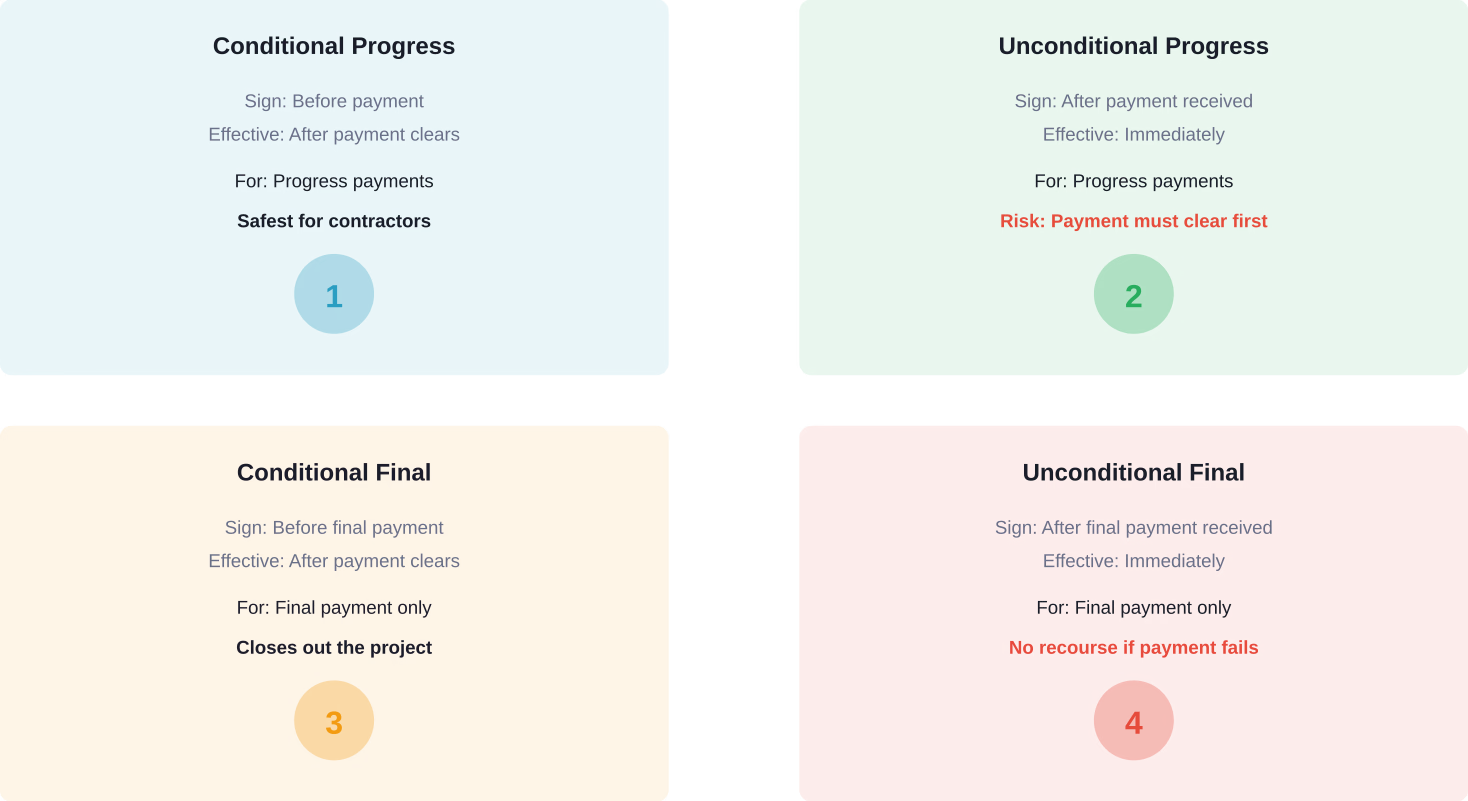
Conditional Progress Lien Waiver
This waiver is used for progress payments during a project. The key word is “conditional.”
Contractors submit this form before receiving payment. But the waiver only becomes effective after the payment actually clears the bank. If the check bounces or the payment never arrives, the waiver isn’t valid and lien rights remain intact.
This is the safest type for contractors and subcontractors to sign because it maintains payment protection until funds are confirmed.
Unconditional Progress Lien Waiver
Also for progress payments, but without the safety net. An unconditional progress waiver takes effect immediately upon signing, regardless of whether payment has been received.
Sign this only after payment is received and cleared. Many experts recommend waiting until the check clears or the wire transfer hits the account before signing an unconditional form.
The risk? If payment falls through after signing, lien rights are already waived. There’s no recourse through the lien process.
Conditional Final Lien Waiver
Used for the final payment at project completion. Like the conditional progress version, this waiver only takes effect once the final payment clears.
This form waives all lien rights for the entire project, not just a specific payment period. It’s the closeout document that confirms all work is complete and all payment has been received.
Property owners typically require this before releasing final payment and considering the project officially complete.
Unconditional Final Lien Waiver
The most powerful—and potentially dangerous—lien waiver. This document immediately and unconditionally waives all lien rights for the entire project.
Only sign this after final payment is received and cleared. Once signed, there’s no going back. If the final check bounces, the signer has given up their legal right to file a lien.
General contractors often need these from all subcontractors and suppliers before the property owner releases final payment to the GC.
| Waiver Type | When to Sign | When Effective | Used For | Risk Level |
|---|---|---|---|---|
| Conditional Progress | Before payment | After payment clears | Progress payments | Low |
| Unconditional Progress | After payment received | Immediately | Progress payments | Orta |
| Conditional Final | Before final payment | After payment clears | Final payment | Low |
| Unconditional Final | After final payment received | Immediately | Final payment | High |
State-Specific Lien Waiver Requirements
Here’s where it gets complicated. Lien waiver rules vary significantly by state.
Some states have statutory lien waiver forms that must be used. California, for example, has specific language required by law. Using a non-compliant form in these states can invalidate the waiver or create legal complications.
Other states allow custom forms but regulate what language can and can’t be included. According to California legislative documentation, the state has specific provisions governing mechanics liens and the forms used for bonds and security, especially for large projects.
Some states have statutory lien waiver forms, though specific state lists should be verified with current state construction law, as requirements vary and change over time. In these states, using the state-mandated form isn’t optional—it’s required.
Other states have no statutory forms but regulate lien waivers through case law and general contract principles.
Real talk: before signing or requesting a lien waiver, check the specific requirements in the state where the project is located. State construction law governs lien rights, not federal law.
Critical Information Every Lien Waiver Must Include
Regardless of type or state, certain information must appear on every lien waiver to make it valid and enforceable.
Property Identification
The waiver must clearly identify the property or project. This typically includes the street address, legal description, or project name. Ambiguity here can invalidate the waiver.
Payment Amount and Through Date
The dollar amount being waived must be specified. For progress waivers, the “through date” indicates the period covered by the payment and waiver.
If billing through March 31 for $10,000, the waiver should reflect exactly that amount and date. Any mismatch can hold up funding or cause disputes later.
Parties Involved
The waiver should name the party signing (contractor, subcontractor, supplier), the party making payment (general contractor or property owner), and ideally the property owner.
Clear identification prevents confusion about who waived what rights against which property.
Signature and Date
Lien waivers require a signature to be enforceable. Some states require notarization for certain types or amounts, while others accept a simple signature.
The date matters because it establishes when lien rights were waived, which affects lien filing deadlines and payment timelines.
Conditional vs. Unconditional Language
The waiver must clearly state whether it’s conditional or unconditional. Ambiguous language can lead to disputes about whether lien rights were actually waived.
Conditional waivers typically include language like “effective upon payment of” or “contingent upon receipt of payment.” Unconditional waivers state that rights are waived immediately.
Common Lien Waiver Mistakes and How to Avoid Them
Construction professionals make predictable mistakes with lien waivers. Here’s what to watch for.
Signing Unconditional Waivers Too Early
This is the number one mistake. Contractors sign an unconditional waiver before payment arrives, then the payment never comes or bounces.
The solution is simple: never sign an unconditional waiver until payment has cleared the bank. Wait the extra day or two. It’s worth it.
Amount and Date Discrepancies
The waiver states $15,000 through March 31, but the invoice shows $12,500 through April 15. These mismatches create confusion and can delay payment or create disputes about what was actually paid and waived.
Always verify that amounts and dates on the lien waiver match the invoice exactly before signing.
Blanket Waivers
Some contractors sign waivers with blank amounts or dates, trusting the general contractor to fill them in correctly. Bad idea.
Never sign a blank lien waiver. Fill in all information before signing, or at minimum be present when it’s filled in and verify accuracy.
Missing Exceptions
If there are change orders, disputed amounts, or unpaid retainage, these should be listed as exceptions on the lien waiver. Otherwise, signing the waiver could be interpreted as waiving rights to those amounts too.
Most lien waiver forms include space for exceptions. Use it.
Ignoring State Requirements
Using a generic lien waiver form in a state that requires a statutory form can invalidate the waiver or create enforceability issues.
Always use the correct form for the state where the project is located.
Lien Waivers vs. Lien Releases: What's the Difference?
The terms “lien waiver” and “lien release” often get used interchangeably, but technically they’re different documents.
A lien waiver is signed before or at the time of payment, waiving the right to file a lien. It’s a preventive document—preventing a lien from being filed in the first place.
A lien release is used after a lien has already been filed. It removes or releases an existing lien from the property records once payment has been received.
In practice, though, many construction professionals use the terms interchangeably, and some forms serve both purposes depending on context.
Who Needs to Sign Lien Waivers?
Lien waiver requirements flow down through the project hierarchy.
General Contractors
General contractors typically sign lien waivers provided by the property owner or construction lender. These waivers confirm that the GC has been paid for work completed during a payment period.
But general contractors also collect lien waivers from everyone they pay: subcontractors, suppliers, equipment rental companies, and anyone else who could potentially file a lien.
Subcontractors
Subcontractors sign lien waivers for the general contractor. First-tier subs (those hired directly by the GC) must provide waivers to get paid.
Sub-subcontractors (second-tier and below) sign waivers for the subcontractor who hired them.
Material Suppliers
Suppliers who provide materials to the project sign lien waivers when they receive payment. This includes lumber yards, concrete suppliers, equipment vendors, and specialty material providers.
Equipment Rental Companies
Companies that rent equipment to the project may also be required to sign lien waivers, especially for long-term rentals or expensive equipment.
The key principle: anyone who provides labor, materials, or equipment to a construction project and has lien rights must waive those rights to facilitate payment up the chain.
Get Your Lien Waivers Signed Faster

Lien waivers stall when no one is fully confident the work is complete and matches what was agreed. That doubt slows approvals and holds money. Powerkh removes that doubt by showing exactly what’s been installed and how it aligns with contract scope and design. Instead of chasing sign-offs at the end, you go into payment with clear, verified evidence already in place. That keeps approvals moving and avoids the usual back-and-forth.
Prove Completion And Get Paid Now
What changes when Powerkh is involved:
- You have a clear, verifiable record of what is actually finished
- Payment reviews move faster because nothing needs to be rechecked
- Approval blockers are identified before they delay sign-off
- Fewer disputes between contractor, client, and subcontractors
- Less time lost chasing confirmations across teams
If lien waivers are slowing down your cash flow, talk to Powerkh and get payments moving without the usual delays and back-and-forth.
Best Practices for Managing Lien Waivers
Construction companies that handle lien waivers efficiently avoid payment delays and legal complications. Here’s how to streamline the process.
Create a System
Don’t handle lien waivers ad hoc. Establish a clear process for when waivers are requested, reviewed, signed, and stored.
Many general contractors require lien waivers before cutting checks. Build this into the payment schedule so everyone knows what to expect.
Use the Right Forms
Maintain updated statutory forms for every state where projects are located. State requirements change, so review forms annually or work with legal counsel to ensure compliance.
Track Payment Status
Implement a system to track when checks are cut, when they’re received, and when they clear. This prevents the mistake of signing unconditional waivers before payment confirmation.
Construction payment software can automate much of this tracking.
Review Before Signing
Every lien waiver should be reviewed before signature. Check the amount, dates, property description, and waiver type. Verify that exceptions are listed if applicable.
For larger amounts or final waivers, consider having legal counsel review the document.
Store Waivers Securely
Keep signed lien waivers organized and accessible. Many construction lenders and property owners require waivers from previous payment periods before releasing current payments.
Digital storage with backup is ideal. Paper waivers get lost, damaged, or misplaced at critical moments.
The Role of Lien Waivers in Construction Payment Flow
Understanding where lien waivers fit in the payment process helps clarify their purpose.
Here’s the typical flow for a progress payment on a construction project:
- Subcontractor completes work during a payment period
- Subcontractor submits an invoice to the general contractor
- General contractor requests a conditional progress lien waiver from the subcontractor
- Subcontractor signs and returns the conditional waiver
- General contractor includes the subcontractor’s invoice in their pay application to the owner
- Owner reviews the pay application and supporting waivers
- Owner pays the general contractor
- General contractor pays the subcontractor
- Subcontractor confirms payment cleared
- The conditional waiver becomes effective
For the next payment period, the owner might require unconditional waivers from the previous period before releasing current payment. This creates proof that prior work has been paid for.
At project completion, the owner requires unconditional final waivers from the general contractor and all subcontractors and suppliers before releasing final payment and retainage.
The American Institute of Architects (AIA) publishes standardized forms that support this process, including AIA Document G706A™–1994, Contractor’s Affidavit of Release of Liens, which provides a sworn statement that all releases or waivers of liens have been received.
When NOT to Sign a Lien Waiver
Sometimes the right answer is to refuse to sign. Here are situations where signing a lien waiver isn’t advisable.
Before Work Is Complete
If the waiver covers work that hasn’t been finished yet, don’t sign it. The waiver amount and through date should only reflect completed work.
For More Than You’re Being Paid
If the waiver amount exceeds the payment amount, that’s a red flag. The waiver should match the payment dollar for dollar.
When There Are Unresolved Disputes
If there’s a dispute about the quality of work, completion status, or amount owed, signing a waiver without exceptions can forfeit the right to resolve those disputes through the lien process.
List disputed amounts as exceptions, or wait until disputes are resolved before signing.
Unconditional Forms Before Payment
Never sign an unconditional waiver before payment arrives and clears. No exceptions to this rule.
If pressured to sign an unconditional waiver early, offer a conditional waiver instead. Explain that the conditional version protects both parties by ensuring payment actually happens.
Protecting Payment Rights in Construction
Lien waivers are powerful documents that affect payment security for everyone involved in a construction project. Understanding the four types, knowing when each applies, and recognizing common mistakes can prevent costly payment problems.
The key takeaways: always use conditional waivers until payment clears, verify that amounts and dates match invoices exactly, use the correct form for the project’s state, and never sign an unconditional waiver before money is in the bank.
For property owners and general contractors, lien waivers provide essential protection against payment disputes and multiple claims on the same work. For subcontractors and suppliers, conditional waivers offer a way to facilitate payment while maintaining security.
The construction industry runs on trust, but lien waivers provide the documentation that backs up that trust. When used correctly, they create clarity, prevent disputes, and keep projects moving forward financially.
Need help managing construction payments and lien waivers on your projects? Consider implementing a systematic approach to waiver collection, verification, and storage that protects all parties and keeps payment flowing smoothly.
Sıkça Sorulan Sorular
Can I still file a lien after signing a lien waiver?
Generally no, not for amounts covered by the waiver. Signing a lien waiver gives up the right to file a mechanic’s lien for the work and payment period specified in the waiver. But there are exceptions: if the waiver is conditional and payment never cleared, lien rights typically remain intact. If the waiver lists exceptions for certain amounts or work, those exceptions preserve lien rights. And if fraud or misrepresentation was involved in obtaining the waiver, it might be voidable.
Do lien waivers need to be notarized?
It depends on the state and sometimes the amount. Some states require notarization for lien waivers, while others accept a simple signature. Some states only require notarization for final waivers or waivers above a certain dollar amount. Check the specific requirements in the state where the project is located. When in doubt, getting a waiver notarized adds an extra layer of authentication and enforceability.
What’s the difference between a partial and final lien waiver?
Partial lien waivers (also called progress waivers) cover a specific payment period or portion of the project. They waive lien rights only for the work completed and payment received during that period. Final lien waivers waive all lien rights for the entire project. A final waiver is signed once all work is complete and full payment (including retainage) has been received. The final waiver closes out the project from a lien perspective.
Can a property owner require lien waivers from subcontractors they don’t pay directly?
Yes, this is common practice. Property owners typically require the general contractor to provide lien waivers from all subcontractors and suppliers as a condition of payment, even though the owner doesn’t have direct contracts with those parties. This protects the owner from liens filed by unpaid lower-tier contractors. The general contractor collects these waivers and provides them to the owner as part of each pay application.

Vaka Çalışmalarımız
Ticari, endüstriyel ve konut sektörleri için 200'den fazla BIM ve VDC projesi gerçekleştirdik.
Çalışmalarımız şunları içermektedir:
Kalıp tasarım otomasyonu
Our client from
California, USA
Asma tavan tasarım otomasyonu
Our client from
New York, USA
Duvar çerçeveleme tasarım otomasyonu
Our client from
California, USA