Have any questions? Contact us!
Join our team!
Request a free quote or consultation

If you’re in construction, architecture, or engineering, you’ve likely heard the buzz about Building Information Modeling (BIM). It’s a powerful tool, but getting it right takes more than just buying software – it needs a solid strategy. That’s where BIM strategy consulting comes in, and the big question everyone asks is: what’s the cost? As someone who’s seen projects soar and stumble in the AEC world, I can tell you it’s not a one-size-fits-all answer. Costs in 2026 typically range from $5,000 to $50,000 or more, depending on your project’s needs. Some tasks, like a BIM Execution Plan, might run $3,000 to $15,000, while complex software integration could hit $100,000. I’ve watched teams navigate these budgets, and I’m here to break it down with real-world insights, no fluff. Let’s dive into what drives these prices, what you get, and how to plan without breaking the bank.
Why BIM Strategy Consulting Costs Vary
BIM strategy consulting isn’t like buying a coffee – you can’t just walk up and get a standard price. The range of $5,000 to $50,000+ reflects the unique demands of each project. A small residential job might need basic guidance, keeping costs low, while a sprawling infrastructure project with multiple teams and systems pushes the price higher. I’ve seen firms caught off guard by unexpected add-ons, so understanding the variables is key to budgeting smart.
The price hinges on factors like the size of your project, the expertise you’re hiring, and what you’re asking for – whether it’s a quick plan or a full overhaul of your workflows. For example, a consultant crafting a detailed BIM Execution Plan (BEP) for a single building might charge $3,000, but integrating BIM tools across a multi-phase development could easily climb past $50,000. Hourly rates also come into play for specialized tasks, averaging $39 to $75 or more, depending on the consultant’s experience. Knowing these ranges upfront helps you avoid sticker shock and plan realistically.
Factors That Shape Your BIM Consulting Costs
Every project is different, and so is the bill. I’ve talked to contractors who thought they could skimp on consulting only to pay more fixing mistakes later. Let’s break down the main drivers that determine what you’ll spend, so you can see where your money’s going.

Project Scope and Complexity
A simple project, like a small office retrofit, requires less effort than a hospital with intricate MEP systems. Larger or more complex projects demand detailed modeling, higher Levels of Detail (LOD), and coordination across trades, which ramps up costs. For instance, a basic strategy for a residential build might cost $5,000, while a multi-building campus could push $50,000 or more due to the layers of work involved.
Consultant Expertise
Not all consultants are equal. A seasoned pro with years of experience and certifications like Autodesk Certified Professional will charge more – think $75/hour or higher – because they bring precision and foresight. Newer consultants might start at $39/hour, but I’ve seen cheaper options lead to oversights that cost more to fix. Expertise matters when you’re avoiding rework or navigating complex standards like ISO 19650.
Deliverables Included
What you’re asking for directly impacts the price. A basic consultation to align BIM with your goals might be $5,000-$10,000. Add a detailed BEP, and you’re looking at $3,000-$15,000. Throw in software integration or custom templates, and costs climb, especially if you need ongoing support. I’ve noticed firms that clarify deliverables upfront avoid surprise charges.
Project Timeline
Tight deadlines mean higher costs. If you need a model delivered in a week instead of three, consultants might charge for overtime or prioritize resources, bumping rates. A rushed BEP could cost $10,000 versus $5,000 for a standard timeline. Planning ahead saves here – I’ve seen teams regret pushing for speed without budgeting for it.
Software Integration Needs
Linking BIM tools like Revit to existing systems can be a budget-killer, starting at $5,000 but soaring to $100,000+ for complex setups. If your project involves multiple platforms or custom integrations, expect a bigger hit. This is where consultants earn their keep, ensuring compatibility without chaos.
Contract Type
Lump-sum contracts often include buffers for risks, making them pricier – say, $20,000 for a strategy that might cost $15,000 on a time-and-material basis. The catch? Time-and-material shifts rework costs to you if designs change. I always tell teams to weigh their risk tolerance before signing.
Here’s a quick rundown of these factors:
- Scope and Complexity: Simple projects cost less than intricate, multi-phase ones.
- Consultant Expertise: More experience equals higher rates but better results.
- Deliverables: Basic plans are cheaper than full packages with integration.
- Timeline: Rushed jobs inflate costs due to overtime or prioritization.
- Software Integration: Complex system links drive up expenses.
- Contract Type: Lump-sum vs. time-and-material affects risk and price.
Understanding these helps you negotiate smarter or trim where possible without cutting corners.
Powerkh's Breakdown of BIM Strategy Consulting

Powerkh is a UK-based consulting firm specializing in Building Information Modeling (BIM) and Virtual Design & Construction (VDC), with additional offices in the USA and Ukraine. The company works across residential, commercial, and industrial sectors, providing practical BIM solutions that improve construction workflows, reduce costs, and enhance project outcomes.
We provide a range of BIM consulting services, including 3D BIM modeling, BIM coordination, and BIM automation. Our services also include Scan to BIM, converting point cloud data into 3D models, and creating Revit families. We specialize in BIM workflow automation, scripting, and generative design, as well as prefabrication and fabrication support, including CNC manufacturing and shop drawings. Each service is customized to meet the specific needs of the project.
Our team works closely with clients to understand their project requirements and ensure the BIM model integrates smoothly across different disciplines.
Key Highlights:
- UK-based BIM consulting firm with offices in the USA and Ukraine.
- Works across residential, commercial, and industrial sectors.
- Specializes in improving construction workflows, reducing costs, and enhancing project outcomes.
- Expertise in BIM workflow automation, scripting, and generative design.
- Provides tailored BIM solutions for diverse project needs.
Common Pricing Models for BIM Consulting
Consultants don’t just pull numbers out of a hat – they use structured methods to estimate costs. These models are especially helpful early on when details are still coming together. I’ve seen teams get clearer quotes by knowing these approaches, so let’s look at the main ones.
- Square Footage Metrics: Costs are tied to the building’s total area. This works well for straightforward modeling or coordination tasks, especially for offices or warehouses with open spaces.
- Percentage of Construction Costs: Some consultants charge 1-2% of the total project budget. For a $5 million build, that’s $50,000-$100,000 for BIM services, scaling with project size.
- Linear Feet for MEP: For mechanical, electrical, or plumbing work, pricing might be based on feet of piping or ductwork. This is common for trade-specific tasks like HVAC modeling.
- Cost per Deliverable: You pay for specific outputs – like $2,000 for a clash report or $5,000 for shop drawings. This keeps things clear if you need targeted results.
- Phase-Based Pricing: Costs are split by project stages, like $10,000 for conceptual design and $20,000 for detailed modeling. It’s great for budgeting across timelines.
- Trade-Specific Rates: Fees are set per trade – structural, mechanical, etc. For example, electrical modeling might cost $15,000, while plumbing adds another $10,000.
These models give flexibility, letting consultants provide rough estimates even with limited info, then refine as plans firm up. I’ve found phase-based or deliverable pricing helps teams with tight budgets stay in control.
Breaking Down the Cost Components
BIM strategy consulting costs are built from distinct pieces, each adding to the total. Knowing these helps you prioritize or even scale back without losing value. Here’s a detailed look at what you’re paying for.

Strategic Guidance
This is the foundation – experts align BIM tools with your project goals. It might cost $5,000-$20,000, depending on depth. A basic alignment for a small firm could be $5,000, while a multi-team strategy might hit $15,000. This sets the stage for everything else, so don’t skimp here.
BIM Execution Plan (BEP) Development
A BEP is your project’s BIM playbook, outlining standards, roles, and timelines. Costs range from $3,000 for a simple plan to $15,000 for a detailed one with trade-specific protocols. I’ve seen BEPs save projects by catching coordination issues early, making them worth every penny.
Software Integration
Linking BIM tools to existing systems – like Revit to project management software – can start at $5,000 but climb to $100,000+ for complex integrations. The more platforms or custom work involved, the higher the cost. This is critical for seamless data flow but can be a budget surprise if not planned.
Training and Upskilling
Your team needs to know the tools. Online courses run $200-$1,500 per person, while in-person workshops are $500-$3,000 each. Full team onboarding for larger firms can exceed $10,000. I’ve noticed teams that invest here get more out of BIM long-term, avoiding costly errors.
Hardware Upgrades
BIM software demands muscle. A high-performance desktop costs $2,000-$5,000, while enterprise workstations can top $10,000. Cloud rendering or storage adds $50-$500 monthly. Underpowered hardware slows everything down, so budget for this upfront.
Hourly Rates vs. Fixed Fees
Consultants offer two main billing options, and each has trade-offs. Hourly rates average $39-$75, sometimes higher for specialists. This suits short tasks like model audits but can balloon if the scope grows. I’ve seen teams caught out when “quick” fixes dragged on.
Fixed fees, like $10,000 for a BEP or $20,000 for a strategy package, offer predictability. But they often include buffers for risks, making them costlier upfront. Lump-sum contracts might feel safer but can hit $25,000 for what a $15,000 time-and-material deal covers. Choose based on how well-defined your needs are – hourly for flexibility, fixed for clarity.
Costs by Project Size
Project scale shifts costs dramatically. Here’s how it breaks down:
- Small Residential Projects: $5,000-$20,000 for basic strategy, modeling, and a simple BEP. Think single-family homes or small renovations.
- Medium Commercial Projects: $20,000-$100,000, covering detailed coordination, trade-specific modeling, and integration. Office buildings or retail centers fit here.
- Large Infrastructure Projects: $100,000+, due to complex LODs (e.g., LOD 400 for fabrication), multi-phase planning, and extensive support. Think airports or bridges.
I’ve seen small firms keep costs low by focusing on essentials, while big projects justify higher spends with long-term savings.
Tips to Optimize Your BIM Budget
You don’t have to overspend to get value. Here are strategies I’ve seen work:
- Define Scope Early: Clear goals prevent costly revisions. Specify LOD (e.g., LOD 200 vs. 400) to avoid overpaying.
- Choose Bundled Packages: Combine strategy, BEP, and training for discounts.
- Outsource Smartly: Use external consultants for short-term needs to avoid full-time costs.
- Provide Detailed Info: Clear documentation reduces speculative pricing.
- Invest in Quality: Budget for QA/QC to catch errors early, saving rework costs.
Teams that plan these steps save thousands while maximizing BIM’s benefits.
Sample Cost Scenarios
To make it real, let’s sketch out hypothetical costs:
- Small Firm: $8,000 for strategy and BEP, $2,000 for training, $3,000 for hardware. Total: ~$13,000.
- Mid-Size Commercial: $25,000 for strategy and integration, $5,000 for training, $5,000 for hardware, $3,000/year ongoing. Total: ~$38,000 initial.
- Large Infrastructure: $80,000 for full consulting, $15,000 for training, $10,000 for workstations, $10,000/year ongoing. Total: ~$105,000 initial.
These are averages – your numbers depend on specifics.
Conclusion
BIM strategy consulting costs in 2026 aren’t cheap, but they’re an investment that pays off in smoother projects and fewer headaches. With prices from $5,000 to $50,000+ and extras like software integration hitting $100,000, it’s all about aligning costs with your needs. I’ve seen firms transform chaotic workflows into efficient machines by budgeting wisely. Start by defining your scope, comparing quotes, and prioritizing quality – it’s the difference between a good project and a great one. If you’re ready to leverage BIM, consulting is the key to unlocking its full potential.
Frequently Asked Questions (FAQs)
What’s included in the $5,000-$50,000 range for BIM strategy consulting?
This typically covers strategic guidance, BIM Execution Plan development, basic software integration, and some training. Costs vary based on project size, complexity, and deliverables like detailed audits or ongoing support.
Why does software integration cost so much?
Integration can hit $5,000-$100,000+ because it involves linking BIM tools (e.g., Revit) to existing systems, requiring custom work for compatibility. Complex projects with multiple platforms drive costs higher.
Are hourly rates or fixed fees better for BIM consulting?
Hourly rates ($39-$75+) suit flexible, short-term tasks like audits, but costs can grow if scopes expand. Fixed fees ($10,000-$25,000 for a strategy) offer predictability but may include risk buffers, so choose based on project clarity.
How can I reduce BIM strategy consulting costs?
Define your scope clearly, choose the right LOD, opt for bundled services, provide detailed project info for accurate quotes, and invest in QA/QC to avoid rework. Outsourcing for one-off needs can also save money.
Our Case Studies
We have handled 200+ BIM & VDC projects for commercial, industrial, and residential sectors.
Our work includes:
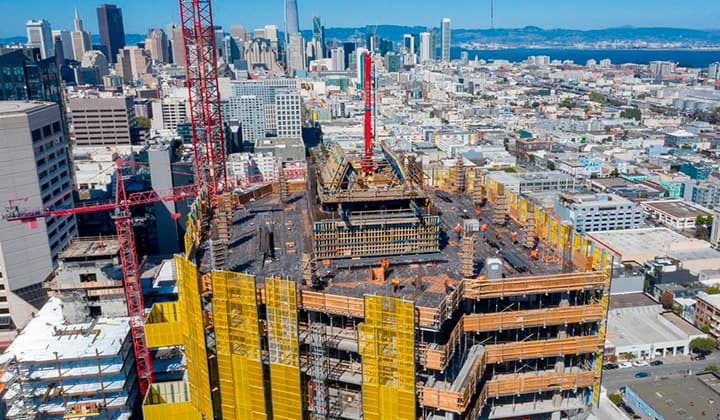
Formwork design automation
Our client from
California, USA
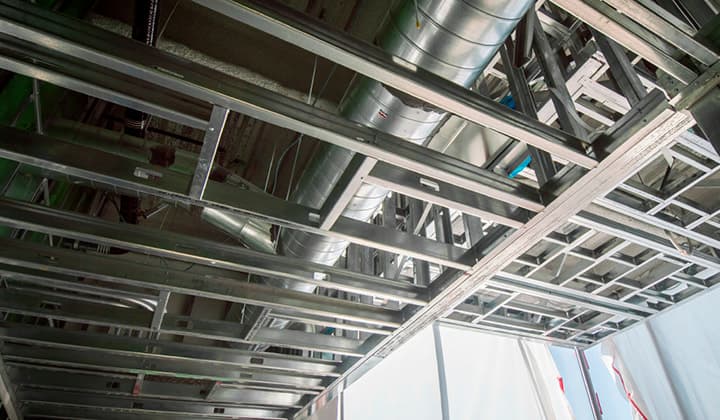
Suspended ceiling design automation
Our client from
New York, USA
Wall framing design automation
Our client from
California, USA