Have any questions? Contact us!
Join our team!
Request a free quote or consultation

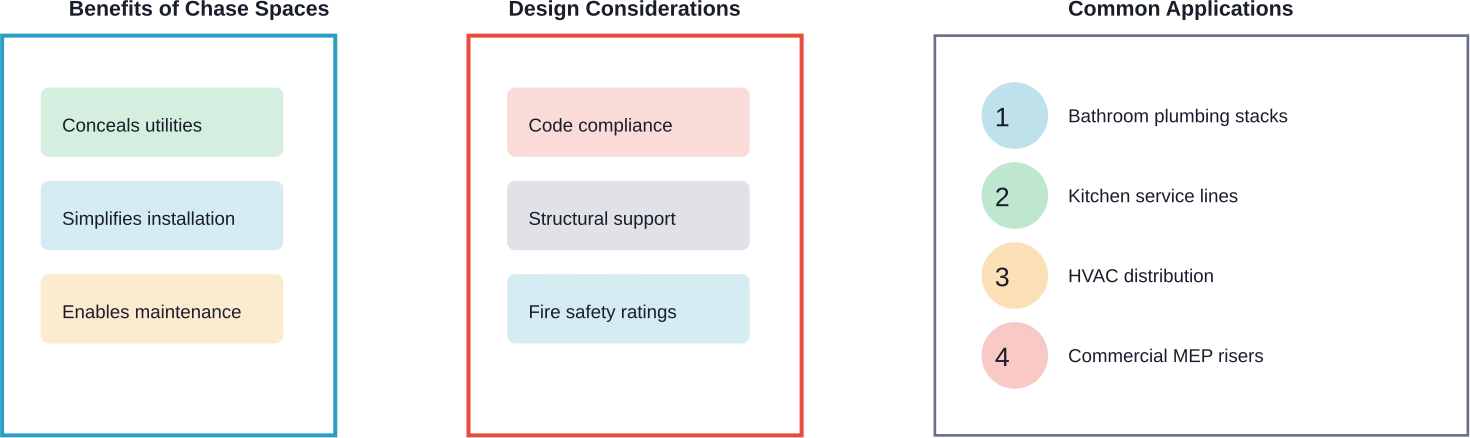
A chase in construction is a vertical or horizontal recess built into walls, floors, or ceilings to conceal and route building services like pipes, electrical wiring, ducts, and conduits. These strategic spaces allow utilities to run through structures without exposed installation, maintaining clean aesthetics while providing accessible pathways for mechanical, electrical, and plumbing (MEP) systems throughout buildings.
When building or renovating structures, one challenge stands out: how do you route essential utilities without creating visual clutter or compromising structural integrity? That’s where chases come in.
A chase is a continuous recess or vertical space built into walls, floors, or ceilings specifically to accommodate building services. According to New York City building code definitions, a chase is “a continuous recess in a wall to receive pipes, ducts, conduits, etc.”
How Chases Work in Building Design
Chases provide strategic pathways that allow cables, plumbing lines, and HVAC components to run from one open space to another. For example, a vertical chase might extend from a basement through multiple floors to an attic, gathering various utility lines along the way.
In residential construction, these spaces are placed strategically so that electrical wiring, water supply lines, drainage pipes, and communication cables can be grouped and routed efficiently. This consolidation simplifies both installation and future maintenance.
Chase vs. Wall Chasing
Here’s where terminology gets interesting. While “chase” refers to a pre-planned space, “chasing” or “wall chasing” means cutting grooves into existing masonry or walls after construction. That’s a different process entirely.
Chase walls and shaft walls serve different purposes in construction design. Chase walls are standard framed walls with utility spaces, while shaft walls are fire-rated assemblies required in commercial buildings.
Use External BIM Support for Project Delivery

Powerkh acts as an external BIM partner for construction projects. It provides modeling, coordination, detailing, and automation support, helping teams handle technical work behind design and construction workflows.
Need a Team to Support BIM Work?
Talk with Powerkh to:
- handle modeling and documentation tasks
- support coordination and design workflows
- add reliable BIM capacity to your project
👉 Contact Powerkh for a project review and consultation.
Building Code Requirements
Masonry directly above chases or recesses wider than 12 inches must be supported on lintels, according to building codes. This ensures structural integrity isn’t compromised when creating these utility pathways.
| Chase Type | Typical Location | Common Services |
|---|---|---|
| Vertical Chase | Multi-story walls | Plumbing stacks, electrical risers |
| Horizontal Chase | Floor/ceiling assemblies | HVAC ducts, branch wiring |
| Masonry Chase | Brick/block walls | Conduits, small pipes |
Why Chases Matter in Modern Construction
MEP systems are the lifeblood of any building. Understanding how MEP systems integrate within projects is essential for efficiency, sustainability, and cost-effectiveness.
Chases allow designers to maintain building aesthetics while ensuring utilities remain accessible for maintenance. No homeowner wants exposed pipes running across their living room walls.
But chases also serve practical purposes during construction. They streamline rough-in phases, reduce conflicts between trades, and simplify inspections since utilities are grouped logically.
Planning Your Chase Strategy
Whether designing new construction or renovating existing spaces, understanding chases helps coordinate MEP systems effectively. These hidden pathways keep buildings functional while maintaining clean, professional appearances.
For architects and builders, early chase planning prevents costly redesigns. For homeowners, knowing where chases exist helps when planning renovations or troubleshooting utility issues.
Ready to dive deeper into construction terminology and building systems? Understanding these fundamental concepts sets the foundation for successful projects.
Frequently Asked Questions
What’s the difference between a chase and a soffit?
A chase is a concealed space built within walls or floors to run utilities vertically or horizontally. A soffit is a boxed-out section below a ceiling or cabinet, often used when utilities need to drop below the main ceiling or change direction.
Can you add a chase to an existing building?
Yes, but it usually involves cutting into existing walls or building out new enclosures. This process is more labor-intensive than including chases during original construction.
Do chases affect structural integrity?
When properly designed and built according to code, chases do not compromise structural integrity. Structural elements are sized and reinforced to account for any openings or recesses.
Are chases required by building codes?
Building codes don’t require chases specifically, but they regulate how they must be constructed when used. Requirements typically address fire resistance, clearances, and structural support.
What size should a utility chase be?
The size depends on the systems inside it. Residential chases are often between 4 and 12 inches wide, while commercial projects may require larger spaces for multiple services.
How do chase walls differ from regular walls?
Chase walls are designed to house utilities, so they may be thicker and framed differently to allow space for pipes, ducts, or wiring while maintaining structural support.
Can electrical and plumbing share the same chase?
They can share the same chase if code requirements are met. Proper spacing, separation, and protection must be maintained to prevent safety issues and allow for maintenance access.

Our Case Studies
We have handled 200+ BIM & VDC projects for commercial, industrial, and residential sectors.
Our work includes:
Formwork design automation
Our client from
California, USA
Suspended ceiling design automation
Our client from
New York, USA
Wall framing design automation
Our client from
California, USA