Have any questions? Contact us!
Join our team!
Request a free quote or consultation

In construction, there is a moment when drawings stop being ideas and start becoming instructions. That shift is not dramatic. It does not come with a ribbon cutting. But it is usually the point where projects either settle into control or start drifting toward problems.
Technical design is the stage where a building is defined in detail. Constructability is the mindset that checks whether all that detail will actually work on site. They are closely connected, yet often discussed separately.
This article explains what each one really means, how they overlap, and why they quietly decide whether a project runs smoothly or constantly fights itself.
Technical Design – Where Intent Becomes Instruction
After the early design phases are complete and the concept has been agreed, a project moves into a more serious stage. This is where lines on paper become dimensions, tolerances, fixings, routes, and specifications. In other words, technical design.
At this point, the team is no longer asking what the building should look like. The questions change. How exactly does the facade connect to the slab edge? Where do the ducts run once the structural beams are in place? How much space is really available above the ceiling once everything is accounted for?
Technical design is about producing information that can be built from. Not sketches. Not ideas. Proper documentation that fabricators, installers, and contractors can rely on.
By the end of this stage, the project should have:
- Coordinated architectural, structural, and MEP designs.
- Clear definitions of materials and systems.
- Detailed specifications.
- Enough information for approvals.
- A structured plan for change control.
It sounds straightforward. In reality, this is where complexity starts to show itself.
Because once everyone works at detail level, the interfaces matter. And interfaces are where projects often struggle.
Coordination Is Not Just a Drawing Exercise
Technical design is sometimes treated like a box to tick. Issue the drawings. Run clash detection. Freeze the design. Move on.
But real coordination is more layered than that.
There is a natural order to building. Some elements dictate others. Drainage falls at set levels. Structural grids define partitions. Ceiling layouts influence lighting and services. If that order is ignored, problems surface later.
For example, a ceiling grid cannot simply be drawn at the end. It has to be considered early enough that lighting, sprinklers, smoke detectors, and access panels all align properly. Similarly, facade mullion positions will affect internal layouts whether anyone likes it or not.
Technical design is where those decisions are locked in. Once the design is frozen, changing them is expensive. That is why this stage deserves more attention than it sometimes gets.
So Where Does Constructability Fit In?
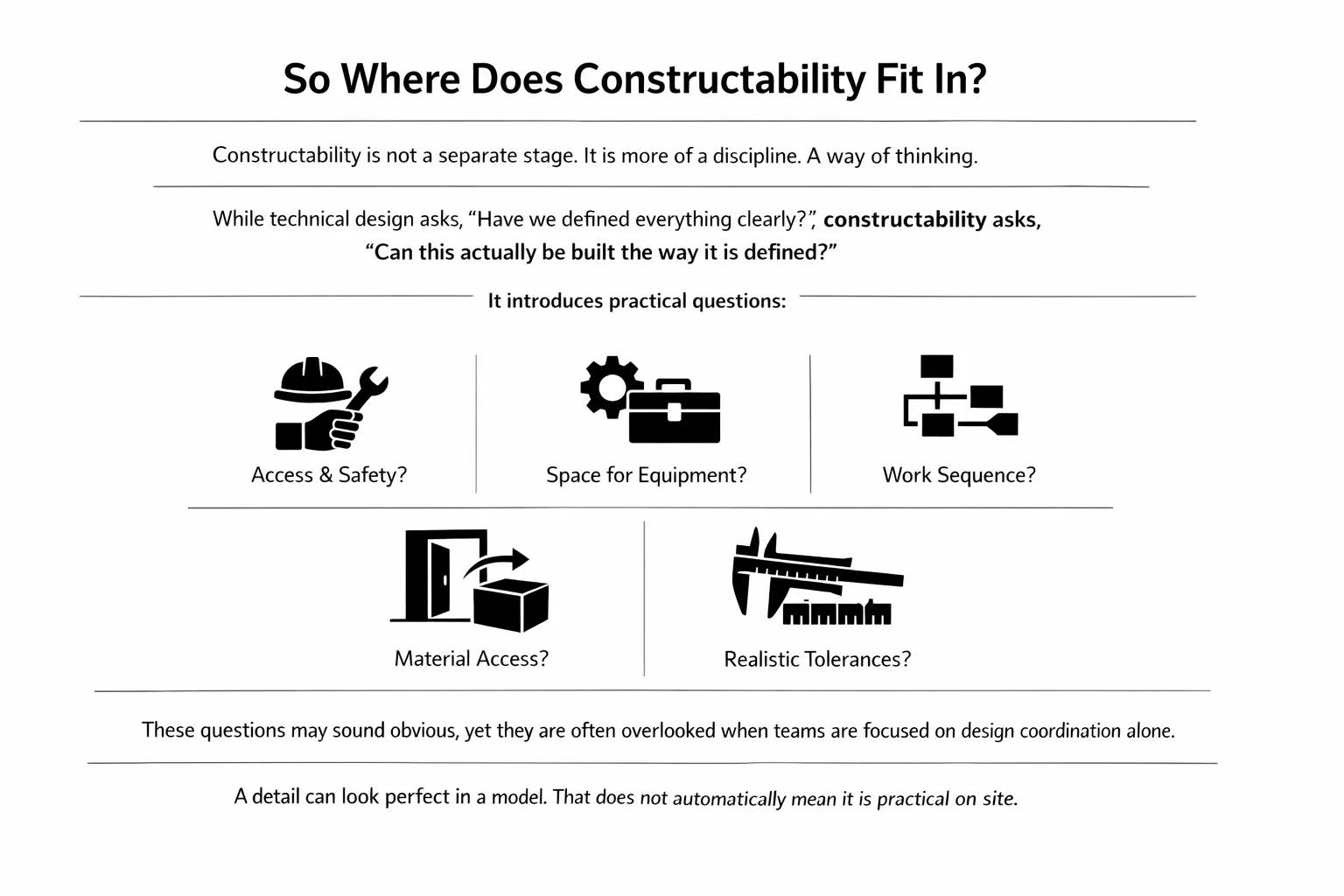
Constructability is not a separate stage. It is more of a discipline. A way of thinking.
While technical design asks, “Have we defined everything clearly?”, constructability asks, “Can this actually be built the way it is defined?”
It introduces practical questions:
- Can installers access this connection safely?
- Is there enough space to install and maintain this equipment?
- Does the sequence of work make sense?
- Will materials fit through available access routes?
- Are tolerances realistic?
These questions may sound obvious, yet they are often overlooked when teams are focused on design coordination alone.
A detail can look perfect in a model. That does not automatically mean it is practical on site.
Constructability Is Not About Making Things Cheaper
There is a common misunderstanding here. Constructability is sometimes confused with value engineering.
They are not the same.
Constructability focuses on feasibility. It challenges whether something can be built safely and efficiently as designed.
Value engineering focuses on optimization. It asks whether something can be done more economically without reducing performance.
Both have their place. But constructability is more about avoiding problems than cutting cost.
How Reviews Actually Work in Practice
On well-managed projects, constructability is not left to chance. It is built into the technical design process.
A typical review might happen when the design is advanced enough to be meaningful but not so advanced that change becomes impossible.
Drawings and models are distributed. Contractors and key trades review them. Questions are raised. Workshops are held. Sequencing is discussed. Access and logistics are examined.
It is not always dramatic. Often, it is just experienced professionals pointing out practical concerns that are not obvious in drawings.
Some recurring issues tend to appear during these reviews:
- Service zones that are too tight.
- Conflicting tolerances between systems.
- Equipment that cannot be delivered to its final location.
- Maintenance access that has not been properly considered.
- Overly complex detailing that slows installation.
Catching these early can save weeks of delay later.
Powerkh: Engineering-Led Technical Design and Constructability Support

Technical design only works when design intent survives coordination and reaches the site intact. That transition is where many projects lose clarity. This is the gap we focus on closing at Powerkh.
We are an engineering-led digital construction consultancy working across the UK, US, and Europe. During developed and technical design stages, we support structural and MEP modelling, prepare coordination-ready models, and resolve high-risk zones such as plant rooms and constrained service areas. At RIBA Stage 4, we carry out constructability and buildability reviews before designs are issued, checking assumptions, tolerances, and clearances so fewer issues reach the site.
Our role does not stop at coordination. Through deviation monitoring and reality-based verification, we compare design intent with what is actually built. The aim is straightforward – help teams make sure what was designed is what gets delivered.
The Role of Digital Tools – Helpful, But Not Magical
Digital coordination has improved technical design significantly.
Building Information Modeling allows teams to detect clashes before fabrication. It provides spatial clarity. It helps simulate coordination in a way that 2D drawings never could.
But software does not replace practical experience.
A model might show zero clashes. Yet the sequence of installation might still be unrealistic. Or maintenance access might technically exist but be impractical in real conditions.
Technology supports constructability. It does not automatically guarantee it.
The strongest results appear when digital tools are combined with field knowledge.
Responsibility, Procurement, Design Freeze and Their Impact on Programme
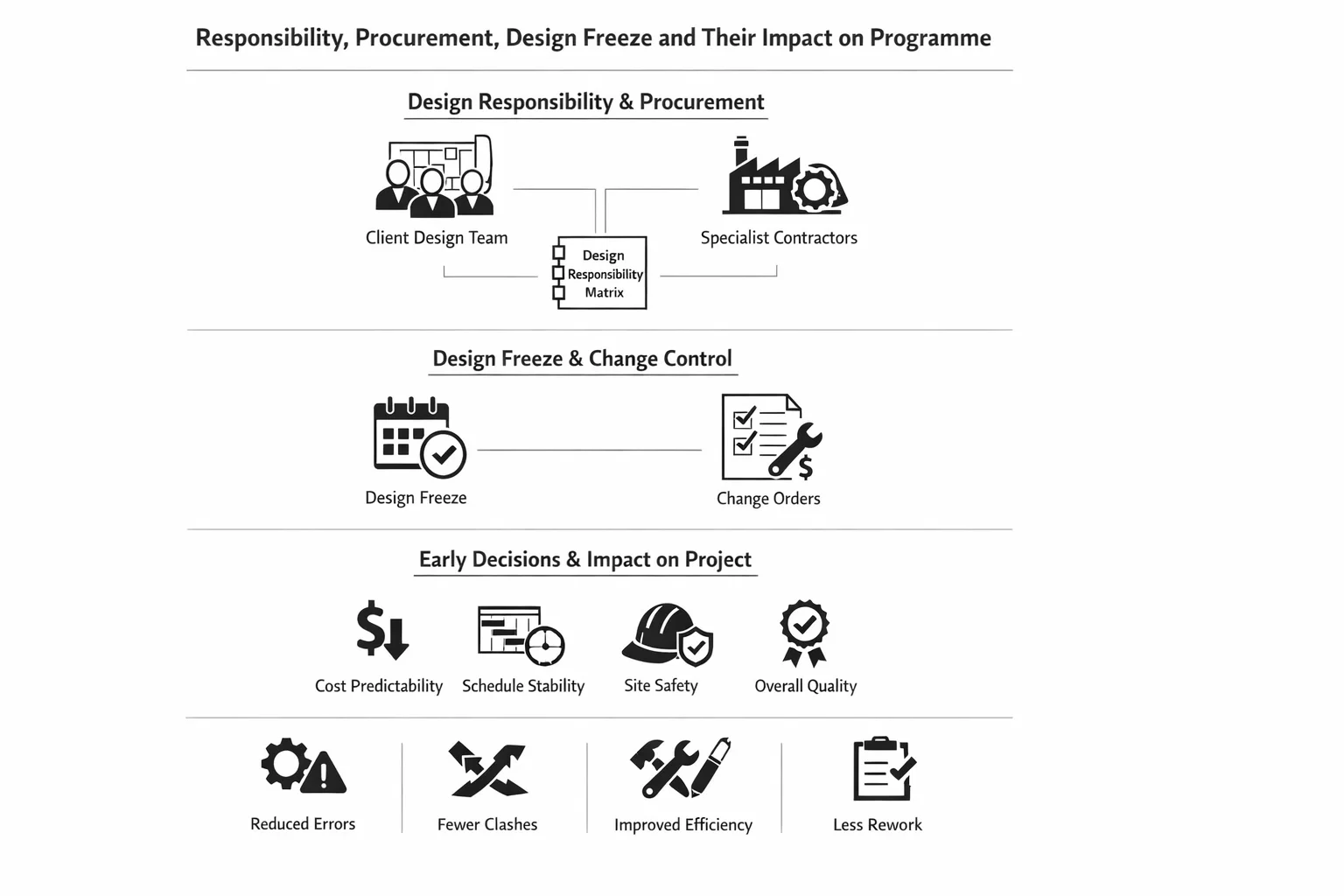
Technical design does not sit in isolation. The way responsibility is structured, how procurement is arranged, and when the design is frozen all influence what happens later on site. These decisions may seem administrative, but they shape coordination, risk, and ultimately cost and schedule performance.
Design Responsibility and Procurement
One of the first practical questions in technical design is simple: who is responsible for what?
On some projects, the client’s design team retains full control of technical detail. On others, especially under design and build arrangements, portions of the technical design are passed to specialist subcontractors. Structural steel detailing, facade systems, or complex MEP layouts are often developed by those who will fabricate and install them.
Shared responsibility can work well. In fact, it often improves accuracy. But only if it is clearly defined. When roles are blurred, gaps appear. A detail gets assumed, not checked. Two parties think the other has covered it.
This is where tools like a design responsibility matrix and structured information requirements become essential. They clarify who designs, who reviews, and who approves. Without that clarity, coordination becomes fragile.
Design Freeze and Change Control
At some point, the design has to stop moving. That is the moment of design freeze.
Once the client signs off on the technical design, formal change control usually begins. Adjustments are still possible, but they are tracked, reviewed, and often cost.
Freezing too early pushes unresolved issues into construction. Freezing too late delays procurement and affects the programme. There is no universal rule for timing. The design needs to be detailed enough to build with confidence, but not held open so long that progress stalls.
Getting that balance right is part experience, part discipline.
Early Decisions and Their Effect on Cost and Programme
It is easy to blame site delays on execution. But many problems start earlier.
If technical design leaves coordination gaps, fabrication errors increase. If sequencing is not thought through, trades clash on site. If access for installation or maintenance is ignored, rework follows.
Well-developed technical design, supported by constructability thinking, improves:
- Cost predictability.
- Programme stability.
- Site safety.
- Overall quality.
It also reduces change orders. No project eliminates change entirely, but fewer surprises usually mean smoother delivery and less tension between teams.
In the end, many construction issues are not caused by poor building work. They are caused by early decisions that were not resolved carefully enough. Technical design and constructability are where those decisions should be tested – before the project feels the impact.
The Human Side of It All
Behind drawings and models are people. And coordination often depends more on communication than on software.
Experienced site managers often notice practical issues quickly. Inviting their input during technical design can prevent expensive mistakes later. The same goes for specialist trades who understand their systems better than anyone else.
Projects that treat technical design as a strategic stage, rather than a procedural requirement, tend to feel more controlled during construction.
There is less improvisation. Fewer urgent redesigns. More predictability.
Why It Still Comes Down to Fundamentals
At its core, technical design defines how a building goes together. Constructability tests whether that definition holds up in reality.
Neither concept is new. What changes over time is the level of complexity in projects and the tools available to manage it.
Even with advanced software and detailed models, the fundamentals remain the same:
- Think through the sequence.
- Check the interfaces.
- Clarify responsibilities.
- Listen to practical input.
- Freeze the design with confidence, not hope.
When technical design and constructability are aligned, construction becomes more controlled. Not perfect, but controlled.
And in this industry, control is often the difference between a manageable project and one that constantly fights back.
Conclusion
Technical design and constructability are not side topics. They are where a project either gains control or quietly loses it.
Technical design defines how the building goes together. Constructability checks whether that definition survives contact with real conditions – site access, sequencing, tolerances, safety, and plain practicality. When both are handled properly, construction feels more predictable. Fewer urgent fixes. Fewer tense meetings about things that should have been resolved earlier.
Most issues on site are not surprises. They are design decisions that were never tested hard enough. That is why this stage matters. It is not glamorous work, but it is foundational. Get it right, and the rest of the project stands on solid ground.
FAQ
1. Is technical design only about producing drawings?
No. Drawings are part of it, but technical design is about coordination and clarity. It defines how systems connect, what tolerances apply, and how components will actually be installed.
2. At what stage should constructability be checked?
Before construction starts, ideally during advanced design. Once fabrication begins, flexibility drops and costs rise. Early review keeps options open.
3. Does every project need a formal constructability review?
Not always a formal workshop, but every project benefits from a practical check. Even smaller jobs can avoid problems by asking simple questions about access, sequence, and coordination.
4. How does procurement affect technical design?
Procurement determines who carries design responsibility. In some models, specialists complete parts of the technical detail. Clear allocation of responsibility prevents gaps and overlap.
5. Can good coordination eliminate all change orders?
No project is completely change-free. But strong technical design and constructability thinking reduce avoidable changes. The difference is usually noticeable.
6. Why do problems still appear even with BIM?
Because models show geometry, not judgment. BIM highlights clashes, but it does not automatically test sequencing or installation logic. Human experience still plays a major role.
7. What is the biggest risk during technical design?
Freezing the design before it is fully resolved. Once decisions are locked in, corrections become harder and more expensive. Timing and discipline make a real difference.

Have a BIM Project? Talk To Us.
Contact UsOur Case Studies
We have handled 200+ BIM & VDC projects for commercial, industrial, and residential sectors.
Our work includes:
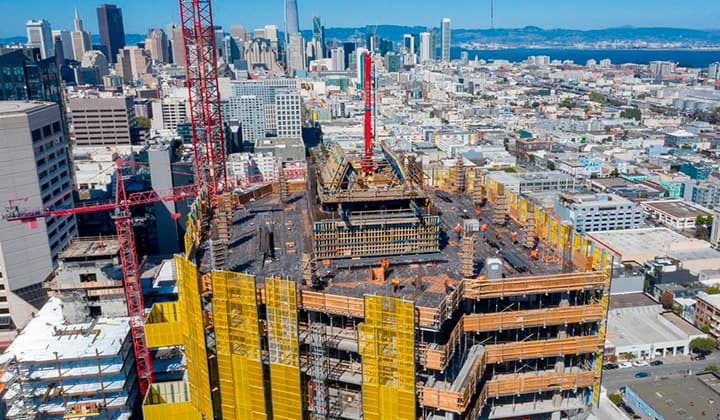
Formwork design automation
Our client from
California, USA
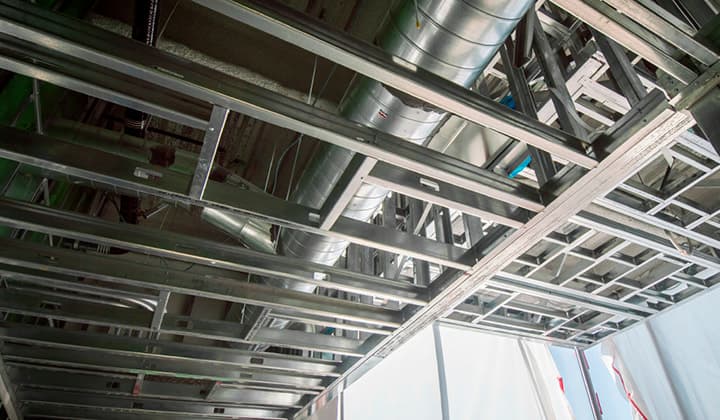
Suspended ceiling design automation
Our client from
New York, USA
Wall framing design automation
Our client from
California, USA