Have any questions? Contact us!
Join our team!
Request a free quote or consultation

Ever wondered how engineers capture every detail of a building, factory, or landscape without lifting a single tape measure? That’s where point cloud modeling comes in. It’s changing the way professionals document, analyze, and redesign the world around us.
From construction sites to historical landmarks, this technology is making it faster and easier to create accurate 3D models of real-life spaces. In this article, we’ll break down what it is, how it works, where it’s used, and why more industries are relying on it every day.
Point Cloud Modeling: What Is It?
Point cloud modeling is a method of capturing real-world objects or environments and turning them into detailed 3D digital models. It works by collecting millions of spatial data points using laser scanners, drones, or photogrammetry. Each of these points has X, Y, and Z coordinates that mark a precise position on the surface of whatever is being scanned. When you put them all together, they form a “cloud” that outlines the shape of the object or space.
This modeling method is especially valuable when accuracy matters. Whether it’s a construction site, historical building, or industrial facility, point cloud modeling helps document the structure exactly as it is, without manual measurements or guesswork.
How Point Cloud Modeling Works
The process begins with data capture and moves through a structured workflow until a usable 3D model is created. Here’s how it typically works:
- Data Collection. Scanners, drones with cameras, or structured light sensors capture millions of surface points.
- Pre-Processing. The raw point cloud data is cleaned by removing noise or irrelevant points. Downsampling may also be done to reduce file size while preserving important geometry.
- Registration. If multiple scans are taken from different angles, they are aligned and merged into a single coordinate system.
- Segmentation. The point cloud is divided into sections or features, such as walls, roofs, or machinery.
- Surface Reconstruction. Points are connected to form a continuous surface (usually a mesh) which can then be textured or colored.
- Model Export. The finished 3D model is saved in formats like OBJ, STL, or PLY for use in CAD software, GIS systems, or VR platforms.
In the end, each step helps transform raw spatial data into an accurate, visual, and interactive model that can be used across many digital workflows.
Powerkh: A Trusted Partner in Point Cloud Modeling

Our Powerkh is a company that provides point cloud modeling services through advanced scan-to-BIM technology. We are a UK-based company with offices in Ukraine and the USA. We use laser scanning and 3D point cloud data to create precise digital models of existing structures. This enables our clients in construction, engineering, and architecture to work with accurate, real-world data for better planning and project execution.
In our company, we focus on transforming raw point cloud data into detailed 3D models that can be used for various applications, from building renovations to new construction projects. Our point cloud modeling services allow teams to visualize and understand the complexities of structures before making design decisions, reducing risks and improving project outcomes.
Our models integrate easily with other tools, helping clients streamline workflows and make informed decisions throughout the project lifecycle.
Key Highlights:
- UK-based company with offices in Ukraine and the USA
- Specializes in point cloud modeling and scan-to-BIM services
- Utilizes laser scanning and 3D point cloud technology for accurate digital models
- Serves industries including construction, engineering, and architecture
- Focus on delivering precise, detailed models for renovation and new construction projects
- Offers additional services like facility management and asset tracking
- Models integrate seamlessly with other tools for streamlined workflows
Services:
- Point Cloud Modeling
- Scan-to-BIM
- Facility Management
- Asset Tracking
- Data Integration
Step-by-Step: From Scan to 3D Model
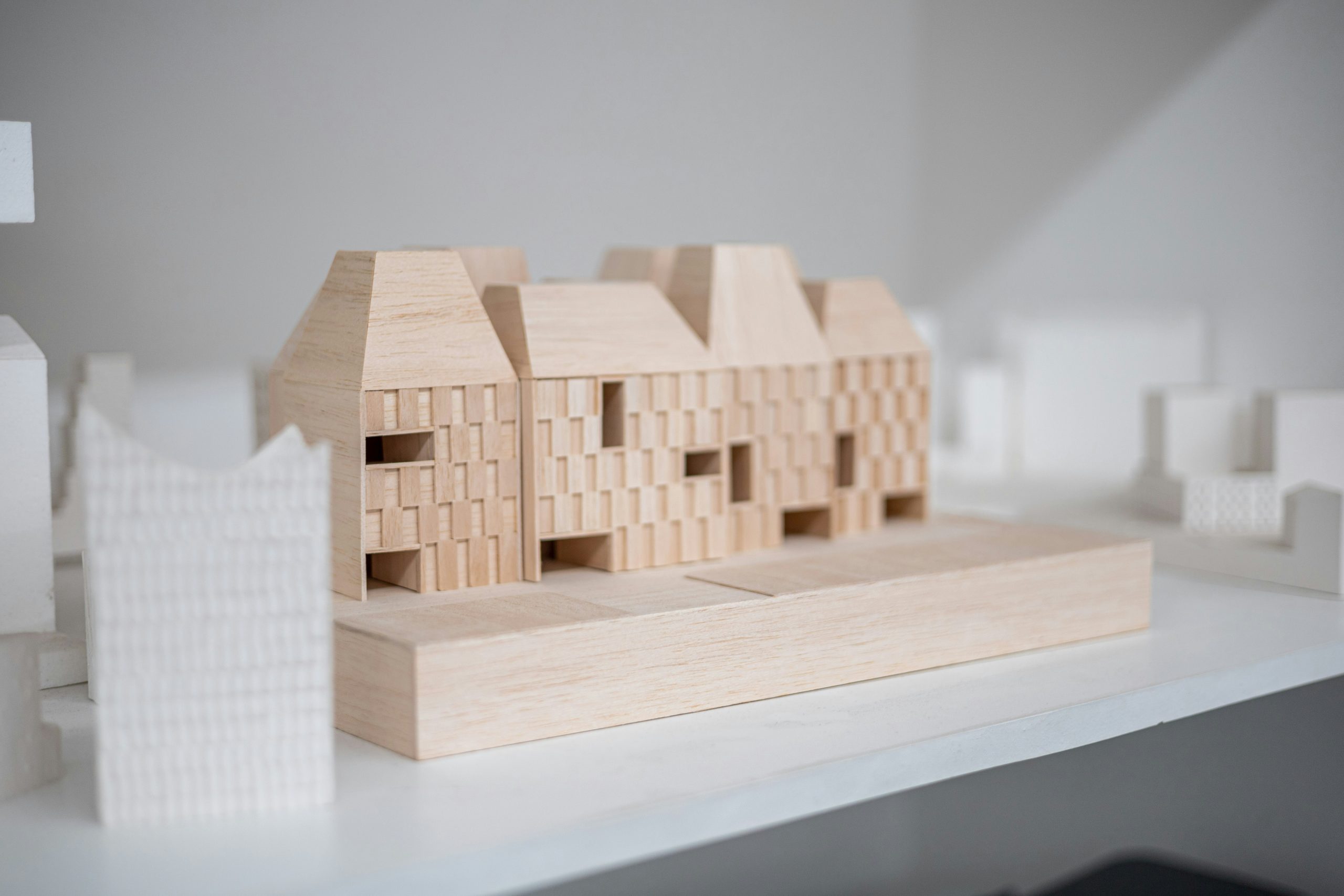
Creating a 3D model from point cloud data is a structured process that transforms raw spatial data into a clean, accurate, and usable digital model. Each step adds value by refining the data and preparing it for design, analysis, or visualization tasks.
Step 1: Data Acquisition
The process begins by scanning the target object, structure, or environment using technologies like LiDAR, photogrammetry, or structured light scanners. These tools collect millions of data points from the surface, capturing its geometry in fine detail. Depending on the project, data may be captured from drones (for large areas), handheld scanners (for interior spaces), or stationary setups (for architectural or industrial surveys).
Step 2: Pre-Processing and Cleaning
Once the raw point cloud is collected, it usually contains noise, redundant data, or outliers due to environmental factors or scanner limitations. Filtering techniques remove these inaccuracies, while downsampling reduces the overall number of points to make the data more manageable. This step improves performance and ensures that the most important details are preserved.
Step 3: Scan Alignment (Registration)
When multiple scans are taken from different angles or positions, they need to be merged into a single, unified point cloud. This process, called registration, aligns the scans into a common 3D coordinate system. Techniques such as the Iterative Closest Point (ICP) algorithm are used to match overlapping features between scans with high precision.
Step 4: Segmentation and Classification
At this stage, the point cloud is segmented into distinct parts or categorized by feature types. This makes it easier to isolate specific elements like ground surfaces, building facades, structural components, or vegetation. Classification adds context to the model, which is especially useful in civil engineering, urban planning, or forestry analysis.
Step 5: Surface Reconstruction
With a clean and organized point cloud, surface reconstruction algorithms are applied to convert the discrete points into a continuous mesh surface. This turns the point cloud into a 3D model that represents the scanned object’s shape and volume. Common methods include Poisson reconstruction for smooth surfaces and Delaunay triangulation for more geometric precision.
Step 6: Export and Integration
Finally, the model is exported into industry-standard file formats such as OBJ, STL, or PLY, depending on how it will be used. These models can then be imported into CAD, BIM, GIS, or visualization software for further editing, analysis, or presentation. At this point, the data becomes a valuable asset in workflows such as renovation planning, clash detection, environmental modeling, or 3D printing.
This structured approach ensures that point cloud data is transformed into accurate, actionable 3D models that professionals can rely on for critical decision-making.
Point Cloud vs Scan-to-BIM: What’s the Difference?
While both techniques involve scanning real-world spaces, they serve different goals.
Point cloud modeling focuses on creating a geometric representation of an object or environment using millions of spatial points. It captures the shape and structure but doesn’t include semantic data about what those shapes represent.
Scan-to-BIM takes point cloud data a step further by converting it into an intelligent Building Information Model (BIM). In a BIM model, elements like walls, doors, pipes, and windows are defined as specific objects with attributes such as material, dimensions, and functions.
In short, point cloud modeling is about geometry and measurement. Scan-to-BIM is about turning that geometry into meaningful, data-rich models for construction and facility management.
Advantages and Limitations of Point Cloud Modeling

Point cloud modeling has become a go-to method for capturing the physical world in 3D. It allows professionals to create highly accurate digital replicas of buildings, landscapes, and objects using millions of data points. But like any technology, it comes with its own set of strengths and challenges. Understanding both sides is essential for anyone considering point cloud workflows for design, analysis, or documentation.
Advantages
- High Accuracy: Captures real-world objects with millimeter-level precision.
- Fast Data Collection: Scans large or complex areas quickly, reducing on-site time.
- Comprehensive Coverage: Records every visible surface, even in hard-to-reach places.
- Versatile Applications: Works across industries, from architecture to manufacturing to entertainment.
Limitations
- No Surface Intelligence: Raw point clouds don’t include surface or material definitions without further processing.
- Heavy File Sizes: Dense point clouds can result in large files, requiring high processing power.
- Complex Processing: Turning raw data into usable models requires specialized software and expertise.
- Not Ideal for Direct Manufacturing Use: Point clouds must be converted into BRep or mesh models before they can be used for fabrication or detailed engineering.
Point cloud modeling delivers clear benefits when accuracy, speed, and full spatial coverage are priorities. With the right approach and tools, the limitations can be managed, making it a valuable part of modern 3D workflows.
Who Uses Point Cloud Modeling and Why?
Point cloud modeling is essential for professionals who need precise, real-world data to support design, analysis, inspection, or digital documentation. It helps bridge the gap between physical environments and digital workflows, offering a reliable foundation for decision-making. Here are the key users and how they apply this technology:
- Architects and Engineers: Use point cloud data for site surveys, renovation planning, and creating detailed as-built models that reflect actual site conditions.
- Construction Managers: Rely on point clouds to compare construction progress against design models, detect clashes early, and verify structural elements in real time.
- Surveyors and Geospatial Analysts: Use point cloud modeling for mapping terrain, modeling land features, and conducting infrastructure assessments.
- Heritage Conservationists: Digitally capture and archive historic buildings, sculptures, and sites to enable restoration efforts and long-term preservation without physically altering or damaging the original structures.
- Manufacturers and Industrial Designers: Apply point cloud modeling for reverse engineering, product redesign, and dimensional inspection of components to ensure manufacturing precision and speeds up product development cycles.
- VR and Game Developers: Use point clouds to create immersive, lifelike environments for simulation, training, and entertainment to replicate real-world locations with a high degree of realism.
Across these fields, point cloud modeling supports more informed planning, improves accuracy, and streamlines workflows—from initial scans to finished digital assets.
Conclusion
Point cloud modeling has become a foundational tool for capturing the physical world in digital form. Its ability to generate detailed 3D models from real-world environments helps professionals across industries work with greater accuracy, efficiency, and insight. From construction and architecture to heritage preservation and virtual reality, this method supports smarter planning, better documentation, and streamlined workflows. As scanning technologies continue to advance, point cloud modeling will play an even larger role in shaping how we design, build, and interact with the spaces around us.
FAQ
What is point cloud modeling?
Point cloud modeling is the process of creating a digital 3D representation of a physical object or environment using millions of individual data points. These points are typically captured using LiDAR, photogrammetry, or 3D scanners.
How is point cloud data turned into a 3D model?
After capturing the data, the point cloud is cleaned, aligned, and processed using specialized software. The points are then converted into a surface or mesh model that can be used in CAD, BIM, GIS, or visualization platforms.
What industries use point cloud modeling?
Industries such as construction, architecture, engineering, surveying, manufacturing, and cultural preservation all use point cloud modeling for tasks like as-built documentation, renovation planning, reverse engineering, and site analysis.
Is point cloud modeling accurate?
Yes, when done properly, it is highly accurate. LiDAR-based scans, for example, can achieve millimeter-level precision, making point cloud modeling reliable for detailed measurements and analysis.
Can point cloud data be used for 2D drawings or maps?
Absolutely. Point cloud data can be projected onto a flat plane to generate 2D floor plans, elevation drawings, or topographic maps, depending on the application.
Do I need advanced skills to use point cloud models?
Basic viewing can be done with user-friendly software, but creating and editing models usually requires training and experience. Many companies outsource this task to specialists or use Scan-to-BIM services.
How much does point cloud modeling cost?
Costs vary widely depending on the project’s size, complexity, required level of detail, and equipment used. Small surveys may cost a few thousand dollars, while large-scale or high-precision projects can be significantly more.
Our Case Studies
We have handled 200+ BIM & VDC projects for commercial, industrial, and residential sectors.
Our work includes:
Formwork design automation
Our client from
California, USA
Suspended ceiling design automation
Our client from
New York, USA
Wall framing design automation
Our client from
California, USA