Have any questions? Contact us!
Join our team!
Request a free quote or consultation

LVL (Laminated Veneer Lumber) is an engineered wood product made by bonding multiple thin wood veneers together with adhesive. It’s commonly used in construction for structural applications like beams, headers, and load-bearing supports, offering superior strength and dimensional stability compared to traditional solid lumber.
Walk onto any construction site today and there’s a good chance the structural beams overhead aren’t solid wood. They’re LVL—laminated veneer lumber—and this engineered material has quietly revolutionized how buildings get framed.
LVL has been around for more than three decades, but many people still don’t know what makes it different from traditional lumber. Here’s everything builders and property owners need to understand about this high-performance construction material.
Understanding LVL: The Basics
Laminated veneer lumber is an engineered wood product that belongs to a broader category called structural composite lumber. The name tells most of the story: thin wood veneers get laminated together to create a stronger, more consistent building material.
Unlike solid lumber that comes directly from milling logs, LVL gets manufactured in a controlled factory environment. Multiple layers of thin wood veneers—typically thin (exact thickness varies by manufacturer)—are bonded together using moisture-resistant adhesives. These veneers are kiln-dried before assembly, which gives LVL its dimensional stability.
The grain of each veneer runs in the same direction, parallel to the length of the finished product. This orientation maximizes strength along the beam’s length, making LVL ideal for load-bearing applications.
Common Species Used
In North America, manufacturers typically use softwood species for LVL production. Douglas fir, southern pine, and spruce are popular choices. Some hardwood species work too, though softwoods dominate the market due to availability and performance characteristics.
How LVL Gets Made
The manufacturing process starts with logs being rotary peeled into continuous sheets of veneer. These sheets get clipped to consistent widths and inspected for defects.
After kiln drying reduces moisture content, the veneers receive a coating of moisture-resistant adhesive—typically phenol-formaldehyde resin. The coated veneers are then stacked with grain running parallel and fed into a continuous or batch press.
Heat and pressure bond the layers together into large blocks called billets. Once cured, these billets get ripped to standard widths and cut to specified lengths. The result is a dimensionally stable product with predictable performance characteristics.
Add BIM Support Without Expanding Your Team

Powerkh works with companies that need extra engineering capacity for ongoing projects. Its services include BIM modeling, coordination, detailing, automation, and point cloud processing. This helps teams handle technical work without increasing internal workload.
Need Extra BIM Capacity?
Talk with Powerkh to:
- extend your team with BIM specialists
- handle modeling and documentation tasks
- support project delivery from design to build
👉 Contact Powerkh for a project review and consultation.
Where Construction Teams Use LVL
LVL shines in structural applications where strength and consistency matter most. The material is typically used for:
- Headers and beams – Supporting loads over windows, doors, and openings
- Rimboard – Perimeter framing at floor levels
- Edge-forming material – Creating flush beams in floor systems
- Scaffolding planks – Where dimensional stability prevents accidents
- Roof and floor joists – For longer spans without intermediate supports
The construction industry has embraced LVL for situations where solid lumber would require excessive depth or where dimensional lumber simply cannot span the required distance.
Performance Specifications
LVL offers measurable performance advantages. Common elastic moduli are 12, 13 and 14 GPa (1,700,000, 1,900,000 and 2,000,000 psi). Common allowable bending stress values are 19 and 21 MPa (2,800 and 3,000 psi).
These numbers mean LVL can handle significant loads while spanning greater distances than comparable solid lumber. The manufacturing process eliminates many of the natural defects found in solid wood—knots, splits, and grain irregularities—that limit structural capacity.
| Property | LVL | Solid Lumber |
|---|---|---|
| Dimensional Stability | High (pre-dried) | Moderate (varies with moisture) |
| Strength Consistency | Uniform throughout | Varies by piece |
| Span Capability | Longer spans possible | Limited by defects |
| Warping/Twisting | Minimal | Common issue |
| Moisture Movement | Reduced | Significant |
| Load Capacity | Higher per cross-section | Lower, less predictable |
Key Advantages Over Solid Wood
Why has LVL become so popular? Several factors drive adoption:
Predictable Performance
Every piece of LVL from a production run has nearly identical structural properties. Solid lumber varies significantly from board to board based on growth characteristics, knot placement, and grain orientation.
Dimensional Stability
Because veneers are kiln-dried before pressing, LVL contains minimal moisture. This means less shrinkage, swelling, warping, or twisting after installation. Framers don’t need to worry about callbacks from dimensional changes.
Efficient Material Use
LVL production uses wood resources more efficiently than solid lumber milling. Manufacturers can incorporate smaller diameter logs and utilize more of each tree.
Longer Spans
LVL beams can span greater distances than solid lumber of equivalent dimensions. This reduces the need for intermediate support posts and creates more open floor plans.
Considerations and Limitations
LVL isn’t perfect for every application. The material costs more per linear foot than dimensional lumber, though the price difference narrows when accounting for performance advantages.
Installation requires appropriate equipment. LVL beams can be heavy, and cutting or drilling requires sharp tools designed for engineered wood products.
Modern LVL formulations comply with the strict 2026 formaldehyde emission limits (e.g., 0.05 ppm or lower), effectively eliminating health concerns associated with older resins.
How LVL Compares to Plywood
Both LVL and plywood are engineered wood products made from veneers, but they serve different purposes. Plywood alternates veneer grain direction in each layer, creating a panel product with strength in multiple directions. LVL runs all grain parallel for maximum strength in one direction.
Think of plywood as a sheet material for sheathing and subflooring. LVL is a beam material for structural support.
The Bottom Line
Laminated veneer lumber has earned its place in modern construction through consistent performance, dimensional stability, and efficient use of wood resources. The material handles structural loads reliably while spanning distances that would require multiple solid lumber members.
For builders working on projects with large openings, long spans, or tight tolerances, LVL delivers predictable results that solid lumber simply cannot match. The upfront cost premium pays dividends through reduced callbacks, fewer support posts, and confidence in structural performance.
Understanding what LVL offers—and where it makes sense—helps construction professionals and property owners make informed material choices that balance performance, cost, and project requirements.
Frequently Asked Questions
What does LVL stand for in construction?
LVL stands for Laminated Veneer Lumber. It is an engineered wood product made by bonding thin wood veneers together under heat and pressure.
Can LVL be used outdoors?
LVL can be used in protected outdoor conditions, but it should not be exposed to constant moisture. Proper detailing like flashing and coatings is required to maintain performance.
How much weight can an LVL beam support?
The load capacity of an LVL beam depends on its size, span, and support conditions. Even typical residential beams can support substantial loads, but exact capacity must be calculated using manufacturer data and engineering design.
Is LVL stronger than steel?
Steel has higher absolute strength, but LVL offers a strong and efficient solution for many structural applications at a lower cost. Each material serves different purposes depending on project requirements.
Do building codes accept LVL?
Yes, LVL is widely accepted by building codes when installed according to manufacturer specifications and local code requirements.
Can LVL beams be cut or drilled on site?
LVL beams can be cut and drilled, but only within manufacturer guidelines. Hole sizes, locations, and notching limits must be followed to avoid weakening the structure.
How long does LVL last in construction?
When properly installed and protected from moisture, LVL can last for the life of the building. Its engineered structure provides consistent long-term performance.

Our Case Studies
We have handled 200+ BIM & VDC projects for commercial, industrial, and residential sectors.
Our work includes:
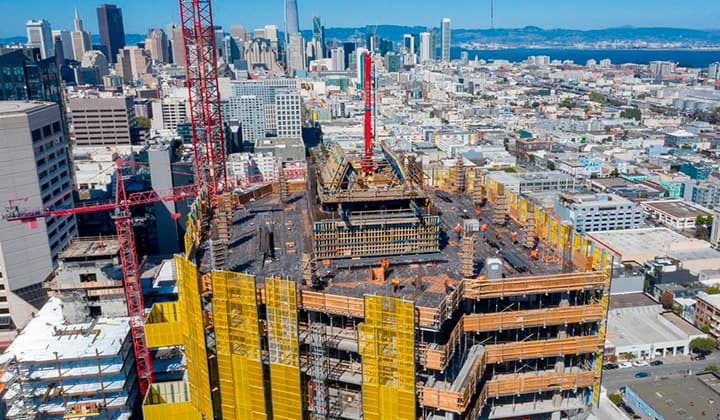
Formwork design automation
Our client from
California, USA
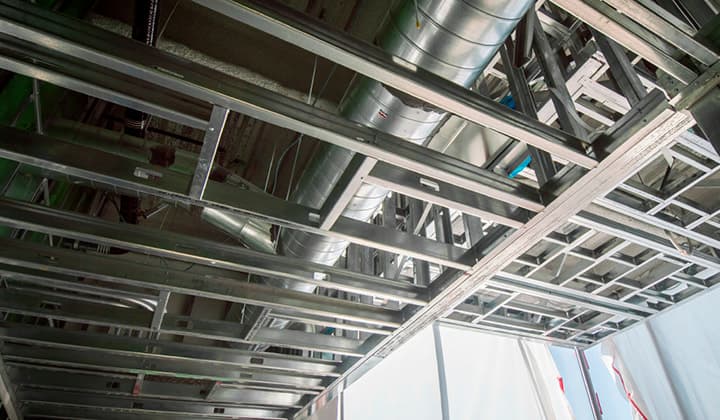
Suspended ceiling design automation
Our client from
New York, USA
Wall framing design automation
Our client from
California, USA