Have any questions? Contact us!
Join our team!
Request a free quote or consultation

Lath is a structural backing material used in construction, consisting of narrow strips of wood, metal, or gypsum board that provide a base for plaster, stucco, or other finishes on walls and ceilings. It creates a framework that allows wet plaster to grip and adhere, forming durable interior and exterior surfaces.
Walk into an older home and knock on the walls. Hear that dense, solid sound? That’s probably lath and plaster construction. For centuries, builders relied on this method to create smooth, durable walls and ceilings before drywall dominated residential construction.
But what exactly is lath? And why does it still matter in modern building projects?
According to Britannica, lath is any material fastened to the structural members of a building to provide a base for plaster. It’s the skeleton beneath the skin—the framework that gives wet plaster something to grip onto and creates the finished surfaces we see every day.
Understanding the Basic Lath Building Process
The lath and plaster building process creates interior dividing walls and ceilings through a straightforward but skill-intensive method. According to Wikipedia, it consists of narrow strips of material nailed horizontally across wall studs or ceiling joists, then coated in plaster.
Here’s how it works. Lathers—the skilled tradespeople who specialize in this work—install the lath boards onto framing members. The Western States Carpenters Training Fund notes that lathers install wood, metal, and gypsum lath boards that support plaster, concrete, and stucco coatings used in construction.
Once the lath is secured, plasterers apply wet plaster in multiple coats. The plaster squeezes through gaps in the lath, creating mechanical keys that lock the coating to the wall when it dries. This mechanical bond creates remarkably strong, long-lasting surfaces.
The process demands precision. Lathers complete extensive training—the Western States Carpenters Training Fund program includes 640 hours of professional training plus 5,200 hours of on-the-job training, with earning potential exceeding $68,000.
Types of Lath Materials Used in Construction
Not all lath is created equal. The material choice depends on the application, budget, and structural requirements.
Wood Lath
Traditional wood lath consists of thin, narrow strips of wood. According to Britannica, narrow wood strips were generally used in older residential buildings.
These strips are nailed horizontally across studs or joists with small gaps between them. When plaster is applied, it oozes through these gaps and forms keys on the backside, creating a mechanical lock.
Wood lath dominated construction until the mid-20th century. It’s still found in historic buildings and occasionally used in restoration projects where maintaining architectural authenticity matters.
Metal Lath
Metal lath revolutionized the industry. According to ASTM standards, metal lath provides a robust base for plaster applications and comes in several configurations.
The Mesh Company explains that metal lath differs from standard metal mesh in its specific design for construction purposes. It’s manufactured with expanded metal patterns that create three-dimensional surfaces for superior plaster adhesion.
Metal lath offers distinct advantages. It doesn’t rot, resists fire better than wood, and provides excellent dimensional stability. It’s commonly used for both interior walls and exterior stucco applications.
According to the New Mexico Administrative Code, metal lath shall be installed around interior and exterior wall openings and over dissimilar materials in rammed earth construction—demonstrating its versatility in specialized building methods.
Gypsum Lath
Britannica identifies gypsum lath as one of the most common lath types. It’s manufactured as rigid boards with a gypsum core, providing a flat, stable surface for plaster application.
Gypsum lath boards install faster than wood strips and provide better fire resistance. The ICC building codes extensively cover gypsum board and panel products, reflecting their widespread adoption in modern construction.
| Lath Type | Material Composition | Primary Applications | Key Advantages
|
|---|---|---|---|
| Wood Lath | Thin wood strips | Historic buildings, restoration | Traditional method, authentic appearance |
| Metal Lath | Expanded metal mesh | Interior walls, exterior stucco | Fire-resistant, doesn’t rot, durable |
| Gypsum Lath | Gypsum board panels | Interior walls and ceilings | Fast installation, fire-resistant, stable |
| Insulated Board | Composite materials | Energy-efficient applications | Thermal performance, moisture resistance |
Where Lath Gets Used in Modern Construction
Despite drywall’s dominance in residential construction, lath remains essential in specific applications.
Commercial buildings frequently use metal lath for stucco exteriors. The material provides excellent weather resistance and allows for textured, decorative finishes that drywall can’t match.
High-end residential projects often specify plaster over lath for interior walls. The result? Walls with superior soundproofing, better durability, and a premium feel that stands apart from standard drywall.
Restoration projects can’t avoid lath. When working on historic structures, maintaining original construction methods preserves architectural integrity and often satisfies preservation requirements.
Curved surfaces and complex geometries benefit from lath systems. Metal lath can bend and conform to shapes that rigid drywall panels simply can’t accommodate.
Get BIM Support From Powerkh

If your project depends on accurate models, coordinated drawings, and fewer issues in the field, Powerkh is worth bringing in early. The company provides BIM and VDC services for construction teams, including BIM modeling, BIM coordination, scan to BIM, structural detailing, prefabrication support, and BIM automation. That work helps turn drawings and site data into buildable documentation teams can actually use.
Need Better Models, Drawings, and Coordination?
Talk with Powerkh to:
- build BIM models from design files or point cloud data
- catch clashes and resolve coordination issues earlier
- prepare shop drawings and fabrication-ready documentation
👉 Contact Powerkh to review your project and BIM needs.
Advantages That Keep Lath Relevant
Why does lath persist when drywall is faster and cheaper?
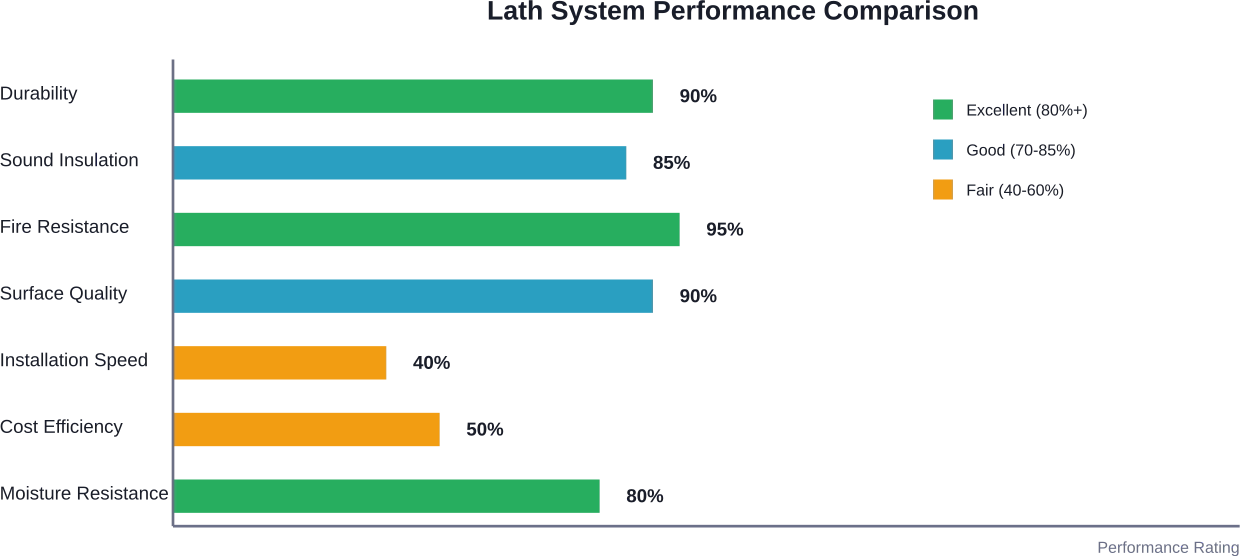
Durability tops the list. Properly installed lath and plaster walls can last centuries. Many buildings from the 1800s still have original plaster surfaces in excellent condition.
Sound insulation improves significantly. The mass and density of plaster over lath creates superior acoustic barriers compared to lightweight drywall construction.
Fire resistance matters for safety. Metal and gypsum lath both provide excellent fire ratings, while the thick plaster coating adds additional protection.
Surface quality differs noticeably. Plaster creates smoother, harder surfaces that resist dents and damage better than drywall’s paper facing.
Real talk: moisture resistance in certain applications gives lath systems an edge. Properly specified metal lath with cement-based plasters performs well in high-humidity environments where paper-faced drywall struggles.
The Downsides Worth Knowing
Nothing’s perfect, and lath systems come with legitimate drawbacks.
Installation costs run higher. The labor-intensive process requires skilled tradespeople, longer installation times, and multiple application stages. Material costs for metal and gypsum lath also exceed drywall pricing.
Weight creates structural considerations. Lath and plaster systems weigh significantly more than drywall, potentially requiring stronger framing members in some applications.
Repair complexity frustrates homeowners. When damage occurs, patching lath and plaster demands specialized skills. Matching textures and seamlessly blending repairs challenges even experienced plasterers.
Drying time extends project schedules. Wet plaster needs adequate curing time between coats, unlike drywall’s immediate readiness for finishing.
| Factor | Lath and Plaster | Modern Drywall |
|---|---|---|
| Installation Time | Several days (multiple coats) | 1-2 days typical |
| Labor Skill Required | Specialized training needed | Moderate skill level |
| Repair Difficulty | High (specialist often needed) | Low (DIY-friendly) |
| Lifespan | 100+ years typical | 30-50 years typical |
Standards and Code Requirements
ASTM maintains several specifications governing lath installation and materials. ASTM C841 covers the installation of interior lathing and furring, establishing industry benchmarks for proper application.
ASTM C847 specifies requirements for metal lath products, ensuring manufacturers meet minimum quality standards for construction use.
The ICC building codes reference these ASTM standards and establish requirements for gypsum board, panel products, and plaster applications in residential and commercial construction.
Local building codes may impose additional requirements. Projects involving lath systems should verify compliance with applicable standards before beginning work.
Final Thoughts on Lath in Construction
Lath remains a fundamental construction material with deep historical roots and continuing relevance. From narrow wood strips in century-old homes to modern metal lath supporting commercial stucco exteriors, these backing systems create durable, high-quality wall and ceiling surfaces.
The choice between lath systems and modern alternatives depends on project requirements. Budget-conscious residential construction typically favors drywall. Projects demanding superior durability, fire resistance, soundproofing, or architectural authenticity benefit from lath and plaster methods.
Understanding lath types—wood, metal, gypsum, and insulated board—helps specify appropriate materials for specific applications. ASTM standards and building codes ensure quality and safety when properly followed.
For restoration work, lath knowledge becomes essential. Preserving historic buildings requires understanding original construction methods and matching materials appropriately.
Whether restoring a Victorian home, specifying finishes for a commercial project, or simply understanding the walls in an older building, knowing what lath is and how it functions provides valuable insight into construction fundamentals that have served builders for generations.
Frequently Asked Questions
What’s the difference between lath and drywall?
Lath is a backing material (wood strips, metal mesh, or gypsum board) that provides a base for wet plaster application. Drywall is a complete wall panel with gypsum core and paper facing that installs directly without additional plaster coats. Lath requires plaster finish coats; drywall only needs joint compound and tape at seams.
Can metal lath be used for exterior applications?
Yes, metal lath excels in exterior applications. It’s commonly used as the base for stucco on building exteriors because it resists moisture, doesn’t rot like wood, and provides excellent adhesion for cement-based plasters. Proper installation following ASTM C1063 standards ensures weather-resistant performance
How long does lath and plaster last?
Properly installed lath and plaster systems routinely last 100+ years. Many buildings from the 1800s and early 1900s retain original plaster walls in serviceable condition. Durability depends on installation quality, moisture control, and structural stability of the building.
Is lath still used in new construction?
Lath appears less frequently in standard residential construction but remains common in commercial buildings, high-end custom homes, restoration projects, and specialized applications requiring superior durability, fire resistance, or curved surfaces. Metal lath dominates exterior stucco applications nationwide.
What tools do lathers use?
Lathers work with tin snips or power shears for cutting metal lath, hammers or pneumatic staplers for fastening, measuring tools for layout, and safety equipment. The Western States Carpenters Training Fund reports that complete training requires 640 professional hours plus 5,200 on-the-job hours to master these specialized techniques.
Can lath and plaster walls be repaired?
Yes, but repairs require specialized skills. Small cracks can be patched with appropriate plaster compounds. Larger damaged areas may need lath replacement and multiple plaster coats to match surrounding surfaces. Professional plasterers achieve better results matching textures and blending repairs seamlessly.
Why does old plaster crack?
Plaster cracks from building settlement, structural movement, moisture infiltration, or natural aging. Wood lath expands and contracts with humidity changes, potentially causing hairline cracks. Foundation shifts create stress that telegraph through rigid plaster. Most minor cracking is cosmetic rather than structural.

Our Case Studies
We have handled 200+ BIM & VDC projects for commercial, industrial, and residential sectors.
Our work includes:
Formwork design automation
Our client from
California, USA
Suspended ceiling design automation
Our client from
New York, USA
Wall framing design automation
Our client from
California, USA


