Have any questions? Contact us!
Join our team!
Request a free quote or consultation

Imagine being able to capture every detail of a building, a crime scene, or even a historical monument in minutes – without touching a thing. That’s the magic of laser scanning. It’s a technology that’s quietly revolutionizing industries by turning physical spaces into precise digital 3D models. But what exactly is laser scanning, and how does it work? Let’s break it down in a way that’s easy to grasp.
What Is Laser Scanning?
At its core, laser scanning is a way to measure objects or environments using laser beams. It’s like a super-smart camera that doesn’t just take pictures – it captures millions of tiny data points to create a 3D map called a point cloud. Think of it as a digital blueprint that shows every nook and cranny of whatever you’re scanning, from a car crash scene to an ancient artifact.
The best part? It’s non-contact, meaning you don’t need to poke, prod, or climb over anything. The scanner does all the work, firing laser beams and collecting data faster than you can say “3D model.”
How Does It Work?

Capturing the Environment with Laser Beams
Laser scanning is a bit like echolocation used by bats, but instead of sound, it uses infrared laser beams to map out a space. The scanner sends out these beams, which travel until they hit a surface – whether it’s a wall, a pipe, or a statue – and then bounce back to the device. By analyzing the returning light, the scanner calculates the exact distance to each point it hits, creating a precise 3D coordinate for that spot. This process happens millions of times, building a detailed digital picture of the environment.
Two Key Measurement Techniques
To figure out distances, laser scanners rely on one of two sophisticated methods, each with its own strengths:
Time-of-Flight Measurement: This technique works like a high-tech stopwatch. The scanner emits a single pulse of laser light and measures the time it takes for that pulse to travel to the surface and return. Since light travels at a constant speed, the scanner can calculate the distance based on this round-trip time. Time-of-flight is especially effective for scanning large areas, like buildings or landscapes, because it can measure long distances with great accuracy.
Phase-Shift Measurement: In this method, the scanner sends out a laser beam with a modulated intensity, creating a specific waveform. When the beam reflects back, the scanner compares the outgoing and returning waveforms to detect subtle shifts in the light’s pattern. These shifts reveal the distance to the surface. Phase-shift systems are incredibly fast and excel at capturing fine details, making them ideal for high-resolution scans of smaller, intricate objects or spaces.
Sweeping the Scene with Precision
To cover an entire object or area, the scanner uses a rotating mirror or a similar mechanism to sweep the laser beam across the environment, much like a painter brushing strokes across a canvas. As the beam moves, it captures millions of individual points, each with its own 3D coordinates. These points come together to form a point cloud – a digital 3D model that captures every detail, from the curve of a pipe to the angle of a wall, with stunning accuracy.
Why Is Laser Scanning Such a Big Deal?
Laser scanning is a game-changer for a few key reasons:
- Speed: It can capture complex spaces in minutes, not days. Traditional tools like tape measures or range finders? They can take forever.
- Accuracy: We’re talking precision down to millimeters. No more guesswork or human error.
- No Contact Needed: You can scan delicate artifacts or dangerous sites without risking damage or safety.
- Versatility: From tiny machine parts to sprawling construction sites, laser scanning works almost anywhere.
Powerkh: Pioneering Laser Scanning for BIM and VDC

At Powerkh, we are a UK-based company specializing in Virtual Design and Construction (VDC) services, with offices in the United States and Ukraine. We assist clients in adopting VDC technologies to streamline workflows and ensure efficient collaboration between architectural, structural, and MEP systems.
Our services include BIM modeling, BIM coordination, Scan to BIM, prefabrication, and structural engineering. We use advanced tools to deliver practical solutions for clash detection, generative design, and workflow automation. These services are designed to address project-specific needs while improving efficiency for architects, engineers, contractors, and on-site teams.
In our company, we use VDC principles to manage complex construction projects. By integrating advanced digital tools, we help clients make informed decisions, improve coordination, and deliver accurate project outcomes. Our work includes detailed shop drawings, prefabrication workflows, and automation processes tailored to meet project goals.
Key Highlights:
- UK-based company with additional offices in the United States and Ukraine.
- Specializes in Virtual Design and Construction (VDC) services to improve project workflows and collaboration.
- Utilizes advanced digital tools for clash detection, generative design, and workflow automation.
- Focuses on integrating architectural, structural, and MEP systems for seamless coordination.
- Provides tailored solutions for architects, engineers, contractors, and on-site teams.
Services:
- VDC Services.
- BIM modeling.
- BIM coordination
- Scan to BIM.
- Prefabrication workflows and structural detailing.
- Generative design and automation processes.
- Structural engineering and detailing
- Detailed shop drawings and clash detection services.
Where Do You See Laser Scanning in Action?

Revolutionizing Industries with Precision
Laser scanning is popping up everywhere, transforming how professionals tackle complex tasks by delivering speed, accuracy, and digital precision. From massive construction sites to delicate historical artifacts, this technology is a game-changer across a wide range of fields. Let’s dive into some of the most exciting ways it’s being used in the real world.
Construction: Building Smarter and Saving Costs
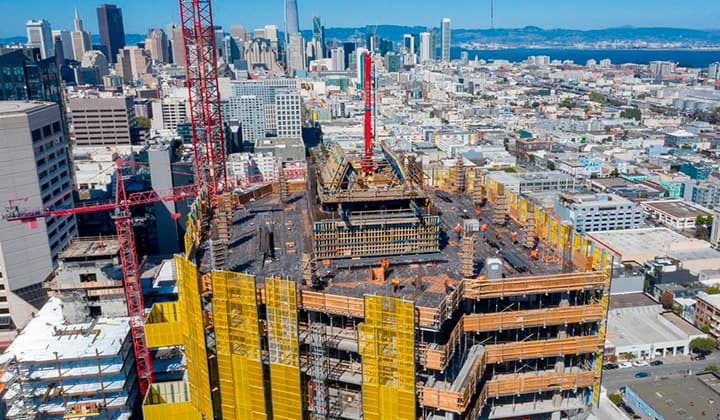
In construction, laser scanning acts like a superpower for builders. By scanning a site or structure, contractors can compare the as-built conditions to the original plans, spotting errors before they spiral into costly rework. Whether it’s ensuring a skyscraper’s foundation is perfectly aligned or verifying a bridge’s structural integrity, laser scanning provides a digital snapshot that saves time, money, and headaches.
Crime Scenes & Forensics: Preserving Every Detail
For law enforcement and forensic investigators, laser scanning is a lifesaver. Picture a car crash or crime scene: investigators use scanners to capture every tire mark, piece of evidence, or blood spatter in a detailed 3D model. This digital record helps recreate events with pinpoint accuracy for court cases and can even speed up the process of reopening roads, getting life back to normal faster.
Heritage Preservation: Safeguarding History
Museums, archaeologists, and historians are turning to laser scanning to protect our past. By scanning ancient ruins, statues, or fragile artifacts, they create digital backups that preserve every intricate detail for future generations. Whether it’s a crumbling temple or a centuries-old manuscript, these 3D models ensure history lives on, even if the original is damaged or lost.
Oil & Gas: Navigating Complex Systems
In the oil and gas industry, laser scanning is a go-to tool for managing intricate infrastructure. Engineers scan sprawling networks of pipes on oil platforms or in refineries to plan maintenance, upgrades, or expansions. These scans reveal every twist and turn, helping avoid installation errors that could lead to costly downtime or safety risks.
Insurance: Clear Records for Fair Claims
Insurance adjusters rely on laser scanning to document property damage with unmatched clarity. Whether it’s a flooded home, a wrecked car, or a fire-damaged building, a scan creates a precise 3D record of the scene. This eliminates disputes over the extent of damage, making claims faster and fairer for everyone involved.
Architecture & Engineering: Designing with Confidence
Architects and engineers use laser scanning to capture the exact measurements of existing buildings or sites, creating accurate 3D models for renovations, expansions, or new designs. This is especially handy for older structures where original blueprints are missing or outdated, ensuring every project starts with a solid foundation of data.
Beyond the Basics: Endless Possibilities
These examples are just the tip of the iceberg. Laser scanning is also used for land surveying to map terrain, inspecting factory equipment for quality control, and even planning safety strategies for high-risk sites. Wherever precision and speed are critical, you’ll find laser scanning making a difference.
The Tech Behind the Magic
Laser scanners rely on some clever hardware to get the job done. The most common types include:
- Galvanometer Scanners: These use rotating mirrors to direct the laser, perfect for detailed tasks like 3D modeling or medical imaging.
- Polygon Scanners: A spinning polygon mirror moves the laser quickly in one direction, great for high-speed jobs like laser printers or LIDAR in self-driving cars.
- Acousto-Optic Deflectors: These use sound waves to steer the laser with no moving parts, ideal for super-fast, specialized tasks like microscopy.
Each type has its strengths, but they all share the same goal: capturing data with pinpoint accuracy.
Why Choose Laser Scanning Over Old-School Methods?
Before laser scanning, measuring large or complex spaces meant relying on tools like tape measures, plumb bobs, or total stations. Those methods were slow, inconsistent, and often missed critical details. A single mistake could mean costly delays or rework.
Laser scanning flips the script. It’s faster, more reliable, and captures everything in one go. Plus, the digital point cloud can be shared, analyzed, or revisited anytime, making it a no-brainer for modern projects.
The Future of Laser Scanning
As technology gets better, laser scanners are becoming smaller, faster, and more affordable. We’re already seeing them in drones, self-driving cars, and even smartphones for things like augmented reality. The possibilities are endless – imagine scanning your home for a virtual renovation or mapping an entire city in a day.
Wrapping It Up
Laser scanning might sound like sci-fi, but it’s a practical tool that’s changing how we work, build, and preserve the world around us. By turning physical spaces into digital 3D models with incredible speed and accuracy, it’s helping professionals save time, cut costs, and get it right the first time. Whether you’re rebuilding a bridge, solving a crime, or saving a piece of history, laser scanning is the tech that makes it happen.
Frequently Asked Questions
What is a point cloud, and why is it important in laser scanning?
A point cloud is a collection of millions of 3D data points that represent the surface of an object or environment, created by a laser scanner. It’s like a digital 3D map that captures every detail, from the shape of a building to the texture of an artifact. Point clouds are crucial because they provide a precise, shareable model for analysis, design, or documentation in industries like construction, forensics, and heritage preservation.
How accurate is laser scanning compared to traditional measurement methods?
Laser scanning is incredibly accurate, often down to millimeters, and far surpasses traditional tools like tape measures or range finders. Unlike manual methods, which can vary from person to person and miss details, laser scanners capture comprehensive data quickly and consistently, reducing errors and saving time.
Can laser scanning be used in tough environments, like outdoors or hazardous sites?
Yes! Laser scanners are built to handle challenging conditions, including outdoor sites with bad weather or hazardous areas like oil platforms or crime scenes. Their non-contact nature means they can safely and efficiently capture data without putting people or delicate objects at risk.
What industries benefit the most from laser scanning?
Laser scanning is a game-changer for many fields, including construction (for project verification), law enforcement (for crime scene documentation), heritage preservation (for archiving artifacts), oil and gas (for maintenance planning), architecture (for 3D modeling), and insurance (for damage assessment). Its speed, accuracy, and versatility make it valuable anywhere precision matters.
Our Case Studies
We have handled 200+ BIM & VDC projects for commercial, industrial, and residential sectors.
Our work includes:
Formwork design automation
Our client from
California, USA
Suspended ceiling design automation
Our client from
New York, USA
Wall framing design automation
Our client from
California, USA