Have any questions? Contact us!
Join our team!
Request a free quote or consultation

Designing HVAC systems in today’s fast-paced construction environment is more challenging than ever. With tight spaces, overlapping trades, and growing demands for efficiency, even the smallest oversight can lead to costly delays. That’s why more professionals are turning to HVAC BIM – a smarter, more integrated way to plan and manage mechanical systems. In this article, we’ll explore what HVAC BIM is, how it works, why it’s changing the way projects are delivered, and what makes it an essential part of modern building design. Keep reading to see how this technology can help you build better, faster, and with fewer surprises.
What Is the Definition for HVAC BIM?
HVAC BIM stands for Heating, Ventilation, and Air Conditioning Building Information Modeling. It’s a process that uses 3D modeling software to design and manage HVAC systems within a digital representation of a building. Rather than relying on traditional 2D blueprints, HVAC BIM gives engineers and contractors a smarter way to plan ductwork, equipment placement, airflow, and system coordination in advance.
This method doesn’t just create visual models. It also includes real-world data like airflow rates, equipment specs, material types, and energy efficiency. The result is a more accurate, conflict-free design that reduces mistakes during construction and improves long-term system performance.
How HVAC BIM Works in Construction Projects
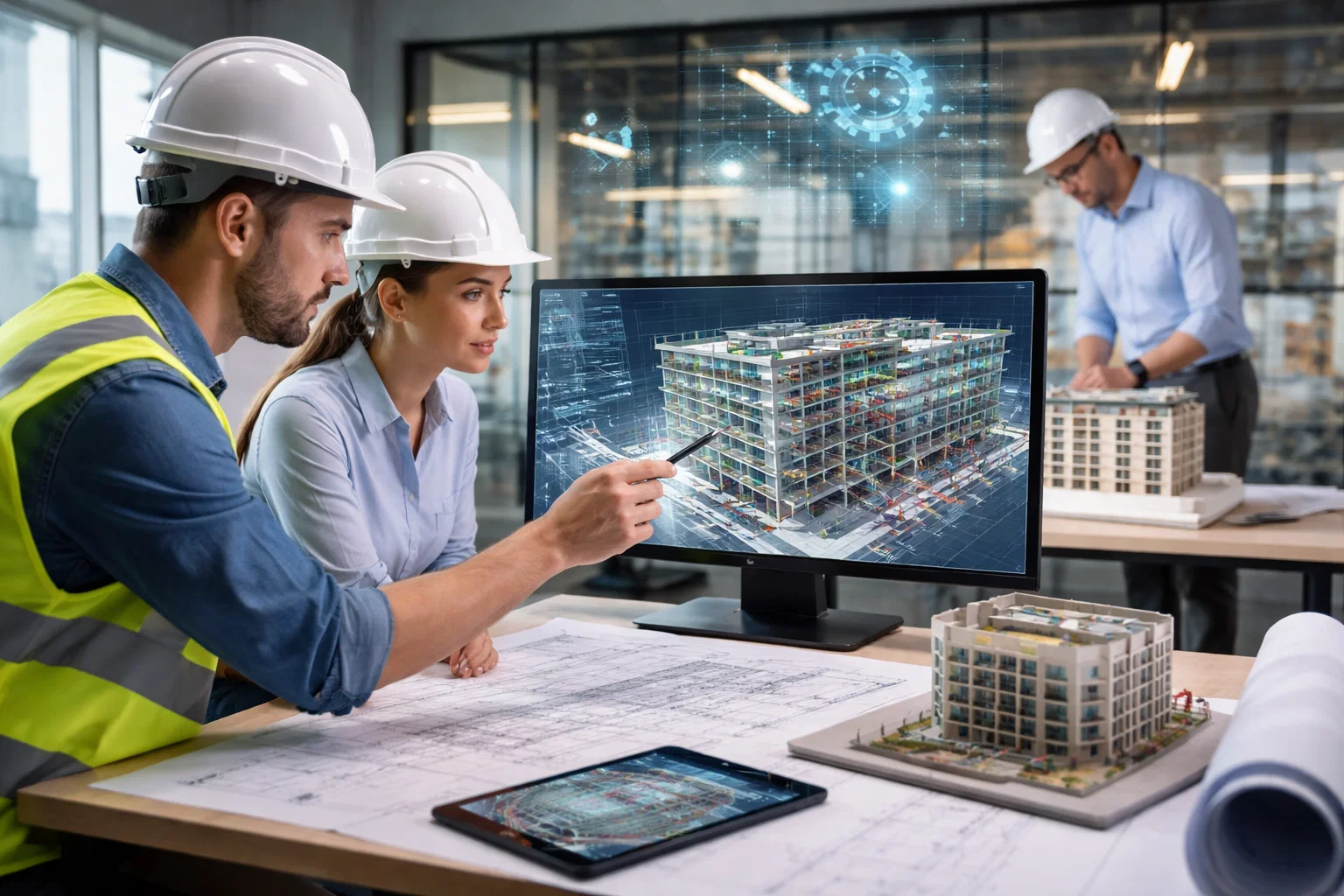
In construction, HVAC BIM helps mechanical teams create, coordinate, and implement HVAC systems with precision. It supports the full lifecycle of a building, from early design through construction and facility management.
Here’s how it typically works:
- 3D Modeling of Systems: Engineers create detailed models of ducts, vents, air handlers, chillers, and other HVAC components.
- Data Integration: Each part of the model contains real-world data, such as dimensions, flow capacity, or energy rating.
- Clash Detection: The system automatically checks for conflicts between HVAC components and other systems like plumbing or electrical.
- Coordination Across Teams: The shared model is used by architects, structural engineers, and contractors to keep everything aligned.
- Fabrication-Ready Outputs: The model can be used to generate shop drawings and material takeoffs for fabrication and installation.
This approach ensures that every element of the HVAC system fits properly and functions as intended before anyone steps on the job site.
Powerkh: Transforming Building Projects with Tailored BIM Solutions

We at Powerkh, are a UK-based company providing comprehensive Building Information Modeling (BIM) services, focused on enhancing the design, planning, and construction phases of building and infrastructure projects. With offices in the UK, Ukraine, and the USA, we leverage our global presence to offer tailored BIM solutions that foster seamless collaboration across international teams. Our services include 3D modeling, clash detection, and data integration, all aimed at ensuring projects are completed with precision, efficiency, and minimal risk.
At Powerkh, we are committed to driving digital transformation within the construction industry. Our BIM solutions help clients streamline workflows, improve project outcomes, and enhance decision-making. By ensuring that all project data is up-to-date and easily accessible, we enable project teams to work more collaboratively and avoid costly errors throughout the project lifecycle.
With a focus on meeting diverse client needs across different regions, we are equipped to reduce delays, manage costs, and ensure successful project completion, no matter the scale or location.
Key Highlights:
- UK-based company with offices in Ukraine and the USA
- Specializes in Building Information Modeling (BIM) services
- Expertise in 3D modeling, clash detection, and data integration
- Supports digital transformation in the construction industry
- Focus on improving project accuracy, efficiency, and collaboration
- Tailored solutions for both small-scale and large, complex projects
- Dedicated to reducing costs, delays, and risks throughout the project lifecycle
Services:
- BIM Services
- 3D Modeling
- Clash Detection
- Data Integration
- BIM Management
- Virtual Design and Construction (VDC)
- BIM Consulting
Why HVAC BIM Is Better Than Traditional 2D Design
Traditional 2D CAD drawings are limited in their ability to show how systems interact in real space. HVAC BIM, on the other hand, creates a full 3D model of the building and its systems, offering clear advantages.
Key benefits include:
- Improved Accuracy: 3D models reduce guesswork and help avoid measurement errors.
- Fewer Clashes: BIM highlights system conflicts early so they can be fixed before installation.
- Better Visualization: Teams can see how HVAC systems fit within the building layout.
- Faster Revisions: Design updates are easier to implement and view in real time.
- Data-Rich Models: BIM includes operational data like airflow, load calculations, and maintenance schedules.
These benefits help reduce costly changes, avoid construction delays, and deliver a more efficient HVAC system.
Solving Common HVAC Design Problems with BIM

HVAC design is complex and often involves navigating tight spaces, coordinating with multiple teams, and ensuring efficient system performance. These challenges can lead to costly delays and on-site rework if not addressed early. HVAC BIM helps resolve these problems during the design phase by giving teams better tools to plan, visualize, and coordinate.
Space Constraints
Fitting HVAC components into a building can be difficult, especially in high-density areas like ceilings, shafts, or mechanical rooms. HVAC systems must coexist with plumbing lines, electrical conduits, fire protection systems, and structural elements. BIM allows designers to accurately model and visualize how all systems will occupy space, making it easier to plan exact routing, identify potential bottlenecks, and adjust layouts early on.
System Clashes
Unexpected clashes between ducts, beams, or other systems are one of the leading causes of delays in HVAC installation. BIM software includes automated clash detection that highlights these conflicts before construction begins. This gives mechanical designers time to reroute ductwork or adjust other components, reducing costly revisions during installation.
Inaccurate Duct Layouts
Poorly designed duct layouts can result in airflow imbalance, increased energy usage, and uneven temperature control throughout the building. HVAC BIM enables precise modeling of duct runs, pressure zones, and airflow paths. Engineers can test and refine layouts digitally to ensure the system performs as intended, improving comfort and efficiency.
Poor Communication
HVAC projects involve multiple disciplines – mechanical engineers, architects, structural teams, and contractors – all working with different priorities. Miscommunication or outdated drawings often leads to errors and rework. BIM solves this by centralizing design information in a shared, real-time model. All teams can access the same up-to-date data, reducing confusion and improving coordination throughout the project.
By tackling these issues at the design stage, HVAC BIM not only prevents problems but also leads to smoother construction, fewer change orders, and a more reliable finished system.
Key Features of HVAC BIM Services
HVAC BIM services provide a range of capabilities designed to improve design quality and project coordination. Common features include:
- 3D HVAC Modeling: Visualizes how components fit and connect within the building.
- Parametric Components: Parts like dampers or valves adapt automatically as designs change.
- Clash Detection and Resolution: Finds and resolves conflicts between systems before construction.
- MEP Coordination: Aligns HVAC with plumbing, electrical, and structural elements.
- Fabrication and Shop Drawings: Generates detailed plans for manufacturing and site installation.
- Builders Work Drawings: Identifies where openings, sleeves, and supports are needed in structures.
- Material Takeoffs and BOM: Automatically calculates material quantities for ordering and budgeting.
These features allow teams to reduce risk, improve accuracy, and save time throughout the project.
How HVAC BIM Improves Collaboration and Workflow
Construction projects involve many disciplines working at once. HVAC BIM improves collaboration by providing a shared digital environment where teams can coordinate in real time.
Instead of passing around disconnected drawings or dealing with slow approvals, all stakeholders can access a single BIM model. Engineers can adjust duct layouts, architects can review ceiling clearances, and contractors can plan installations – all from the same system. This transparency reduces miscommunication, speeds up decision-making, and keeps everyone aligned on project goals.
With better communication and fewer surprises, HVAC BIM leads to smoother workflows and more predictable outcomes.
Long-Term Benefits of Using HVAC BIM

Beyond construction, HVAC BIM supports long-term building operation and maintenance. The precision and data embedded in the model deliver lasting value.
Key long-term benefits:
- Energy Efficiency: Accurate airflow and zoning lead to reduced energy use.
- Lower Maintenance Costs: Well-coordinated systems experience fewer breakdowns.
- Extended System Life: Reduced wear from efficient design can add years to system lifespan.
- Facility Management Support: BIM data can be used for repairs, upgrades, and performance monitoring.
- Cost Predictability: Fewer surprises during installation and operation keep budgets under control.
HVAC BIM isn’t just a design tool – it’s an investment in a building’s long-term efficiency and performance.
Conclusion
HVAC BIM has become a vital tool in modern construction, helping teams design, coordinate, and deliver mechanical systems with greater accuracy and efficiency. By moving away from traditional 2D drawings and embracing intelligent 3D models, HVAC professionals can identify problems early, reduce installation errors, and optimize performance across the entire lifecycle of a building. Whether you’re working on a residential build or a large-scale commercial project, HVAC BIM offers a smarter, more collaborative way to plan and execute complex systems. It’s not just about making design easier – it’s about building better outcomes from the ground up.
FAQ
What does HVAC BIM actually include?
HVAC BIM includes the 3D modeling of ductwork, air handling units, piping, valves, and other HVAC components. These models also contain performance data like airflow rates, pressure levels, and system specifications, which help engineers and contractors make informed decisions during design and installation.
Is HVAC BIM only useful for large construction projects?
No, HVAC BIM can be used on projects of any size. While it’s especially helpful in complex or multi-system buildings, even small residential projects benefit from better coordination, reduced errors, and more efficient installations.
How does BIM prevent clashes during construction?
BIM software detects spatial conflicts by analyzing how HVAC systems interact with other building elements like plumbing, electrical, and structural features. This allows teams to make adjustments digitally before work begins on-site.
Can HVAC BIM help reduce project costs?
Yes, BIM helps reduce costs by minimizing rework, speeding up design revisions, and improving coordination across teams. By catching problems early, it helps avoid expensive delays and changes during construction.
Does BIM modeling require special software?
Yes, HVAC BIM is typically created using platforms like Autodesk Revit, Navisworks, or similar tools designed for MEP coordination. These programs allow for advanced modeling, clash detection, and data sharing.
Who typically uses HVAC BIM on a project?
HVAC BIM is used by mechanical engineers, BIM coordinators, contractors, and sometimes architects. Everyone involved in the design and installation process benefits from having access to a coordinated, real-time model.
Have a BIM Project? Talk To Us.
Contact UsOur Case Studies
We have handled 200+ BIM & VDC projects for commercial, industrial, and residential sectors.
Our work includes:
Formwork design automation
Our client from
California, USA
Suspended ceiling design automation
Our client from
New York, USA
Wall framing design automation
Our client from
California, USA