Have any questions? Contact us!
Join our team!
Request a free quote or consultation

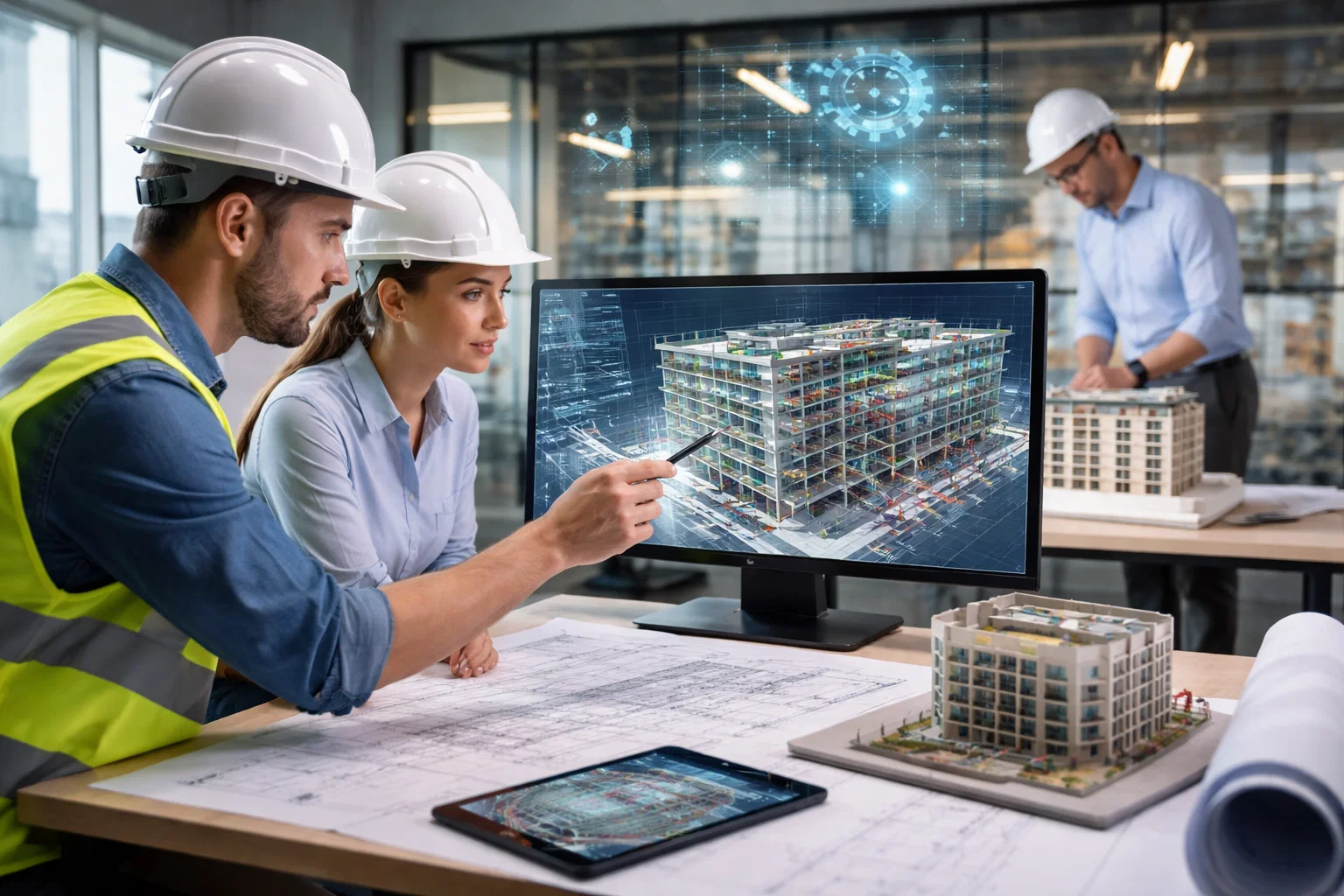
BIM (Building Information Modeling) consulting is an essential service for modern construction projects. It involves using advanced digital tools and techniques to create detailed 3D models of buildings and infrastructure. These models help streamline the design, planning, and construction processes, ensuring better collaboration, cost-efficiency, and timely project completion. BIM consulting can assist architects, engineers, contractors, and project managers in navigating complex construction projects with precision and ease.
What is BIM Consulting?
BIM consulting involves the expert application of Building Information Modeling (BIM) to improve the planning, design, and execution of construction projects. A BIM consultant helps organizations implement and optimize BIM processes by creating detailed digital models that enhance collaboration, reduce errors, and streamline workflows.
They guide project teams in integrating BIM technology, ensuring compliance with industry standards, and providing support throughout the project lifecycle. By bridging the gap between traditional construction methods and modern digital tools, BIM consultants enable companies to make more informed decisions, save costs, and deliver projects with greater efficiency and accuracy.
Benefits of BIM Consulting
BIM consulting offers several advantages that help improve the efficiency and success of construction projects. These benefits include:
- Cost Savings: Early detection of design clashes and issues helps avoid costly rework and delays, leading to significant cost reductions.
- Improved Collaboration: A unified digital model enables better communication and coordination between all project stakeholders, ensuring everyone works with the same up-to-date information.
- Faster Project Completion: Streamlined workflows and better coordination result in quicker decision-making and project execution, helping to meet deadlines.
- Enhanced Accuracy: BIM consultants ensure the creation of accurate digital models, reducing errors and discrepancies that may arise during construction.
- Predictable Costs: By integrating 5D BIM with specialized software, consultants can enhance cost tracking accuracy, provided the necessary tools and data integration processes are implemented, allowing for better budgeting and financial control.
- Risk Mitigation: BIM’s proactive approach to conflict detection and problem-solving minimizes potential project risks, ensuring smoother execution.
- Future-Proofing: BIM consultants help companies stay ahead of industry trends, integrating the latest digital technologies and processes into their projects for long-term success.
Powerkh BIM Solutions: Streamlining Construction with Technology

Powerkh is a UK-based consulting firm specializing in Building Information Modeling (BIM) and Virtual Design & Construction (VDC), with additional offices in the USA and Ukraine. The company works across residential, commercial, and industrial sectors, providing practical BIM solutions that improve construction workflows, reduce costs, and enhance project outcomes.
We provide a range of BIM consulting services, including 3D BIM modeling, BIM coordination, and BIM automation. Our services also include Scan to BIM, converting point cloud data into 3D models, and creating Revit families. We specialize in BIM workflow automation, scripting, and generative design, as well as prefabrication and fabrication support, including CNC manufacturing and shop drawings. Each service is customized to meet the specific needs of the project.
Our team works closely with clients to understand their project requirements and ensure the BIM model integrates smoothly across different disciplines.
Key Skills of BIM Consulting

Successful BIM consulting requires a combination of technical, managerial, and communication expertise to ensure smooth implementation and management of BIM processes across construction projects. Below are the key skills that define effective BIM consulting:
Technical Proficiency
BIM consulting involves utilizing various BIM software tools, such as Autodesk Revit for 3D modeling and Navisworks for clash detection and BIM 360 for project management and data coordination. Proficiency in these tools is essential, as they enable consultants to ensure the accuracy of digital models, streamline workflows, and track project progress. Familiarity with other tools like Solibri or ArchiCAD can also be beneficial, as they help in quality control and design validation.
Project Management
Effective project management is a crucial skill in BIM consulting. BIM consultants must oversee the coordination of multiple teams, ensuring that timelines are met and workflows remain efficient across all disciplines. BIM consulting firms are responsible for managing the integration of BIM processes across various stages of a project, ensuring that all components, from design to construction, are aligned and completed on time.
Standards and Compliance Knowledge
BIM consultants must have an in-depth understanding of BIM standards, such as ISO 19650-1 and ISO 19650-2, as well as specific local regulations, to ensure compliance with industry guidelines and legal requirements. This knowledge ensures that all BIM processes comply with industry guidelines, safety protocols, and legal requirements, making the project legally compliant and industry-approved.
Effective Communication
Clear communication is a cornerstone of successful BIM consulting. BIM consultants must be able to relay complex technical concepts in simple terms, facilitating understanding and collaboration among project teams, stakeholders, clients, and contractors. This skill ensures smooth decision-making and the resolution of potential conflicts early in the process.
Problem-Solving
BIM consulting requires the ability to identify and resolve potential issues in digital models and workflows. A strong problem-solving approach is essential for detecting clashes or inefficiencies early on, preventing costly mistakes or delays. BIM consultants work proactively to address these challenges, keeping the project on track and reducing the need for rework.
Training and Mentorship
BIM consulting also involves training and mentoring team members within an organization. A consultant’s ability to educate internal teams on BIM processes, tools, and best practices is key to successful implementation. This skill helps ensure that the entire team is equipped with the necessary knowledge to adopt and effectively use BIM technologies, ultimately driving the success of the project.
How BIM Consulting Helps Different Industries
BIM consulting provides valuable support across a variety of industries, helping organizations improve efficiency, collaboration, and project outcomes. Below are some key industries that benefit from BIM consulting services:
1. Commercial Construction
BIM consulting helps streamline the construction of office buildings, retail centers, and mixed-use developments. By creating detailed digital models, BIM consultants enable teams to:
- Better plan the construction process
- Detect issues early in the design phase
- Improve collaboration across architectural, structural, and MEP disciplines
This results in:
- Faster project completion
- Reduced costs
- Improved quality control
2. Infrastructure Projects
For infrastructure projects like roads, bridges, and airports, BIM consultants optimize design and construction workflows. They integrate 3D models with time (4D) and cost (5D) data, which allows for:
- More accurate project scheduling
- Better budgeting
- Enhanced coordination between engineering teams
This leads to:
- Fewer errors and disruptions during construction
- More efficient project execution
3. Healthcare Facilities
In the healthcare industry, BIM consulting is crucial for the planning and construction of hospitals, clinics, and other medical facilities. BIM models assist in:
- Designing complex building systems
- Ensuring compliance with health regulations
- Optimizing space utilization for better functionality
Consultants also help ensure that:
- Projects are completed on time and within budget
- Disruptions to the operation of healthcare facilities are minimized
4. Residential Construction
In residential construction, BIM consulting helps with the design and management of single-family homes, multi-family units, and luxury apartments. By using BIM models, consultants can:
- Improve design accuracy
- Manage resources more effectively
- Reduce the risk of costly mistakes
This ensures:
- A smoother construction process
- Enhanced quality in the final product
5. Industrial Buildings
BIM consultants play an important role in the construction of factories, warehouses, and logistics hubs. By creating detailed models, they enable:
- Better coordination between architects, engineers, and contractors
- Efficient space planning
- Seamless integration of building systems
This ensures:
- Industrial buildings meet operational needs
- Costs and delays are minimized
6. Government and Defense Projects
Government and defense projects often involve strict regulatory requirements and complex design specifications. BIM consultants help ensure:
- Compliance with these regulations
- Efficient management of sensitive data
- Models that support long-term maintenance and operational efficiency
BIM also facilitates:
- Collaboration across different agencies and contractors
- More streamlined and secure project execution
Why You Need BIM Consulting
BIM consulting is essential for modern construction projects, offering a structured approach to digital modeling that improves project efficiency, accuracy, and collaboration. With BIM consultants, you gain expertise in creating detailed 3D models that streamline the design and construction process. These models allow for better coordination across all teams, from architects to contractors, ensuring that everyone works with the most up-to-date information, reducing errors and miscommunications.
Implementing BIM can also result in significant cost savings. BIM consultants help identify potential issues early, preventing costly mistakes and rework. By incorporating time and cost data into the model, BIM consultants help you stay on budget and schedule, providing clearer insight into project timelines and financials. Moreover, their proactive approach to clash detection and problem-solving minimizes disruptions and delays, making the entire process more predictable and efficient.
Ultimately, BIM consulting helps you stay competitive in the ever-evolving construction industry by enabling you to adopt the latest technologies. With BIM, you can improve your project outcomes, reduce risks, and ensure a smoother construction process, ultimately leading to greater client satisfaction and project success.
Conclusion
BIM consulting plays a pivotal role in transforming how construction projects are planned, designed, and executed. By leveraging advanced Building Information Modeling (BIM) tools, BIM consultants streamline project workflows, enhance collaboration, and ensure the accuracy of digital models, leading to significant cost savings and timely project completion.
Their expertise in managing data, ensuring compliance with industry standards, and proactively identifying and solving problems makes them essential for modern construction projects. Whether it’s for commercial, residential, healthcare, or infrastructure projects, BIM consulting services are invaluable in driving efficiency and reducing risks, ultimately improving overall project outcomes.
FAQ
1. What is BIM consulting?
BIM consulting involves using Building Information Modeling (BIM) to improve the planning, design, and execution of construction projects. Consultants help teams create accurate digital models and optimize workflows.
2. Why is BIM consulting important in construction?
BIM consulting improves efficiency, reduces errors, and ensures better collaboration, helping projects stay on time and within budget while minimizing rework.
3. What does a BIM consultant do?
A BIM consultant coordinates digital models, manages project data, ensures compliance with standards, and improves collaboration across teams.
4. What industries benefit from BIM consulting?
BIM consulting is used in commercial construction, healthcare, infrastructure, residential buildings, and industrial projects, improving project management and outcomes.
5. How does BIM consulting save costs?
BIM consulting saves costs by identifying issues early, reducing errors and rework, and improving scheduling and budgeting.
6. What skills are needed for BIM consulting?
BIM consultants need technical expertise in BIM software, project management skills, knowledge of industry standards, and the ability to communicate and solve problems effectively.
7. Can BIM consulting be used for all construction projects?
Yes, BIM consulting can be applied to all construction projects, from small residential buildings to large-scale infrastructure projects.
Have a BIM Project? Talk To Us.
Contact UsOur Case Studies
We have handled 200+ BIM & VDC projects for commercial, industrial, and residential sectors.
Our work includes:
Formwork design automation
Our client from
California, USA
Suspended ceiling design automation
Our client from
New York, USA
Wall framing design automation
Our client from
California, USA