Have any questions? Contact us!
Join our team!
Request a free quote or consultation

Quick Summary: A punch list in construction is a formal document created near the end of a project that itemizes incomplete work, defects, or items not conforming to contract specifications. It serves as the final quality control checkpoint before project completion and payment release, typically prepared at substantial completion and requiring resolution before the owner accepts the project.
Construction projects involve hundreds of moving parts. Subcontractors, suppliers, inspectors, and owners all work toward one goal: a finished building that meets specifications.
But here’s the thing—no matter how well-managed a project is, some items inevitably slip through the cracks. A door handle that doesn’t quite work right. Paint touch-ups needed in a hallway. Missing outlet covers. These aren’t major defects, but they matter.
That’s where the punch list comes in.
This document represents the final quality control checkpoint before a contractor gets paid and an owner takes possession. It’s both a practical tool and a contractual obligation, bridging the gap between “mostly done” and “actually complete.”
Defining the Construction Punch List
A punch list is a document prepared during key milestones or near the end of a construction project listing works that do not conform to contract drawings and specifications. The general contractor must correct these items prior to final payment.
The work documented may include incomplete installations, incorrect specifications, or incidental damage that occurred during construction. Think of it as the gap analysis between what was promised and what was delivered.
Industry standards, including those from the AIA (American Institute of Architects), recognize punch lists as standard practice in construction contract administration. AIA contract documents are recognized as industry standard for architects, contractors, engineers, and all other parties involved in a construction project in the US.
The punch list isn’t informal. It’s a contractual document with real consequences for payment and project acceptance.
When Punch Lists Are Created
Timing matters significantly.
Contracts often mandate punch list creation at substantial completion—the stage that allows the owner to move in or use the space while contractors finish remaining tasks. This is a critical milestone for several reasons:
- Warranties begin at substantial completion, not when the project is 100% done
- Payment milestones trigger, though retainage continues
- Owner occupancy becomes possible
- The clock starts on contract completion dates
Owners might hold back a portion of payment—called retainage—typically five to 10 percent until every punch list item is resolved. This financial incentive keeps contractors engaged through the final details.
Some project teams implement rolling punch lists, performing walks by area, floor, or system before final completion. For instance, finishing the first few floors or systems fully before moving to others. This approach prevents a massive punch list at the end that delays occupancy.
Who Creates and Manages the Punch List
Responsibility varies by project and contract type, but common patterns emerge.
The general contractor typically initiates the punch list, walking the project with their superintendent to identify deficiencies before presenting it to the owner or architect. This self-inspection catches obvious issues and reduces back-and-forth.
The architect or owner’s representative then conducts their own inspection, adding items the contractor missed. This becomes the official punch list that the contractor must address.
On larger projects, multiple parties participate in punch walks:
- Owner representatives documenting operational concerns
- Architects verifying design intent compliance
- Engineers checking systems performance
- General contractor coordinating corrections
- Subcontractors addressing trade-specific items
The general contractor bears ultimate responsibility for completing all punch list items, even those requiring subcontractor work. They coordinate the corrections, verify completion, and notify the architect when items are ready for re-inspection.
Real talk: disputes happen. An owner might consider something a punch item that the contractor views as outside the contract scope. Clear contract language and good communication prevent these conflicts from derailing closeout.
Common Punch List Items
What actually ends up on these lists?
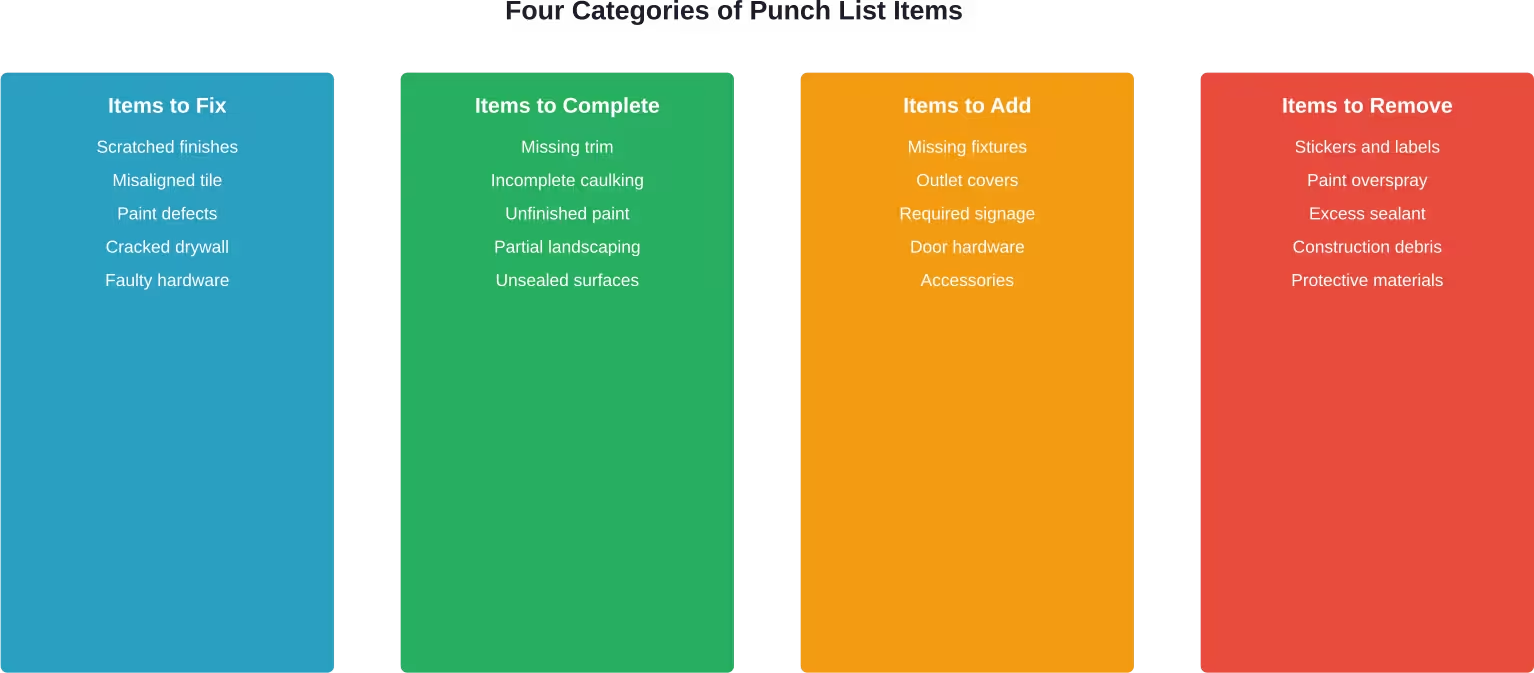
Punch list items generally fall into four categories: items to fix, items to complete, items to add, and items to remove or clean.
Items to Fix
These are completed installations that don’t meet quality standards or specifications:
- Scratched or dented finishes on doors, trim, or fixtures
- Poorly aligned tile or flooring transitions
- Paint drips, thin coverage, or wrong colors
- Cracked drywall or visible seams
- Improperly functioning hardware
- Leaking plumbing fixtures
- Electrical outlets or switches installed crooked
Items to Complete
Work that was started but remains unfinished:
- Missing trim or baseboard sections
- Incomplete caulking around tubs, sinks, or windows
- Unpainted surfaces that should be finished
- Missing door hardware or stops
- Incomplete grading or landscaping
- Unsealed concrete or unfinished floors
Items to Add
Components specified in the contract but not yet installed:
- Missing light fixtures or bulbs
- Outlet or switch plate covers not installed
- Required signage or wayfinding elements
- Weatherstripping or door sweeps
- Specified accessories in restrooms
- Touch-up materials for owner maintenance
Items to Remove or Clean
Construction debris or materials that shouldn’t remain:
- Stickers, labels, or protective film on fixtures
- Paint overspray on windows or adjacent surfaces
- Excess caulk or sealant
- Construction dust or debris
- Temporary protection materials
- Spare materials that should be organized and stored for the owner
Systems Testing Items
Beyond visible construction, punch lists include functional verification:
- HVAC systems balanced and performing to specifications
- Fire alarm and sprinkler system testing complete
- Plumbing fixtures achieving proper flow rates
- Emergency lighting and exit signs functional
- Access control or security systems operational
- Building automation systems programmed and commissioned
According to an academic case study from California Polytechnic State University analyzing a 435-unit apartment complex, punch list challenges often stem from lack of communication, schedule constraints, misaligned expectations, quality control issues, or site logistics problems.
The Punch List Process Step-by-Step
How does this actually work in practice?
Step 1: Pre-Punch Preparation
Smart contractors don’t wait for the official punch walk. They conduct internal quality checks throughout construction, addressing obvious deficiencies before the owner or architect sees them. This self-policing reduces the official punch list length and demonstrates professionalism.
Step 2: Substantial Completion Walk
When the contractor believes the project has reached substantial completion, they request an inspection. The architect, owner, and contractor walk the entire project systematically—room by room, floor by floor, system by system.
Each participant documents issues. Some use paper forms, others use tablets or smartphones with specialized software. Items get photographed, described, and assigned locations.
Step 3: List Compilation
The architect or owner’s representative compiles all documented items into a single official punch list. Each item typically includes:
- Specific location (building, floor, room number)
- Clear description of the deficiency
- Reference to applicable specification section
- Responsible party (though usually the GC coordinates all)
- Photo documentation
- Priority or severity rating on some projects
Step 4: Item Resolution
The general contractor receives the punch list and coordinates corrections. They schedule subcontractors, order missing materials, and assign crews to address items. Progress gets tracked—which items are complete, which are in progress, which are awaiting materials.
Communication matters here. Contractors should update the architect regularly rather than going silent until everything’s done.
Step 5: Verification Inspection
When the contractor believes all items are complete, they notify the architect for re-inspection. The architect verifies each item, checking them off or noting continued deficiencies.
Items that don’t pass get added back to the list with more specific guidance. This cycle continues until everything meets contract requirements.
Step 6: Final Completion and Payment
Once all punch list items are verified complete, the project reaches final completion. The architect issues a certificate of final completion, triggering release of retainage and final payment to the contractor.
The owner accepts the project, though warranty periods continue for specified durations.
Finish Your Punch List Without Delays

Punch lists drag when items are unclear or keep coming back. Powerkh checks the site and shows exactly what is still incomplete and where. No duplicates, no vague notes – just a clear view of what’s left to finish. Instead of repeated walkthroughs, teams get a clean picture of remaining work and can close items once, not multiple times.
Get a Clear List of What’s Left to Finish
Powerkh shows exactly what is left to complete on site:
- Exact location of each issue
- Clear description of what is missing or incorrect
- No duplicate or repeated observations
- Verified status of completed vs outstanding work
- Information structured for fast close-out
Contact Powerkh to close outstanding work faster without repeat checks and delays.
Best Practices for Efficient Punch Lists
Some teams handle punch lists smoothly. Others turn them into prolonged battles that delay occupancy and payments. What separates the two?
Start Early with Rolling Punch Checks
Rather than waiting until the very end, perform punch walks by area, floor, or system before final completion. This distributes the workload and allows subcontractors to address issues while still mobilized on-site.
Finishing the first few floors completely before moving to others prevents a massive list at the end.
Use Digital Tools
Paper punch lists create inefficiency. Items get lost, photos aren’t linked to descriptions, and tracking completion becomes manual labor.
Digital platforms allow real-time documentation during walks, automatic assignment to responsible parties, photo attachment, status tracking, and reporting. The entire team sees the same updated information.
Be Specific in Descriptions
Vague punch items create confusion. “Fix paint” doesn’t help. “Touch up paint scuffs on the north wall of Room 204, 3 feet from the east corner” gives the painter exactly what they need.
Specificity reduces callbacks and arguments about whether an item was properly addressed.
Set Clear Expectations Early
Quality standards should be established during construction, not invented during punch walks. If the architect has specific expectations about paint coverage, grout joint width, or fixture alignment, communicate those before installation.
Academic research from Cal Poly noted that misaligned expectations contributed significantly to punch list challenges on their examined project.
Prioritize Critical Items
Not all punch items are equally urgent. Some affect safety, building systems, or owner occupancy. Others are minor cosmetic touches.
Categorizing items by priority allows contractors to sequence work logically and may allow partial occupancy while minor items get resolved.
Document Everything
Photos prove conditions at various stages. They resolve disputes about whether damage existed before punch work or occurred during corrections. They provide clear visual reference for what needs fixing.
Time stamps and systematic organization of photos create a defensible record.
Communicate Proactively
Contractors who provide weekly updates on punch list progress maintain better relationships than those who go dark for three weeks and suddenly claim everything’s done.
Regular communication manages expectations and allows problems to surface before they become crises.
| Approach | Traditional Method | Best Practice Method |
|---|---|---|
| Timing | Single punch walk at the very end | Rolling punch walks by area during construction |
| Documentation | Paper lists with separate photos | Digital platform with integrated photos and location data |
| Item Description | Vague general statements | Specific location and detailed description |
| Prioritization | All items treated equally | Items categorized by urgency and impact |
| Communication | Contractor goes silent until claiming completion | Regular progress updates to architect and owner |
| Verification | Single final walk with long list of remaining issues | Incremental verification as areas are completed |
Common Challenges and How to Avoid Them
Even with good intentions, punch list processes hit obstacles.
Scope Creep
Owners sometimes use punch walks as an opportunity to request changes or additions beyond the contract scope. A punch list should document deficiencies, not design modifications.
Clear contract language distinguishes punch work from change orders. Items not in the original contract scope shouldn’t appear on the punch list without separate negotiation and compensation.
Subcontractor Availability
By the time punch lists are issued, subcontractors have often moved to other projects. Getting them back for a few hours of touch-up work becomes difficult.
Solutions include retaining subcontractor payment until punch items are complete, scheduling punch work during regular construction when crews are still on-site, or having the GC maintain their own crews for minor corrections.
Disagreements About Quality Standards
What the architect considers unacceptable might seem fine to the contractor. Without objective standards, these disputes stall progress.
Reference to specific contract specifications, industry standards, or manufacturer guidelines provides objective criteria for resolution. Photos of approved mockups or samples from earlier in construction establish the quality benchmark.
Extended Punch Periods
Some punch lists drag on for months. Items get completed but not verified. New damage occurs during punch work. The process loses momentum.
Setting aggressive but reasonable deadlines—30 days for punch completion is common—maintains urgency. Scheduled re-inspection dates create accountability.
Weather and Seasonal Limitations
Exterior work, landscaping, or items requiring specific temperature conditions can’t always be completed immediately. Projects reaching substantial completion in late fall might have exterior paint or landscaping deferred until spring.
Contracts should address seasonal limitations explicitly, allowing conditional completion with deferred items scheduled for appropriate weather and adequate financial security held to ensure completion.
Digital Tools Versus Traditional Paper Methods
Technology has transformed punch list management, though not every project has adopted modern tools.
Traditional paper methods involve clipboards, cameras, and spreadsheets. The architect documents items by hand during the walk, types them into a document later, emails PDFs to the contractor, and tracks completion through email exchanges and phone calls.
This works but creates inefficiency. Photos and descriptions live in separate files. Status updates require manual compilation. Multiple versions of “the punch list” circulate with conflicting information.
Digital platforms offer integrated solutions. Inspectors document items directly on tablets or phones during the walk. Photos attach automatically to specific items. Location gets tagged. Items are instantly visible to the contractor. Status updates happen in real-time. Reports generate automatically.
The efficiency gain is substantial for larger projects with hundreds of punch items across multiple buildings or floors.
But smaller projects might not justify the software cost and learning curve. A single-family home with 20 punch items doesn’t need enterprise software.
The choice depends on project complexity, team familiarity with technology, and available budget.
| Feature | Paper Method | Digital Platform |
|---|---|---|
| Documentation Speed | Handwritten notes, separate photos | Instant entry with integrated photos |
| Distribution | Email PDF after office compilation | Real-time access for all parties |
| Status Tracking | Manual spreadsheet updates | Automated status dashboard |
| Photo Management | Separate files requiring manual linking | Photos attached directly to specific items |
| Version Control | Multiple versions circulate via email | Single source of truth with update history |
| Reporting | Manual compilation for progress reports | Automated reports and analytics |
| Cost | Minimal direct cost | Software subscription required |
| Best For | Small projects, traditional teams | Large projects, tech-savvy teams |
The Role of Punch Lists in Payment and Warranty
Money talks. The punch list directly affects when contractors get paid and when liability shifts.
In most construction contracts, final payment is released when punch list items have been completed to meet contract specifications. That retainage—the five to 10 percent held back—remains with the owner until verification of completion.
This creates powerful motivation for contractors to finish punch work quickly. Every day of delay is cash flow sitting on the table.
But here’s where it gets interesting: warranties typically begin at substantial completion, not final completion. The manufacturer’s one-year warranty on that roofing system? It started ticking when the building became occupiable, even though three punch items remained.
This timing matters for scheduling. If punch work drags on for six months, half the warranty period has elapsed before the contractor even finished the project.
Some contracts address this by extending warranty start dates until final completion or adjusting warranty periods to account for punch duration. Others don’t, creating potential coverage gaps.
Owners should understand these implications. Contractors should manage punch timelines to preserve warranty value.
Relationship Between Punch Lists and Building Inspections
Punch lists aren’t the same as building code inspections, though people sometimes confuse them.
Building code inspections are performed by local government authorities to verify compliance with building codes, fire safety regulations, accessibility requirements, and zoning ordinances. These are legal requirements.
The final inspection by a local zoning authority or building department confirms a building fully complies with applicable codes. This must pass before occupancy permits are issued.
Punch lists are contractual documents between the owner and contractor addressing contract compliance and quality expectations. They cover issues beyond code minimums—finishes, aesthetics, system performance, and detailed specifications.
A building can pass code inspection but still have punch list items. The paint might be code-compliant but not matching the specified color. The door might meet accessibility requirements but have scratches requiring repair.
Both processes happen during project closeout, but they serve different purposes and involve different parties.
Industry Standards and Contract Language
How punch lists work is largely determined by the construction contract.
AIA contracts, recognized as industry standard documents, include specific provisions for punch lists and substantial completion. These define timing, responsibilities, and dispute resolution procedures.
Other contract forms—ConsensusDocs, EJCDC, or custom agreements—have their own language but cover similar ground.
Key contract provisions to address include:
- Definition of substantial completion and who makes that determination
- Punch list preparation timeline and responsible party
- Dispute resolution for items the contractor believes are outside scope
- Completion deadline for punch work
- Retainage release conditions
- Warranty start date relative to substantial versus final completion
- Seasonal work deferrals and security for deferred items
Reading the contract before the punch walk prevents surprises and arguments during closeout.
Frequently Asked Questions
What’s the difference between substantial completion and final completion?
Substantial completion means the project is complete enough for the owner to use it for its intended purpose, even if minor items remain. Final completion means all work, including punch list items, is fully finished. Substantial completion allows occupancy, while final completion triggers final payment.
How long does a contractor have to complete punch list items?
The timeline depends on the contract, but 30 days is typical for most work. Seasonal tasks may be scheduled later based on weather conditions.
Can an owner refuse to pay if punch items aren’t complete?
Yes. Owners can withhold retainage—usually 5–10% of the contract value—until all punch list items are completed and verified.
Who decides what goes on the punch list?
The architect or owner’s representative prepares the official punch list after inspection. Contractors may create preliminary lists, but final authority typically lies with the project representative.
What if the contractor disagrees with a punch list item?
Disputes are resolved by reviewing contract documents and specifications. If the item is outside the original scope, it may be treated as a change order rather than punch work.
Do punch lists apply to residential construction?
Yes. Punch lists are used in both residential and commercial projects, though residential processes are often less formal.
Can punch lists be done digitally?
Yes. Many modern tools allow digital punch lists with photos, tracking, and real-time updates, improving efficiency and communication.
Conclusion
The punch list represents the final quality checkpoint in construction—the gap between “almost done” and truly complete. It’s both a practical tool for organizing final corrections and a contractual mechanism protecting owner interests while ensuring contractor payment.
Understanding when punch lists are created, who manages them, what items typically appear, and how the process works helps all parties navigate closeout more smoothly.
The best punch list is a short one. Maintaining quality throughout construction, conducting rolling inspections, communicating clearly about standards, and addressing deficiencies promptly all reduce that final list.
Technology offers tools to streamline the process, but the fundamentals remain unchanged: document deficiencies clearly, complete corrections efficiently, verify work properly, and maintain good communication throughout.
Whether an owner wanting to understand their rights, a contractor managing closeout, or an architect administering contracts, the punch list is where theory meets reality—where drawings and specifications are measured against actual construction.
Get it right, and projects close smoothly with satisfied owners and paid contractors. Get it wrong, and minor issues become major disputes delaying occupancy and payment for months.
The choice is clear. Make punch lists a priority from project start, and closeout becomes a formality rather than a battle.

Our Case Studies
We have handled 200+ BIM & VDC projects for commercial, industrial, and residential sectors.
Our work includes:
Formwork design automation
Our client from
California, USA
Suspended ceiling design automation
Our client from
New York, USA
Wall framing design automation
Our client from
California, USA