Have any questions? Contact us!
Join our team!
Request a free quote or consultation

A construction engineer is a specialized professional who manages the planning, design, and execution of construction projects, bridging the gap between architectural vision and physical reality. They oversee everything from project scheduling and safety compliance to budget management and quality control, ensuring structures are built efficiently, safely, and within specified parameters.
Construction engineers shape the physical world around us. From highways and tunnels to commercial buildings and residential complexes, these professionals ensure that architectural designs transform into safe, functional structures.
But what exactly does a construction engineer do? And how does this career differ from other engineering disciplines?
Defining Construction Engineering
Construction engineering represents a specialized branch of civil engineering focused on the construction and operations aspects of building projects. According to ASCE (American Society of Civil Engineers), civil engineers design, build, and maintain the foundation for modern society—buildings, roads, bridges, drinking water systems, energy infrastructure, and environmental systems.
Construction engineers take this a step further. They don’t just design—they execute. These professionals bridge the gap between blueprints and reality, managing the actual construction process from groundbreaking to completion.
The field combines technical engineering knowledge with project management expertise. Construction engineers work both in office settings and out in the field, often splitting their time between design work and on-site supervision.
Core Responsibilities
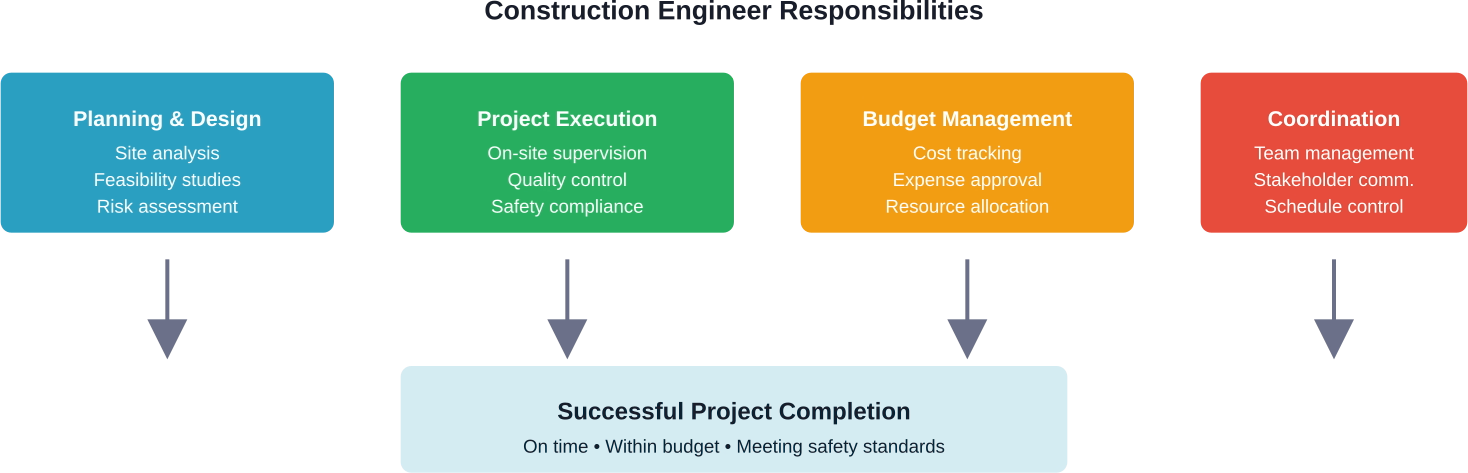
Construction engineers wear many hats throughout a project’s lifecycle. Their responsibilities span technical, managerial, and coordination functions.
Planning and Design
Before any construction begins, construction engineers develop detailed project plans. They analyze site conditions, review architectural designs for feasibility, and create construction methodologies that account for local regulations and environmental factors.
They also conduct risk assessments to identify potential challenges before they become costly problems.
Project Execution and Oversight
Once construction begins, engineers supervise day-to-day operations. They coordinate with architects, contractors, and subcontractors to ensure work proceeds according to specifications.
Quality control falls squarely on their shoulders. Construction engineers inspect work at various stages, verifying that materials meet standards and that construction methods follow approved plans.
Budget and Schedule Management
Financial oversight represents a critical component of the role. Construction engineers track project costs, approve expenditures, and identify opportunities to reduce expenses without compromising quality or safety.
They also maintain project timelines, adjusting schedules when delays occur and coordinating multiple teams to keep work moving efficiently.
Safety and Regulatory Compliance
Construction sites present numerous hazards. Engineers implement safety protocols, conduct regular safety inspections, and ensure all workers follow proper procedures.
They also navigate complex regulatory environments, securing necessary permits and ensuring construction methods comply with local building codes and environmental regulations.
Construction Engineer vs. Civil Engineer
The terms often get used interchangeably, but important distinctions exist. Civil engineering represents the broader discipline encompassing various specializations including transportation, coastal, structural, environmental, geotechnical, and construction engineering.
Civil engineers typically focus more heavily on design and planning phases. Construction engineers concentrate on execution—turning those designs into physical structures.
Here’s the thing though—many professionals work across both domains. The Bureau of Labor Statistics notes that civil engineers plan, design, and supervise construction and maintenance of building and infrastructure projects, highlighting the overlap between these roles.
| Aspect | Civil Engineer | Construction Engineer |
|---|---|---|
| Primary Focus | Design and planning | Execution and management |
| Work Location | Primarily office-based | Split between office and field |
| Key Activities | Structural analysis, system design | Site supervision, coordination |
| Career Path | Specialist roles (structural, transportation) | Project management, general contracting |
| Education | Civil engineering degree | Construction or civil engineering degree |
Educational Requirements and Licensure
Breaking into construction engineering requires solid educational credentials. Most positions demand at least a bachelor’s degree in construction engineering or civil engineering with a construction focus.
ABET-accredited programs provide the standard educational pathway. These programs cover foundational engineering principles, construction methods, project management, structural analysis, and safety protocols.
According to the Bureau of Labor Statistics, civil engineers earned a median annual wage of $99,590 in May 2024. For those providing services directly to the public, state licensure becomes necessary.
The Path to Professional Engineer (PE) License
Becoming a licensed Professional Engineer involves several steps. NCEES (National Council of Examiners for Engineering and Surveying) administers the licensure process, which typically requires:
- A degree from an ABET-accredited engineering program
- Passing the Fundamentals of Engineering (FE) exam
- Four years of progressive engineering experience
- Passing the Principles and Practice of Engineering (PE) exam
The NCEES PE Civil exam format changed in April 2024: it now consists of 80 questions focused on a specific sub-discipline, and the common ‘breadth’ morning section has been removed.
Breaking into construction engineering requires solid educational credentials. Most positions demand at least a bachelor’s degree in construction engineering or civil engineering with a construction focus.
ABET-accredited programs provide the standard educational pathway. These programs cover foundational engineering principles, construction methods, project management, structural analysis, and safety protocols.
According to the Bureau of Labor Statistics, civil engineers earned a median annual wage of $99,590 in May 2024. For those providing services directly to the public, state licensure becomes necessary.
The Path to Professional Engineer (PE) License
Becoming a licensed Professional Engineer involves several steps. NCEES (National Council of Examiners for Engineering and Surveying) administers the licensure process, which typically requires:
- A degree from an ABET-accredited engineering program
- Passing the Fundamentals of Engineering (FE) exam
- Four years of progressive engineering experience
- Passing the Principles and Practice of Engineering (PE) exam
The NCEES PE Civil exam format changed in April 2024: it now consists of 80 questions focused on a specific sub-discipline, and the common ‘breadth’ morning section has been removed.
Career Outlook and Opportunities
The construction engineering field offers solid career prospects. As infrastructure continues aging and expanding globally, demand for skilled construction engineers remains steady.
According to the Bureau of Labor Statistics, construction managers earned a median annual wage of $106,980 in May 2024. Large construction firms typically prefer candidates with both construction experience and bachelor’s degrees in construction-related fields.
Career paths branch in multiple directions. Some construction engineers move into senior project management roles, overseeing multiple projects or entire portfolios. Others transition into general contracting, starting their own construction firms.
Specialization opportunities exist within construction engineering itself—some focus on specific project types like transportation infrastructure, commercial buildings, or industrial facilities.
Essential Skills for Success
Technical knowledge forms the foundation, but successful construction engineers need diverse skill sets.
Strong communication abilities prove critical. Engineers constantly coordinate with architects, contractors, clients, and regulatory officials. The ability to explain complex technical concepts to non-technical stakeholders makes the difference between smooth projects and troubled ones.
Problem-solving skills get tested daily. Construction rarely goes exactly according to plan—weather delays, material shortages, unexpected site conditions, and design conflicts all demand creative solutions.
Leadership and team management capabilities become increasingly important as careers progress. Construction engineers direct diverse teams, often managing workers from multiple companies and trades simultaneously.
Typical Work Environment
Construction engineers split their time between offices and construction sites. Office work involves reviewing plans, coordinating schedules, processing documentation, and conducting design work.
Field work brings engineers to active construction sites. Here they inspect work quality, meet with contractors, address problems as they arise, and verify that construction follows approved specifications.
The balance varies by specific role and project phase. During initial planning stages, office work dominates. As projects move into active construction, site visits increase significantly.
Physical demands shouldn’t be overlooked. Construction sites require walking long distances, climbing stairs and ladders, and working in various weather conditions. Safety gear becomes part of the daily uniform.
Make Engineering Work The Way It’s Meant To Be Built

A construction engineer works between design and site, but that connection is where things often start to drift once the project moves forward.
Powerkh helps close that gap by checking how engineering decisions translate into real construction conditions. They work through coordinated models, layout reviews, and verification to see where systems don’t quite fit, where tolerances become tight, and where adjustments are needed before work begins. This gives engineers a clearer sense of how their decisions will behave beyond the drawings.
👉 Reach out to Powerkh to review your project and make sure your engineering holds together when it reaches site.
Moving Forward in Construction Engineering
Construction engineering offers a dynamic career path for those interested in transforming architectural visions into tangible structures. The profession combines technical expertise, management skills, and practical problem-solving in ways that directly shape communities and infrastructure.
The field continues evolving. New construction methods, sustainable building practices, and digital technologies constantly reshape how construction engineers approach their work. Those entering the profession now will help guide this evolution.
For prospective construction engineers, the path forward starts with solid educational foundations in ABET-accredited programs, followed by progressive experience and eventual licensure. The investment pays dividends through challenging work, competitive compensation, and the satisfaction of seeing projects transform from concepts to completed structures.
Ready to explore construction engineering opportunities? Research accredited programs, connect with practicing professionals through organizations like ASCE, and consider which specializations align with personal interests. The infrastructure of tomorrow needs skilled construction engineers to bring it to life.
Frequently Asked Questions
What’s the difference between a construction engineer and a construction manager?
Construction engineers focus on technical aspects like structural integrity and design feasibility, while construction managers handle coordination, scheduling, and business operations. The roles often overlap in practice.
Do construction engineers need to be licensed?
Licensing depends on the role. Engineers offering services to the public typically need Professional Engineer licensure, while others working under licensed professionals may not require it.
What type of projects do construction engineers work on?
They work on projects such as commercial buildings, residential developments, infrastructure, water systems, energy facilities, and industrial plants.
How long does it take to become a construction engineer?
Typically about four years for a degree, plus around four years of experience if pursuing professional licensure.
Is construction engineering a good career choice?
Yes. It offers strong salaries, diverse projects, and long-term demand, especially for those who enjoy technical problem-solving.
Can civil engineers work as construction engineers?
Yes. Civil engineering provides a strong foundation, and many professionals transition into construction engineering roles through experience.
What software do construction engineers use?
They use tools like AutoCAD, Revit, BIM platforms, scheduling software, and project management systems for design and coordination.

Our Case Studies
We have handled 200+ BIM & VDC projects for commercial, industrial, and residential sectors.
Our work includes:
Formwork design automation
Our client from
California, USA
Suspended ceiling design automation
Our client from
New York, USA
Wall framing design automation
Our client from
California, USA