Have any questions? Contact us!
Join our team!
Request a free quote or consultation

Construction managers plan, coordinate, budget, and oversee construction projects from conception to completion. They handle scheduling, cost management, quality control, safety compliance, and team coordination while serving as the primary liaison between owners, contractors, and workers. According to the Bureau of Labor Statistics, construction managers earned a median annual wage of $106,980 in May 2024.
Walk past any construction site and the organized chaos tells a story. Workers coordinating tasks, materials arriving on schedule, inspectors reviewing progress. Behind all that coordination? A construction manager orchestrating every moving piece.
But what exactly does that role entail beyond wearing a hard hat and carrying blueprints? The reality involves far more complexity than most people realize.
The Core Responsibilities of Construction Managers
Construction managers serve as the central hub for every construction project. According to the Bureau of Labor Statistics, they “plan, coordinate, budget, and supervise construction projects from start to finish.” That definition barely scratches the surface.
Their primary responsibility is to the project owner and the project’s success. Construction management is a professional service that provides effective management of schedule, cost, quality, safety, scope, and function.
Here’s where it gets interesting. Construction managers don’t just show up when ground breaks. They participate in conceptual development before a single shovel hits dirt. They analyze site conditions, review architectural plans, and identify potential challenges before they become expensive problems.
Daily Tasks and Activities
The day-to-day work varies dramatically depending on project phase and scope. Early in a project, construction managers focus on planning and coordination. They develop schedules, prepare budgets, and select contractors and subcontractors.
Once construction begins, their attention shifts to oversight and problem-solving. They ensure work proceeds on schedule, materials arrive when needed, and everyone follows safety protocols. Community discussions reveal this juggling act requires constant adaptation.
Construction managers also handle the people side of projects. They conduct meetings with architects, engineers, contractors, and clients. They resolve conflicts between subcontractors. They communicate progress to stakeholders who want to know why things cost what they cost.
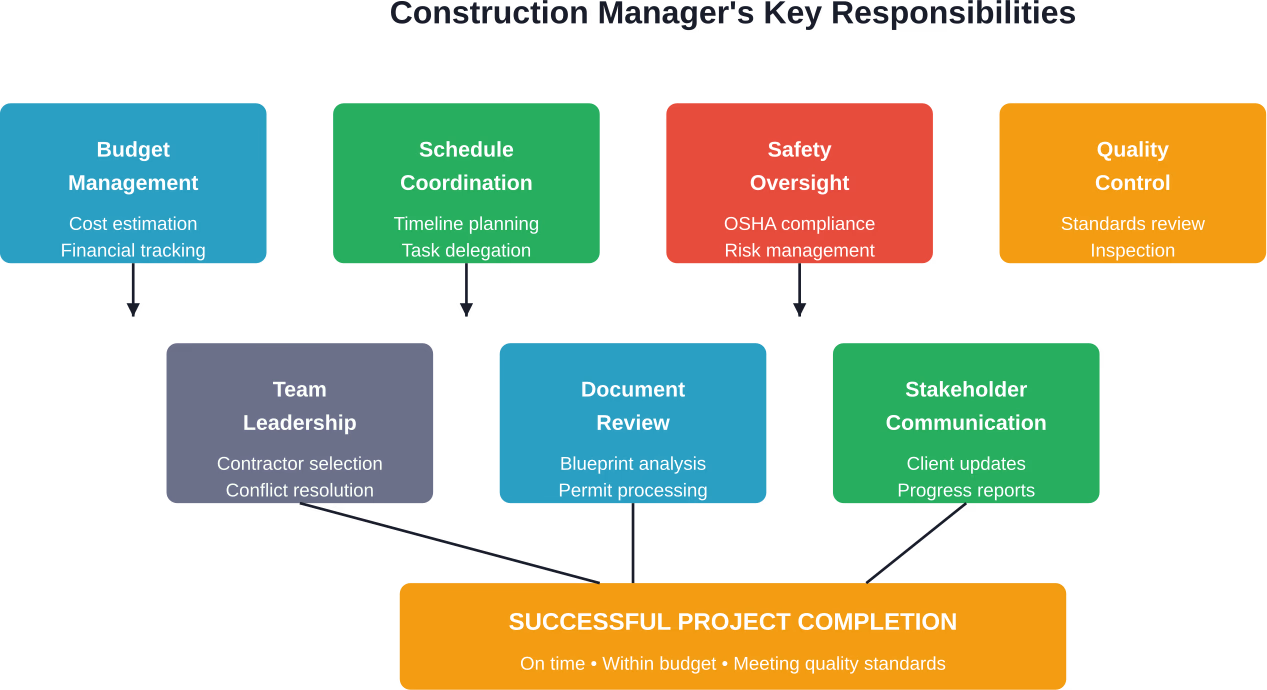
Project Phases and Management Activities
Construction projects don’t just happen. They evolve through distinct phases, each demanding different management approaches.
Pre-Construction Planning
Before construction begins, managers analyze feasibility and develop comprehensive plans. They review design documents, identify potential construction challenges, and establish project procedures. This phase sets the foundation for everything that follows.
Budget development happens here. Construction managers prepare detailed cost estimates covering materials, labor, equipment, permits, and contingencies. Getting these numbers right prevents financial disasters later.
Construction Phase Management
Once work begins, construction managers shift into active oversight mode. They coordinate multiple contractors working simultaneously, ensure materials arrive according to schedule, and monitor quality at every stage.
Safety becomes paramount during active construction. The Occupational Safety and Health Administration requires employers to report all work-related fatalities within 8 hours and hospitalizations within 24 hours. Construction managers implement safety protocols to prevent these incidents.
They also manage the inevitable changes. Design modifications, unexpected site conditions, weather delays—construction managers adjust plans and budgets to accommodate reality without derailing the entire project.
Project Closeout
As construction wraps up, managers coordinate final inspections, ensure all work meets specifications, and handle punch list items. They compile project documentation, process final payments, and transition the completed structure to the owner.
Catch What Gets Missed Between Drawings And Site

A construction manager keeps everything moving, but some issues don’t show up in reports or meetings – they build up inside models, coordination, and how work is actually prepared.
Powerkh gets involved at that point, following the project from design into coordination and then into construction to see where things start to drift. Their work focuses on keeping design intent intact, checking how different systems interact in real conditions, and using verification to understand what is actually being built.
👉 Bring Powerkh into your workflow to get a clearer view of what is really happening across your project and avoid problems that usually stay hidden until it is too late.
Essential Skills and Qualifications
The Bureau of Labor Statistics notes that large construction firms typically prefer candidates with both construction experience and a bachelor’s degree in a construction-related field. That combination makes sense given the role’s technical and managerial demands.
| Skill Category | Specific Competencies | Why It Matters
|
|---|---|---|
| Technical Knowledge | Blueprint reading, building codes, construction methods | Understanding technical requirements ensures proper project execution |
| Leadership | Team management, decision-making, delegation | Coordinating diverse teams and contractors requires strong leadership |
| Communication | Stakeholder updates, conflict resolution, negotiation | Projects involve constant communication between multiple parties |
| Financial Management | Budgeting, cost control, financial reporting | Keeping projects profitable demands rigorous financial oversight |
| Problem-Solving | Risk assessment, contingency planning, adaptive thinking | Construction projects always encounter unexpected challenges |
| Technology | Project management software, scheduling tools, digital collaboration | Modern construction relies heavily on technology platforms |
Real talk: the technology aspect matters more now than ever. As construction industry analyst Johnathan E. Mitchell noted in HR Future, there’s a significant “discrepancy between the existing workforce’s skills and the emerging requirements of modern construction practices.” Emerging techniques and technologies address diverse industry challenges, but managers need the skills to implement them.
Work Environment and Conditions
Construction managers split time between offices and construction sites. Office work involves planning, budgeting, and communication. Site visits allow them to monitor progress, address issues, and ensure safety compliance.
The work isn’t strictly nine-to-five. Projects run on tight schedules, and problems don’t respect business hours. Construction managers often work evenings and weekends to meet deadlines or handle emergencies.
Physical demands exist too. Site visits require walking construction areas, climbing stairs, and navigating unfinished structures. Weather doesn’t stop construction, so managers work in heat, cold, and everything between.
Career Path and Advancement
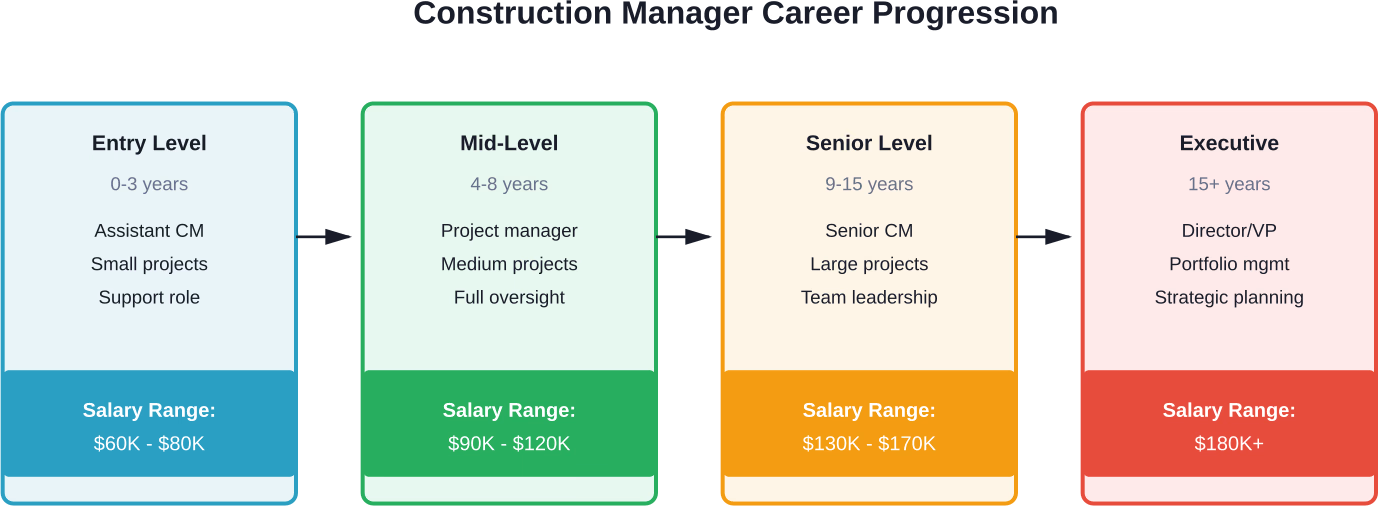
Most construction managers start their careers in construction itself. They work as carpenters, electricians, or laborers, gaining hands-on understanding of how buildings come together. Some pursue bachelor’s degrees in construction management, civil engineering, or architecture while working.
Entry-level construction managers typically oversee smaller projects or assist senior managers on larger ones. As they gain experience, they take on bigger projects with larger budgets and more complex requirements.
Career advancement can lead to positions managing multiple projects simultaneously or specializing in specific construction types—commercial buildings, residential developments, infrastructure projects, or industrial facilities.
Salary and Job Outlook
According to the Bureau of Labor Statistics, the median annual wage for construction managers was $106,980 in May 2024, which breaks down to $51.43 per hour. But that’s just the median—earnings vary considerably based on experience, location, and project complexity.
Employment growth looks promising. The Bureau of Labor Statistics projects construction manager employment will increase by 9% between 2024 and 2034, much faster than the 3% average growth rate for all occupations. That reflects ongoing demand for new construction and infrastructure improvements.
Industry Specializations
Construction managers often specialize in specific building types or project categories. Residential construction managers focus on housing developments, apartment complexes, and single-family homes. Commercial construction managers handle office buildings, retail centers, and hospitality projects.
Infrastructure specialists manage roads, bridges, utilities, and public works projects. Industrial construction managers oversee factories, warehouses, and processing facilities. Each specialization brings unique challenges and technical requirements.
The specialization choice affects everything from required technical knowledge to typical project timelines and budgets. Residential projects might complete in months, while major infrastructure projects span years.
The Bottom Line
Construction managers serve as the linchpin holding construction projects together. They balance technical expertise with leadership skills, financial acumen with problem-solving ability, and strategic planning with hands-on oversight.
The role demands diverse competencies—understanding blueprints and building codes, managing budgets and schedules, leading teams and resolving conflicts, ensuring safety and quality standards. It’s not a job for someone seeking routine or predictability.
But for those drawn to tangible results and complex challenges, construction management offers a compelling career path. Every completed project represents something concrete—a building where people will work, a bridge connecting communities, a facility enabling commerce.
The construction industry continues evolving with new technologies, materials, and methods. Construction managers who adapt to these changes while maintaining core competencies in planning, coordination, and leadership will find abundant opportunities ahead.
Looking to enter this field? Focus on gaining both educational credentials and hands-on construction experience. Develop technical knowledge alongside communication and leadership skills. And remember—successful construction management isn’t about knowing everything, but about coordinating everyone and everything toward a common goal.
Frequently Asked Questions
What education do construction managers need?
Construction managers typically have a bachelor’s degree in construction management, engineering, architecture, or a related field. Some enter the role through extensive hands-on experience, though formal education is increasingly preferred.
How much do construction managers earn?
The median annual salary is around $106,980, though earnings vary based on experience, location, and project size. Senior managers on large projects can earn significantly more.
Is construction management a good career choice?
Yes. The field offers strong job growth, competitive salaries, and clear career progression, though it requires handling pressure, long hours, and complex project coordination.
What’s the difference between a construction manager and a project manager?
Construction managers focus specifically on building projects and require technical knowledge of construction processes, while project managers work across industries and handle a wider range of project types.
Do construction managers work on-site every day?
They divide time between job sites and offices. Site visits are frequent for monitoring progress and safety, while office work includes planning, communication, and documentation.
What software do construction managers use?
They use scheduling tools, cost estimation software, BIM platforms, and collaboration systems to manage projects and coordinate teams effectively.
Can construction managers work remotely?
Some tasks can be done remotely, but regular on-site presence is essential for inspections, coordination, and managing construction activities.

Our Case Studies
We have handled 200+ BIM & VDC projects for commercial, industrial, and residential sectors.
Our work includes:
Formwork design automation
Our client from
California, USA
Suspended ceiling design automation
Our client from
New York, USA
Wall framing design automation
Our client from
California, USA