Have any questions? Contact us!
Join our team!
Request a free quote or consultation

A construction engineer manages the planning, design, and execution of building projects from concept to completion. They oversee budgets, schedules, safety protocols, and coordinate with architects, contractors, and other professionals to ensure structures are built according to specifications. According to the Bureau of Labor Statistics, the median annual wage for civil engineers was $99,590 in 2024, while construction managers earned $106,980 in 2024, with strong job growth expected through 2034.
Construction engineers shape the physical world around us. Every highway, bridge, airport, and building relies on these professionals to transform architectural visions into concrete reality.
But what exactly does a construction engineer do day-to-day? The role extends far beyond simply overseeing workers on a job site. These professionals blend technical expertise with management skills, ensuring projects stay on schedule, within budget, and meet exacting safety standards.
The field offers compelling opportunities. With infrastructure continuing to develop and expand globally, there’s an ongoing need for skilled construction engineers who can turn complex designs into functional structures.
The Core Role of a Construction Engineer
Construction engineers perform engineering duties in planning, designing, and overseeing construction and maintenance of building structures and facilities. According to the Bureau of Labor Statistics, their work encompasses roads, railroads, airports, bridges, harbors, channels, dams, irrigation projects, pipelines, power plants, and water and sewage systems.
These professionals occupy a unique position. They bridge the gap between theoretical design and practical construction, translating plans from architects and civil engineers into buildable projects.
Here’s the thing though—construction engineers don’t just read blueprints and tell workers what to build. They’re responsible for the entire construction process from start to finish.
Primary Responsibilities
Construction engineers manage construction projects, ensuring that they’re scheduled and built according to plans and specifications. They typically handle responsibility for the design and safety of temporary structures used during construction.
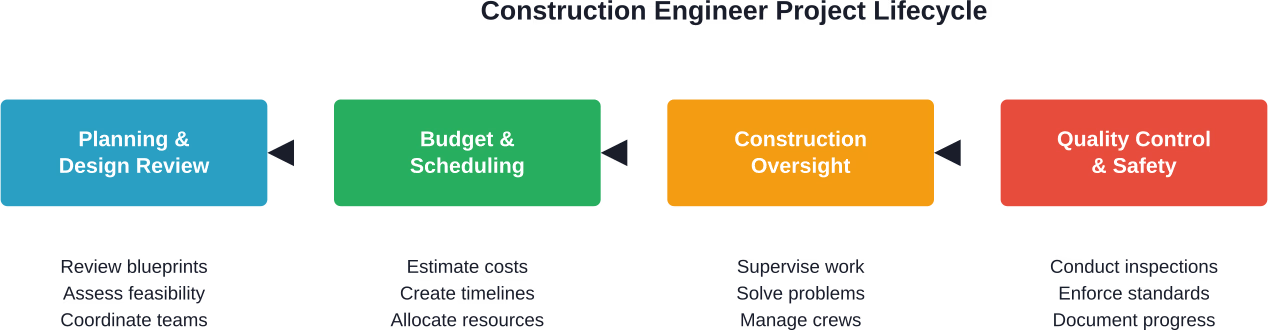
Their day-to-day work includes:
- Reviewing project plans to ensure technical accuracy and feasibility
- Coordinating with architects, project managers, and contractors
- Overseeing budgetary considerations and time-management aspects
- Ensuring compliance with building codes and safety regulations
- Supervising construction activities and resolving on-site problems
- Managing resources, equipment, and personnel allocation
- Conducting site inspections and quality control checks
According to the American Society of Civil Engineers, construction engineers often specialize in areas like transportation, structural engineering, geotechnical engineering, or architectural engineering.
Construction Engineer vs. Civil Engineer: What's the Difference?
The terms often get used interchangeably, which creates confusion. While there’s overlap, these roles have distinct focuses.
Civil engineers plan, design, and supervise the construction and maintenance of building and infrastructure projects, according to the Bureau of Labor Statistics. They handle the broader engineering aspects—structural calculations, material specifications, environmental considerations, and long-term planning.
Construction engineers, on the other hand, concentrate on the actual building process. They take the civil engineer’s designs and make them happen on the ground.
| Aspect | Civil Engineer | Construction Engineer
|
|---|---|---|
| Primary Focus | Design and planning infrastructure | Executing and managing construction |
| Main Activities | Structural analysis, design calculations, material selection | Site supervision, schedule management, quality control |
| Work Location | Often office-based with occasional site visits | Split between office and active construction sites |
| Project Phase | Pre-construction and design phase | Construction and implementation phase |
| Median Salary (2024) | $99,590 | $106,980 |
Think of it this way: civil engineers design the bridge, while construction engineers build it. Both roles require engineering expertise, but construction engineers need stronger project management and on-site problem-solving skills.
A Day in the Life of a Construction Engineer
No two days look exactly the same for construction engineers. The work varies based on project type, construction phase, and unexpected challenges that arise.
A typical day might start with reviewing overnight progress reports and addressing any issues from the previous shift. Morning site walks allow engineers to inspect work quality, verify safety compliance, and identify potential problems before they escalate.
Mid-morning often involves coordination meetings. According to the University of North Dakota, construction engineers work individually and as a team with people from different backgrounds and expertise including architects, geologists, electrical engineers, and mechanical engineers.
Afternoons might include:
- Reviewing and approving material deliveries
- Updating project schedules based on actual progress
- Resolving conflicts between subcontractors
- Meeting with clients to discuss changes or concerns
- Preparing documentation for regulatory inspections
- Analyzing budget variances and cost projections
Real talk: construction engineering involves considerable problem-solving under pressure. Weather delays, material shortages, design conflicts, and safety incidents require immediate attention and creative solutions.
Essential Skills for Construction Engineers
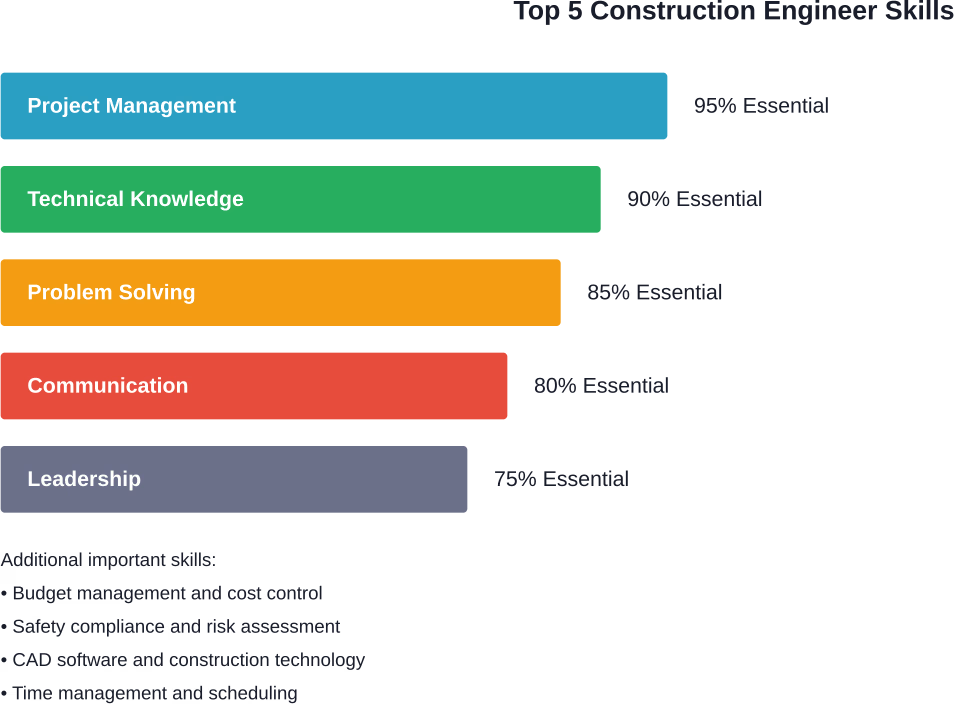
Technical knowledge forms the foundation, but construction engineers need a diverse skill set to succeed.
Technical Competencies
Construction engineers must understand structural principles, construction methods, building codes, and safety regulations. They need proficiency with computer-aided design software, project management platforms, and construction-specific tools.
The ability to read and interpret complex blueprints and specifications is non-negotiable. Engineers must spot design conflicts, identify constructability issues, and propose workable alternatives.
Management and Leadership
Construction projects involve coordinating dozens or hundreds of workers across multiple trades. Strong leadership skills help construction engineers motivate teams, resolve conflicts, and maintain productivity.
Budget management requires constant attention. Engineers track expenses, approve purchases, forecast costs, and find ways to maintain quality while controlling spending.
Communication Abilities
Construction engineers serve as the communication hub for projects. They translate technical information for non-engineers, negotiate with vendors, report to clients, and document decisions for regulatory compliance.
Written communication matters as much as verbal. Engineers prepare reports, maintain logs, write change orders, and create documentation that might become legally significant.
Educational Path and Licensing Requirements
Becoming a construction engineer requires specific educational credentials and often professional licensing.
Academic Requirements
Most positions require at minimum a bachelor’s degree in civil engineering, construction engineering, or a related field. Large construction firms may prefer to hire candidates who have both construction experience and a bachelor’s degree in a construction-related field, according to BLS data.
According to Ohio University, programs like the online Master of Science in Civil Engineering help professionals stand out and prepare them to earn professional engineer licensure. When pursuing higher education, ensuring that the program is ABET accredited indicates it meets industry standards.
Coursework typically covers:
- Structural analysis and design
- Construction materials and methods
- Geotechnical engineering
- Project management principles
- Construction law and contracts
- Cost estimation and budgeting
- Safety management
Professional Licensing
Civil engineers typically need a state-issued license if they provide services directly to the public, according to the Bureau of Labor Statistics. The licensing process generally follows these steps:
- Earn a degree from an ABET-accredited engineering program
- Pass the Fundamentals of Engineering exam
- Gain relevant work experience under a licensed engineer
- Pass the Professional Engineering exam
All students are strongly encouraged to prepare for and pass the Fundamentals of Engineering examination prior to graduation, according to the University of Alabama’s construction engineering program guidelines.
Salary and Compensation
Construction engineering offers competitive compensation that reflects the role’s responsibilities and required expertise.
According to Bureau of Labor Statistics data from May 2024, the median annual wage for civil engineers was $99,590 in 2024, while construction managers earned $51.43 per hour in 2024.
Breaking that down hourly: civil engineers earned $47.88 per hour in 2024, while construction managers earned $51.43 per hour in 2024.
But compensation varies significantly based on several factors.
Industry Variations
According to BLS employment statistics from May 2023, civil engineers in the Architectural and Engineering Services sector earned the following wages:
| Industry | Employment | Hourly Mean Wage | Annual Mean Wage
|
|---|---|---|---|
| Architectural and Engineering Services | 176,160 | $49.20 | $102,340 |
| State Government, excluding Schools and Hospitals | 35,970 | $46.46 | $96,630 |
Experience level significantly impacts earnings. Entry-level construction engineers typically start below the median, while senior engineers with specialized expertise or management responsibilities often exceed it substantially.
Geographic location matters too. Engineers working in major metropolitan areas with high construction activity generally command higher salaries than those in smaller markets.
Career Outlook and Job Growth
The construction engineering field shows promising growth prospects.
According to BLS projections, about 23 percent of new jobs for engineers are projected to be for civil engineers, the largest engineering occupation. Civil engineering represents one of the top three engineering fields for projected job growth.
Several factors drive this positive outlook:
- Infrastructure investment: Aging infrastructure across the United States requires replacement and modernization. Roads, bridges, water systems, and public facilities need engineers to plan and execute improvement projects.
- Population growth: Expanding populations require new residential developments, commercial buildings, schools, and transportation networks. Construction engineers make these projects possible.
- Sustainability initiatives: Green building practices, renewable energy projects, and environmentally conscious construction create new opportunities for engineers with specialized knowledge.
- Technology integration: Building information modeling, drones, automation, and other technological advances require engineers who can adapt to and implement new tools.
As infrastructure continues to develop and expand globally, there will be an ongoing need for skilled construction engineers to turn architectural visions into physical realities.
Specializations Within Construction Engineering
Construction engineers often develop expertise in specific project types or technical areas.
According to the American Society of Civil Engineers, civil engineers often specialize in areas including:
- Transportation: Highways, railways, airports, and mass transit systems
- Structural: Buildings, bridges, towers, and load-bearing structures
- Geotechnical: Foundation design, soil mechanics, and underground construction
- Environmental: Water treatment, waste management, and pollution control
- Coastal Engineering: Marine structures, harbors, and shoreline protection
- Architectural Engineering: Building systems integration and construction technology
Specialization typically develops through work experience rather than initial education. Engineers gravitate toward areas that match their interests and then build expertise through successive projects.
Challenges and Rewards
Construction engineering isn’t for everyone. The work involves genuine challenges that require resilience and adaptability.
Common Challenges
Project delays test patience and problem-solving abilities. Weather, material shortages, labor issues, and unforeseen site conditions can derail even well-planned schedules.
Safety responsibility weighs heavily. Construction engineers bear accountability for worker safety, and accidents can have devastating consequences.
Budget pressures create constant tension. Clients want quality results at minimum cost, requiring engineers to balance competing priorities.
Long hours during critical project phases can strain work-life balance. When deadlines loom or emergencies arise, construction engineers need to be available.
Professional Rewards
That said, construction engineering offers tangible satisfaction that many careers lack. Engineers see direct results from their efforts—completed buildings, functional bridges, improved infrastructure that serves communities for decades.
The variety keeps work interesting. Different projects bring new challenges, locations, and learning opportunities.
Career advancement paths offer multiple options. Engineers can move into senior technical roles, transition to project management, start consulting firms, or shift into related fields.
The compensation reflects the responsibility and expertise required, providing financial stability and growth potential.
The Future of Construction Engineering
Technology is reshaping how construction engineers work.
Building Information Modeling creates detailed 3D models that help engineers identify conflicts before construction begins, reducing costly changes during building.
Drones enable rapid site surveys, progress monitoring, and safety inspections that previously required extensive manual effort.
Prefabrication and modular construction methods change how projects get built, requiring engineers to adapt traditional approaches.
Sustainability considerations increasingly influence design and construction decisions. Engineers need knowledge of green building practices, energy efficiency, and environmental impact mitigation.
According to recent ASCE insights, civil engineering isn’t a monolith. The term infrastructure covers structures from skyscrapers to bridges to pipelines and even nature-based solutions, and civil engineering roles aren’t only focused on building—project management is a huge part of it as well.
With so many different job types, construction engineers are likely to encounter new or unfamiliar responsibilities as they move through their careers, requiring ongoing learning and adaptation.
Make Engineering Decisions That Don’t Break

A lot of engineering decisions look correct in drawings but start to fall apart once different systems meet on site. Powerkh steps into that moment, not to redesign, but to check how those decisions actually behave when the project moves forward.
They review how elements fit together, how tolerances hold in real conditions, and where small mismatches can turn into delays or rework. This gives engineers a way to test their decisions against reality before they are locked in.
👉 Talk to Powerkh and review your project before construction starts to make sure your engineering decisions hold up on site.
Conclusion
Construction engineers occupy a vital position in transforming infrastructure visions into built reality. They blend technical engineering knowledge with project management expertise, coordinating diverse teams to complete complex projects safely, on schedule, and within budget.
The career offers competitive compensation, with median wages ranging from $99,590 to $106,980 according to 2024 BLS data. Job growth projections remain strong, driven by infrastructure investment, population growth, and ongoing development needs.
But success requires more than technical skills. Construction engineers need leadership abilities, communication prowess, problem-solving creativity, and the resilience to handle unexpected challenges. The work involves genuine responsibility—for worker safety, project outcomes, and budgets that often reach millions of dollars.
For those with the right combination of technical aptitude and practical management skills, construction engineering provides a career with tangible impact. Every completed project stands as visible evidence of professional accomplishment.
Considering a career in construction engineering? Start by researching ABET-accredited engineering programs that match your interests and career goals. Look for programs offering hands-on experience, internship opportunities, and strong industry connections. The investment in education pays dividends throughout a rewarding career building the infrastructure that shapes modern society.
Frequently Asked Questions
What’s the difference between a construction engineer and a construction manager?
Construction managers focus on coordination, scheduling, and project delivery, while construction engineers handle technical decisions, structural considerations, and engineering aspects of projects.
Do construction engineers work indoors or outdoors?
They work in both environments. Office work includes planning and coordination, while on-site work involves supervision and inspections in active construction conditions.
Can someone become a construction engineer without an engineering degree?
It is very difficult. Most roles require a degree in civil or construction engineering, and many positions also require professional licensing.
What industries employ the most construction engineers?
They are employed by engineering firms, construction companies, government agencies, and infrastructure development organizations.
Is construction engineering a stable career choice?
Yes. Demand remains steady due to ongoing infrastructure needs, and long-term job growth prospects are strong.
How long does it take to become a licensed Professional Engineer?
It typically takes 6 to 8 years, including a degree, passing exams, and gaining supervised work experience.
What’s the work-life balance like for construction engineers?
Work-life balance varies. Active construction phases may require long hours, while office-based roles often provide more predictable schedules.

Our Case Studies
We have handled 200+ BIM & VDC projects for commercial, industrial, and residential sectors.
Our work includes:
Formwork design automation
Our client from
California, USA
Suspended ceiling design automation
Our client from
New York, USA
Wall framing design automation
Our client from
California, USA