Herhangi bir sorunuz var mı? Bize ulaşın!
Ekibimize katılın!
Ücretsiz fiyat teklifi veya danışmanlık talep edin

FRP (Fiber-Reinforced Polymer) in construction is a composite material made of a polymer matrix reinforced with fibers like glass, carbon, or aramid. This lightweight yet durable material offers superior corrosion resistance, strength-to-weight ratio, and longevity compared to traditional construction materials like steel and concrete, making it increasingly popular for bridges, building panels, reinforcement bars, and structural retrofits.
The construction industry has witnessed a significant shift toward advanced composite materials. At the forefront of this transformation stands fiber-reinforced polymer—a material that’s changing how engineers and builders approach structural design.
But what exactly is FRP, and why has it become such a critical component in modern construction projects?
Understanding FRP: The Basics
FRP stands for Fiber-Reinforced Polymer (also called Fiber-Reinforced Plastic). It’s a composite material that combines a polymer matrix with fiber reinforcement to create a product that’s stronger than either component alone.
The polymer matrix—typically made from materials like vinyl ester, epoxy, polyester, or thermoplastics—acts as a binding agent. The fibers provide structural strength and stiffness. Common fiber types include glass (fiberglass), carbon, aramid, and basalt.
Here’s the thing though—FRP isn’t a single material type. It’s a broader category of performance composites where the manufacturing technique depends on factors like desired function, size, aesthetic requirements, and order quantity.
How FRP is Manufactured
Production methods vary based on application needs. Compression molding offers excellent detailing for geometric shapes ranging from pattern and relief detailing to complex curves, all within a maximum curing time of 2 to 5 minutes according to current industry standards.
Other manufacturing processes include pultrusion for continuous profiles, filament winding for cylindrical structures, and hand lay-up for custom applications. The chosen method directly impacts the final product’s mechanical properties and cost.
Get Help With BIM Models and Drawings

Powerkh focuses on producing BIM models and project documentation that can be used directly in construction workflows. The company supports projects with modeling, Scan to BIM, coordination, and detailing services.
Need Support With BIM Deliverables?
Talk with Powerkh to:
- produce BIM models and technical drawings
- convert scans into structured project data
- support coordination and documentation
👉 Contact Powerkh for a project review and consultation.
Why FRP is Transforming Construction
Traditional materials like steel and concrete have dominated construction for decades. So why the shift?
FRP composites deliver several compelling advantages that address common challenges in modern building projects.
Exceptional Strength-to-Weight Ratio
At just 10-20% the weight of reinforced concrete decking, FRP panels and structural elements dramatically reduce dead loads. This lightweight nature simplifies installation, reduces transportation costs, and allows for designs that would be impractical with heavier materials.
Despite weighing significantly less, FRP materials provide comparable or superior strength to traditional options.
Unmatched Corrosion Resistance
Steel corrodes. Concrete cracks and deteriorates. FRP composites, however, resist chemical attack, moisture damage, and environmental degradation that plague conventional materials.
This corrosion resistance proves particularly valuable in harsh environments like coastal areas, chemical plants, and wastewater treatment facilities.
Extended Service Life
An FRP structure can go up to 75 years with little or no maintenance, drastically reducing the overall cost of construction projects and generating more long-term economies of scale. This longevity stems from the material’s resistance to rust, rot, and chemical breakdown.
The maintenance savings alone often justify the higher initial material costs.
Common Applications in Construction
FRP composites have found their way into numerous construction applications. Their versatility makes them suitable for both new construction and retrofitting existing structures.
Bridge Construction and Repair
According to the Federal Highway Administration, FRP composites play an increasingly important role in bridge infrastructure. The materials are used for bridge decking, girders, and structural reinforcement.
Repairing bridges to extend their lifetime and enhance their seismic strength is often less expensive than replacing the entire bridge. A case study from the American Society of Civil Engineers outlines how FRP retrofits can strengthen reinforced concrete bridges while maintaining structural integrity.
Concrete Reinforcement
ASTM International’s composite materials committee developed standards including D7565/D7565M for determining tensile properties of fiber reinforced polymer matrix composites used for strengthening civil structures.
The higher performance specified for FRP bars results in significant improvement of design and construction of concrete structures reinforced with non-metallic bars, translating into more efficient and sustainable design.
Research from Purdue University indicates that FRP reinforcement requires longer development lengths than steel due to lower bond strengths. However, specimen crack widths and deflections can be managed through proper design considerations.
Building Panels and Cladding
Lightweight and easy to install, FRP panels serve as decorative elements or functional surfaces in commercial and residential spaces. The non-porous feature of FRP panels makes them perfect for buildings that require sterile conditions, such as hospitals or food preparation areas.
From walls and roofs to skylights and hygienic interiors, FRP offers a durable alternative to conventional options.
Sismik Güçlendirme
Externally bonded fiber-reinforced polymer composites are a cost-effective material used for repairing and seismic retrofitting of existing concrete structures, according to research published by the National Institute of Standards and Technology (NIST).
Materials characterization studies after long-term service in subarctic Alaskan environments demonstrate FRP’s reliability even under harsh conditions.
| Application Type | Primary FRP Material | Key Benefits |
|---|---|---|
| Bridge Decks | Glass/Vinyl-Ester | Lightweight, corrosion resistant, rapid installation |
| Concrete Reinforcement | Glass, Carbon, Aramid | Non-corrosive, high tensile strength, design flexibility |
| Hygienic Panels | Fiberglass | Non-porous, easy to clean, chemical resistant |
| Seismic Retrofits | Carbon/Epoxy | High strength, minimal added weight, quick application |
| Marine Structures | Glass/Vinyl-Ester | Saltwater resistance, durability, low maintenance |
Considerations and Limitations
Real talk: FRP isn’t perfect for every situation.
The material typically costs more upfront than traditional alternatives. This higher initial investment must be weighed against long-term maintenance savings and extended service life.
FRP composites also exhibit different mechanical behaviors than steel. According to academic research on durability and mechanical effects, FRP may be affected by harsh environmental conditions and exhibit phenomena like creep rupture and fatigue that could affect performance.
Design professionals need specialized knowledge to properly specify and install FRP systems. The learning curve can slow adoption in organizations accustomed to conventional materials.
Temperature sensitivity varies by matrix type. Some polymer systems lose strength at elevated temperatures, requiring careful selection for specific applications.
The Future of FRP in Construction
Standards development continues to advance. ASTM International maintains specifications including F3059-18 Standard Specification for Fiber-Reinforced Polymer (FRP) Gratings Used in Marine Construction and Shipbuilding, and D7565/D7565M-10(2017) Standard Test Method for Determining Tensile Properties of Fiber Reinforced Polymer Matrix Composites Used for Strengthening Civil Structures.
These evolving standards support wider adoption by providing clear performance criteria and testing methodologies.
Research into new fiber types and matrix formulations promises even better performance characteristics. Basalt fibers, for instance, offer an interesting alternative to traditional glass or carbon reinforcement.
As the construction industry prioritizes sustainability and lifecycle costs over first-cost considerations, FRP composites become increasingly attractive options.
Building Better with Advanced Composites
FRP represents a fundamental shift in construction materials philosophy. Rather than accepting the limitations of traditional materials, fiber-reinforced polymers offer engineered solutions tailored to specific performance requirements.
The combination of light weight, high strength, corrosion resistance, and extended service life makes FRP increasingly competitive—especially when lifecycle costs receive proper consideration.
As standards continue evolving and the construction industry gains familiarity with proper design and installation techniques, FRP composites will likely capture growing market share across diverse applications. The material’s proven performance in demanding environments from subarctic Alaska to corrosive marine settings demonstrates its reliability.
For projects where durability, weight savings, or corrosion resistance drive design decisions, FRP deserves serious evaluation alongside conventional materials. The initial investment often pays dividends through decades of maintenance-free service.
Sıkça Sorulan Sorular
What does FRP stand for in construction?
FRP stands for Fiber-Reinforced Polymer. It is a composite material made by combining a polymer base with reinforcing fibers to create a strong and lightweight construction material.
How long does FRP last in construction applications?
FRP can last several decades, often up to 75 years, especially in environments where traditional materials would corrode. Its durability makes it a long-term solution for many structural and protective applications.
Is FRP stronger than steel?
FRP offers a higher strength-to-weight ratio than steel, meaning it provides comparable strength at a much lower weight. However, performance depends on the specific fiber type and application.
What are the main disadvantages of FRP in construction?
FRP generally has higher upfront costs and requires specialized design knowledge. It also behaves differently from traditional materials, particularly under long-term loads and temperature changes.
Can FRP be used for structural reinforcement?
Yes, FRP is widely used for reinforcing concrete and strengthening existing structures. It can be applied internally as reinforcement bars or externally as bonded composite systems.
What types of fibers are used in construction FRP?
Common fiber types include glass, carbon, aramid, and basalt. Each offers different properties, with glass being the most cost-effective and carbon providing the highest strength and stiffness.
Where is FRP most commonly used in buildings?
FRP is used in bridge components, reinforcement systems, wall panels, cladding, and environments requiring corrosion resistance. Its use continues to expand as technology advances.

Vaka Çalışmalarımız
Ticari, endüstriyel ve konut sektörleri için 200'den fazla BIM ve VDC projesi gerçekleştirdik.
Çalışmalarımız şunları içermektedir:
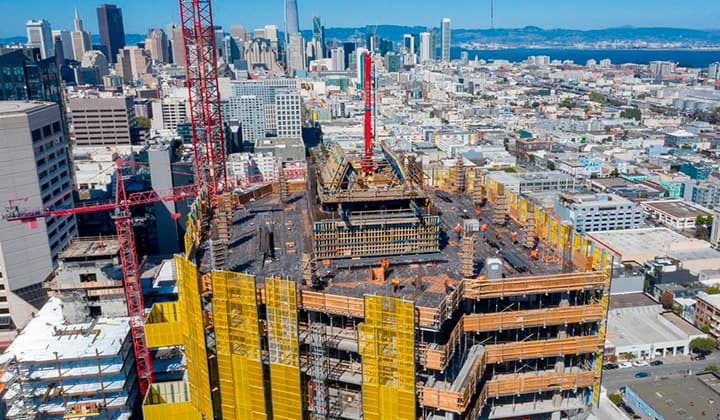
Kalıp tasarım otomasyonu
Our client from
California, USA
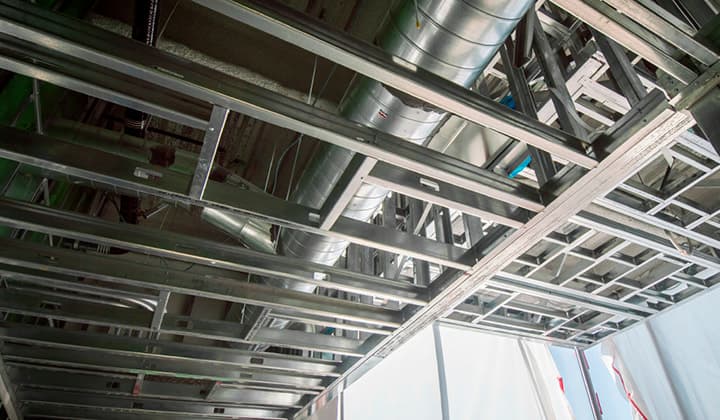
Asma tavan tasarım otomasyonu
Our client from
New York, USA
Duvar çerçeveleme tasarım otomasyonu
Our client from
California, USA