Have any questions? Contact us!
Join our team!
Request a free quote or consultation

Construction site preparation is the essential first phase of any building project, involving land surveying, clearing vegetation, grading, soil testing, erosion control, and establishing temporary facilities. Proper site prep ensures structural stability, worker safety, regulatory compliance, and prevents costly delays. According to OSHA regulations, contractors must implement safety provisions and report all work-related fatalities within 8 hours.
Every successful construction project starts long before the first brick gets laid. The foundation of that success? Proper site preparation.
Site prep isn’t just about clearing trees and moving dirt around. It’s a systematic process that determines whether the building stands strong for decades or develops structural issues within years. Skip steps here, and those shortcuts come back to haunt projects through foundation failures, drainage problems, and regulatory penalties.
Here’s what makes site preparation the most critical phase of construction.
What Is Construction Site Preparation?
Site preparation encompasses all activities required to transform raw land into a construction-ready workspace. This includes surveying boundaries, removing vegetation, excavating soil, establishing proper drainage, and creating safe access routes.
The process typically happens in two distinct phases. First, vegetation gets cleared from the designated area. Then the surface soil layer is removed or relocated based on engineering specifications.
Both manual and mechanical methods exist for site prep work. Small residential projects might rely on hand tools and compact equipment, while commercial developments require heavy machinery like bulldozers, excavators, and graders.
Why Site Preparation Matters
Proper site prep delivers benefits that extend throughout the entire construction lifecycle and beyond.
Structural Integrity
Buildings need stable ground. Period.
Soil conditions directly affect foundation performance. Compacted and smooth soil surfaces increase erosion by 30%, while rough and irregular surfaces decrease erosion by 50%. These numbers aren’t trivial when structural stability hangs in the balance.
Soil testing during preparation reveals load-bearing capacity, moisture content, and composition. Armed with this data, engineers design foundations that won’t settle unevenly or crack under stress.
Safety and Compliance
OSHA regulations under 29 CFR 1926 establish mandatory safety requirements for construction sites. According to OSHA’s compliance guidelines, all employers must report work-related fatalities within 8 hours and all work-related inpatient hospitalizations, amputations, and eye losses within 24 hours.
Site preparation creates the controlled environment where these safety standards become achievable. Proper grading prevents water accumulation that creates slip hazards. Cleared access routes allow emergency vehicles to reach any location quickly.
Project Timeline Protection
Inadequate site prep causes delays that cascade through every subsequent phase. Foundation contractors can’t work on unstable soil. Framers can’t start until foundations cure properly. Each delay compounds.
Thorough preparation identifies and resolves issues before they halt progress. Underground utilities get located and marked. Drainage problems get engineered out. Access routes get established for material deliveries.
Cost Control
Site preparation represents a relatively small percentage of total project costs, but skimping here multiplies expenses downstream.
Foundation repairs cost exponentially more than proper soil preparation. Erosion control measures implemented during construction cost less than sediment removal from neighboring properties after violations. Equipment damage from poor site access exceeds the cost of proper road establishment.
Work With Powerkh on BIM and VDC Tasks

Powerkh supports construction teams that need hands-on BIM and VDC work, not just high-level advice. The company provides BIM modeling, BIM coordination, scan to BIM, structural detailing, prefabrication support, and BIM automation. That can be useful when a project needs accurate models, better drawing sets, or extra technical support during delivery.
Need Extra BIM Capacity for the Project?
Talk with Powerkh to:
- build models from existing files or site scans
- support coordination across design and construction teams
- deliver shop drawings and detailed project documentation
👉 Contact Powerkh to review your project and BIM needs.
Essential Steps for Construction Site Preparation
Site preparation follows a logical sequence. Each step builds on the previous one, and skipping stages creates problems.
Step 1: Land Survey and Permitting
Before equipment arrives, surveyors establish exact property boundaries, topographical features, and elevation points. This data drives every decision that follows.
Simultaneously, permits must be secured. The EPA’s National Pollutant Discharge Elimination System requires permits for construction activities disturbing one acre or more. Local jurisdictions add their own requirements for building, grading, and environmental impact.
Stormwater Pollution Prevention Plans (SWPPP) are mandatory for covered projects under the EPA’s Construction General Permit. These plans outline erosion control measures, sediment management, and inspection schedules.
Step 2: Site Clearing
Vegetation removal comes first. Trees, brush, stumps, and root systems all must go from the building footprint and surrounding work areas.
Manual clearing works for small sites with minimal vegetation. Hand tools, chainsaws, and small equipment handle residential lots efficiently.
Mechanical clearing tackles larger projects. Bulldozers equipped with clearing blades push vegetation into piles for removal or chipping. Excavators with grapples pull stumps and load debris into trucks.
Now, here’s something most guides overlook: proper debris disposal matters legally and environmentally. Many jurisdictions regulate where cleared vegetation can go. Burning requires permits in most areas. Chipping for mulch provides an eco-friendly alternative.
Step 3: Soil Testing and Analysis
Soil conditions vary dramatically even within small areas. Testing reveals what engineers need to know for foundation design.
Standard tests measure bearing capacity, moisture content, organic material percentage, and soil composition. Labs analyze samples to determine how soil behaves under load and how it drains.
Standards for construction material evaluation establish that when cube and cylinder test specimens from like mixtures are compared, cylinder compressive strength may be considered equal to 80-85% of cube compressive strength due to specimen shape differences.
Contamination testing identifies hazardous materials that require special handling. Former industrial sites, gas stations, or agricultural land often contain substances that mandate remediation before construction proceeds.
Step 4: Grading and Excavation
Grading reshapes the land to specified elevations and slopes. This creates proper drainage, establishes building pad elevation, and prepares access routes.
The surface soil layer often requires removal. Topsoil contains organic material that compresses over time, creating uneven settling. Stripping this layer and stockpiling it for later landscaping use is standard practice.
Excavation depth depends on foundation design. Basements require deep excavation. Slab-on-grade foundations need minimal digging beyond unsuitable soil removal.
Cut-and-fill operations balance earthwork volumes. Soil excavated from high areas gets moved to fill low spots, minimizing material that needs hauling off-site.
Step 5: Erosion and Sediment Control
Bare soil erodes quickly. Rainfall washes sediment into storm drains, waterways, and neighboring properties.
EPA’s National Menu of Best Management Practices provides guidance for construction stormwater control. Recommended measures include silt fencing, sediment basins, stabilized construction entrances, and soil stabilization techniques.
Surface preparation significantly impacts erosion rates:
| Soil Surface Condition | Erosion Impact |
|---|---|
| Compacted and smooth | Increases erosion by 30% |
| Tracks across slopes | Increases erosion by 20% |
| Tracks up and down slopes | Decreases erosion by 10% |
| Rough and irregular | Decreases erosion by 10% |
Temporary measures protect soil during construction. Permanent drainage systems get installed before building begins, ensuring long-term water management.
Step 6: Temporary Facilities
Construction sites need infrastructure before building starts. These temporary facilities create safe, efficient work environments.
Essential facilities include perimeter fencing for security and safety, temporary access roads for equipment and deliveries, construction offices and storage buildings, sanitation facilities meeting OSHA requirements, and utility connections for power and water.
OSHA’s general safety and health provisions under 29 CFR 1926.20 require contractors to implement safety programs addressing site-specific hazards. Temporary facilities support these programs by providing tool storage, first aid stations, and emergency assembly areas.
Step 7: Utility Installation
Underground utilities get installed before foundations go in. Running water, sewer, gas, electric, and communication lines under completed structures costs far more than doing it during site prep.
Existing utilities require location and protection. One call to 811 triggers utility locating services that mark underground lines. Damaging utilities during excavation creates safety hazards, service interruptions, and liability.
Temporary utility connections power construction equipment and tools. Permanent utility stubs get positioned precisely where buildings will connect to them.
Critical Equipment for Site Preparation
The right equipment makes site prep efficient and cost-effective. The wrong equipment creates delays and safety issues.
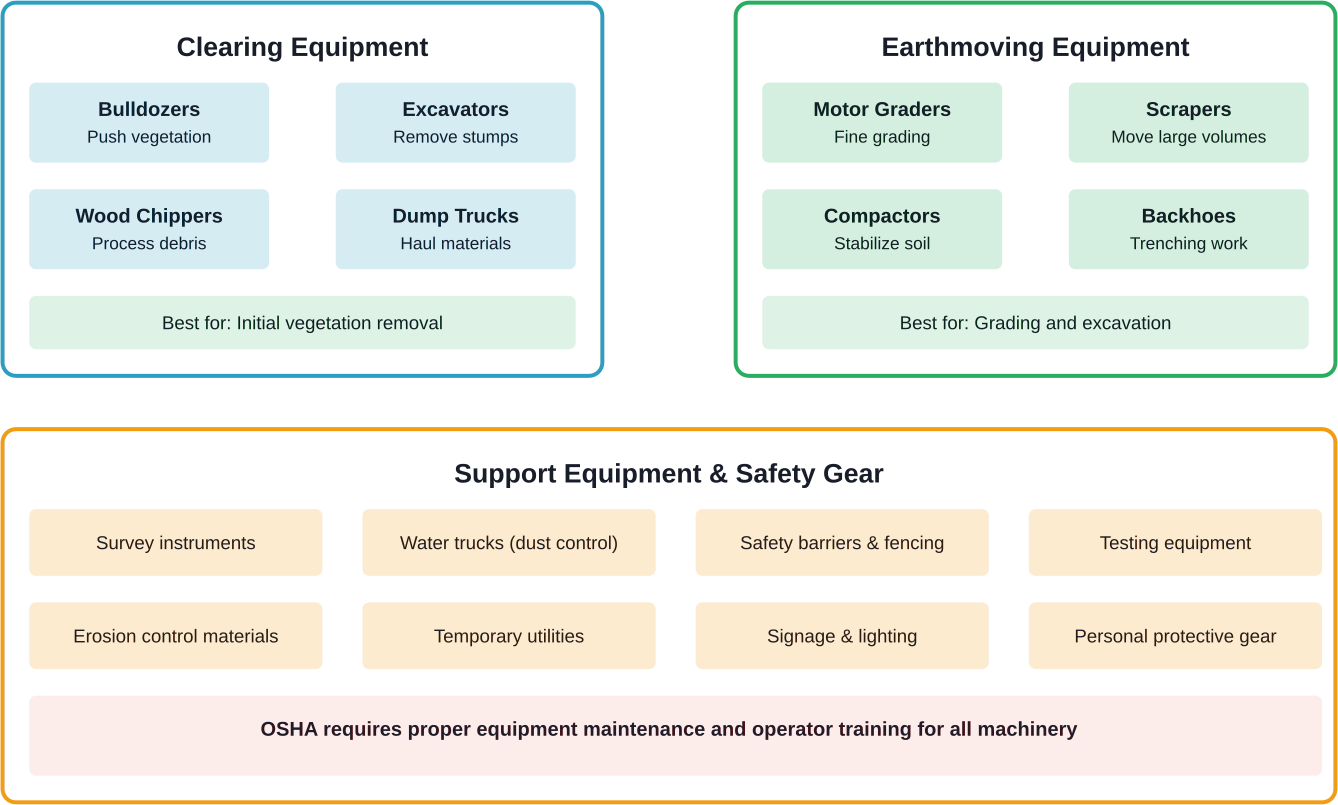
Heavy Machinery
Bulldozers handle clearing and rough grading. Track-mounted models provide stability on uneven terrain. Wheel-mounted versions offer better mobility on finished surfaces.
Excavators dig foundations, trenches, and drainage systems. Size selection depends on project scale. Compact excavators maneuver in tight residential spaces. Large excavators move serious earth volumes on commercial sites.
Motor graders create precise slopes and elevations. These specialized machines excel at fine grading work that establishes proper drainage patterns.
Support Equipment
Water trucks control dust during dry conditions. Many jurisdictions mandate dust suppression for air quality compliance.
Compaction equipment densifies fill material and subgrade. Proper compaction prevents future settling that damages structures.
Survey equipment maintains accuracy throughout the process. Modern laser levels and GPS systems enable precise grade control that meets engineering specifications within fractions of an inch.
Safety Considerations
Equipment operation creates inherent risks. OSHA standards require operator training, equipment maintenance, and worksite protocols that protect workers.
Ropes, cables, and chains used in site preparation demand careful inspection. According to construction safety guidelines, if rope has been overloaded, i.e. near or up to its breaking load, it will be weakened for subsequent use, by 50 percent or more in some cases. Cables should be fitted using proper eyes or clamps rather than knots.
Common Site Preparation Challenges
Even well-planned projects encounter obstacles. Anticipating these issues reduces their impact.
Unexpected Soil Conditions
Testing provides data, but surprises still happen. Buried debris, contaminated soil, or unsuitable bearing capacity discovered mid-project requires engineering solutions and budget adjustments.
Contingency planning builds flexibility into schedules and budgets for addressing unforeseen soil issues without derailing the entire project.
Weather Delays
Rain turns construction sites into mud pits. Frozen ground prevents excavation. Extreme heat creates safety concerns for workers and equipment.
Seasonal timing affects site prep efficiency. Many regions have optimal construction windows when weather cooperates most reliably.
Utility Conflicts
Underground utilities sometimes occupy spaces needed for new construction. Relocating active utilities adds time and expense to projects.
Early coordination with utility companies identifies conflicts when design changes cost less than mid-construction rework.
Regulatory Hurdles
Environmental regulations protect wetlands, endangered species habitat, and water quality. Sites near protected areas face additional permitting requirements and construction restrictions.
Archaeological discoveries can halt work entirely until proper surveys and mitigation occur. Some jurisdictions require archaeological assessments before issuing permits for areas with historical significance.
Best Practices for Efficient Site Preparation
Experience reveals techniques that streamline the process and avoid common pitfalls.
Plan Thoroughly Before Breaking Ground
Time invested in planning returns multiples in execution efficiency. Complete surveys, soil testing, and engineering before mobilizing equipment.
Coordinate with all stakeholders early. Architects, engineers, utility companies, and local authorities all have input that affects site prep. Getting everyone aligned prevents conflicts during execution.
Sequence Operations Logically
Some tasks must precede others. Clearing before grading. Rough grading before fine grading. Erosion controls before exposing large soil areas.
But wait. Staging areas for equipment and materials need establishment early. Access routes require completion before heavy equipment arrives. Temporary utilities should be functional before work crews need them.
Document Everything
Photographs and measurements create records that protect against future disputes. Before-and-after documentation proves work completion and existing condition preservation.
As-built surveys record exactly where utilities got installed. This information proves invaluable for future work on the property.
Maintain Safety as Priority One
According to OSHA’s general safety provisions, contractors must implement safety programs addressing site-specific hazards. These programs should identify potential hazards before they cause injuries.
Regular safety meetings, proper personal protective equipment, and clear communication protocols create cultures where workers look out for each other and themselves.
Setting the Stage for Construction Success
Site preparation sets the foundation—literally and figuratively—for everything that follows. Projects that invest time and resources in thorough site prep experience fewer delays, lower costs, and better outcomes.
The process demands technical knowledge, proper equipment, and attention to regulatory requirements. But it isn’t rocket science. Following established procedures, working with qualified professionals, and maintaining focus on safety and quality produces construction-ready sites that support successful building projects.
Ready to start site preparation for an upcoming project? Begin with comprehensive planning, secure necessary permits, and partner with experienced contractors who understand local conditions and requirements. The work invested now pays dividends throughout the entire construction process and for decades afterward in the structures built on properly prepared ground.
Frequently Asked Questions
How long does construction site preparation typically take?
Site prep duration varies based on project size, soil conditions, and weather. Small residential lots might require one to two weeks. Large commercial developments can take several months. Complex sites with contamination issues, difficult terrain, or extensive utility work extend timelines significantly.
What permits are required for site preparation?
Permit requirements vary by jurisdiction and project scope. Most sites need grading permits, erosion control permits, and possibly stormwater discharge permits if the site exceeds one acre. The EPA’s Construction General Permit applies to sites disturbing one acre or more. Local building departments issue specific permits for their jurisdictions. Always check with local authorities before beginning work.
Can site preparation happen during winter months?
Winter site prep presents challenges but remains feasible in many regions. Frozen ground complicates excavation and compaction. Snow and ice create safety hazards and access difficulties. However, winter work offers advantages like reduced demand for contractors and equipment rental availability. Projects in temperate climates proceed year-round with minimal seasonal adjustment.
How much does professional site preparation cost?
Costs depend on site size, terrain difficulty, soil conditions, and regional labor rates. Generally speaking, site prep represents 10-15% of total construction budgets for residential projects. Commercial sites with extensive earthwork or challenging conditions consume larger percentages. Get multiple bids from qualified contractors and verify their experience with similar projects.
What happens if contaminated soil is discovered during preparation?
Contaminated soil discovery triggers environmental assessment and potential remediation requirements. Work typically stops in affected areas until testing determines contamination extent and composition. Environmental consultants develop remediation plans that might involve soil removal, treatment, or containment. Costs and delays vary based on contamination severity and regulatory requirements.
Do I need an engineer for site preparation?
Engineering input proves valuable for most projects and becomes mandatory for complex sites. Engineers design proper drainage systems, specify soil compaction requirements, and ensure grade elevations support structural integrity. Sites with challenging topography, poor soil conditions, or substantial earthwork benefit significantly from professional engineering.
How is erosion controlled during and after site preparation?
Erosion control employs multiple strategies. Silt fencing around site perimeters captures sediment. Sediment basins collect runoff before it leaves the property. Temporary seeding or erosion control blankets stabilize exposed soil. Stabilized construction entrances prevent mud tracking onto public roads. The EPA’s National Menu of Best Management Practices provides detailed guidance for construction stormwater management.

Have a BIM Project? Talk To Us.
Contact UsOur Case Studies
We have handled 200+ BIM & VDC projects for commercial, industrial, and residential sectors.
Our work includes:
Formwork design automation
Our client from
California, USA
Suspended ceiling design automation
Our client from
New York, USA
Wall framing design automation
Our client from
California, USA