Have any questions? Contact us!
Join our team!
Request a free quote or consultation

Construction waste can be minimized through strategic planning, source reduction during design, material reuse and recycling, and implementing on-site tracking systems. According to the EPA, demolition accounts for over 90% of construction and demolition debris, making waste management planning essential. Prefabrication, precise material ordering, and proper training can reduce site waste by 30% or more.
Construction sites generate massive amounts of waste. In the United States, construction and demolition activities produce approximately 600 million tons of waste annually. Most of it ends up in landfills, representing lost money, wasted resources, and environmental damage that’s entirely preventable.
But here’s the thing—minimizing construction waste isn’t just about being environmentally responsible. It directly impacts project budgets, timelines, and profitability. Every ton of material hauled to a landfill represents money spent twice: once to purchase it, and again to dispose of it.
The good news? Construction waste reduction has become more achievable than ever. Better recycling infrastructure, improved sorting technology, and digital tracking tools have made waste diversion practical and cost-effective. This guide breaks down the most effective strategies for minimizing construction waste, from initial design through project completion.
Understanding Construction and Demolition Waste
Construction and demolition (C&D) materials consist of debris generated during building construction, renovation, and demolition. According to the EPA, demolition represents more than 90 percent of total C&D debris generation, while construction represents less than 10 percent.
That’s a critical distinction. Demolition projects generate enormous quantities of material that could potentially be salvaged, reused, or recycled. Construction projects, though producing less volume, offer more opportunities for waste prevention through planning and precision.
Common C&D materials include:
- Concrete, brick, and masonry
- Wood and engineered lumber
- Drywall and gypsum products
- Metals (steel, copper, aluminum)
- Roofing materials (asphalt, tile, metal)
- Insulation and mechanical systems
- Plastic, glass, and cardboard packaging
The EPA notes that depending on the material, “next use” markets may include fuel, manufactured products, aggregate, compost and mulch, or soil amendment. Understanding these downstream options helps inform waste planning decisions.
Benefits of Minimizing Construction Waste
Waste reduction delivers multiple advantages beyond environmental responsibility:
- Cost savings come from reduced material purchases, lower disposal fees, and decreased hauling costs. Landfill tipping fees continue to rise, making waste diversion increasingly economical.
- Project efficiency improves when materials are tracked, organized, and used precisely. Less waste means cleaner sites, better workflow, and fewer delays related to material management.
- Regulatory compliance becomes easier. Many jurisdictions now mandate waste diversion targets or require waste management plans for construction projects above certain thresholds.
- Competitive advantage emerges as clients increasingly prioritize sustainability. Green building certifications like LEED reward construction waste management, making documentation and diversion essential for certain projects.
Design Phase Strategies
Waste minimization begins long before the first shovel hits dirt. Design decisions fundamentally determine how much waste a project will generate.
Design for Adaptability and Disassembly
The EPA recommends designing buildings for future adaptability and eventual disassembly. This approach considers the entire building lifecycle, not just initial construction.
Key principles include:
- Using standard dimensions that align with common material sizes
- Specifying modular systems that can be reconfigured
- Selecting mechanical fasteners over adhesives where feasible
- Designing flexible spaces that accommodate multiple uses
Research shows that the average office is used only 43-54% of working hours. Designing multifunctional spaces that work for various purposes reduces overall building footprint and material consumption.
Building Information Modeling
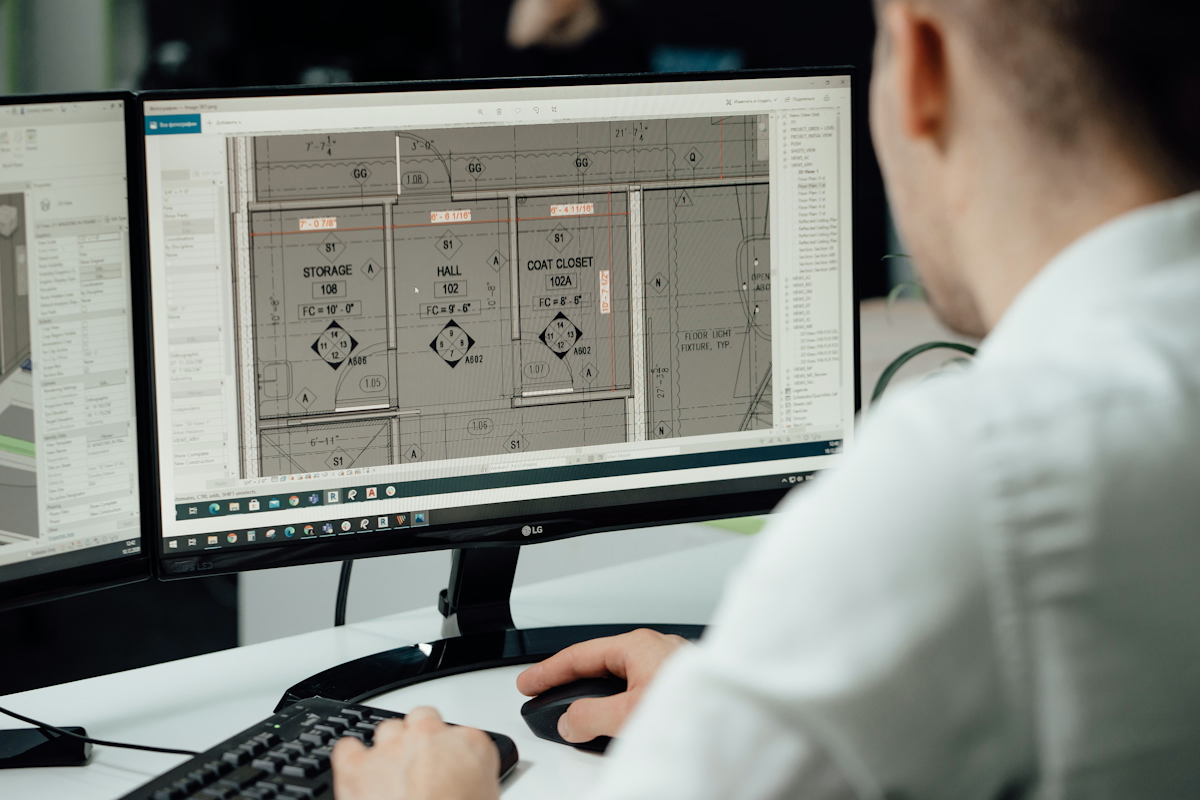
BIM technology enables precise quantity takeoffs and materials planning. Digital models help identify material conflicts, optimize structural systems, and calculate exact quantities before ordering.
This precision prevents over-ordering—one of the most common sources of construction waste. When specifications are accurate and quantities are exact, excess materials don’t accumulate on site.
Material Selection
Specifying materials with recycled content, regional sourcing, or take-back programs supports waste reduction goals. Some manufacturers now offer programs to reclaim and recycle their products at end-of-life.
Research indicates the concrete and cement industry can reduce fly ash and slag waste by 24% by investing in innovative alternative cementitious materials. Material specifications directly influence waste generation across the supply chain.
Work With Powerkh on Models, Drawings, and BIM Tasks

Powerkh supports construction teams that need hands-on BIM and VDC work during planning and delivery. The company provides BIM modeling, scan to BIM, BIM coordination, structural detailing, prefabrication support, and BIM automation. That can help when the project depends on clear models, reliable drawings, and better coordination between design and construction.
Need Extra BIM and Drawing Support?
Talk with Powerkh to:
- build models from drawings, scans, or as-built data
- improve coordination before field issues appear
- prepare shop drawings and fabrication documentation
👉 Contact Powerkh to review your project and BIM needs.
Pre-Construction Planning
Detailed planning before construction starts prevents waste more effectively than any on-site management strategy.
Develop a Waste Management Plan
A comprehensive waste management plan documents:
- Target diversion rates (typically 50-75% or higher)
- Material-specific handling procedures
- Designated collection areas and container locations
- Responsible parties for tracking and reporting
- Local recycling facilities and hauler contacts
Many green building programs require definitive minimum waste and debris diversion criteria, commonly incorporated into demolition specifications as numerical targets such as “divert from landfill disposal a minimum of 75% by weight.”
Research Local Infrastructure
Waste diversion depends on available recycling and reuse infrastructure. Before creating a waste plan, research:
- C&D recycling facilities within economical hauling distance
- Material-specific processors (concrete crushers, metal recyclers, wood grinders)
- Salvage operations that purchase reusable materials
- Donation programs for usable items
The EPA maintains state-specific information on C&D materials management infrastructure to help identify local resources.
Establish Material Tracking Systems
Digital tracking enables early waste identification through centralized, real-time material data. Modern construction management software can monitor:
- Material deliveries and quantities
- Installation rates and remaining inventory
- Waste generation by type and volume
- Diversion rates and disposal costs
This visibility allows teams to adjust ordering, identify waste sources, and document diversion performance for certifications or client reporting.
On-Site Waste Reduction Strategies
Once construction begins, operational practices determine how much waste actually hits the dumpster.
Source Separation
Separating waste streams at the point of generation dramatically improves diversion rates. Mixed waste typically goes to landfills because sorting is impractical or uneconomical.
Set up clearly labeled collection areas for:
- Wood and dimensional lumber
- Metals (ferrous and non-ferrous separately if volume warrants)
- Cardboard and packaging materials
- Drywall and gypsum products
- Concrete, brick, and masonry
- General trash (non-recyclable materials)
The USGBC notes that material streams include deconstructed materials sent to reuse markets, commingled waste sent to mixed-waste recycling facilities, source separation where each material goes to a specific facility, manufacturers’ or suppliers’ take-back of materials, and reuse of deconstructed material.
Just-in-Time Delivery
Scheduling material deliveries closer to installation time reduces damage, theft, and obsolescence. Materials sitting on site for extended periods are more likely to become waste.
This approach requires tighter coordination with suppliers and subcontractors, but it pays off in reduced material losses and better site organization.
Prefabrication and Modular Construction
Building components in controlled factory environments may reduce debris by 30% or more through precise cutting, optimized material use, and better quality control.
Prefabrication also shifts waste generation to facilities with established recycling infrastructure and better sorting capabilities than typical job sites.
Protect Materials Properly
Simple protection measures prevent damage-related waste:
- Cover stored materials from weather exposure
- Elevate materials off the ground to prevent moisture damage
- Designate protected storage areas away from traffic
- Handle materials carefully during unloading and transport
Damaged materials become waste even if they were precisely ordered and carefully planned.
Train Crews and Subcontractors
Waste reduction requires buy-in from everyone on site. Hold pre-construction meetings to explain:
- Waste management goals and diversion targets
- Sorting procedures and container locations
- Material handling expectations
- Consequences for non-compliance
Make waste management part of the project culture, not an afterthought.
Demolition and Deconstruction
Since demolition generates over 90% of C&D waste according to EPA data, this phase offers enormous waste reduction potential.
Selective Demolition vs. Total Demolition
Traditional demolition uses heavy equipment to quickly tear down structures, creating mountains of mixed debris. Selective demolition—or deconstruction—systematically removes materials for reuse or recycling.
Deconstruction takes longer and costs more in labor, but it recovers valuable materials that offset disposal costs and may generate revenue:
- Dimensional lumber in good condition
- Architectural elements (doors, windows, trim, fixtures)
- Mechanical and electrical components
- Metals (structural steel, copper pipe, brass fittings)
- Brick and stone that can be cleaned and reused
The EPA’s best practices for C&D materials recommend preserving existing structures and salvaging and reusing existing materials.
Pre-Demolition Audit
Before demolition begins, survey the structure to identify:
- Hazardous materials requiring special handling (asbestos, lead paint)
- High-value items worth salvaging
- Materials with reuse or recycling markets
- Optimal deconstruction sequence
This audit informs the demolition approach and waste management strategy.
Material-Specific Strategies
Different materials require different handling approaches for maximum diversion.
| Material | Waste Reduction Strategy | Recycling Potential
|
|---|---|---|
| Concrete | Crush on-site for base material; use as aggregate in new concrete | Very high – most recycled C&D material |
| Wood | Cut precisely; use cutoffs for blocking; separate treated from untreated | High – grinding, engineered products, biomass fuel |
| Metals | Collect separately by type; protect from contamination | Very high – valuable recycling markets |
| Drywall | Separate from other materials; keep dry; avoid contamination | Moderate – agricultural applications, new drywall |
| Asphalt Roofing | Remove carefully to minimize breakage; separate from other materials | Moderate – asphalt paving, new roofing products |
| Cardboard/Packaging | Break down boxes; keep dry and clean; collect in designated areas | Very high – paper recycling infrastructure |
Concrete and Masonry
Concrete represents a significant volume of C&D material and is highly recyclable. Crushed concrete becomes aggregate for road base, new concrete, or riprap.
Many jurisdictions now have mobile crushing equipment that processes concrete on-site, eliminating hauling costs while providing useful fill material.
Wood Products
Clean dimensional lumber can be reused directly, donated, or sold to salvage operations. Scraps and sawdust can be ground for mulch, animal bedding, or biomass fuel.
The key challenge is separating treated lumber, which has limited recycling options, from untreated wood with broader markets.
Metals
All metals have recycling value, but prices vary dramatically. Copper, brass, and stainless steel command premium prices. Steel and aluminum are widely recycled but less valuable.
Keep metals clean and sorted by type for maximum value. Contaminated metals or those mixed with other materials may be rejected by recyclers.
Drywall
Gypsum from drywall can be recycled into new drywall or used as a soil amendment. However, drywall must be clean (no paint, mud, or contamination) and dry.
Many recyclers have strict quality requirements, so proper handling is essential for successful diversion.
Technology and Digital Tools
Construction management software increasingly includes waste tracking features that provide visibility into material flows and waste generation patterns.
Digital Tracking Benefits
Software platforms can:
- Generate material quantity reports comparing ordered vs. installed vs. wasted amounts
- Track waste by type, volume, and destination (landfill, recycling, reuse)
- Calculate diversion rates automatically for reporting
- Alert managers when waste exceeds expected thresholds
- Document waste management for LEED or other certifications
This data helps identify waste sources and measure improvement over time. Projects can compare waste performance and learn from successes.
BIM Integration
Building Information Modeling prevents waste by improving accuracy in quantity takeoffs and reducing conflicts that generate rework waste.
BIM also facilitates prefabrication by providing precise dimensions and specifications for factory production.
Measuring and Improving Performance
What gets measured gets managed. Tracking waste metrics drives continuous improvement.
Key Metrics
Track these indicators to assess waste management performance:
- Diversion rate: Percentage of waste diverted from landfills (by weight or volume)
- Waste per square foot: Total waste generated normalized by building area
- Disposal cost per unit: Total disposal costs divided by project value or square footage
- Material efficiency: Installed quantity divided by ordered quantity (closer to 100% is better)
Documentation
Maintain records for each waste stream:
- Hauler tickets showing weights and destinations
- Recycler receipts documenting materials received
- Photos of sorting areas and waste management practices
- Donation receipts for reusable materials
This documentation supports green building certifications and demonstrates waste management performance to clients and stakeholders.
Common Challenges and Solutions
Waste reduction faces predictable obstacles. Here’s how to address them:
| Challenge | Solution
|
|---|---|
| Crews ignore sorting requirements | Make compliance easy with clear signage, convenient locations, and regular monitoring |
| Contaminated materials rejected by recyclers | Educate workers on quality requirements; inspect containers regularly |
| No local recycling infrastructure for certain materials | Research alternatives like regional facilities or manufacturer take-back programs |
| Extra costs for sorting and hauling | Calculate total cost including disposal fees; diversion often costs less than landfilling |
| Insufficient space for multiple containers | Schedule more frequent pickups; use vertical space with balers or compactors |
| Tracking too time-consuming | Use digital tools that automate data collection and reporting |
Budget Considerations
Waste management costs money, but so does waste disposal. The goal isn’t zero cost—it’s optimal cost while maximizing diversion.
Calculate total waste costs including:
- Purchase price of wasted materials
- Labor to handle waste multiple times
- Container rental and hauling fees
- Disposal or tipping fees
- Lost productivity from cluttered sites
Effective waste management often costs less than traditional disposal once all factors are considered.
Regulatory Requirements and Incentives
Many jurisdictions now regulate construction waste through various mechanisms.
Common Regulations
Requirements may include:
- Mandatory waste management plans for projects above size thresholds
- Minimum diversion rate targets (often 50-75%)
- Bans on landfilling specific recyclable materials
- Reporting requirements for waste generation and disposal
- Permit conditions requiring waste reduction measures
The EPA’s Resource Conservation and Recovery Act (RCRA) provides federal framework for C&D materials management, though specific requirements are often established at state and local levels.
Incentive Programs
Some areas offer incentives for waste reduction:
- Reduced tipping fees for source-separated materials
- Fast-track permitting for projects meeting sustainability criteria
- Tax credits or rebates for waste diversion
- Recognition programs highlighting top performers
Research local programs that may offset waste management costs or provide competitive advantages.
Future Trends in Construction Waste Management
Waste reduction practices continue evolving as technology improves and sustainability expectations rise.
Circular Economy Principles
The construction industry is increasingly adopting circular economy concepts that view materials as resources in continuous cycles rather than linear flows from extraction to disposal.
This approach emphasizes designing for disassembly, using recycled-content materials, and planning for material recovery at end-of-life.
Extended Producer Responsibility
More manufacturers are accepting responsibility for product end-of-life through take-back programs and designing products for recyclability or biodegradability.
Building products with clear end-of-life pathways make waste planning simpler and more effective.
Advanced Sorting Technology
Material recovery facilities increasingly use optical sorting, artificial intelligence, and robotics to separate mixed C&D waste streams more effectively than manual sorting.
This infrastructure development makes waste diversion more economical even for projects with limited on-site sorting capabilities.
Conclusion
Minimizing construction waste isn’t just environmental responsibility—it’s smart business. Projects that plan for waste reduction, track materials carefully, and implement on-site sorting systems consistently achieve better outcomes: lower costs, cleaner sites, easier compliance, and satisfied clients who value sustainability.
The strategies outlined here work at any scale. Small residential projects benefit from precise ordering and basic sorting. Large commercial developments can implement comprehensive waste management programs with digital tracking, prefabrication, and sophisticated material recovery systems.
Start with the fundamentals: design for efficiency, plan before building, separate waste streams, and measure performance. These core strategies drive the majority of waste reduction results.
Ready to reduce waste on your next project? Begin by researching local recycling infrastructure, establishing clear diversion targets, and communicating expectations to everyone on site. The investment in planning pays dividends throughout construction and positions projects for success in an industry increasingly focused on sustainability and resource efficiency.
Frequently Asked Questions
What percentage of construction waste can realistically be diverted from landfills?
With proper planning and infrastructure, diversion rates of 50-75% are commonly achievable. Some projects reach 90% or higher through aggressive deconstruction, extensive sorting, and strong local recycling options.
Is construction waste reduction actually cost-effective?
In most cases, yes. While sorting and separate hauling can increase upfront costs, savings from lower disposal fees, material reuse, and salvage value often balance or exceed those costs.
What’s the difference between demolition and deconstruction?
Demolition quickly tears down structures using heavy equipment, creating mixed waste. Deconstruction carefully dismantles buildings to recover materials for reuse or recycling, reducing landfill waste but requiring more time and labor.
How do I find recycling facilities for construction materials?
Start with local environmental agencies, waste authorities, and industry directories. Recycling organizations and waste haulers can also recommend facilities that accept specific materials.
What materials are easiest to recycle from construction projects?
Metals, concrete, and clean wood are the easiest to recycle due to established markets. Cardboard is also widely accepted, while mixed or contaminated materials are more difficult to process.
Do green building certifications require construction waste management?
Yes. Programs like LEED include credits for construction waste management, encouraging waste tracking, diversion targets, and documentation of recycling efforts.
How does prefabrication reduce construction waste?
Prefabrication uses controlled factory environments for precise cutting and material optimization. This can reduce waste by 30% or more and allows better recycling of leftover materials.

Have a BIM Project? Talk To Us.
Contact UsOur Case Studies
We have handled 200+ BIM & VDC projects for commercial, industrial, and residential sectors.
Our work includes:
Formwork design automation
Our client from
California, USA
Suspended ceiling design automation
Our client from
New York, USA
Wall framing design automation
Our client from
California, USA