Have any questions? Contact us!
Join our team!
Request a free quote or consultation

Steel shop drawings play a central role in construction – they translate design intent into precise fabrication instructions. Without them, contractors face delays, misaligned components, and higher risks of errors on site. But for project owners and managers, one of the first questions is cost. Prices vary widely depending on project type, level of detail, and compliance requirements. Understanding these factors is the first step to setting a realistic budget and avoiding surprises down the line.
The Role of Steel Shop Drawings in Construction
Steel shop drawings are more than technical sketches – they’re the working instructions that turn design concepts into buildable structures. Each drawing defines dimensions, connections, and fabrication details with enough precision to eliminate guesswork. From weld placements to bolt positions, every specification ensures the steel can be manufactured and assembled exactly as intended.
Their value goes beyond accuracy. Shop drawings bring architects, engineers, and contractors into alignment, reducing the risk of miscommunication and costly rework. They also guarantee compliance with local codes and safety standards – essential safeguards on any project. Even a small error in measurements can escalate into delays or structural risks, which is why these documents are considered the backbone of steel construction.
To put it simply, shop drawings serve three critical purposes:
- Guide fabricators and on-site teams with precise, build-ready instructions
- Align multiple stakeholders so the project moves forward smoothly
- Provide reliable data for estimating materials, labor, and timelines
For project managers, this combination of technical detail and planning support makes shop drawings indispensable. Whether the task is a small commercial fit-out or a large industrial build, they play a direct role in keeping projects efficient, safe, and on budget.
Powerkh: Steel Shop Drawings and Structural Detailing Expertise

Powerkh is a UK-based company with offices in Ukraine and the USA, specializing in steel shop drawings and structural detailing. We provide precise and detailed steel drawings tailored to the needs of each project, ensuring alignment with architectural and engineering requirements. Our services are designed to support a variety of industries throughout the design and construction stages, offering clear, accurate documentation for steel structures.
Our team produces comprehensive shop drawings for critical steel components, including framing, connections, and foundations. These drawings serve as essential guidelines for fabrication and construction teams, ensuring proper assembly and minimizing errors. We use advanced software tools to create detailed, high-quality drawings that facilitate efficient communication and coordination across all project stakeholders.
Beyond detailing, we also offer project coordination services, addressing any challenges that arise during the construction process. Our approach helps ensure projects proceed smoothly, with accurate and reliable documentation that reduces the risk of delays and costly revisions.
Average Cost of Steel Shop Drawings
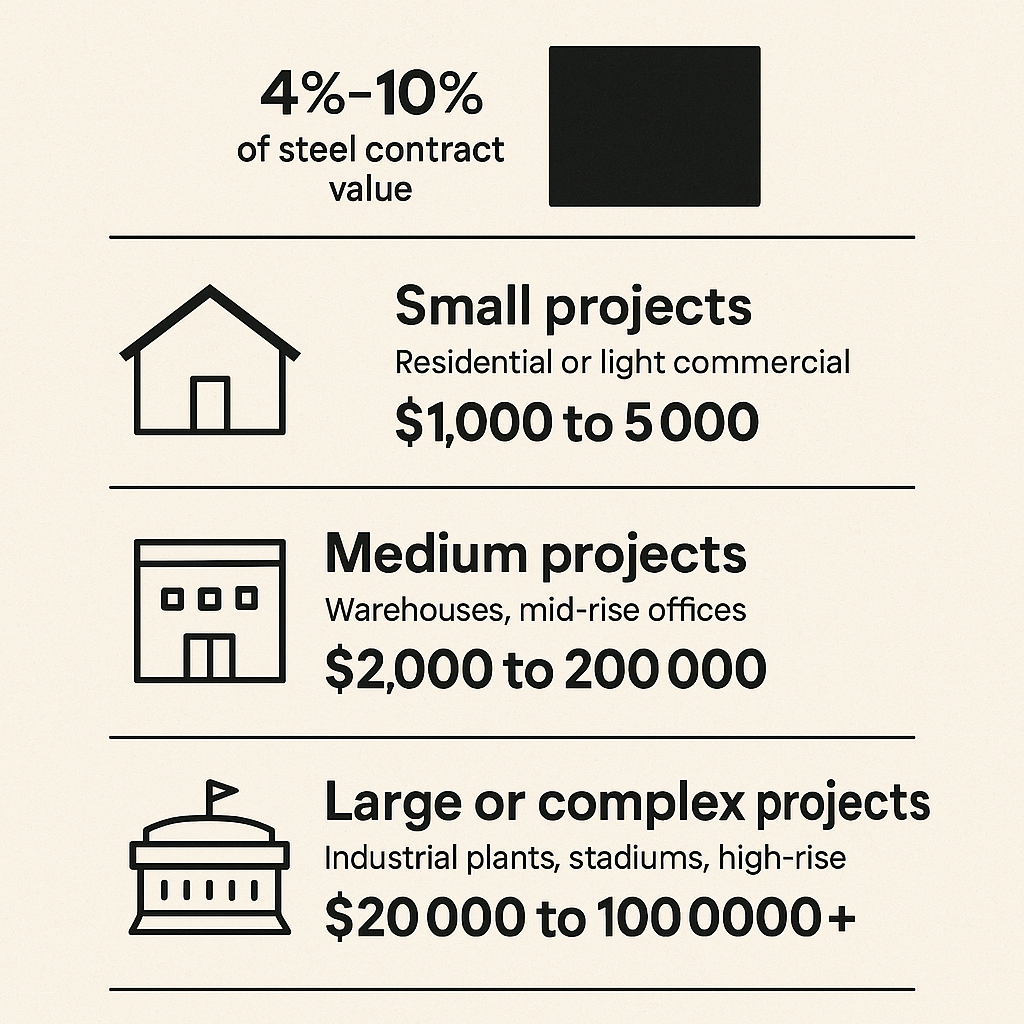
The cost of steel shop drawings is rarely fixed, and that’s what makes early budgeting tricky. On one project they may feel like a minor expense, while on another they become a significant investment. The most widely accepted benchmark is that detailing represents 4% to 10% of the overall steel contract value on commercial builds, depending on project complexity. This percentage approach works well at the planning stage, giving teams a way to forecast costs in proportion to the steel package.
Still, many clients prefer to think in real numbers rather than percentages. Typical ranges look like this:
- Small projects (residential or light commercial): Expect a package of shop drawings to cost between $1,000 and $5,000. These are usually straightforward builds with limited steel complexity.
- Medium projects (warehouses, mid-rise offices, retail developments): Costs usually fall between $2,000 and $20,000, depending on BIM requirements and connection detailing complexity.
- Large or complex projects (industrial plants, stadiums, high-rise structures): Budgets start around $20,000 and can climb well past $100,000, particularly when designs include custom steelwork, strict compliance requirements, or advanced BIM coordination.
The wide spread in pricing comes down to how demanding the project is. A steel frame with standard sections can be drafted relatively quickly, but once you add non-standard connections, tight tolerances, or multiple design changes, costs rise fast. Location also matters: detailing services sourced in high-cost regions are typically more expensive than work outsourced overseas, even for the same deliverables.
It’s worth noting that the upfront investment in shop drawings often offsets itself further down the line. High-quality detailing reduces fabrication errors, avoids clashes during assembly, and speeds up approval processes. For contractors, that means fewer delays and less money spent correcting mistakes on site – savings that can outweigh the cost of the drawings themselves.
For anyone budgeting, the best approach is to treat these ranges as a starting point. A small residential build should never hit six figures, and a stadium won’t be covered for a few thousand dollars. Getting a tailored quote based on scope and complexity is the only way to know the true number, but these averages provide a realistic frame of reference.
How Steel Shop Drawing Costs Are Estimated
There isn’t a single formula for pricing shop drawings. Each project is assessed on its own terms, and costs are built up step by step. Estimators look at scope, detail, and potential risks before assigning a figure. The process is closer to project planning than simple math, because every drawing package has different requirements. A typical cost assessment usually includes:
- Project review: The starting point is understanding the type of structure and its complexity. A simple steel frame is far easier to model than a multi-story building with custom connections.
- Scope definition: Estimators outline exactly what drawings are needed: fabrication, erection, GA diagrams, rebar details, or all of the above.
- Workload breakdown: The number of sheets, the expected level of detail, and any specialist modeling tasks are calculated into hours of drafting.
- Labor and software costs: Beyond man-hours, expenses include the use of detailing software, quality checks, and coordination meetings.
- Contingency and overhead: Additional budget is usually factored in to cover unforeseen revisions or coordination changes during the design phase.
Experience plays a big role here. An estimator who has seen dozens of similar projects can quickly spot where delays or extra work are likely to appear. That background helps shape a realistic figure rather than an optimistic guess.
For clients, transparency matters as much as accuracy. A detailed cost estimate should show not just the final number, but how it was reached. That way, if scope changes later, everyone understands why the budget moves with it.
Key Drivers Behind Steel Shop Drawing Costs
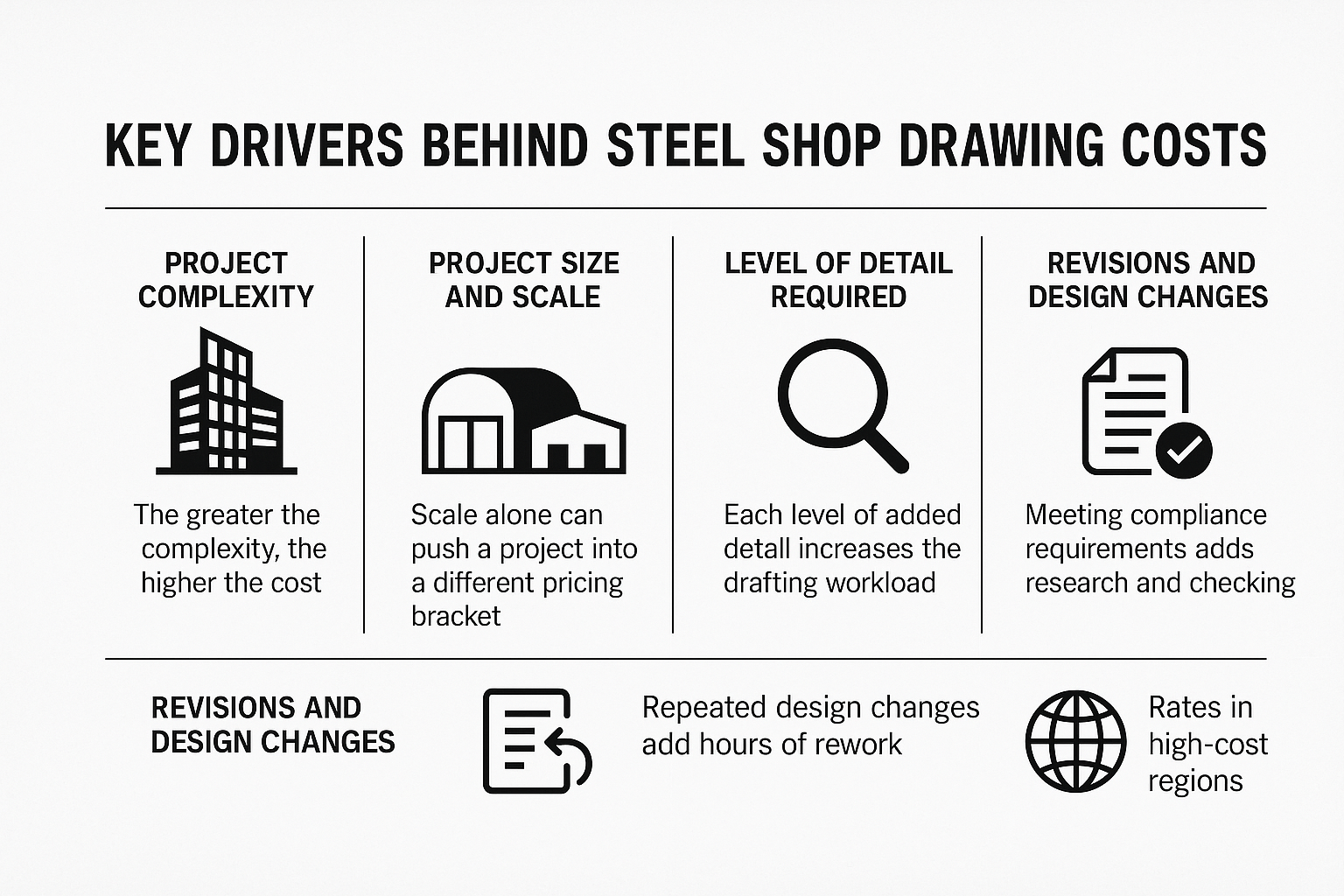
The price of shop drawings is never random. It reflects the work required to turn an architect’s concept into fabrication-ready instructions. Several factors shape the final figure, and understanding them helps explain why two projects of similar size can still carry very different detailing costs.
Project Complexity
A single-story warehouse with repetitive steel members is far easier to detail than a high-rise building full of unique connections. Complex geometry, custom components, and non-standard assemblies all demand more time from detailers. The greater the complexity, the higher the cost.
Project Size and Scale
Larger projects mean more steel, more sheets, and more coordination. A small retail unit may only need a handful of drawings, while a stadium or industrial plant can require thousands. Scale alone can push a project into a different pricing bracket.
Level of Detail Required
Some projects only need basic layouts. Others demand highly detailed drawings down to weld symbols, bolt types, and erection sequences. Each level of added detail increases the drafting workload and review cycles, which is directly reflected in price.
Codes and Standards
Local building codes, industry standards, and client specifications all have to be met. When a project has strict compliance requirements or needs to follow multiple sets of standards, additional research and checking are built into the cost.
Revisions and Design Changes
Few projects move from start to finish without adjustments. Minor revisions are usually included, but repeated design changes add hours of rework. The more design information shifts, the more the drawings cost.
Geographic Location
Where the work is done matters. Rates in high-cost regions are typically higher than those offered by outsourced teams overseas. For international projects, a hybrid approach is sometimes used to balance price with experience.
In practice, most projects are influenced by more than one of these factors at once. A medium-sized building might look simple at first but become costly if it includes custom steelwork and multiple rounds of revisions. Knowing these drivers early helps clients set a realistic budget and reduces the chance of unpleasant surprises later on.
Other Factors That Can Affect the Final Price
Beyond scale and complexity, there are smaller details that can shift the cost of shop drawings. They don’t apply to every project, but when they do, the budget can change quickly.
- Rush orders: Accelerated delivery usually adds a surcharge. Depending on scope, the extra cost can range from 10% to 25% above standard rates.
- Technology used: 3D BIM modeling often costs more than basic 2D drafting, but the difference is justified: investing an extra $1,000-$3,000 upfront in coordination can prevent far higher rework costs later.
- Outsourcing vs. local services: Offshore detailing firms may cut prices by 20-30%, while local teams often charge more but provide faster communication and easier compliance with regional codes.
- Rework from design changes: A handful of revisions are usually included, but multiple design updates can add $500-$2,000 or more depending on the scale of changes.
- Special compliance requirements: Projects in seismic zones, industrial plants, or heavily regulated markets may require additional checks, which can raise costs by another 5-10% of the detailing budget.
These numbers are not fixed, but they help illustrate how costs can climb beyond the base estimate. For project owners, being aware of them early makes budgeting clearer and reduces the risk of surprises mid-way through.
How to Keep Steel Shop Drawing Costs Under Control
Managing shop drawing costs isn’t about cutting corners – it’s about planning well and using resources wisely. Here are a few areas that make the biggest difference.
Define the Scope Early
Unclear project briefs almost always lead to wasted effort. If the design intent isn’t fully understood at the start, drawings get redone multiple times. Providing complete architectural and engineering information upfront keeps the scope tight and reduces rework.
Limit Design Changes
Adjustments happen, but constant revisions drive costs up quickly. Locking in critical design decisions before detailing begins – structural grids, connection types, material choices – helps avoid extra rounds of updates.
Match Detail Level to Project Needs
Not every project requires drawings down to the last weld symbol. A small warehouse can be detailed with a simpler set of instructions, while a high-rise with custom steelwork needs much deeper precision. Choosing the right level of detail keeps costs aligned with project requirements.
Work With Experienced Teams
Higher hourly rates can feel expensive at first, but skilled detailers produce accurate drawings faster. Fewer mistakes also mean fewer delays in fabrication and erection. In most cases, experience saves more money than it costs.
Consider Outsourcing Where It Fits
Offshore detailing teams often provide lower pricing. For routine tasks, this can be a practical option, as long as quality checks and communication standards are clear. For critical elements, many clients still prefer local teams for faster coordination.
Keeping these points in mind helps balance cost with quality. Well-prepared shop drawings usually save more than they spend, preventing fabrication errors and site delays that can be far more expensive than the drawings themselves.
Conclusion
Steel shop drawings carry a cost that can’t be ignored, but they also bring clarity and control to construction projects. Prices vary – from a few thousand dollars for smaller jobs to well over a hundred thousand for large, complex builds – and those numbers reflect the detail, compliance, and coordination required. For project owners, it’s less about finding the cheapest option and more about investing in accuracy that saves time and prevents costly mistakes later. When planned carefully and handled by experienced detailers, shop drawings tend to pay for themselves many times over by keeping the wider project on schedule and within budget.
FAQ
How long does it take to produce steel shop drawings?
The timeline depends on project size and complexity. A small commercial build may be completed within a week or two, while large industrial projects can take several months with multiple stages of review.
Are revisions included in the price?
Most providers include a limited number of revisions in the initial fee, but significant design changes or repeated updates are usually billed separately. Clarifying this upfront avoids unexpected charges.
Why do costs differ between regions?
Labor rates and overhead vary. A detailing package prepared in North America or Western Europe often costs more than the same scope handled in lower-cost regions, although many clients balance this by combining local and outsourced teams.
Can I reduce costs by using templates or standard drawings?
Templates can help for repetitive elements, but every project has unique requirements. While they may cut drafting time slightly, custom detailing is still necessary to ensure compliance and fit.
Do rush orders cost more?
Yes. When drawings need to be delivered quickly, additional staff or overtime is required. In practice, rush orders often add 10 to 25 percent to the base price, depending on the deadline.
Our Case Studies
We have handled 200+ BIM & VDC projects for commercial, industrial, and residential sectors.
Our work includes:
Formwork design automation
Our client from
California, USA
Suspended ceiling design automation
Our client from
New York, USA
Wall framing design automation
Our client from
California, USA