Have any questions? Contact us!
Join our team!
Request a free quote or consultation

If you’ve ever looked into switching from CAD drawings to full-blown BIM models, you’ve probably asked the same question everyone else does: How much is this actually going to cost me? And like most things in architecture and construction – it depends.
CAD to BIM conversion isn’t just a button-click process. It’s a mix of skilled work, detailed geometry, and intelligent data structuring. Some projects take a few days. Others take a few weeks. The price? That moves right along with it. In this guide, we’ll break down what really affects the cost, where the money goes, and what you can expect based on the type of files you’ve got and the level of detail you need.
Whether you’re budgeting for a small residential remodel or trying to map out BIM for a sprawling hospital project, we’ll help you get a realistic sense of what this service usually costs and why.
Typical Pricing Ranges
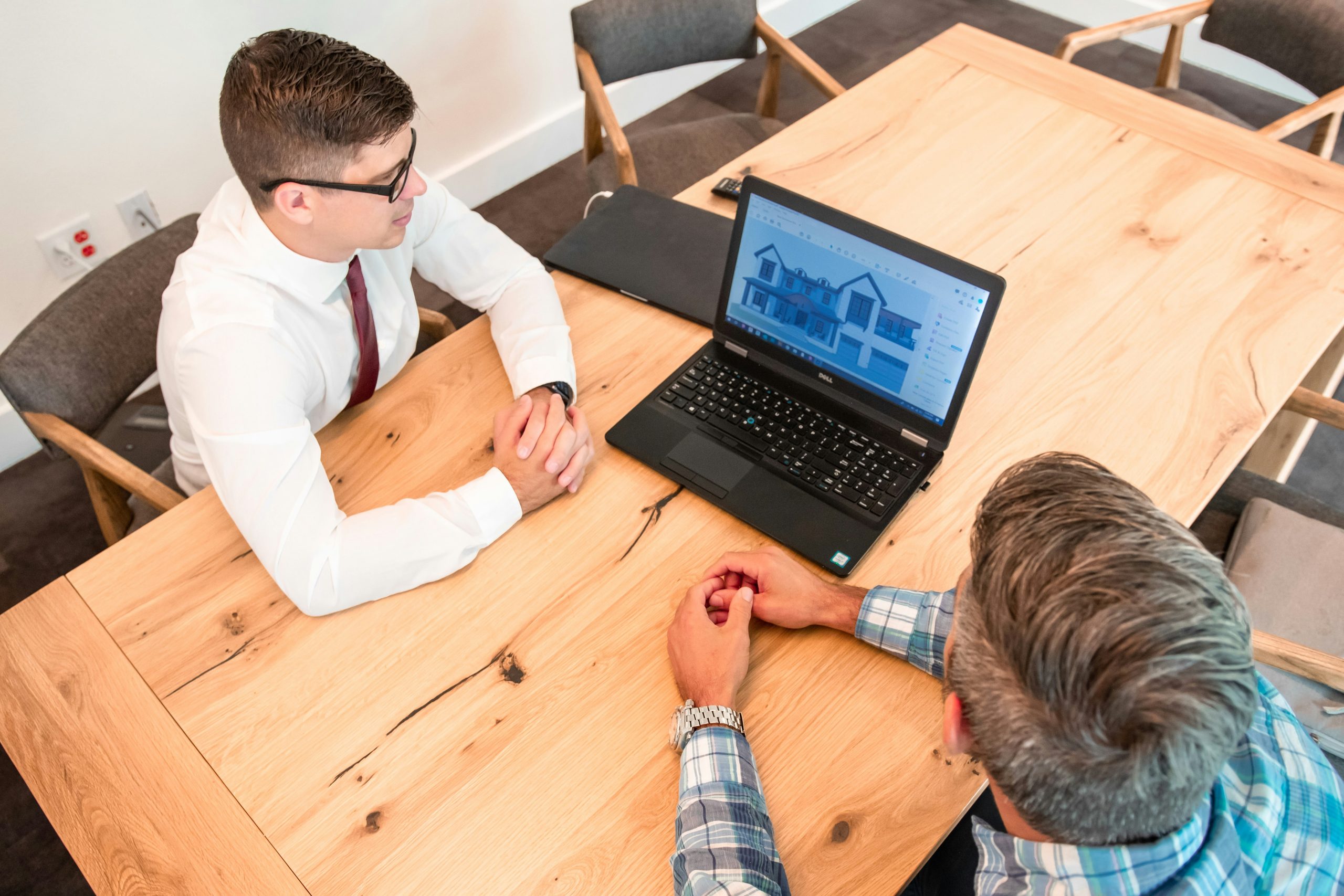
You’re probably here for the numbers, so let’s get into some real-world pricing based on what’s typical in the industry.
Small-Scale Projects (Homes, Small Offices)
- Price range: $500 to $2,500.
- Typical scope: Basic floor plans, elevations, maybe one discipline.
- LOD: Usually 200 to 300.
Mid-Size Commercial Projects (Retail, Schools, Mid-Rise Buildings)
- Price range: $3,000 to $15,000.
- Typical scope: Multiple floors, MEP elements, detailed geometry.
- LOD: 300 minimum, often with custom families.
Large Infrastructure or Industrial Facilities
- Price range: $20,000 to $100,000 and over.
- Typical scope: Extensive area, full trade coordination, high LOD, shop drawings, prefabrication support.
- LOD: Often 400 to 500.
These are rough estimates. Every project is different, and pricing can fluctuate depending on file condition, deadlines, or even which country your service provider is based in.
Powerkh’s Approach to CAD to BIM: Precision, Detail, and Real-World Use

We are Powerkh – a UK-based company with additional offices in the USA and Ukraine. In our company, we provide BIM and VDC services for residential, commercial, and industrial construction projects. We have completed over 200 projects involving digital modeling, coordination, and construction documentation.
In our work, CAD to BIM conversion is a core service. We use Autodesk Revit to convert 2D CAD drawings into 3D BIM models, covering architectural, structural, and MEP elements. These models are developed to varying levels of detail, from LOD 100 to LOD 500. As part of the process, we run clash detection and prepare shop drawings when required.
Our team also handles scan to BIM using point cloud data, creates Revit families, develops automation scripts in tools like Dynamo, and produces structural detailing for prefabrication and fabrication. In our company, we support architects, engineers, contractors, and site teams with modeling and documentation needed at different stages of construction.
Key Highlights:
- UK-based company with offices in the USA and Ukraine
- Completed over 200 BIM and VDC projects
- Develops BIM models up to LOD 500 using Autodesk Revit
- Supports architectural, structural, and MEP modeling
- Provides clash detection and shop drawing production
- Works with point cloud data for scan to BIM
Services:
- CAD to BIM conversion
- BIM modeling (LOD 100 to LOD 500)
- BIM coordination and clash detection
- Revit family creation
- Scan to BIM
- BIM automation and scripting
- Structural detailing for prefabrication and fabrication
So, What Affects the Cost?
The cost of CAD to BIM conversion isn’t fixed because no two projects are exactly alike. It’s shaped by a handful of variables – some obvious, some easy to overlook. Before you ask for quotes or start comparing providers, it’s worth understanding what actually drives the numbers.
Things like how clean your files are, how much detail you need, and how many disciplines you’re including all play a role. Even something as simple as whether you need furniture or HVAC fixtures modeled can change the scope. Let’s walk through the main factors that tend to have the biggest impact.
1. Project Complexity
This one’s pretty straightforward. A single-story home with clean layouts and basic systems is a whole different beast than a five-story mixed-use building with underground parking, complex HVAC routing, and multi-phase construction.
The more elements you’re asking to be modeled – think beams, ducts, cable trays, stairs, or curtain walls – the more time it takes to get everything right. More geometry means more modeling hours, and more systems mean more coordination across trades. All of that adds up quickly.
Also, projects with irregular geometry, non-standard materials, or custom construction details usually take longer to model accurately than typical boxy layouts with off-the-shelf components.
2. Level of Detail (LOD)
If you’ve worked with BIM before, you’re probably familiar with LOD ratings. But if you’re new to it, here’s the quick version: the Level of Detail defines how developed your model is, both in terms of geometry and information.
Here’s a rough breakdown of the most common LODs used in conversion projects:
- LOD 100: Massing and basic shape only – good for early-stage planning, but not useful for documentation.
- LOD 200: Generic components with estimated dimensions. This is often used for schematic design.
- LOD 300: Accurate geometry and spatial relationships. Often the minimum requirement for coordination.
- LOD 400: Fabrication-ready details. Used by contractors and manufacturers to build from.
- LOD 500: True as-built documentation. Includes what’s actually installed and is used for facility management.
The higher the LOD, the more time (and budget) it takes to build the model. For most conversions, LOD 300 is the sweet spot – it’s detailed enough for coordination and documentation, but not overkill.
3. Input File Quality
Not all input files are created equal. If you’re starting with clean DWG files, that’s great – those are usually easy to work with. But if you’re working from a scanned PDF of a blueprint that’s been marked up and faded over time, you’re going to run into problems.
Low-quality inputs mean the modeling team has to spend extra time interpreting, cleaning up, and sometimes even guessing missing information. That slows things down and pushes the cost higher. The same goes for incomplete files or drawings that aren’t dimensionally accurate.
To keep your costs in check, it helps to provide the most complete and legible files you’ve got. Bonus points if you can include reference photos or clarify anything that’s unclear in the original drawing set.
4. Discipline Coverage
One of the biggest decisions that affects both scope and cost is what parts of the project you’re converting. Are you just converting architectural plans into 3D? Or do you also need structural framing, MEP systems, or interior elements like millwork and fixtures?
Each discipline added means additional modeling time, more coordination effort, and deeper expertise. Architectural-only models are often the cheapest. Add in structure and MEP, and the job gets bigger and the price follows.
If you’re not sure which disciplines you actually need, it helps to think about how the model will be used. If it’s for basic visualization, you might only need architecture. But if it’s for clash detection or prefabrication, you’ll likely want everything in there.
5. Revit Family Creation
Revit comes with a lot of built-in families (doors, windows, furniture, etc.), but those don’t always cut it, especially if you’re working with manufacturer-specific equipment or non-standard dimensions.
When the modeling team has to build custom Revit families from scratch – say, for a unique lighting fixture or a specific air handling unit – that takes extra time. And time means money.
Sometimes this gets overlooked during the quoting process. You might think, “It’s just a sink,” but if that sink has custom dimensions, non-standard mounting, or multiple subcomponents, it might need to be built manually. Multiply that by 50 fixtures, and you’ve got a chunk of your budget tied up in content creation.
A Few Other Worth Mentioning…
While the five points above are the heavy hitters, a few other things can nudge your quote up or down:
- Turnaround time: Rush jobs typically come with a surcharge.
- Coordination meetings: If you’re planning weekly syncs, that time needs to be budgeted.
- Geographic location: Rates vary depending on where your modeling team is based.
- Software compatibility: If you need export in IFC or other formats, there may be an extra fee for cleaning and validating files.
Where the Money Goes
Let’s say you’ve been quoted $5,000 for a CAD to BIM conversion. What are you actually paying for? It’s not just “modeling time.” Here’s a breakdown of what that fee might include:
- Project scoping and kickoff meetings.
- Model setup and file cleanup.
- Geometric modeling of walls, floors, roofs, windows, etc.
- Creation of parametric families (if needed).
- Assigning metadata (materials, thermal values, dimensions).
- Model QA/QC.
- Revisions and client feedback rounds.
- Final file delivery in RVT/IFC format.
What About Hourly Rates?
Some freelancers or firms quote by the hour instead of per project. Hourly rates vary based on skill and location:
- Entry-level modelers: $20 to $40/hour.
- Mid-level professionals: $40 to $60/hour.
- Senior specialists or consultants: $60 to $100+/hour.
Just remember, the cheapest hourly rate isn’t always the most cost-effective. A senior BIM expert might take half the time of a junior modeler and deliver better results.
Cost-Saving Tips (Without Cutting Corners)
If you’re working with a tight budget, here are a few ways to keep costs down while still getting a solid BIM model:
- Clean up your CAD files first: Remove unnecessary layers, fix broken lines, and check dimensions.
- Stick to standard Revit families: Custom components take time. Use defaults if they get the job done.
- Be clear about LOD requirements: Don’t ask for LOD 400 if LOD 300 is all you really need.
- Bundle projects if possible: Some providers offer discounts for batch jobs or ongoing contracts.
Outsourcing vs. In-House: What's More Cost-Effective?

Building an in-house BIM team comes with long-term overhead – software, hardware, salaries, training, and management. That makes sense if you’re working on high-volume or ongoing BIM work.
But for one-off projects or seasonal spikes? Outsourcing to a CAD to BIM conversion provider is often more cost-effective.
Outsourcing eliminates the need to manage resources or keep up with evolving BIM standards. You also benefit from teams who do this day in and day out and already have streamlined workflows.
What to Look for in a CAD to BIM Partner
If you’re planning to outsource, don’t just compare prices. Look for:
- A portfolio of past BIM work.
- Experience in your project type (residential, commercial, industrial, etc.).
- Clear process (scope, delivery timeline, revisions).
- Willingness to customize deliverables.
- Communication tools for updates and file sharing.
And don’t be afraid to ask for a sample or pilot project before committing to a large engagement.
Final Thoughts: Is It Worth the Investment?
CAD to BIM conversion isn’t just a cost – it’s an investment in project accuracy, collaboration, and long-term efficiency. It helps avoid clashes, speeds up approvals, and lays a foundation for digital construction workflows.
Is it cheap? Not really. But when done right, it can save you far more down the line – especially when coordination errors, rework, or miscommunications start racking up bills.
If you’re planning to bring your 2D drawings into the world of intelligent modeling, it pays to understand what drives cost – and how to get the most value out of every dollar you spend.
FAQ
How long does a typical CAD to BIM conversion take?
It really depends on the size and detail of the project, but most small to mid-sized jobs fall somewhere between a few days and a couple of weeks. If you’re dealing with a full building with multiple systems and trades, or if your files need a lot of cleanup, that timeline can stretch. The best way to get a clear estimate is to share your drawings upfront.
Is it cheaper to convert from DWG files than PDFs or scans?
Yes, usually. Clean DWG files save a lot of time because we can extract geometry directly. PDFs and hand sketches require a bit more detective work, sometimes even redrawing by eye, which adds to the effort (and the cost).
Do I always need LOD 400 or 500 for my model?
Not necessarily. In fact, most clients don’t. LOD 300 is enough for coordination and documentation in a lot of cases. LOD 400 or 500 is useful if you’re fabricating from the model or need it for facilities management later on. If you’re not sure, start with what you need today – you can always build on it later.
Can I just hire a freelancer to save money?
You can, and for very simple jobs that might work fine. But with more complex projects, you often get what you pay for. A solid BIM partner brings experience, QA checks, and accountability, especially if the model needs to be accurate enough for clash detection or construction planning. It’s not just about cost per hour – it’s about the quality of what you get back.
What’s the biggest cost driver most people overlook?
Custom Revit families, hands down. It’s one of those things that seems small, but if you have a lot of unique components that aren’t in the standard libraries, that adds hours fast. If you can stick to standard elements where possible, you’ll save more than you think.
Our Case Studies
We have handled 200+ BIM & VDC projects for commercial, industrial, and residential sectors.
Our work includes:
Formwork design automation
Our client from
California, USA
Suspended ceiling design automation
Our client from
New York, USA
Wall framing design automation
Our client from
California, USA