Have any questions? Contact us!
Join our team!
Request a free quote or consultation

I’ve seen too many renovation projects go sideways because folks didn’t have solid as-built documentation. It’s not just a pile of plans – it’s the real story of your building, capturing every change from the original design, like a rerouted pipe or a new electrical panel. Whether you’re a homeowner planning a remodel or a contractor wrapping up a commercial job, these records keep costly mistakes at bay. In 2025, with tech like 3D scanning and BIM changing the game, costs are shifting. Let’s unpack what you’ll pay, why prices vary, and how to get the most value, based on the latest industry insights.
What Is As-Built Documentation and Why Is It Essential?
As-built documentation records a building’s final state after construction or renovation, detailing every deviation from the architect’s original plans. It includes 2D plans, 3D models, BIM files, and notes, showing things like a relocated doorway or an updated HVAC system, often marked in red. Contractors typically compile it at project’s end, and homeowners update it after every change, big or small.
Why does it matter? It’s your roadmap for:
- Planning renovations without damaging hidden systems like wiring or plumbing.
- Helping utility companies maintain equipment without costly guesswork.
- Streamlining property sales by providing buyers with clear, accurate records.
- Ensuring compliance with building codes for inspections or permits.
I’ve talked to homeowners who skipped this step to save money, only to face a $4,000 bill when a “simple” remodel hit unexpected plumbing. With digital tools making documentation sharper in 2025, investing in it is a no-brainer.
Powerkh's Guide to As-Built Documentation Costs in 2025

Powerkh is a UK-based company with offices in Ukraine and the USA, specializing in as-built drawing services using Scan to BIM (Building Information Modeling) technology. We provide accurate 3D models and 2D drawings based on Point Cloud data, created using laser scanning. Our services are focused on delivering reliable documentation for construction, renovation, and facility management projects.
Our company produces both 3D models and 2D as-built drawings that reflect the actual conditions of a building or structure. These drawings help support decision-making and reduce errors during design and construction. We aim to offer fast turnaround times and reasonable pricing, making our services accessible for businesses that need precise documentation quickly.
We use Point Cloud data to generate 3D models and 2D drawings, ensuring that the output accurately represents the existing structure. This method helps clients avoid mistakes, streamline processes, and make more informed decisions.
Key Highlights:
- UK-based company with offices in Ukraine and the USA
- Specializes in as-built drawing services using Scan to BIM technology
- Delivers accurate 3D models and 2D drawings based on Point Cloud data
- Focused on providing reliable documentation for construction, renovation, and facility management projects
- Fast turnaround times and reasonable pricing
- Global presence allowing efficient service to a wide range of clients
Average Costs for As-Built Documentation in 2025
Pricing depends on your project’s scope, but here’s what to expect in 2025, based on U.S. industry averages with a slight 7–14% increase from 2024 due to labor and tech trends. Global costs may vary, but these are solid benchmarks.

Small Residential (Under 2,000 sq ft)
Expect $800–$1,400, or $0.50–$2.50 per square foot. This covers basic 2D plans and system details (e.g., plumbing, electrical). Site visits add $100–$500 for measurements.
Medium Residential (2,000–5,000 sq ft)
Costs range from $1,500–$4,000, or $0.50–$3.00 per square foot. This includes detailed MEP (mechanical, electrical, plumbing) records and possibly 3D/BIM models, which push costs higher.
Commercial or Large-Scale (5,000+ sq ft)
You’re looking at $4,000–$12,000+, or $0.60–$3.50 per square foot. These require extensive surveys, especially for complex systems like fire sprinklers or HVAC.
Minor Updates (e.g., Single-Room Remodel)
Quick revisions to existing records cost $400–$1,000. Digital formats can save 10–20% compared to full redocumentation.
Additional Costs to Consider
- Site surveys: $100–$500 for on-site accuracy.
- Revisions: $150–$700 per set for post-drafting updates.
- Digital conversion: $500–$1,500 to digitize old paper records.
- 3D/BIM integration: Adds $0.50–$1.50 per square foot for advanced modeling.
These numbers come from contractor feedback and industry sources, with higher rates in urban areas like New York or California.
What Drives As-Built Documentation Costs?
Every project’s different, and several factors shape the final bill. Here’s what’s at play:
Project Size and Complexity
Larger buildings require more measurements and records, so a 10,000 sq ft office costs more than a 1,500 sq ft home. Complex setups – like custom HVAC or unique layouts – need detailed documentation, sometimes doubling the hours.
Site Conditions
Remote or hard-to-access sites (e.g., rural areas or tight urban lots) add travel and logistics fees. Older buildings, especially pre-1980s, often lack original records, requiring surveyors to track down plans or measure everything, adding $500–$2,000.
Level of Detail
Basic 2D plans are cheaper at $0.50–$1.20 per square foot. Detailed MEP records or 3D/BIM models, needing specialized software, can hit $1.50–$3.50 per square foot.
Building Age and Documentation
Missing or outdated records mean extra work. Tracing upgrades to old electrical or plumbing systems might require contacting the original architect, piling on hours and fees.
Provider Expertise
Experienced firms with BIM or scanning skills charge $100–$200 per hour vs. $50–$80 for standard drafters. Freelancers can save 20–30% on simple jobs, but complex projects need seasoned pros to avoid mistakes.
Technology Used
Tools like AutoCAD or Revit improve accuracy but require skilled pros, increasing rates. Laser scanning or point cloud-to-BIM services add $500–$2,000 but reduce errors and time.
A contractor I know said one missed pipe in the documentation cost his client thousands in rework, so skimping here is risky.
Drafting Rates at Architecture Firms
Most firms charge hourly for as-built documentation, with rates tied to expertise and location. Here’s the breakdown for 2025:
Drafter Rates
Expect $50–$150 per hour. Entry-level drafters charge $50–$80, while senior pros hit $100–$150. A typical residential set takes 20–40 hours, totaling $1,000–$6,000.
Architect Oversight
Review or coordination by architects runs $100–$250 per hour, usually 5–10 hours per project.
Specialized Services
BIM or 3D modeling pros charge $80–$200 per hour due to software expertise. A full BIM set for a 5,000 sq ft home might cost $3,000–$7,000, especially in urban areas.
Freelancers are great for basic jobs, but for complex projects, I’d go with firms that have a strong track record to avoid errors.
What Should As-Built Documentation Include?
To be useful, as-built documentation needs to cover everything for future work. It should include:
- Exact locations of doors, windows, electrical panels, wiring, plumbing, and fixed fixtures (e.g., a relocated outlet is clearly marked).
- Building materials, noting planned vs. used (e.g., swapping wood for steel beams).
- Equipment and system details, like HVAC or sprinkler model numbers.
- Updated dimensions after additions or remodels, like a new room’s size.
- Redlined changes with timestamps and reasons (e.g., “Moved pipe due to inspection, April 2025”).
Digital formats like CAD, PDF, or BIM are standard, making updates easier than old paper records. It’s like a history log for your building, tracking every change.
How Is As-Built Documentation Created?

The process is methodical but straightforward:
- Field Notes: Contractors record changes on the original plans during construction, noting dates and details (e.g., “Moved outlet 2 ft left, April 2025”).
- Organized Records: Notes are compiled into a clear document, updated as changes are approved by the architect or owner.
- Final Compilation: A drafter creates clean digital files in AutoCAD or Revit, using the same scale and format as the originals. Changes are redlined, and the architect reviews before archiving.
Digital tools have replaced messy paper notes, which I’ve seen lead to errors when handwriting gets sloppy. A tight process ensures nothing’s missed.
2025 Trends: Tech Transforming As-Builts
Technology is making as-built documentation smarter in 2025:
- Laser Scanning and Point Cloud-to-BIM: 3D scans capture every detail, turning data into models in half the time of manual surveys. Adds $500–$2,000 but cuts errors.
- BIM Integration: Dynamic 3D models spot clashes (e.g., pipes hitting ducts) early, saving 10–20% on rework costs.
- Automation: Scripting tools speed up repetitive tasks like layout generation, cutting time by up to 50%.
These advancements mean higher upfront costs but big savings long-term, especially for commercial projects. I’ve heard teams say BIM makes coordination way easier than juggling 2D plans.
Tips to Keep Costs Down
Nobody wants to overpay, so here’s how to save:
- Share existing plans to cut research time by 10–20%.
- Bundle as-built documentation with other services (like a remodel) for discounts.
- Go digital early to avoid costly conversions of paper records later.
- Compare providers – freelancers can save 20–30% on simple jobs.
- Invest in a thorough site survey ($100–$500) to ensure accuracy and avoid revisions.
A contractor friend saved a client $2,000 by providing old as-builts before a kitchen remodel – prep like that makes a difference.
Wrapping Up: A Small Price for Big Peace of Mind
As-built documentation might seem like a chore, but at $800–$1,400 for a typical home, it’s a steal compared to the chaos of working without it. In 2025, with tech like BIM and scanning making records more reliable, they’re a must for renovations, maintenance, or sales. If you’ve got a project coming up, talk to a drafting pro to lock in costs early – it’s a move that saves time and money. Got a story about as-builts saving (or costing) you? I’d love to hear it.
FAQs About As-Built Documentation Costs
What’s the difference between as-built documentation and blueprints?
Blueprints show the architect’s planned design. As-built documentation records the actual build, marking changes like moved walls or updated systems in red for clarity.
Why is as-built documentation pricier for older buildings?
Older buildings often lack original plans or have undocumented upgrades (e.g., new plumbing). This requires extra surveying or tracking down records, adding $500–$2,000.
Can I skip as-built documentation to cut costs?
Not a good idea. Without it, renovations or repairs risk hitting hidden systems, leading to errors that can cost thousands. Spending $800–$1,400 now prevents bigger bills later.
How can I lower as-built documentation costs?
Provide existing plans to reduce research, bundle with other services for discounts, or hire freelancers for simple jobs. A good site survey early on avoids pricey revisions.
Have a BIM Project? Talk To Us.
Contact UsOur Case Studies
We have handled 200+ BIM & VDC projects for commercial, industrial, and residential sectors.
Our work includes:
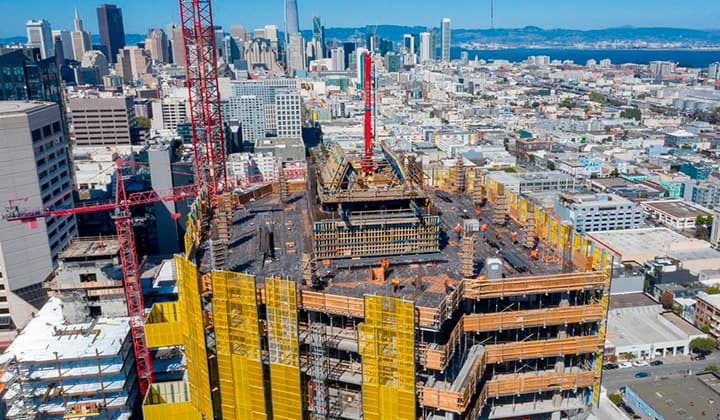
Formwork design automation
Our client from
California, USA
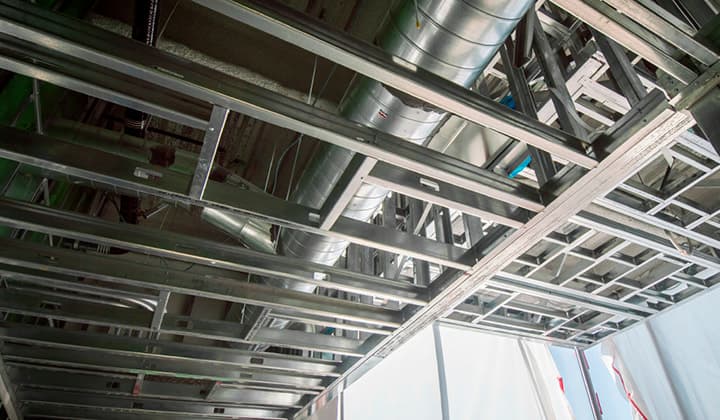
Suspended ceiling design automation
Our client from
New York, USA
Wall framing design automation
Our client from
California, USA