Vous avez des questions ? Contactez nous !
Rejoignez notre équipe !
Demander un devis ou une consultation gratuite

Quick Summary: Lean construction is a project delivery methodology that maximizes value for stakeholders while systematically eliminating waste throughout the construction process. Adapted from lean manufacturing principles, it emphasizes continuous improvement, respect for people, and collaborative workflows to address the construction industry’s productivity challenges, where 70% of projects run over budget and late.
The construction industry faces a troubling reality. While nearly every other sector has doubled productivity since the 1960s, construction labor efficiency has actually decreased. Today, according to the Lean Construction Institute, 70% of projects are over budget and delivered late.
That’s where lean construction enters the picture.
But lean construction isn’t just another project management buzzword. It’s a fundamental shift in how teams approach project delivery—from design through completion.
Defining Lean Construction
According to the Lean Construction Institute, lean construction is a project delivery process that uses lean methods to maximize stakeholder value while reducing waste. It’s a respect- and relationship-oriented production management approach that fundamentally changes how construction projects unfold.
Here’s the thing though—lean construction isn’t simply about cutting costs or rushing projects. It’s about optimizing the entire production system.
The methodology focuses on developing and managing projects through relationships, shared knowledge, and common goals. Rather than creating silos around architects, designers, general contractors, and subcontractors, lean construction breaks down these barriers and fosters collaboration from day one.
This approach addresses the inherent problems in design-build and design-bid-build contract structures, which prevent collaboration between design and construction phases. That lack of coordination leads to rework, inefficiency, and the budget overruns that plague the industry.
The Origins: From Manufacturing to Construction
The origins of lean management relate to lean manufacturing principles, particularly the Toyota Production System developed in post-war Japan. The manufacturing sector proved that focusing on value creation while systematically eliminating waste could transform productivity.
The construction industry took notice. Why shouldn’t these principles work on job sites?
The adaptation wasn’t straightforward. Construction projects differ from manufacturing in significant ways—each project is unique, locations change, supply chains vary, and teams assemble temporarily rather than working together permanently.
But the core philosophy translated well. The focus shifted from optimizing individual tasks to optimizing the flow of work across the entire project. This represented a fundamental rethinking of construction management.
Bring in Powerkh for Model and Drawing Work

Powerkh supports construction and design projects with BIM models, drawings, coordination, scan conversion, automation, and detailing. The company works with teams that need reliable outside help for project execution, whether the task involves model development, clash coordination, or fabrication-related documentation.
Looking for Outside BIM Capacity?
Talk with Powerkh to:
- build and update BIM models
- turn point cloud data into structured outputs
- support detailing, coordination, and documentation
👉 Contact Powerkh for a project review and consultation.
The 6 Core Principles of Lean Construction
The Lean Construction Institute identifies six foundational principles that define the lean approach. These aren’t just abstract concepts—they’re actionable ways of thinking that reshape project delivery.
1. Optimize the Whole, Not the Parts
Traditional construction optimizes individual trades or tasks. Lean construction optimizes the entire project delivery system. That means considering how each decision affects downstream work, schedule dependencies, and overall project flow.
When electrical contractors finish their work faster but block plumbing installation, that’s local optimization. System optimization ensures both trades can work efficiently without creating bottlenecks.
2. Eliminate Waste Systematically
Waste in construction takes many forms beyond leftover materials. It includes waiting time, unnecessary movement, overproduction, excess inventory, rework, and underutilized talent.
Lean construction identifies and removes these non-value-adding activities. The goal isn’t perfection overnight—it’s systematic, continuous reduction of waste across every project phase.
3. Generate Value for the Customer
This principle starts with a simple question: What does the customer actually value?
Not what the team thinks adds value, but what the end user needs. Every process, material selection, and design decision should connect back to delivering customer value. Activities that don’t contribute get scrutinized and often eliminated.
4. Focus on Flow
According to the Lean Construction Institute, focusing on flow is crucial for project success. Work should progress smoothly through each phase without interruptions, delays, or pile-ups.
This requires careful coordination. When design information flows seamlessly to estimators, who pass accurate data to schedulers, who coordinate with trade contractors, the entire project benefits. Break that flow anywhere, and problems cascade.
5. Build Continuous Improvement Into the Culture
Lean construction treats every project as a learning opportunity. Teams regularly reflect on what worked, what didn’t, and how processes can improve.
According to the Lean Construction Institute, lean requires buy-in from teams focused on continuously improving working processes to seek the best outcome. This isn’t a one-time initiative—it’s an ongoing commitment to getting better.
6. Respect for People
Construction happens because people design, plan, and build. Lean construction values their expertise, input, and well-being.
This means creating safe working conditions, listening to frontline workers who understand job site realities, and building collaborative relationships across all project stakeholders. Respect isn’t soft—it’s fundamental to unlocking team potential.
How Lean Construction Works in Practice
Theory is one thing. Implementation is another.
Lean construction relies on specific tools and methodologies that translate principles into action. The most prominent is the Last Planner System, a collaborative planning approach that brings together everyone involved in a project.
The Last Planner System
The Last Planner System engages the people actually doing the work—the “last planners”—in creating realistic, reliable schedules. Instead of top-down directives that ignore job site realities, this system builds plans collaboratively.
Teams meet regularly to coordinate upcoming work, identify constraints that could cause delays, and make commitments they can actually keep. This reduces variability and improves workflow reliability.
Pull Planning
Traditional construction uses push scheduling—starting with a project kickoff date and pushing work forward. Pull planning works backward from the completion date, with each trade identifying what needs to happen before they can start their work.
This reveals dependencies that push scheduling often misses. It also creates ownership, as teams participate in building the schedule rather than just receiving it.
Visual Management
Lean construction makes work visible. Physical or digital boards display project status, upcoming tasks, constraints, and progress in ways everyone can understand at a glance.
When problems surface visually, teams address them faster. Transparency replaces guesswork.
Lean in the Design Phase
According to the Lean Construction Institute, lean in the design phase is crucial for achieving successful project outcomes. By integrating builders and design teams from the outset, lean design focuses on delivering maximum customer value in the most efficient way possible.
Design suffers from lack of collaboration, indecisiveness, high rates of change, resource constraints, and siloed processes. Traditional contract structures prevent collaboration between design and construction phases, leading to rework and inefficiency.
Lean design brings architects, engineers, and contractors together early. They explore options collaboratively, identify constructability issues before they become expensive problems, and align design decisions with budget and schedule realities.
This integrated approach reduces costly late-stage changes and ensures designs can actually be built as intended.
Key Benefits of Lean Construction
Why adopt lean construction? The benefits extend across multiple dimensions of project performance.
| Benefit Category | Specific Improvements | Impact |
|---|---|---|
| Cost Control | Reduced waste, fewer change orders, better budget accuracy | Projects stay within financial constraints |
| Schedule Performance | Improved workflow reliability, fewer delays, better coordination | On-time or early completion |
| Quality | Less rework, better communication, proactive problem-solving | Higher-quality deliverables |
| Sécurité | Organized worksites, clear communication, focus on people | Fewer accidents and incidents |
| Collaboration | Shared goals, mutual respect, integrated teams | Stronger working relationships |
| Customer Satisfaction | Value-focused delivery, transparency, better outcomes | Clients get what they need |
Reduced Costs Through Waste Elimination
Eliminating waste directly impacts the bottom line. Less rework means labor and materials get used once, correctly. Better coordination reduces idle time when crews wait for preceding work to finish.
These savings compound across large projects. Even small percentage improvements in efficiency translate to significant cost reductions.
Improved Schedule Reliability
When teams use collaborative planning and commit to realistic schedules, projects finish on time more consistently. The Last Planner System improves plan reliability, reducing the chaos of constantly shifting schedules.
Reliable schedules benefit everyone—owners can plan building occupancy, contractors can schedule their workforce effectively, and suppliers can deliver materials when actually needed.
Higher Quality Outcomes
Lean construction’s emphasis on doing things right the first time, combined with continuous improvement, drives quality upward. When teams identify and address issues early rather than discovering them during inspections or after occupancy, quality improves substantially.
Better communication ensures everyone understands expectations and specifications, reducing errors from misunderstanding.
Enhanced Safety Performance
Organized, well-coordinated job sites are safer job sites. When work flows smoothly without last-minute scrambles or conflicting activities, accident risks decrease.
The respect-for-people principle directly supports safety culture. Workers aren’t just resources to be consumed—they’re valued team members whose safety matters.
Challenges in Implementing Lean Construction
Lean construction isn’t a magic solution. Implementation faces real obstacles.
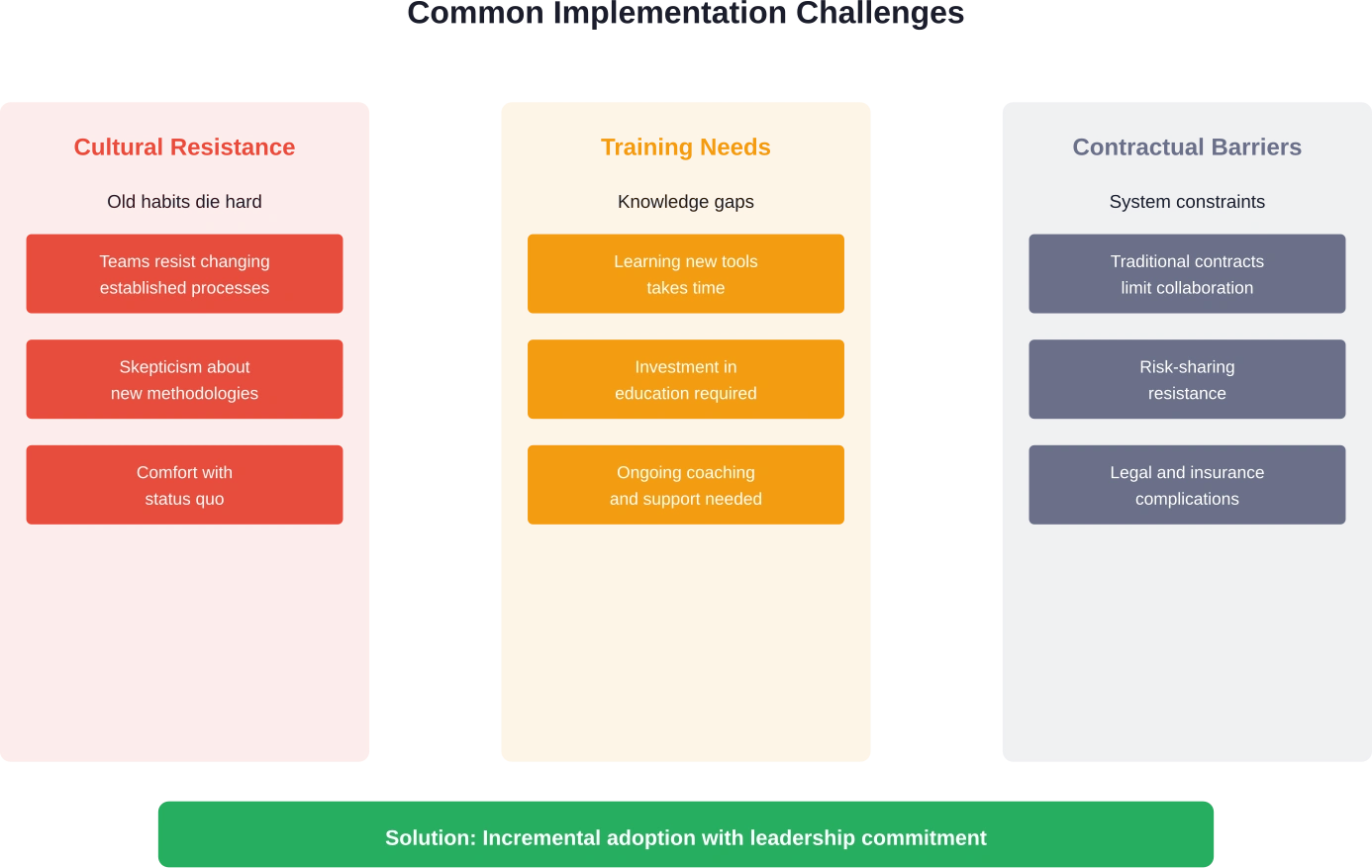
Cultural Resistance to Change
Construction has established patterns. People know how projects traditionally work, even when those patterns are inefficient.
Changing to lean construction requires shifting mindsets. That’s harder than adopting new software or equipment. Some team members resist, skeptical that “this new approach” will actually work.
Overcoming resistance requires demonstrating value through pilot projects, celebrating early wins, and showing—not just telling—how lean construction improves outcomes.
Training and Knowledge Development
Teams need education. Understanding lean principles conceptually differs from applying them on active job sites.
Organizations must invest in training, from executive leadership down to field supervisors. That takes time and money. But without adequate knowledge development, implementation stumbles.
Contractual and Procurement Obstacles
Traditional procurement methods don’t support lean construction well. Design-bid-build separates design from construction. Low-bid selection prioritizes initial cost over value and collaboration.
Lean construction thrives under Integrated Project Delivery or other collaborative contracting approaches that align incentives and enable early involvement of all parties. Shifting procurement practices meets institutional resistance, especially in public sector work bound by procurement regulations.
Steps to Implement Lean Construction
Organizations serious about lean construction need a structured approach. Here’s how implementation typically unfolds.
Start With Leadership Commitment
Lean transformation won’t succeed without genuine leadership support. Executives and project leaders must understand lean principles, commit resources, and model the behaviors they want to see.
Half-hearted attempts fail. Leadership must communicate why lean construction matters and hold teams accountable for applying lean methods.
Educate the Team
Before diving into tools and techniques, teams need foundational knowledge. What is lean construction? Why does it matter? How does it change daily work?
Training should be practical, not just theoretical. Workshops, simulations, and case studies help teams internalize concepts and see applications to their specific roles.
Pilot on a Suitable Project
Don’t try to transform the entire organization overnight. Select a pilot project where conditions favor success—engaged stakeholders, reasonable complexity, and leadership support.
Use the pilot to learn, experiment, and demonstrate value. Document what works and what doesn’t. Build credibility through tangible results.
Deploy Lean Tools Systematically
Introduce tools like the Last Planner System, pull planning, and visual management deliberately. Train teams thoroughly on each tool before expecting mastery.
Tools aren’t magic—they’re enablers. Success comes from understanding why tools work and applying them thoughtfully, not just checking boxes.
Measure, Learn, Improve
Track performance metrics that matter: plan reliability, schedule variance, rework hours, safety incidents, budget performance. Use data to identify improvement opportunities.
Regular retrospectives help teams reflect on experiences and capture lessons. Continuous improvement isn’t automatic—it requires intentional effort.
Scale Across the Organization
Once pilot projects demonstrate success, expand lean construction to additional projects. Share lessons learned, transfer trained personnel to new teams, and build organizational capability systematically.
Scaling takes patience. Culture change happens project by project, team by team.
Lean Construction Versus Traditional Methods
How does lean construction compare to conventional approaches? The differences are substantial.
| Aspect | Traditional Construction | Lean Construction |
|---|---|---|
| Planning Approach | Top-down, push scheduling | Collaborative pull planning |
| Focus | Optimizing individual tasks | Optimizing overall flow |
| Decision-Making | Hierarchical, siloed | Collaborative, integrated |
| Résolution de problèmes | Reactive, firefighting | Proactive, preventative |
| Waste | Accepted as inevitable | Systematically eliminated |
| Improvement | Sporadic, project-based | Continuous, cultural |
| Relationships | Adversarial, contract-focused | Collaborative, trust-based |
| Value Definition | Assumed by designers | Defined by customers |
Traditional construction treats each project as a unique event, starting fresh each time. Lean construction treats each project as an opportunity to refine and improve systems that carry forward.
The traditional approach accepts waste and inefficiency as inherent to construction. Lean construction challenges that assumption and proves projects can perform better.
The Role of Technology in Lean Construction
Technology enables lean construction but doesn’t replace lean thinking.
Digital tools support collaborative planning through cloud-based platforms accessible to all stakeholders. Building Information Modeling visualizes designs and identifies conflicts before construction begins. Mobile devices bring information to the field, reducing trips to the trailer.
Project management software tracks plan reliability and surfaces issues needing attention. Visual management becomes easier with digital displays that update in real-time.
But technology alone doesn’t create lean construction. The principles—optimizing the whole, eliminating waste, focusing on value—require human judgment and collaboration. Technology amplifies lean methods when used thoughtfully.
Industry Adoption and the Future
Lean construction adoption is growing, but the industry hasn’t fully transformed yet. Progressive owners, contractors, and design firms lead the way, demonstrating what’s possible.
As more organizations see the value of lean construction, the industry’s culture and practices shift toward increased project efficiency. Educational institutions now teach lean construction principles, preparing the next generation of construction professionals.
Professional organizations like the Lean Construction Institute provide resources, training, and community support for practitioners. Conferences, webinars, and publications spread knowledge and best practices.
The construction industry faces mounting pressures—labor shortages, supply chain disruptions, sustainability requirements, and client demands for better performance. Lean construction offers proven methods for addressing these challenges.
Looking ahead, lean construction will likely become standard practice rather than a specialized approach. The question isn’t whether lean construction works—it’s how quickly the industry will embrace it.
Questions fréquemment posées
What’s the main difference between lean construction and traditional construction?
Lean construction focuses on optimizing the entire project system by maximizing value and eliminating waste. Traditional construction optimizes individual tasks and often accepts inefficiencies as unavoidable. Lean emphasizes collaboration and continuous improvement, while traditional methods rely on top-down planning.
How long does it take to implement lean construction?
Initial results can be seen within months on pilot projects, but full cultural adoption may take years. Organizations typically implement lean practices gradually, building capability over time.
Can lean construction work on small projects?
Yes. Lean principles apply to projects of any size. Smaller projects often use simplified tools but still benefit from improved coordination, reduced waste, and better workflow.
Does lean construction reduce project costs?
Lean construction reduces costs by minimizing waste, reducing rework, and improving efficiency. It also enhances schedule performance, quality, safety, and overall project value.
What’s the Last Planner System?
The Last Planner System is a collaborative planning approach where those responsible for executing work help create the schedule. It focuses on realistic commitments, identifying constraints, and improving workflow reliability.
Do I need special software for lean construction?
No. Lean construction can be implemented using simple tools like whiteboards or spreadsheets. Advanced software can support planning and tracking but is not required.
How does lean construction improve safety?
Lean construction improves safety through better planning, clearer workflows, and stronger team collaboration. Reduced chaos and improved visibility of risks help lower accident rates.
Conclusion: Building Better Through Lean Construction
The construction industry’s productivity challenges are real and longstanding. While other sectors doubled efficiency over recent decades, construction labor productivity actually declined. Currently, 70% of projects exceed budgets and miss deadlines.
Lean construction offers a proven path forward. By maximizing stakeholder value while systematically eliminating waste, the methodology transforms how projects unfold from design through completion.
The six core principles—optimize the whole, eliminate waste, generate value, focus on flow, continuous improvement, and respect for people—create an integrated approach that addresses construction’s fundamental challenges.
Implementation isn’t easy. Cultural resistance, training needs, and contractual obstacles present real hurdles. But organizations that commit to lean construction and apply it systematically see measurable improvements in cost, schedule, quality, and safety performance.
Real talk: lean construction isn’t a quick fix or another management fad. It’s a fundamental rethinking of construction project delivery backed by decades of evidence and supported by growing adoption across the industry.
For construction professionals facing mounting pressures and rising client expectations, lean construction provides both philosophy and practical tools for building better projects. The question isn’t whether to explore lean construction—it’s when to start.
Ready to transform project delivery? Learn more through the Lean Construction Institute, explore educational programs, or connect with practitioners already applying these principles successfully.

Nos études de cas
Nous avons géré plus de 200 projets BIM et VDC pour les secteurs commerciaux, industriels et résidentiels.
Notre travail comprend
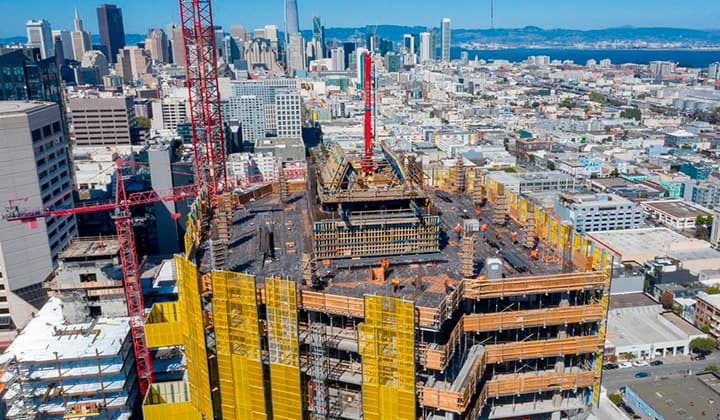
Automatisation de la conception des coffrages
Our client from
California, USA
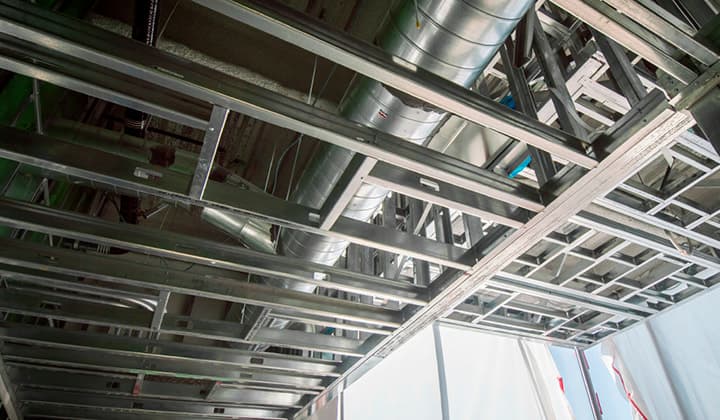
Automatisation de la conception des plafonds suspendus
Our client from
New York, USA
Automatisation de la conception de l'ossature des murs
Our client from
California, USA