¿Tiene alguna pregunta? Póngase en contacto con nosotros
¡Únete a nuestro equipo!
Solicitar presupuesto o consulta gratuita

Quick Summary: Substantial completion in construction marks the point when a project is sufficiently finished for the owner to occupy or use it for its intended purpose, even if minor punch list items remain. This critical milestone triggers important contractual events including the start of warranty periods, release of retainage, and transfer of project responsibilities from contractor to owner.
Substantial completion represents one of the most critical milestones in any construction project. Yet it’s also one of the most misunderstood concepts in the industry.
The point at which a building reaches substantial completion has significant implications for contractors, owners, and everyone involved. It affects payment schedules, warranty periods, insurance coverage, and legal responsibilities. Understanding this concept isn’t optional—it’s essential for successful project management.
Defining Substantial Completion
Substantial completion occurs when construction has progressed to the point where the owner can occupy or utilize the work for its intended purpose. The building doesn’t need to be 100% finished. But it must be functional and safe for use.
According to AIA Contract Documents, substantial completion is defined as the stage when “the Work or designated portion thereof is sufficiently complete in accordance with the Contract Documents so that the Owner can occupy or utilize the Work for its intended use.”
Here’s the thing though—this definition leaves room for interpretation. What counts as “sufficiently complete” for one project might differ from another. That’s why construction contracts need to spell out exactly what substantial completion means for each specific project.
| Aspect | Substantial Completion | Final Completion |
|---|---|---|
| Project Status | Functional and ready for intended use | 100% complete, all punch list items finished |
| Owner Occupancy | Permitted | Permitted |
| Warranty Start | Begins at this point | Already running |
| Retainage Release | Partial release (typically) | Final release |
| Remaining Work | Minor punch list items | None |
Many construction contracts base their definition on functionality. If a hospital wing can accept patients, it’s substantially complete. If office space can accommodate workers, it’s substantially complete. The standard isn’t perfection—it’s usability.
BIM Services for Construction Closeout

Substantial completion usually depends on what has been installed, documented, and coordinated by the end of the project. Powerkh supports that process through BIM modeling, BIM coordination, Scan to BIM, structural detailing, prefabrication workflows, and BIM automation. Their services help teams keep models, drawings, and technical documentation more organized as projects move toward closeout.
Need BIM services for project closeout support?
Talk with Powerkh to:
- update and coordinate project models
- prepare documentation and detailed drawings
- support final project stages with clearer BIM workflows
👉 Contact Powerkh to review your drawings, scope, and BIM needs.
The Certificate of Substantial Completion
When substantial completion is reached, the contractor requests a Certificate of Substantial Completion from the architect or project manager. This document officially recognizes the milestone and sets several things in motion.
The certificate typically includes several key pieces of information. It specifies the date substantial completion was achieved, lists any remaining punch list items that need attention, and establishes deadlines for completing that remaining work.
According to the University of Texas System’s project management guidelines, achieving substantial completion for all phases of construction is a required task before project closeout can begin. This underscores how critical proper documentation of this milestone is for institutional projects.
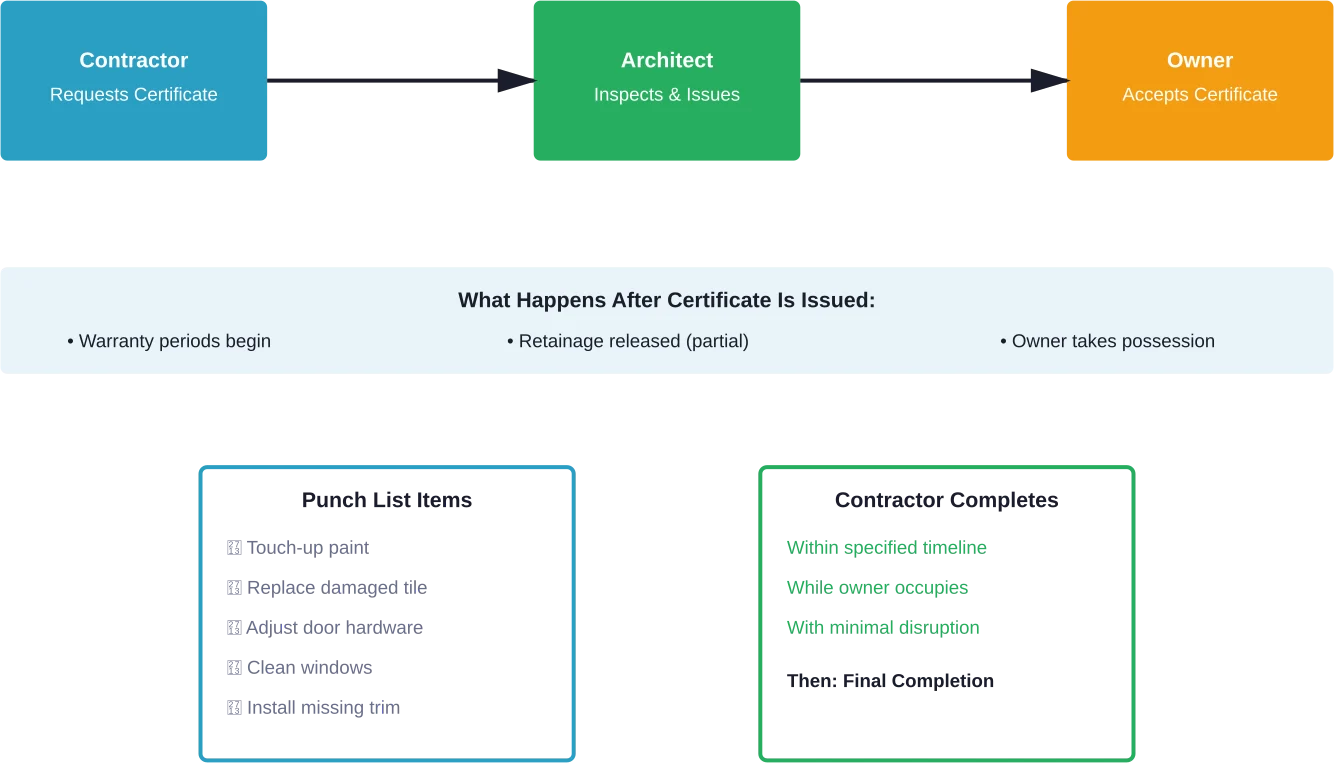
But wait. Who determines if substantial completion has actually been reached? That’s where things can get contentious. The architect or project manager typically makes this determination, but owners and contractors don’t always agree with the assessment.
Why Substantial Completion Matters
The substantial completion date triggers a cascade of contractual and legal consequences. Understanding these implications is essential for both owners and contractors.
Warranty Periods Begin
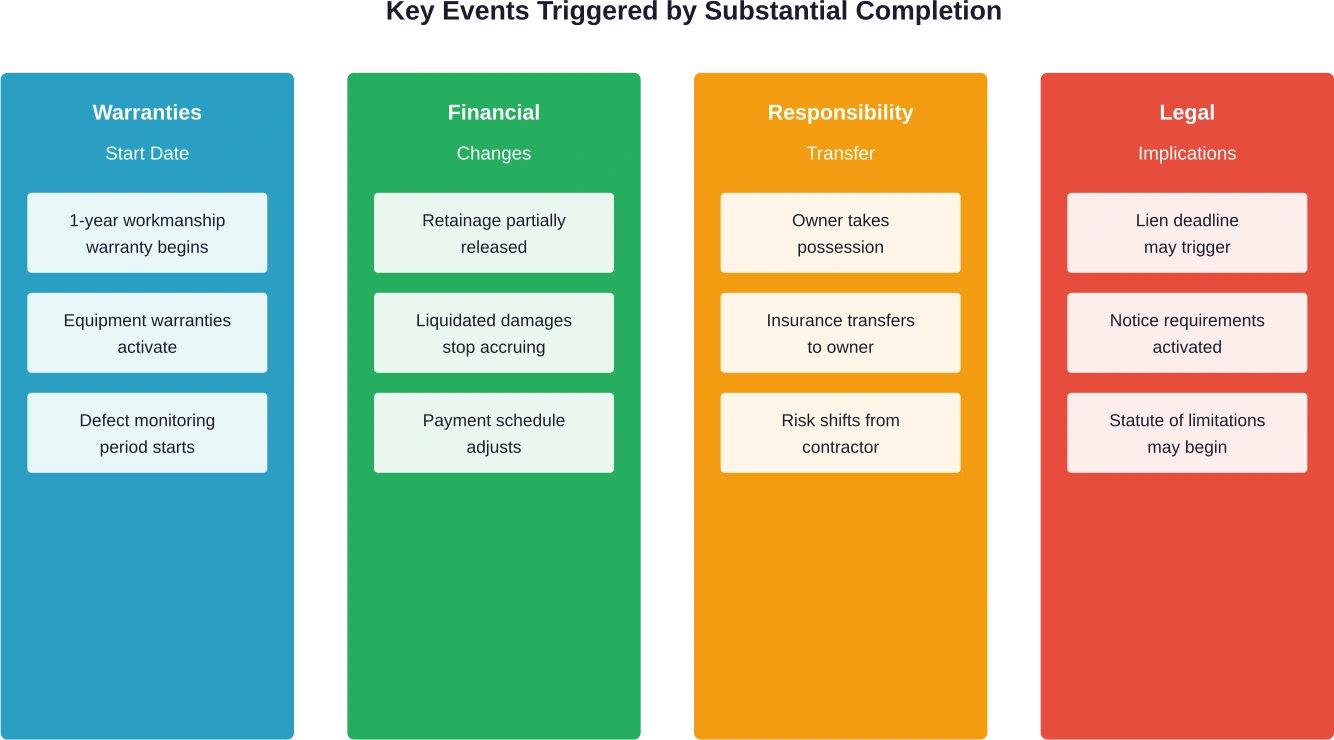
Most construction warranties start running from the date of substantial completion, not final completion. This means the one-year warranty on workmanship typically begins when the owner takes occupancy, even if minor items remain unfinished.
According to the University of Texas System’s guidelines, project teams must monitor defects and warranties as part of project closeout procedures. The substantial completion date establishes when this monitoring period officially starts.
Retainage Release
Construction contracts typically hold back a percentage of payment (usually 5-10%) as retainage throughout the project. When substantial completion is reached, a significant portion of this retainage gets released to the contractor. A substantial portion of any retainage may be released after Substantial Completion has occurred. The remaining retainage stays in place until final completion, when all punch list items are finished and the project is 100% complete.
Risk and Insurance Transfer
Before substantial completion, the contractor bears responsibility for the project and maintains builder’s risk insurance. After substantial completion, risk typically transfers to the owner, who must activate their property insurance coverage.
The University of Texas System specifically requires coordination of systemwide insurance program coverage at least two weeks before substantial completion is anticipated. This ensures no gaps in coverage during the transition.
Liquidated Damages Stop
Many construction contracts include liquidated damages clauses that charge the contractor a daily fee for delays beyond the scheduled completion date. Reaching substantial completion typically stops these damages from accruing, even if minor work remains.
Substantial Completion vs. Final Completion
These two milestones are often confused, but they’re distinctly different. Substantial completion means the project is usable. Final completion means it’s finished.
The period between substantial and final completion is when contractors complete punch list items. These are typically minor tasks—touch-up painting, fixing small defects, adjusting hardware, or replacing damaged finishes.
Final completion triggers the release of the remaining retainage. It also marks the end of the contractor’s primary obligations under the contract, though warranty responsibilities continue.
Common Disputes Around Substantial Completion
Disagreements about whether substantial completion has been reached are surprisingly common. Contractors want to achieve this milestone to trigger retainage release and stop liquidated damages. Owners sometimes resist certifying substantial completion if they feel significant work remains.
The definition in the contract documents is critical. Vague language leads to disputes. Clear, specific criteria for substantial completion help both parties understand exactly what needs to be accomplished.
According to legal analysis from construction law experts at Saul Ewing LLP, finding a definition of substantial completion acceptable to both owner and contractor is an important component of construction contract negotiations. The definition should align with related documents, such as construction loan agreements or lease terms.
Some contracts specify that substantial completion requires a certificate of occupancy from local building officials. Others tie it to specific operational criteria—HVAC systems functioning, elevators operational, fire safety systems activated, and so forth.
Practical Steps for Contractors
When approaching substantial completion, contractors should take several important steps. First, conduct a thorough pre-inspection before requesting the certificate. Identify and resolve obvious deficiencies before the architect or owner inspects.
Second, compile all required documentation. This includes operating manuals, warranty information, as-built drawings, and maintenance instructions. Many contracts require these documents before substantial completion can be certified.
Third, coordinate with the owner about timing for occupancy. Even though the contractor retains some access rights to complete punch list items, the owner’s occupancy will impact how and when remaining work gets done.
For Project Owners
Owners need to prepare for the transition that substantial completion brings. Activate property insurance coverage. Arrange for facility management to begin. Plan the move-in or occupancy process.
Review the punch list carefully. While minor items shouldn’t prevent certification of substantial completion, significant deficiencies should be addressed first. The punch list should capture genuinely minor work, not major system defects or safety issues.
Understand that certifying substantial completion doesn’t mean giving up leverage. The remaining retainage and warranty obligations provide continued protection.
Conclusión
Substantial completion represents a pivotal transition point in construction projects. It’s not just a box to check—it’s a milestone with real consequences for payment, risk, warranties, and responsibilities.
Clear contract language defining substantial completion prevents disputes. Proper documentation through the certificate process protects all parties. Understanding what this milestone triggers allows contractors and owners to prepare appropriately.
Whether you’re a contractor approaching project completion or an owner preparing for occupancy, don’t treat substantial completion as an afterthought. Plan for it, document it properly, and understand its implications. The quality of your project closeout depends on getting this critical milestone right.
Preguntas frecuentes
What percentage complete is substantial completion?
There’s no universal percentage. Substantial completion is based on functionality and usability for intended purpose, not a specific completion percentage. A project could be 95% complete by cost but not substantially complete if critical systems don’t work. Conversely, a project at 98% might be substantially complete if only minor cosmetic items remain.
Who decides when substantial completion is achieved?
The architect or construction manager typically makes the determination based on inspection and the contract documents’ definition. However, the owner must accept the certificate. Disputes about substantial completion can be resolved through the contract’s dispute resolution procedures.
Can substantial completion happen in phases?
Yes. Large projects often achieve substantial completion for designated portions before the entire project is complete. For example, a multi-building campus might certify substantial completion for individual buildings as they’re finished, allowing phased occupancy while construction continues elsewhere.
What happens if the owner occupies before substantial completion?
Early occupancy can complicate matters significantly. It may be deemed acceptance of substantial completion even if the certificate hasn’t been issued. Contracts should address early occupancy scenarios specifically, including how it affects warranties, insurance, and remaining work completion.
How long do contractors have to complete punch list items?
The substantial completion certificate typically specifies deadlines for punch list completion, often 30 to 60 days. The contract documents should establish these timelines. Failure to complete punch list items by the deadline can result in the owner hiring others to finish the work and back-charging the contractor.
Does substantial completion affect lien rights?
In many jurisdictions, the substantial completion date affects deadlines for filing mechanic’s liens or providing required notices. These deadlines vary by state, so contractors and subcontractors must understand local lien law requirements and how they relate to substantial completion.
What if the contractor and owner disagree about substantial completion?
Contract documents typically include dispute resolution procedures. The architect often serves as initial decision-maker. If disagreements persist, mediation or arbitration may be required. Courts generally defer to the contract’s definition of substantial completion and evaluate whether that standard has been met based on the evidence.

Nuestros casos prácticos
Hemos gestionado más de 200 proyectos BIM y VDC para los sectores comercial, industrial y residencial.
Nuestro trabajo incluye:
Automatización del diseño de encofrados
Our client from
California, USA
Automatización del diseño de falsos techos
Our client from
New York, USA
Automatización del diseño del entramado de muros
Our client from
California, USA