¿Tiene alguna pregunta? Póngase en contacto con nosotros
¡Únete a nuestro equipo!
Solicitar presupuesto o consulta gratuita

OSB (Oriented Strand Board) is an engineered wood panel made from rectangular wood strands bonded with waterproof adhesives and compressed in cross-oriented layers. Widely used in construction for structural applications like wall sheathing, roof decking, and subfloors, OSB offers strength and dimensional stability comparable to plywood at a more cost-effective price point.
Walk onto any modern construction site and there’s a good chance the structural sheathing wrapping the framing isn’t plywood. It’s OSB—a versatile engineered wood panel that’s become the industry standard for everything from roof decking to wall bracing.
But what exactly is OSB? And why has this material replaced plywood in so many applications?
Here’s the thing though—understanding OSB goes beyond just knowing what the acronym stands for. The manufacturing process, performance characteristics, and specific grades all determine where and how this material performs best.
What Does OSB Stand For?
OSB stands for Oriented Strand Board. The name describes exactly how the material is constructed: wood strands oriented in specific directions and compressed into board form.
Invented by Armin Elmendorf, who received the patent for the first ‘strand board’ process in 1965, OSB is a type of engineered wood formed by adding adhesives to layers of wood strands arranged in cross-oriented layers and compressing them. According to APA – The Engineered Wood Association, OSB is manufactured from waterproof heat-cured adhesives and rectangularly shaped wood strands that create a strong, dimensionally stable panel.
The engineered design shares many strength and performance characteristics with plywood, but the manufacturing process differs significantly.
How OSB Is Manufactured
The production process transforms raw timber into engineered panels through several distinct stages.
First, logs are debarked and cut into rectangular wood strands—typically thin flakes several inches long. These strands are dried to specific moisture content, then coated with waterproof adhesives (usually phenol-formaldehyde resins).
Now, this is where it gets interesting. The coated strands are arranged in cross-oriented layers—outer layers run parallel to the panel length, while inner layers run perpendicular. This cross-lamination pattern provides strength in both directions.
The layered mat is then compressed under high heat and pressure, curing the adhesives and bonding the strands into a solid panel. By early 2025, North American OSB production capacity had significantly expanded, with multiple mill projects initiated since 2021 designed to add approximately 3.5 to 4 billion square feet of capacity. While structural panel production in the first half of 2024 was about 16 billion sqft (3/8-inch basis), the overall market for engineered wood panels, including OSB, continues to see high demand, with OSB maintaining a dominant role in residential and commercial construction
Work With a BIM and VDC Services Team

Powerkh provides BIM modeling, coordination, Scan to BIM, BIM automation, and structural detailing. The company supports construction teams with models, drawings, and technical documentation used in real projects.
Need BIM Support for a Project?
Talk with Powerkh to:
- build BIM models and construction documentation
- prepare drawings for fabrication and site use
- support coordination across project teams
👉 Contact Powerkh for a project review and consultation.
Common Construction Applications
OSB has become a widely used structural wood panel across multiple construction applications.
- Wall Sheathing: OSB panels provide lateral bracing for wall frames, resisting racking forces from wind and seismic loads. The material’s dimensional stability makes it ideal for this purpose.
- Roof Decking: As a roof substrate, OSB provides a nailable surface for shingles while supporting loads from snow, equipment, and foot traffic.
- Subflooring: APA Rated Sturd-I-Floor panels combine subfloor and underlayment in a single panel, reducing installation time and material costs.
- Real talk: OSB’s versatility extends beyond these core uses. The material appears in single-layer flooring systems, structural insulated panels (SIPs), I-joists, and even furniture construction.
OSB Types and Performance Grades
Not all OSB performs the same. Different grades exist for different service conditions.
According to academic research published in BioResources, there are four types of OSB boards carried out depending on conditions of use:
| Type | Use Condition | Load-Bearing | Moisture Resistance |
|---|---|---|---|
| OSB/1 | Dry conditions, interior use | General purpose | Low |
| OSB/2 | Dry conditions, structural | Load-bearing | Low |
| OSB/3 | Humid conditions, structural | Load-bearing | High |
| OSB/4 | Humid conditions, heavy-duty | Heavy load-bearing | High |
Research shows improvements of 27% to 22% in modulus of rupture (MOR) and 13% to 10% in modulus of elasticity (MOE) for OSB/3 and OSB/2 compared to OSB/1. Internal bond values were approximately 32% higher for OSB/3 than OSB/1.
Utilization classes further refine moisture performance. UC1 boards suit indoor dry areas where moisture content stays below 20%. UC2 boards handle outdoor protected areas and temporary exposure to weather during construction.
Key Advantages of OSB
Several factors explain OSB’s dominance in modern construction.
- Cost-Effectiveness: OSB typically costs less than plywood while delivering comparable structural performance. The manufacturing process uses smaller, faster-growing trees efficiently.
- Consistent Quality: According to APA, OSB’s engineered nature creates consistent strength and performance. There are no weak spots from knots or voids like natural wood.
- Structural Performance: The cross-oriented layers provide strength in multiple directions. APA Structural I sheathing meets additional requirements for racking performance in shear walls and diaphragms.
- Large Panel Sizes: Manufacturing allows production of large panels, reducing seams and installation time on job sites.
But wait. OSB isn’t perfect. The material can swell when exposed to moisture, edges are particularly vulnerable, and the surface texture isn’t ideal for exposed applications requiring smooth finishes.
OSB vs. Plywood: Understanding the Differences
The OSB versus plywood debate continues on construction sites.
Both are engineered wood panels sharing similar strength characteristics, but manufacturing differences create distinct performance profiles. Plywood uses thin wood veneers glued in alternating grain directions. OSB uses smaller strands in cross-oriented layers.
Plywood generally handles moisture exposure better and returns to original dimensions faster after wetting. OSB holds fasteners well but can experience edge swelling. For structural applications in protected conditions, both perform admirably when properly installed.
The choice often comes down to specific project requirements, local building codes, and budget considerations.
Conclusión
OSB has earned its place as a versatile structural wood panel in modern construction. The engineered design delivers consistent quality, reliable strength, and cost-effective performance across applications from wall sheathing to roof decking.
Understanding OSB types, grades, and proper applications ensures optimal material selection for specific project requirements. While the material has limitations—particularly regarding moisture exposure—proper installation and protection allow OSB to perform effectively in structural roles.
For construction professionals and DIY builders alike, OSB represents a proven choice backed by decades of real-world performance and extensive testing standards from organizations like APA and ASTM.
Preguntas frecuentes
What does OSB stand for in construction?
OSB stands for Oriented Strand Board. It is an engineered wood panel made from wood strands arranged in cross-oriented layers and bonded with waterproof adhesives under heat and pressure.
Can OSB be used outdoors?
Yes, OSB can be used outdoors for structural purposes if properly protected. Higher-grade panels like OSB/3 and OSB/4 offer better moisture resistance, but all OSB should be shielded from prolonged direct water exposure.
Is OSB stronger than plywood?
OSB and plywood provide similar structural strength in most applications. OSB is often more cost-effective, while plywood typically performs better under repeated moisture exposure.
How thick should OSB be for roofing?
Common roof decking thicknesses are 7/16 inch or 15/32 inch for typical residential framing. The correct thickness depends on rafter spacing, roof loads, and local building codes.
Does OSB need to be sealed?
OSB does not usually require sealing in standard structural use. However, sealing exposed edges can help reduce moisture absorption and improve durability.
What are the disadvantages of OSB?
OSB can swell at the edges when exposed to moisture, has a rougher surface than plywood, and takes longer to dry after getting wet. Proper installation and protection help reduce these issues.
How long does OSB last in construction?
When installed correctly and protected from moisture, OSB can last for the lifetime of the structure. Its performance depends on maintaining dry conditions and proper detailing.

Nuestros casos prácticos
Hemos gestionado más de 200 proyectos BIM y VDC para los sectores comercial, industrial y residencial.
Nuestro trabajo incluye:
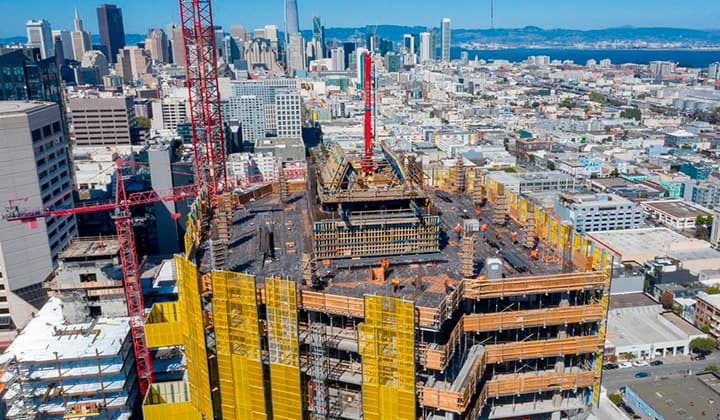
Automatización del diseño de encofrados
Our client from
California, USA
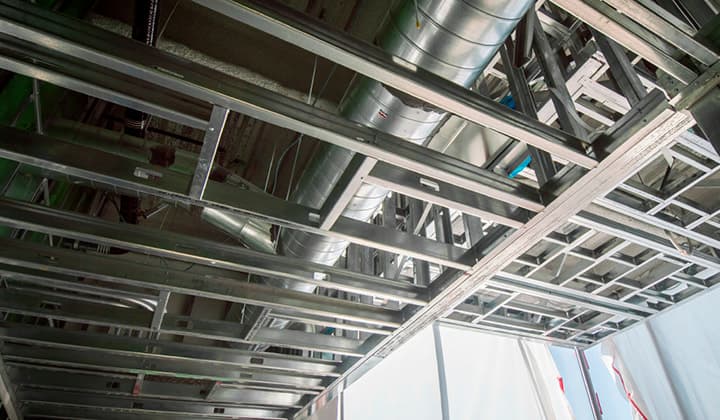
Automatización del diseño de falsos techos
Our client from
New York, USA
Automatización del diseño del entramado de muros
Our client from
California, USA