¿Tiene alguna pregunta? Póngase en contacto con nosotros
¡Únete a nuestro equipo!
Solicitar presupuesto o consulta gratuita

Quick Summary: A contractor in construction is a professional individual or company hired to execute specific construction work under a contractual agreement. General contractors oversee entire projects and coordinate all trades, while specialty contractors focus on specific aspects like electrical, plumbing, or HVAC work. Contractors operate as independent businesses rather than employees and bear responsibility for delivering quality work within agreed timelines and budgets.
Walk onto any construction site, and the term “contractor” gets thrown around constantly. But what does it actually mean?
The construction industry relies on a complex web of professionals who bring projects from concept to completion. Contractors form the backbone of this system, whether they’re managing an entire commercial development or installing specialized electrical systems in a residential remodel.
Understanding what contractors do—and how they differ from regular employees or construction companies—matters for anyone planning a building project. The right contractor can make the difference between a smooth build and a costly nightmare.
Defining a Construction Contractor
A construction contractor is an individual or company hired to complete a defined scope of work on a construction project. Unlike regular employees, contractors work on a contractual basis, bringing specialized skills and resources to specific projects.
According to OSHA regulations under 29 CFR 1926.16, contractors operate within a defined framework that establishes their responsibilities on construction sites. The terms “construction, alteration, and repair” used in federal construction safety standards help define the scope of contractor work.
Here’s the critical distinction: contractors run independent businesses. They control how work gets done, invest in their own equipment, and bear financial risk for project outcomes. This separates them from employees who work under direct supervision and receive regular wages.
The IRS defines independent contractors as professionals “in an independent trade, business, or profession in which they offer their services to the general public.” This includes construction contractors who provide services across multiple projects and clients rather than working for a single employer.
Legal Status and Worker Classification
The distinction between contractors and employees carries serious legal implications. The U.S. Department of Labor has been actively addressing worker misclassification issues, with a Notice of Proposed Rulemaking announced on February 26, 2026 (per DOL), focusing on proper classification under the Fair Labor Standards Act.
Misclassifying employees as independent contractors creates problems. Workers misclassified as contractors lose protections like minimum wage guarantees, overtime pay, and other employment benefits. Employers face penalties for improper classification.
The economic reality test examines whether workers are truly in business for themselves or economically dependent on an employer. Factors include investment in equipment, opportunity for profit or loss, permanence of the working relationship, and degree of control over work performance.
Support Construction Work With Better BIM Models

Contractors often need accurate models, coordinated drawings, and technical documentation that can actually be used during delivery. Powerkh provides BIM modeling, BIM coordination, Scan to BIM, BIM automation, prefabrication support, and structural detailing. Their team works across commercial, industrial, and residential projects, supporting contractors with model creation, documentation, and coordination work.
Need BIM Services for a Construction Project?
Talk with Powerkh to:
- build BIM models at the required level of detail
- improve coordination across drawings and disciplines
- prepare documentation for fabrication and construction
👉 Contact Powerkh to review your drawings, scope, and BIM needs.
Types of Contractors in Construction
Construction projects involve numerous contractor types, each bringing specialized expertise. Understanding these categories helps clarify the complex ecosystem of construction professionals.
General Contractors
General contractors manage entire construction projects from start to finish. They serve as the primary point of contact between property owners and the various trades needed to complete a project.
Their responsibilities span project coordination, subcontractor hiring and management, material procurement, scheduling, quality control, and ensuring compliance with building codes and safety regulations. General contractors typically handle projects on a lump sum, time and material, or cost-plus basis.
While all general contractors participate in the construction industry, not all construction companies function as general contractors. A construction company represents a broader term that can include developers, material suppliers, or specialty firms that don’t manage complete projects.
Specialty Contractors (Subcontractors)
Specialty contractors focus on specific construction trades. They’re typically hired by general contractors to perform specialized portions of a project.
Common specialty contractor types include:
- Electrical contractors: Install wiring, lighting, power systems, and electrical components
- Plumbing contractors: Handle water supply, drainage systems, and fixtures
- HVAC contractors: Install heating, ventilation, and air conditioning systems
- Concrete contractors: Pour foundations, slabs, and structural concrete elements
- Framing contractors: Build the structural skeleton of buildings
- Roofing contractors: Install and repair roof systems
- Drywall contractors: Install and finish interior walls and ceilings
- Painting contractors: Apply interior and exterior finishes
According to OSHA’s 29 CFR 1926.16, prime contractors and subcontractors can arrange obligations on a jobsite basis. For example, they might designate one party to maintain common safety equipment or facilities rather than duplicating resources.
Jefes de obra
Construction managers occupy a different role than general contractors. Rather than contracting to build, they provide professional management services to oversee projects on behalf of owners.
The distinction matters. Construction managers typically work on a fee basis as the owner’s representative, coordinating multiple contractors without holding construction contracts themselves. General contractors, by contrast, contract to deliver the actual construction work and may hire subcontractors to execute portions of that work.
Key Responsibilities of Construction Contractors
Contractors shoulder significant responsibilities that extend beyond simply showing up and doing work. These obligations define the professional standards expected in the construction industry.
Project Execution and Quality Control
Contractors commit to delivering work that meets specifications outlined in contracts and construction documents. This includes reading and understanding architectural, structural, civil, and MEP (mechanical, electrical, plumbing) plans.
Quality control falls squarely on contractor shoulders. Work must comply with building codes, pass inspections, and meet industry standards. Defective work requires correction at the contractor’s expense.
Safety and Regulatory Compliance
Construction sites present inherent hazards. OSHA regulations under 29 CFR 1926 establish comprehensive safety requirements for construction work.
Contractors must maintain safe working conditions, provide proper equipment and training, implement fall protection and other safety systems, and ensure compliance with applicable standards. The prime contractor often bears ultimate responsibility for overall site safety, though subcontractors maintain obligations for their own work areas.
OSHA’s Construction Safety Act (40 U.S.C. 333) establishes the legal framework for these requirements. Violations can result in citations, fines, and project shutdowns.
Scheduling and Coordination
General contractors manage complex schedules involving multiple trades, material deliveries, inspections, and owner requirements. Delays from one trade ripple through the entire project timeline.
Effective coordination prevents conflicts. Plumbers can’t install fixtures before framers build walls. Electricians need access before drywall goes up. Managing these interdependencies requires planning and communication.
Financial Management and Payment
Contractors manage project budgets, track costs, and process payments to subcontractors and suppliers. General contractors typically receive periodic payments from owners based on completed work, then pay downstream parties.
Payment timing matters. Increasing visibility of subcontractors and sub-subcontractors, streamlining paperwork, and maintaining open communication help ensure everyone gets paid on time. Payment delays cause serious problems for small contractors operating on tight cash flow.
| Responsibility Area | General Contractor | Specialty Contractor
|
|---|---|---|
| Overall Project Management | Yes | No |
| Hiring Subcontractors | Yes | Rarely |
| Site Safety Oversight | Primary responsibility | Own work area |
| Building Permits | Usually obtains | Trade-specific permits |
| Owner Communication | Direct contact | Through GC typically |
| Schedule Coordination | Creates master schedule | Coordinates own work |
| Material Procurement | Major materials | Trade-specific materials |
| Quality Control | Overall project | Specialized work |
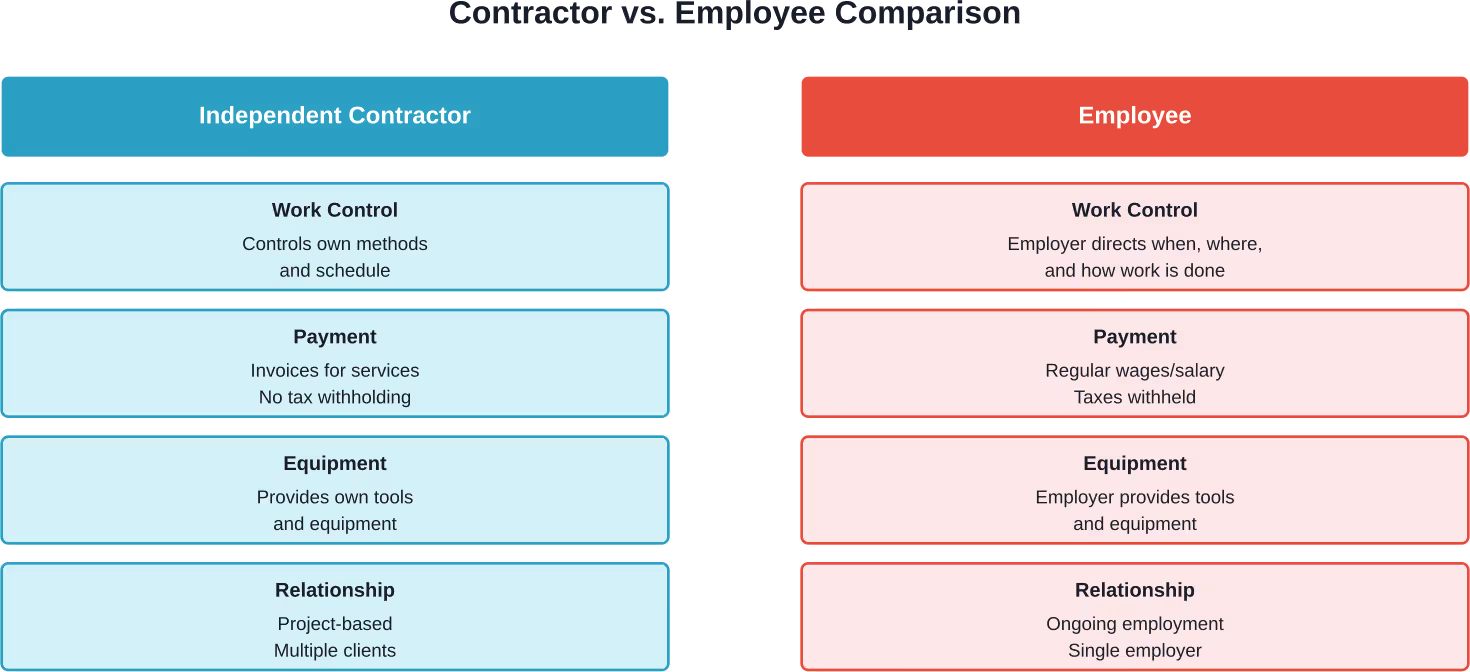
How Contractors Differ from Employees
The contractor-versus-employee distinction confuses many people. But the differences carry substantial legal and financial consequences.
Control and Independence
Employees work under direct supervision. Employers control when, where, and how work gets performed. They provide tools, set schedules, and direct daily activities.
Contractors maintain independence over their work methods. They decide how to accomplish contracted tasks, use their own equipment, and control their business operations. According to IRS guidance, the degree of control over work performance serves as a key factor in worker classification.
Financial Arrangements
Employees receive regular wages or salaries. Employers withhold taxes, contribute to Social Security and Medicare, and may provide benefits like health insurance and retirement plans.
Contractors invoice for services rendered. They receive payment without tax withholding and handle their own tax obligations, including self-employment taxes. They don’t receive employee benefits unless specifically negotiated into contracts.
The IRS examines financial control factors including significant investment in equipment, unreimbursed expenses, opportunity for profit or loss, services available to the market, and method of payment when determining worker status.
Relationship Duration and Scope
Employment relationships tend toward permanence. Employees expect ongoing work and employers expect continued availability.
Contractor relationships center on specific projects or defined scopes of work. When the contracted work ends, so does the relationship—unless new contracts get signed. Contractors typically work for multiple clients simultaneously or sequentially.
Choosing the Right Contractor for Your Project
Selecting contractors ranks among the most important decisions in any construction project. The wrong choice leads to delays, cost overruns, and quality problems.
Licensing and Credentials
Legitimate contractors hold appropriate licenses for their trade and location. Requirements vary by state and municipality, but most jurisdictions require contractors to pass examinations and maintain insurance.
Verify contractor licenses through state licensing boards. Check that insurance coverage includes general liability and workers’ compensation. Don’t skip this step—unlicensed contractors create liability nightmares when accidents happen or work fails inspections.
Experience and References
Look for contractors with proven experience in similar projects. A contractor who excels at residential remodels might struggle with commercial ground-up construction.
Ask for references from recent projects. Actually contact those references. Ask about work quality, timeline adherence, communication, problem-solving, and whether they’d hire the contractor again.
Financial Stability
Contractors facing financial difficulties may cut corners, delay work, or even abandon projects. Request financial references or bonding capacity information for larger projects.
For significant projects, payment and performance bonds provide protection. These bonds guarantee project completion and payment to subcontractors even if the general contractor defaults.
Communication and Professionalism
Pay attention to how contractors communicate during the bidding and selection process. Responsive, clear communication early on usually continues through the project. Poor communication at the start rarely improves.
Professional contractors provide detailed written proposals, maintain organized documentation, and explain processes clearly. These practices signal competence and reliability.
Common Contract Types in Construction
Construction contracts define the business relationship between owners and contractors. Different contract structures allocate risk and reward differently.
Lump Sum (Fixed Price) Contracts
Lump sum contracts establish a fixed price for defined work. The contractor agrees to complete specified work for a set amount regardless of actual costs incurred.
This structure transfers cost risk to contractors. If work costs more than anticipated, contractors absorb losses. If costs come in under budget, contractors keep the savings. Owners benefit from price certainty.
Time and Material Contracts
Time and material contracts reimburse contractors for labor hours at specified rates plus material costs. Often these include a markup percentage on materials and a not-to-exceed cap.
This approach works well when project scope remains uncertain. Owners pay for actual work performed but need strong oversight to control costs.
Cost Plus Contracts
Cost plus contracts reimburse all legitimate project costs plus a fee for the contractor. The fee might be a fixed amount, a percentage of costs, or a percentage with a guaranteed maximum price.
These contracts work for complex projects where scope can’t be fully defined upfront. They require detailed cost tracking and transparent accounting. Owners assume more financial risk but gain flexibility.
| Tipo de contrato | Price Structure | Risk to Owner | Risk to Contractor | Lo mejor para
|
|---|---|---|---|---|
| Suma global | Fixed total price | Low | High | Well-defined projects |
| Time & Material | Hourly rates + materials | Medium-High | Low | Uncertain scope |
| Cost Plus | Actual costs + fee | High | Low | Complex projects |
| Unit Price | Price per unit installed | Medio | Medio | Quantity-based work |
The Contractor's Role in Project Success
Contractors don’t just execute tasks—they drive project outcomes. Their expertise, work quality, and professionalism determine whether projects succeed or fail.
Skilled contractors identify potential problems before they become crises. They suggest value engineering opportunities that reduce costs without sacrificing quality. They coordinate complex logistics to keep projects moving forward.
The best contractors bring more than technical skills. They solve problems, communicate proactively, and maintain professional standards even when challenges arise. They understand that their reputation depends on every project they touch.
For property owners and developers, recognizing the value contractors provide leads to better project partnerships. For individuals considering construction careers, understanding contractor roles and responsibilities helps chart career paths whether toward general contracting, specialty trades, or construction management.
Conclusión
Construction contractors form the operational backbone of the building industry. From general contractors orchestrating entire developments to specialty contractors bringing focused expertise, these professionals translate designs into physical structures.
Understanding what contractors do—and how they differ from employees or other construction professionals—matters for anyone involved in building projects. The contractual relationships, legal obligations, and professional standards that define contractor work create a framework for successful project delivery.
Whether planning a home remodel, developing a commercial property, or considering a construction career, recognizing the roles and responsibilities of contractors provides essential knowledge for navigating the construction industry.
Ready to start a construction project? Take time to research and select qualified, licensed contractors with proven track records in similar work. The effort invested in contractor selection pays dividends through smoother projects, better quality, and fewer headaches down the road.
Preguntas frecuentes
What’s the difference between a contractor and a subcontractor?
A contractor (typically a general contractor) holds a direct contract with the property owner to complete a construction project. A subcontractor is hired by the general contractor to perform specific portions of the work, such as electrical, plumbing, or HVAC installation. Subcontractors don’t have direct contractual relationships with owners in traditional project delivery.
Do construction contractors need to be licensed?
Most states and many municipalities require construction contractors to hold licenses specific to their trade and the scale of work they perform. Requirements vary by location but typically include passing examinations, demonstrating experience, and maintaining insurance. Working without required licenses can result in fines, project shutdowns, and inability to enforce payment for work performed.
How do contractors differ from construction managers?
Contractors contract to perform actual construction work, whether managing an entire project (general contractors) or specific trades (specialty contractors). Construction managers provide professional management services to oversee projects on behalf of owners but typically don’t hold construction contracts themselves. Construction managers work on a fee basis as the owner’s representative, while general contractors contract to deliver completed work.
Can construction workers be classified as independent contractors?
Worker classification depends on the economic reality of the relationship, not simply how parties label it. The Department of Labor and IRS examine factors including degree of control, investment in equipment, opportunity for profit or loss, and whether workers are in business for themselves. Misclassifying employees as independent contractors violates labor laws and creates serious legal and financial consequences.
What should I look for when hiring a construction contractor?
Verify the contractor holds appropriate licenses and insurance for the work. Check references from recent similar projects. Assess financial stability, especially for larger projects. Evaluate communication skills and professionalism during the selection process. Request detailed written proposals and ensure the contractor demonstrates understanding of project requirements. For significant projects, consider requiring payment and performance bonds.
What types of insurance should contractors carry?
General liability insurance covers property damage and bodily injury claims. Workers’ compensation insurance covers employee injuries (required in most states). Contractors working on larger commercial projects often need professional liability insurance, builders risk insurance, and commercial auto insurance. Umbrella policies provide additional coverage beyond primary policy limits. Always verify insurance coverage is current before work begins.
How are construction contractors typically paid?
Payment structures vary by contract type. Lump sum contracts often use progress payments based on percentage of work completed or achievement of milestones. Time and material contracts bill periodically for hours worked and materials used. Cost plus contracts reimburse documented costs plus agreed fees. Payment terms, retention amounts, and documentation requirements should be clearly specified in contracts to avoid disputes.

Nuestros casos prácticos
Hemos gestionado más de 200 proyectos BIM y VDC para los sectores comercial, industrial y residencial.
Nuestro trabajo incluye:
Automatización del diseño de encofrados
Our client from
California, USA
Automatización del diseño de falsos techos
Our client from
New York, USA
Automatización del diseño del entramado de muros
Our client from
California, USA