¿Tiene alguna pregunta? Póngase en contacto con nosotros
¡Únete a nuestro equipo!
Solicitar presupuesto o consulta gratuita

Quick Summary: Becoming a construction manager typically requires a bachelor’s degree in construction management or a related field, plus several years of hands-on construction experience. According to the Bureau of Labor Statistics, the median annual wage for construction managers was $106,980 in May 2024 ($51.43 per hour), and employment is projected to grow 9% from 2024 to 2034—much faster than the average of 3% for all occupations. Certifications like the Certified Construction Manager (CCM) can boost earning potential by approximately 10%.
Drive through any major city and the evidence is everywhere: construction projects are booming. From residential developments to massive infrastructure upgrades, someone needs to keep these complex projects on schedule, on budget, and safe.
That someone is a construction manager.
The career offers substantial rewards. According to the Bureau of Labor Statistics, construction managers earned a median annual wage of $106,980 as of 2024. Job prospects look strong too—employment is projected to grow 9% between 2024 and 2034, significantly faster than the average for all occupations.
But how exactly does someone break into this field? What education and experience are required? Let’s break down the pathway to becoming a construction manager.
What Does a Construction Manager Actually Do?
Construction managers plan, coordinate, budget, and supervise construction projects from start to finish. They’re the central hub connecting owners, architects, engineers, subcontractors, and laborers.
Their day-to-day responsibilities typically include:
- Developing project timelines and budgets according to client requirements
- Hiring and managing subcontractors, laborers, and tradespeople
- Ensuring worksites comply with safety and legal requirements
- Communicating project progression and updates to stakeholders
- Negotiating contracts and managing change orders
- Solving problems that inevitably arise during construction
- Coordinating material deliveries and equipment scheduling
The role demands both technical construction knowledge and strong leadership abilities. Construction managers don’t just understand how buildings go together—they understand how to lead teams and manage the business side of projects.
BIM Support for Construction Management

Construction managers work with coordination, documentation, revisions, and delivery across multiple trades. Powerkh supports that process through BIM modeling, BIM coordination, Scan to BIM, structural detailing, prefabrication support, and BIM automation. Their services help keep models, drawings, and documentation more organized during construction.
Need BIM services for construction management?
Talk with Powerkh to:
- coordinate models across disciplines
- prepare documentation for construction use
- improve workflows with BIM automation
👉 Contact Powerkh to review your drawings, scope, and BIM needs.
Education Requirements for Construction Managers
Most construction managers need a bachelor’s degree. While pathways vary, formal education provides the foundational knowledge that employers increasingly expect.
Bachelor’s Degree in Construction Management
The most direct route is earning a bachelor’s degree in construction management or construction science. These programs typically cover:
- Métodos y materiales de construcción
- Project scheduling and cost estimation
- Building codes and safety regulations
- Contract administration and construction law
- Structural design principles
- Business management and accounting
According to Bureau of Labor Statistics data from 2023, about 68% of construction degree holders work in occupations requiring at least a bachelor’s degree. The median wage for construction degree holders was $90,000 as of 2023.
Programs accredited by the American Council for Construction Education (ACCE) meet industry standards and can improve job prospects.
Related Degrees That Work
Large construction firms may also hire candidates with degrees in:
- Civil engineering
- Arquitectura
- Building science
- Business management with construction emphasis
These degrees work best when combined with substantial construction experience. The key is demonstrating both technical understanding and practical knowledge of how construction projects actually function.
Can You Become a Construction Manager Without a Degree?
Technically, yes. Some construction managers rise through the ranks without formal degrees, starting as craft workers or tradespeople and gaining extensive hands-on experience.
However, this path has become increasingly difficult. Many firms now prefer or require bachelor’s degrees, especially for larger projects. The education route typically opens more doors and accelerates career progression.
The Essential Role of Work Experience
Here’s the thing though—a degree alone won’t make someone a construction manager. Practical experience is absolutely critical.
Most construction managers start with several years of hands-on construction work. This might include:
- Working as a carpenter, electrician, plumber, or other tradesperson
- Serving as a project engineer or assistant project manager
- Working in construction estimating or scheduling
- Managing small projects before advancing to larger ones
This experience teaches the realities of construction that classrooms can’t fully replicate. How do weather delays impact schedules? What happens when materials arrive damaged? How do you handle a subcontractor who’s falling behind?
Generally speaking, expect to spend 3-5 years gaining relevant experience before moving into a full construction manager role. Some companies offer entry-level positions like assistant construction manager or project coordinator that provide stepping stones.
Professional Certifications That Boost Your Career
While not always required, professional certifications demonstrate expertise and commitment. They can significantly impact both job opportunities and earning potential.
Certified Construction Manager (CCM)
The CCM credential, offered by the Construction Management Association of America (CMAA), is one of the most respected certifications in the field.
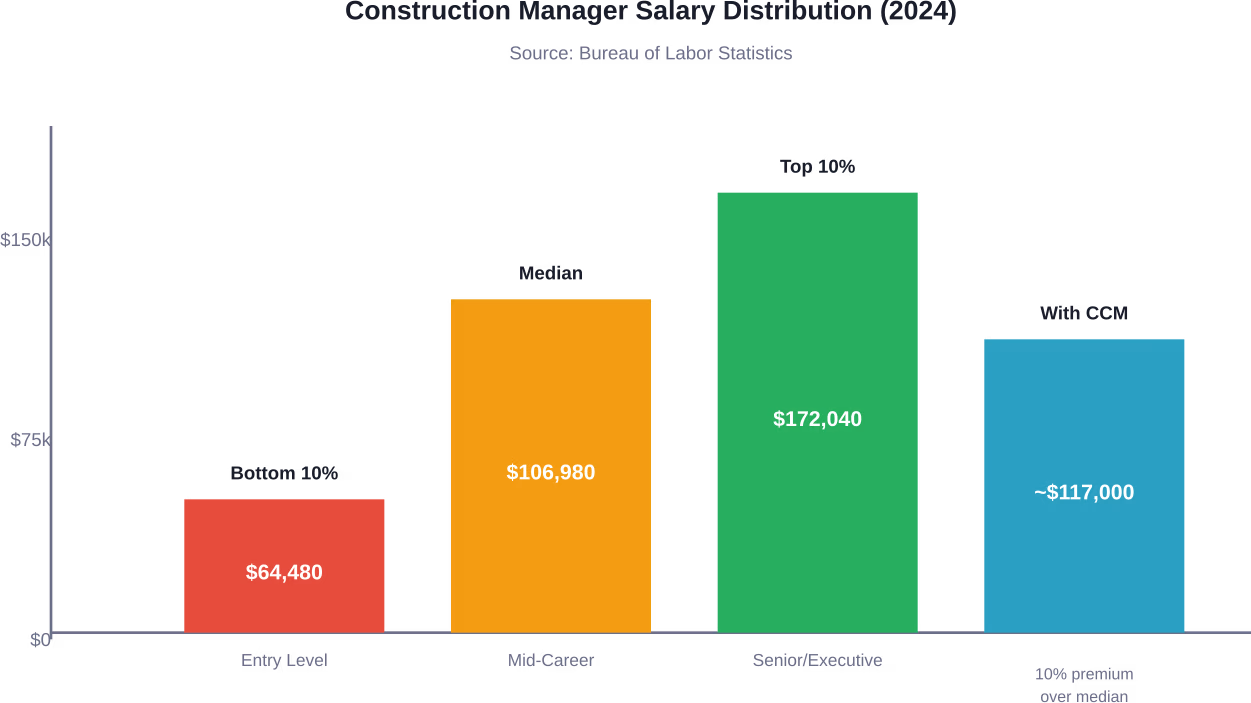
According to CMAA, Certified Construction Managers earn approximately 10% more than construction managers without the credential. Additionally, hundreds of job postings specifically require or prefer candidates with the CCM designation.
Eligibility requirements include:
- Bachelor’s degree plus four years of experience, or
- Associate degree plus six years of experience, or
- High school diploma plus eight years of experience
- Passing a comprehensive examination
The CCM examination tests knowledge across the construction management body of knowledge, including project management, cost management, contract administration, and professional practice.
Associate Constructor (AC)
The American Institute of Constructors offers the Associate Constructor certification, designed for entry-level professionals. This credential is particularly valuable for recent graduates or those transitioning into construction management from other industries.
Other Valuable Certifications
Depending on project types and specializations, these certifications add value:
- Project Management Professional (PMP) from PMI
- OSHA 30-Hour Construction Safety certification
- LEED Accredited Professional for sustainable construction
- State-specific contractor licenses (requirements vary by location)
Critical Skills for Construction Manager Success
Technical knowledge matters, but soft skills often determine who excels in construction management roles.
Leadership and Communication
Construction managers coordinate diverse teams—architects, engineers, subcontractors, laborers, inspectors, and owners. Clear communication prevents costly mistakes and keeps everyone aligned.
Leadership means making tough decisions under pressure, resolving conflicts between stakeholders, and motivating teams to deliver quality work on tight deadlines.
Problem-Solving Under Pressure
Construction projects rarely go exactly as planned. Materials get delayed. Weather interferes. Design issues emerge during construction. Subcontractors don’t show up.
Successful construction managers stay calm and develop creative solutions quickly. They anticipate problems before they escalate and adjust plans to minimize impacts.
Business and Financial Acumen
Construction management is fundamentally a business. Managers need to understand:
- Cost estimation and budget management
- Contract negotiation and administration
- Project scheduling and resource allocation
- Risk management and insurance
- Accounting principles and financial reporting
The difference between a profitable project and a money-losing one often comes down to tight financial control.
Technology Proficiency
Modern construction management relies heavily on technology:
- Building Information Modeling (BIM) software
- Project management platforms
- Scheduling software like Primavera or Microsoft Project
- Cost estimating applications
- Mobile field management tools
Staying current with construction technology provides competitive advantages.
Construction Manager Salary and Job Outlook
Compensation varies based on experience, location, project types, and employer size.
Median Salary Data
According to the Bureau of Labor Statistics, construction managers earned a median annual wage of $106,980 ($51.43 per hour) as of 2024.
The bottom 10% earned around $64,480 annually, while the top 10% earned over $172,040.
Salary varies significantly by industry. According to BLS data, construction managers working in heavy and civil engineering construction tend to earn higher median salaries compared to those in residential building construction.
Geographic Variations
Location dramatically affects earning potential. States with high construction activity and cost of living typically offer higher salaries. According to BLS employment statistics, Texas has among the highest employment levels for construction managers nationally.
Employment Growth Projections
The Bureau of Labor Statistics projects construction manager employment will grow 9% from 2024 to 2034—much faster than the average of 3% for all occupations.
This growth is driven by:
- Ongoing infrastructure investment and renovation needs
- Residential construction demand
- Commercial development projects
- Replacement of retiring construction managers
About 1.1 million openings are projected each year, on average, across management occupations through 2034, providing substantial opportunities for qualified candidates.
Steps to Launch Your Construction Manager Career
Ready to pursue this career? Here’s a practical roadmap.
Step 1: Earn Your Bachelor’s Degree
Enroll in a construction management program or related field. Look for ACCE-accredited programs when possible. During school, seek internships with construction firms to start building practical experience and industry connections.
Step 2: Gain Hands-On Experience
After graduation, target entry-level positions like:
- Assistant project manager
- Project engineer
- Field engineer
- Project coordinator
- Estimator or scheduler
These roles provide exposure to project management while building skills under experienced managers’ guidance. Don’t rush this phase—the experience is invaluable.
Step 3: Build Your Professional Network
Join industry associations like:
- Construction Management Association of America (CMAA)
- Associated General Contractors of America (AGC)
- National Association of Home Builders (NAHB)
Attend conferences, participate in local chapter events, and connect with experienced professionals. Many job opportunities come through industry relationships.
Step 4: Pursue Certification
Once eligible, pursue the CCM or other relevant certifications. The preparation process itself deepens knowledge, and the credential signals professional commitment to employers.
Step 5: Specialize and Advance
As experience builds, consider specializing in specific project types:
- Commercial construction
- Residential development
- Heavy civil and infrastructure
- Industrial facilities
- Green/sustainable building
Specialization can lead to higher-level positions and greater expertise in complex project types.
Training and Development Programs
Several organizations offer specialized training for aspiring and current construction managers.
AGC Programs
The Associated General Contractors of America provides multiple development programs:
The Project Manager Development Program (PMDP) is specifically designed for early-career project managers or those transitioning into the role. The interactive courses address construction industry-specific challenges.
For senior professionals with at least eight years of experience, AGC offers the Advanced Project Manager Course (APMC). This program focuses on leadership, negotiation, and delivering exceptional value beyond basic project execution.
AGC also offers Construction Supervision Fundamentals for front-line leaders learning entry-level management skills to lead construction activities.
University Online Programs
Many universities now offer online construction management degrees and certificates for working professionals. These programs provide flexibility while maintaining academic rigor.
Challenges in Construction Management
Real talk: construction management isn’t easy. Understanding the challenges helps set realistic expectations.
Long and Irregular Hours
Construction projects often require early morning starts, evening meetings with owners, and weekend site visits. When deadlines loom or problems arise, 50-60 hour weeks aren’t uncommon.
High-Stress Environment
Managing million-dollar budgets, coordinating dozens of people, and meeting aggressive deadlines creates constant pressure. A single mistake can cascade into major cost overruns or safety incidents.
Outdoor Work Conditions
Construction managers spend significant time on job sites, meaning exposure to weather, noise, dust, and physical demands of navigating construction zones.
Liability and Safety Responsibility
Construction managers bear responsibility for worksite safety. Accidents can result in injuries, lawsuits, and professional consequences. The weight of keeping people safe is substantial.
That said, many find these challenges energizing rather than discouraging. The satisfaction of seeing projects rise from dirt to completion makes the difficulties worthwhile.
Alternative Paths and Related Careers
Construction management skills transfer to related career paths worth considering:
| Career Path | Focus Area | Typical Requirements |
|---|---|---|
| Project Manager (General) | Cross-industry project management | PMP certification, bachelor’s degree |
| Facilities Manager | Building operations and maintenance | Facilities management experience, technical knowledge |
| Construction Estimator | Cost analysis and bidding | Strong math skills, construction knowledge |
| Real Estate Developer | Property development and investment | Business acumen, construction knowledge, capital |
| Construction Consultant | Advisory services for owners/contractors | Extensive experience, specialized expertise |
Building Your Future in Construction Management
Construction management offers a unique combination: technical challenges, leadership opportunities, tangible results, and strong compensation. Watching a project transform from concept drawings to completed buildings provides satisfaction that desk jobs rarely match.
The path requires commitment. Earning a degree takes four years. Building experience takes several more. But for those with the right combination of technical aptitude, leadership ability, and problem-solving skills, construction management provides a rewarding long-term career.
Start by researching accredited construction management programs. Talk to construction managers about their career paths. Seek internships or entry-level positions to experience the work firsthand.
The construction industry needs skilled managers to lead increasingly complex projects. With the right education, experience, and dedication, that manager could be you.
Preguntas frecuentes
How long does it take to become a construction manager?
Typically 7-9 years total. This includes four years earning a bachelor’s degree plus 3-5 years gaining practical construction experience in entry-level or assistant positions. Those who start as tradespeople without degrees may need 8-10 years of hands-on experience before advancing to management roles.
Can I become a construction manager without a college degree?
While possible, it’s increasingly difficult. Some construction managers rise through the ranks starting as skilled tradespeople, but this path typically requires 8-10 years of experience and may limit advancement opportunities. Most firms now prefer bachelor’s degrees, especially for larger projects and senior positions.
What’s the difference between a construction manager and a project manager?
Construction managers specifically oversee building projects and need deep knowledge of construction methods, materials, codes, and safety requirements. General project managers work across industries managing various project types. Construction managers typically need construction-specific education and experience, while project managers may come from diverse backgrounds.
Is the CCM certification worth pursuing?
For most construction managers, yes. The CCM credential demonstrates professional competency and commitment. According to CMAA, certified construction managers earn approximately 10% more than non-certified peers, and hundreds of job postings specifically require or prefer the CCM designation.
What’s the job market like for construction managers?
Strong and growing. The Bureau of Labor Statistics projects 9% employment growth from 2024 to 2034—much faster than the average of 3% for all occupations. Infrastructure investment, ongoing development, and retiring managers create substantial opportunities for qualified candidates.
Do construction managers work for general contractors or owners?
Both. Construction managers work for general contractors managing projects for external clients, or directly for building owners (corporations, institutions, government agencies) overseeing their construction programs. The role functions similarly in both contexts, though owner representatives may focus more on protecting owner interests.
What software should aspiring construction managers learn?
Focus on Building Information Modeling (BIM) tools like Revit, project scheduling software like Primavera P6 or Microsoft Project, estimating applications like RSMeans, and project management platforms like Procore or PlanGrid. Most employers provide training on their specific systems, but general familiarity with these tool categories is valuable.

Nuestros casos prácticos
Hemos gestionado más de 200 proyectos BIM y VDC para los sectores comercial, industrial y residencial.
Nuestro trabajo incluye:
Automatización del diseño de encofrados
Our client from
California, USA
Automatización del diseño de falsos techos
Our client from
New York, USA
Automatización del diseño del entramado de muros
Our client from
California, USA