¿Tiene alguna pregunta? Póngase en contacto con nosotros
¡Únete a nuestro equipo!
Solicitar presupuesto o consulta gratuita

A header in construction is a horizontal load-bearing beam installed above openings like doors and windows. It redistributes structural loads from above the opening to vertical studs on either side, preventing sagging or collapse since windows and doors cannot support weight themselves.
Walk through any building under construction and look above the window or door openings. That horizontal beam spanning the gap? That’s a header, and it’s doing some seriously heavy lifting—literally.
Headers are fundamental structural components that most homeowners never think about. But without them, walls would buckle and openings would collapse under the weight from above.
The Structural Purpose of Headers
According to the American Wood Council, a header is a single member composed of two or more wood members securely attached together and used to transfer loads above openings. Here’s why that matters.
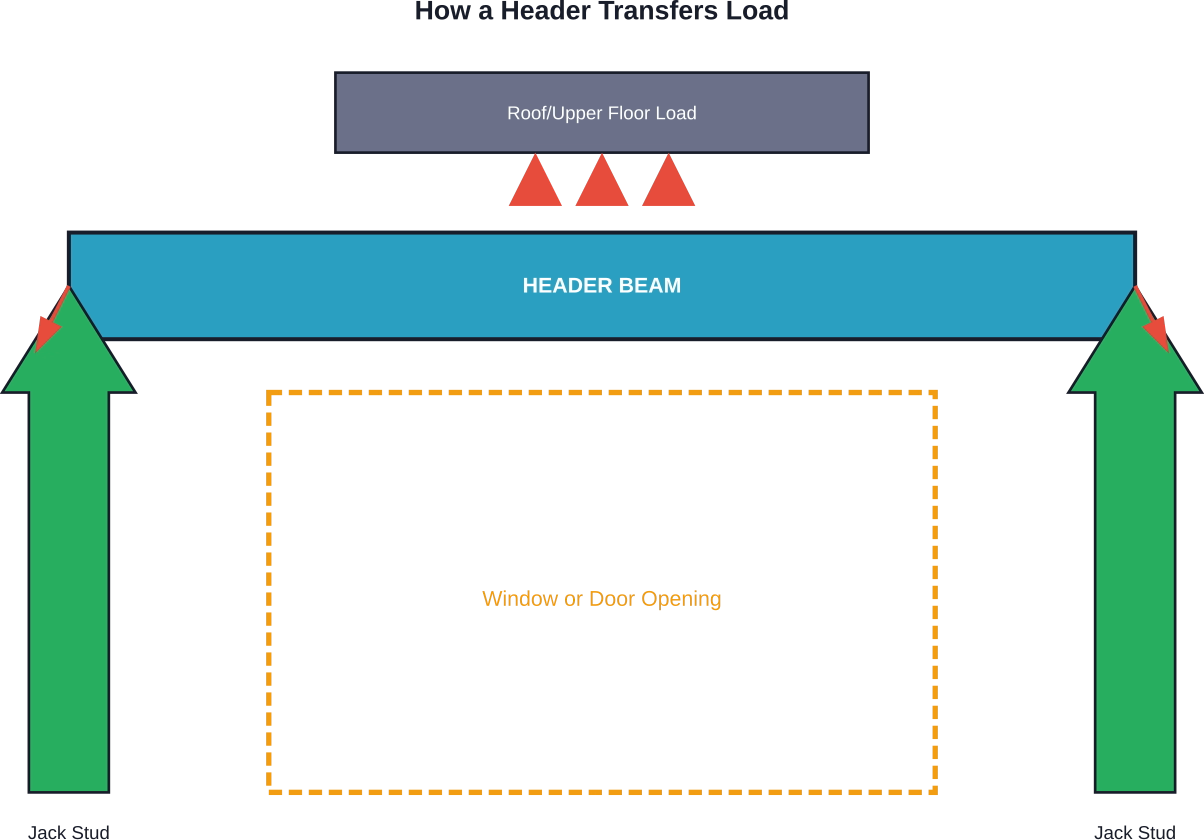
Windows and doors cannot support weight other than their own. When builders create an opening in a load-bearing wall, they’re essentially removing vertical support that was meant to carry loads from the roof, upper floors, or other structural elements above.
The header solves this problem by acting as a horizontal beam. It collects the weight that would have been supported by the removed studs and redistributes it to the vertical framing members—called jack studs or trimmer studs—on either side of the opening.
Common Header Types and Materials
Not all headers are created equal. The type depends on the span width, load requirements, and building codes.
| Header Type | Description | Best Use Case |
|---|---|---|
| Solid Sawn Lumber | Two or more dimensional lumber boards nailed together | Small openings, residential framing |
| LVL (Laminated Veneer Lumber) | Thin wood veneers bonded with adhesive | Wider spans, higher loads |
| PSL (Parallel Strand Lumber) | Wood strands arranged parallel and bonded | Heavy load applications |
| Glulam | Layers of dimensional lumber glued together | Large openings, commercial projects |
The depth of the header is determined by considering the span of the opening and the load it must support. Wider openings require deeper or stronger headers to prevent deflection.
Advanced Framing Considerations
According to Building Science Corporation, modern advanced framing techniques are changing how headers are used. The traditional approach called for double headers in every opening, but research shows this wastes lumber.
In non-load-bearing walls, headers may not be needed at all. In load-bearing walls with smaller openings, single headers can often handle the load. Advanced framing systems use 5% to 10% less lumber (board-feet) and 30% fewer pieces overall, making construction faster and more cost-effective.
That said, always follow local building codes and engineering specifications. What works in one climate zone or building type may not meet requirements elsewhere.
Installation and Support Structure
Headers don’t float in space. They rest on jack studs (also called trimmer studs), which are vertical framing members installed alongside the full-height king studs. These jack studs transfer the concentrated load from the header down to the bottom plate and foundation.
The header spans horizontally between the jack studs, and cripple studs—short vertical pieces—fill the space between the header and the top plate above. This creates a complete load path from roof to foundation.
Why Headers Matter for Structural Integrity
Here’s the thing: skip the header or undersize it, and structural problems follow. Sagging walls, cracked drywall, stuck doors and windows, and in extreme cases, partial wall failure.
Headers are code-required for a reason. The International Code Council provides specifications for header sizing and installation in their building codes, which jurisdictions across the country adopt and enforce.
For builders and homeowners, understanding headers means understanding how loads flow through a structure. It’s not the flashiest part of construction, but it’s among the most critical.
Get Header Openings Built As Planned

Headers look simple until the opening doesn’t match. Windows shift, doors don’t fit, loads aren’t where they were expected, and crews start adjusting framing on site. That’s where delays and rework begin. Powerkh checks how header openings are actually being formed against the design before those issues spread. You get a clear view of where dimensions, positions, and loads don’t line up – not in drawings, but in what’s being built.
Check Your Openings Before They Lock In
What Powerkh shows you early:
- Where header positions don’t match the intended layout
- Which openings will not fit installed elements
- Where load paths are not aligned with the built condition
- Where framing around openings is already shifting
- What needs correction before it affects installation
Contact Powerkh right now and make sure your openings are built right before they create rework on site.
Preguntas frecuentes
Do all wall openings need headers?
Only openings in load-bearing walls require structural headers. Non-load-bearing walls may use simplified framing or no header at all, depending on local building code requirements.
Can I remove a header during renovation?
No. Headers support loads from above, and removing one without proper structural replacement can lead to serious damage or collapse. Always consult a structural engineer before making changes.
How do I know what size header I need?
Header size depends on the opening span, loads above, material strength, and local code requirements. Residential projects often use span tables from building codes, while larger or more complex openings require engineering design.
What’s the difference between a header and a lintel?
The terms are similar. “Header” is commonly used in wood framing, while “lintel” typically refers to the structural element above openings in masonry construction. Both serve the same purpose of supporting loads above openings.
Can headers be made from steel instead of wood?
Yes. Steel headers are often used for longer spans or heavier loads. They provide higher strength with less depth compared to wood and are common in commercial construction and some residential designs.
Do headers need insulation?
In exterior walls, yes. Solid wood headers can create thermal bridges. Using insulated headers or adding rigid insulation improves energy efficiency and reduces heat loss.
How long does it take to install a header?
Once materials are prepared, experienced framers can install a header in minutes as part of the wall framing process. More complex installations may take longer depending on size and structural requirements.

Nuestros casos prácticos
Hemos gestionado más de 200 proyectos BIM y VDC para los sectores comercial, industrial y residencial.
Nuestro trabajo incluye:
Automatización del diseño de encofrados
Our client from
California, USA
Automatización del diseño de falsos techos
Our client from
New York, USA
Automatización del diseño del entramado de muros
Our client from
California, USA