¿Tiene alguna pregunta? Póngase en contacto con nosotros
¡Únete a nuestro equipo!
Solicitar presupuesto o consulta gratuita

RIBA Stage 4 is where the pressure kicks in. The design’s approved, deadlines are getting tighter, and suddenly the focus shifts from creativity to precision. This is the point where everything needs to work – structurally, spatially, and technically. And that’s exactly where BIM support becomes essential.
In this article, we’ll break down what RIBA Stage 4 BIM support actually means in practice. You’ll see how it fits into the wider design process, what kinds of modeling and coordination tasks happen at this stage, and why it’s such a critical link between planning approval and real-world construction.
Whether you’re reviewing models, preparing for tender, or just trying to avoid problems later on site, Stage 4 is where the details really start to matter, and where the right kind of BIM input can keep things on track.
What Happens During RIBA Stage 4?
RIBA Stage 4 is officially known as the “Technical Design” phase. At this point, the aim is simple: develop a fully coordinated, compliant, and buildable design. That means every element of the building – structure, MEP, architecture, materials – has to be drawn out, detailed, and cross-checked to make sure it can actually be constructed.
But here’s where it gets tricky. Designs are rarely static. Layouts shift. Structural zones tighten. Ceiling voids fill up fast. The idea of Stage 4 as a tidy “handover” point is misleading. In reality, it’s an active, ongoing collaboration between architects, engineers, consultants, and BIM specialists.
So when we talk about BIM support at this stage, we’re talking about the people and tools that make sure the drawings, models, and specifications reflect what can really happen on site – and that they all line up.
Where BIM Support Fits In
BIM support during Stage 4 isn’t a separate task tacked onto the side. It’s woven into the process. The BIM team becomes the link between concept and constructability, translating design intent into technical output that can be used by contractors, building control, and fabricators.
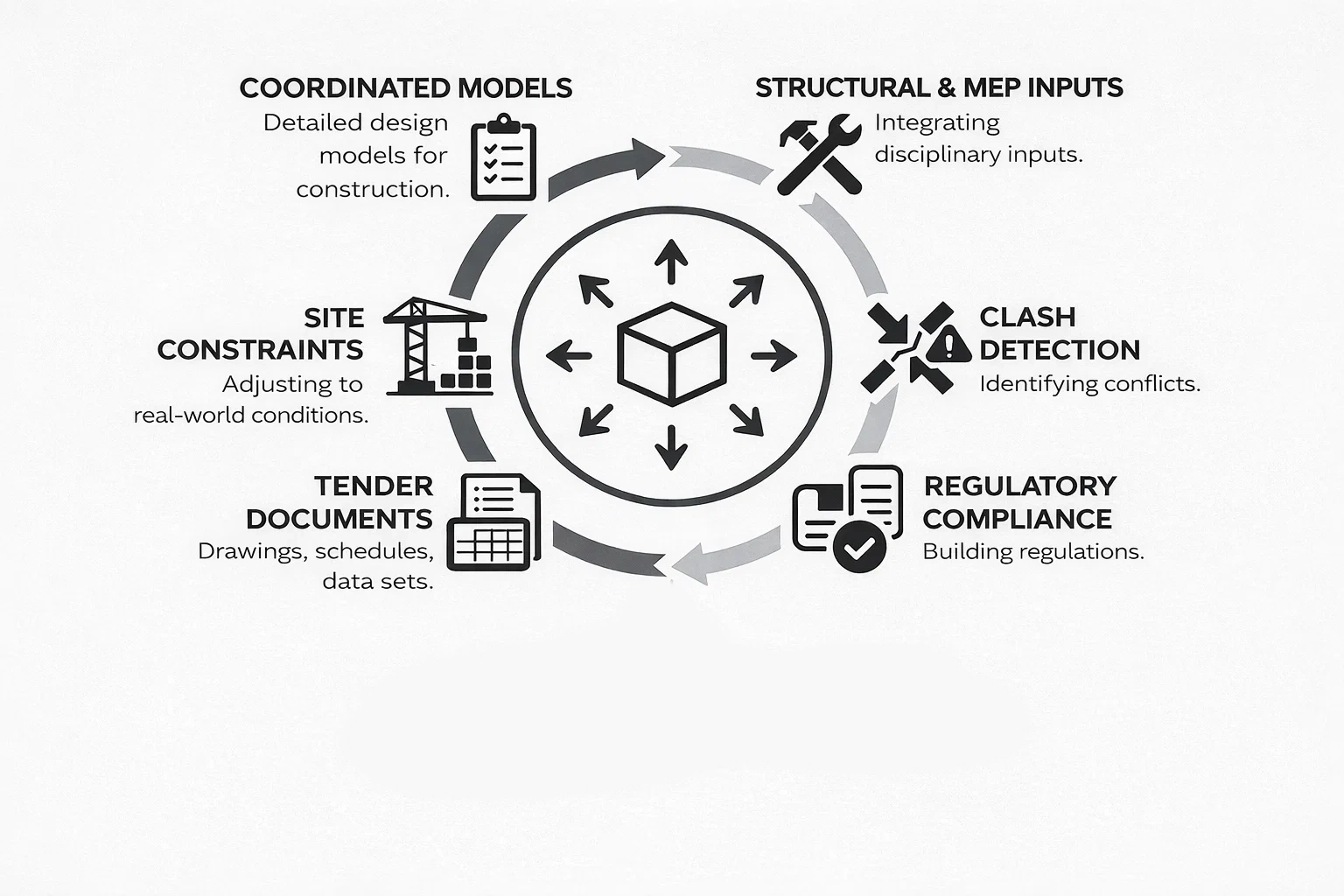
This support usually includes:
- Developing or refining coordinated models to support detailed technical design and construction readiness.
- Incorporating structural and MEP inputs into a unified model.
- Clash detection and resolution between trades.
- Adjusting models in response to real site constraints.
- Supporting compliance with building regulations and planning conditions.
- Preparing tender-ready drawings, schedules, and data sets.
In short, BIM support at Stage 4 helps ensure that what goes out to tender and onto site isn’t just visually impressive but technically sound.
Our Role at Powerkh During Stage 4

En Powerkh, we focus heavily on design continuity during RIBA Stage 4. That means we don’t just deliver technical drawings or tidy models – we stay close to the original design intent and help carry design intent through coordination and into construction without losing clarity along the way.
Our support at this stage includes engineering-led modeling, spatial coordination in critical zones, and constructability reviews tailored to actual site conditions. We work closely with design teams to resolve risks early, protect key design decisions, and ensure that what gets drawn can actually be built. From risers and plant rooms to ceiling voids and critical structural zones, we pay attention to the areas that typically cause issues later if overlooked.
Because we operate across the UK, US, and Europe, our teams bring both regional familiarity and cross-market experience. Whether we’re reviewing tolerances or helping teams gear up for prefab, we focus on making decisions easier and construction smoother. If your project needs reliable Stage 4 BIM support grounded in engineering insight, we’re ready to step in.
Why Coordination Matters More Than Ever
Coordination is one of those words that gets thrown around a lot in BIM discussions. But at Stage 4, it stops being a buzzword and becomes a practical necessity.
When you’re dealing with real structural systems, real duct routes, and real build sequences, it doesn’t take much to derail the design. A slightly misplaced riser or misjudged slab depth can cause a cascade of issues.
This is where good BIM support adds real value:
Conflicts Get Caught Before They Cost You
When coordination is working well, layout clashes are spotted while the team is still at their desks, not when the steel is already up. It’s much easier (and cheaper) to move a duct in the model than to re-route it on site after installation has started.
Tight Spaces Are Pressure-Tested Early
Ceiling voids and floor zones are often where things go wrong. With proper BIM support, those areas are reviewed early using real service routes and tolerances. If there’s not enough space, you’ll know in time to adjust, not scramble.
Fabricators Get the Detail They Actually Need
A coordinated model isn’t just for show. When it’s done right, fabrication teams can pull the data they need directly from the model. That means fewer RFIs, fewer mistakes, and a smoother handoff between design and construction.
Rather than being reactive, a well-coordinated Stage 4 model lets teams anticipate and fix issues while they’re still on screen.
It’s Not Just About 3D
People often associate BIM with 3D visuals, but Stage 4 BIM support goes far beyond just building pretty models. What matters here is the integration of information.
The model needs to carry the right data for:
- Quantification and cost planning.
- Building control approvals.
- Tendering and procurement.
- Prefabrication or off-site manufacturing.
- Tendering, procurement, and early construction planning.
That means it’s not just about the geometry, but about embedded specifications, material data, system requirements, and sequencing logic.
The BIM team at this point isn’t just modelling – they’re making sure the design can survive real-world constraints.
Supporting Building Regulations and Compliance
One of the key functions of Stage 4 BIM support is helping ensure that the model aligns with all relevant building regulations.
This includes:
- Structural compliance (Part A).
- Fire safety planning (Part B).
- Accessibility (Part M).
- Energy performance targets (Part L).
At Stage 4, compliance is demonstrated primarily through coordinated drawings, specifications, and supporting technical documentation, which may be derived from BIM models where used.
Deliverables You Can Expect
Not every Stage 4 BIM package will look the same. But there are some common deliverables that a well-managed team will provide:
- Coordinated Revit models (LOD 300-400+).
- Drawings and schedules for tender.
- Clash reports with resolutions.
- Technical documentation aligned with specification.
These aren’t just checkboxes – they’re tools that help move the project cleanly into construction.
BIM Support for Prefab and DfMA
For projects moving toward prefabrication or modular construction, BIM support at Stage 4 becomes even more critical.
Shop drawings, fabrication models, and coordination of tolerances all need to happen early to align with manufacturing constraints. If the BIM work at this stage isn’t accurate, off-site production can stall or lead to expensive redesigns.
BIM support here includes:
- Model reviews aligned with fabrication sequencing.
- Generation of shop drawings with correct tolerances.
- Early clash resolution between trades and preassembled elements.
What Good Support Looks Like
You don’t need flashy dashboards or overengineered processes. What matters more is clarity, responsiveness, and the ability to zoom in on what actually needs attention.
A reliable Stage 4 BIM support team:
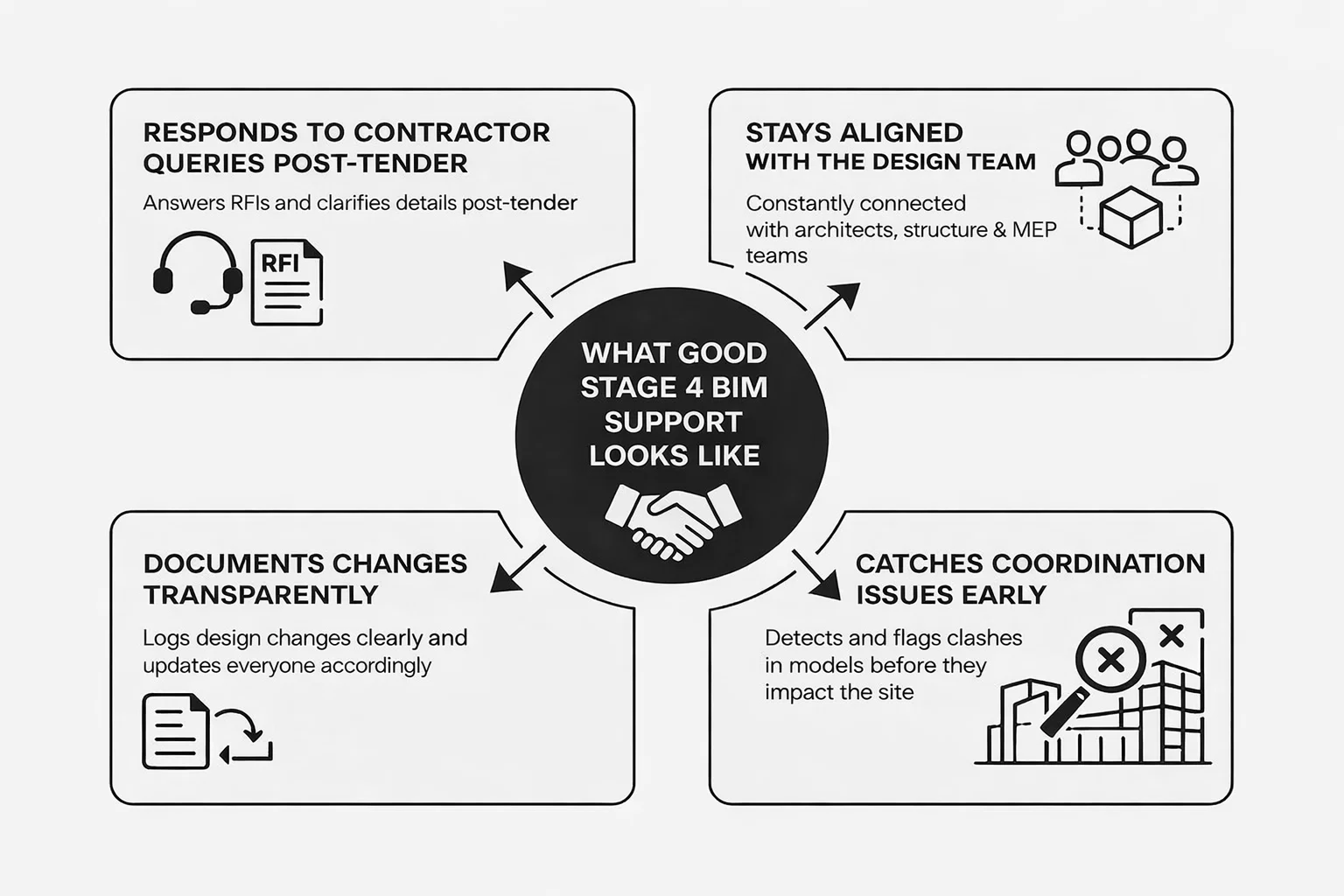
Stays Aligned With the Design Team
A good BIM support team doesn’t disappear into a separate workflow or go off in a different direction. They stay connected to the architects, structural engineers, and MEP designers as the technical design evolves. That means they’re not just reacting to changes – they’re aware of them as they happen, and making sure those updates get reflected in the model without delay. It keeps coordination cleaner and avoids confusion when it’s time to issue drawings.
Catches Coordination Issues Early
Stage 4 is where coordination really gets tested. If the model isn’t tight, the site team will find out the hard way – usually with a phone call and a delay. A reliable BIM support team gets ahead of that. They run clash detection in high-risk zones, look at tolerances practically, and ask the right questions before the design is fixed. It’s not about flooding the team with clash reports – it’s about highlighting what matters and helping resolve it early.
Documents Changes Transparently
Things shift fast at this stage. A reliable team makes sure every design change, model adjustment, or coordination update is tracked and explained. That might mean versioning models clearly, issuing change logs, or just being consistent about how drawings and exports are labeled. It sounds basic, but it’s what helps contractors, consultants, and clients stay on the same page, especially when everyone’s juggling multiple deadlines.
Responds to Contractor Queries Post-Tender
Support doesn’t stop once the model goes out the door. A dependable BIM team remains available to respond to RFIs, clarify unclear details, or support technical responses as the construction team ramps up. Whether it’s answering a query about a riser offset or checking a clearance in a ceiling void, quick and clear responses during early site setup can prevent a lot of unnecessary downtime.
It’s not about overproducing, it’s about producing the right things at the right level of detail.
Reflexiones finales
RIBA Stage 4 isn’t the end of the design process, but it is the point where design has to prove itself. Every technical decision made here has knock-on effects for construction, cost, sequencing, and safety.
BIM support at this stage is what helps keep those decisions grounded in reality. It helps avoid clashes before they hit site, supports clear communication with contractors, and ensures that design intent becomes something that can actually be built.
Whether you’re planning to outsource, coordinate internally, or simply stay informed as a project lead, knowing what proper BIM support looks like at Stage 4 can save serious time and money down the line.
PREGUNTAS FRECUENTES
1. What exactly does “BIM support” mean at RIBA Stage 4?
It’s not just about building a model. At this stage, BIM support means making sure the design is coordinated, compliant, and ready to be built. It’s about helping the team spot issues before they become construction problems, refining the model with real inputs from structure and MEP, and preparing clear technical documentation that’s actually usable on site.
2. Is Stage 4 the point where the BIM model has to be perfect?
Not perfect, but solid. Stage 4 isn’t the final polish, but it’s definitely where the model needs to be accurate enough for tender and early construction prep. Think of it as the moment where decisions get locked in. A bit of wiggle room might remain, but major changes get expensive from here on out.
3. How does BIM support help with building regulations?
A well-managed BIM process pulls compliance into the design itself. Whether it’s Part A for structure, Part B for fire safety, or energy and accessibility requirements, BIM helps embed those checks early. That way, you’re not scrambling to adjust layouts or fix spec conflicts just to pass review.
4. What if we’re planning to go modular or prefabricated?
Then BIM support at Stage 4 becomes even more important. Off-site manufacturing relies on precision. Any clash or misalignment discovered late means wasted material or downtime. The BIM team should be syncing model outputs with fabrication needs and resolving tolerances ahead of time.
5. How do I know if the coordination is “good enough”?
It’s usually not about volume – it’s about relevance. If the high-risk zones are clean (plant rooms, risers, tight voids), if trades are talking to each other through the model, and if the team isn’t catching surprises at the last minute, you’re in a good spot. A smart BIM team focuses effort where it counts.

Nuestros casos prácticos
Hemos gestionado más de 200 proyectos BIM y VDC para los sectores comercial, industrial y residencial.
Nuestro trabajo incluye:
Automatización del diseño de encofrados
Our client from
California, USA
Automatización del diseño de falsos techos
Our client from
New York, USA
Automatización del diseño del entramado de muros
Our client from
California, USA