Haben Sie noch Fragen? Kontaktieren Sie uns!
Kommen Sie in unser Team!
Kostenloses Angebot oder Beratung anfordern

Project controls in construction is a systematic framework of processes, tools, and techniques used to monitor, measure, and manage project performance against budget, schedule, and scope objectives. It integrates cost management, schedule tracking, risk analysis, and performance reporting to ensure construction projects are delivered successfully within planned constraints.
Construction projects today are massive, complex, and interconnected. Billions of dollars get poured into infrastructure, commercial developments, and residential complexes—and there’s almost no room for mistakes. When timelines slip or budgets balloon, the consequences ripple through organizations, affecting profitability, reputation, and future opportunities.
That’s where project controls come in. It’s the discipline that keeps construction projects anchored to reality, measuring actual performance against planned objectives and flagging problems before they spiral out of control.
But what exactly does project controls mean in construction? How does it differ from standard project management? And why has it become so critical as projects grow more ambitious?
Understanding Project Controls in Construction
Project controls is a specialized discipline within construction management focused on the planning, monitoring, and control of project costs, schedules, and scope. Think of it as the nerve center that tracks what’s happening on site and compares it against what should be happening.
Unlike general project management—which encompasses leadership, stakeholder coordination, and strategic decision-making—project controls zeroes in on the quantitative aspects. It answers questions like: Are costs tracking to budget? Is the schedule slipping? Where are the biggest risks? What corrective actions should teams take?
The discipline emerged from earned value management theories and has evolved significantly with digital tools and real-time data analytics. According to data from the U.S. Bureau of Labor Statistics, construction management roles show 9% growth projected between 2024 and 2034—three times the 3% average growth rate across most occupations. This surge reflects the increasing complexity of construction projects and the demand for professionals who can navigate financial and scheduling challenges.
Why Project Controls Matter in Construction
Construction projects face unique pressures. Weather delays, supply chain disruptions, labor shortages, design changes—any of these can derail carefully laid plans. Without robust controls, small issues compound into major budget overruns or schedule delays.
Here’s the thing though—project controls provide the early warning system. Research indicates that 47% of organizations lack access to real-time key performance indicators, forcing teams to react only after problems have grown. Project controls closes that gap by turning performance data into actionable insights.
The benefits are tangible. Projects with effective controls tend to finish closer to their original budget and timeline. Teams can identify variances early, understand their root causes, and implement corrective measures before costs escalate. This proactive approach reduces operational costs and improves contractor profitability—critical in an industry where margins are often thin.
The Core Components of Project Controls
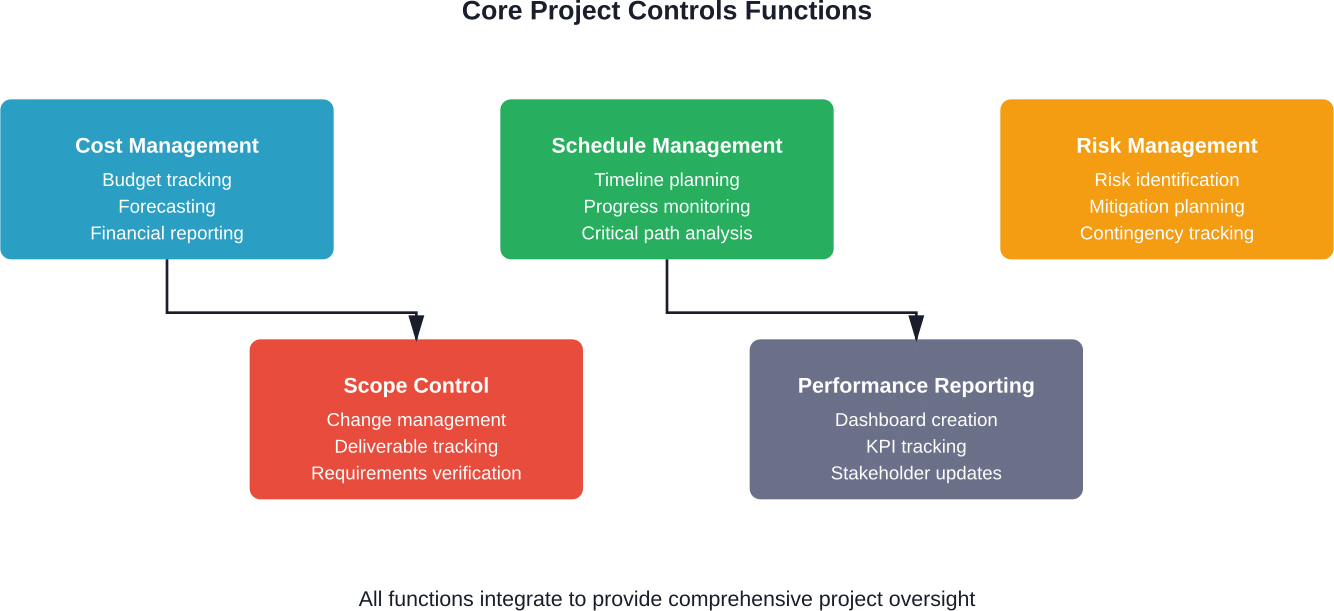
Project controls isn’t a single task—it’s a collection of interconnected disciplines. Each component addresses a specific aspect of project performance.
Cost Management and Budget Control
Cost management tracks all financial aspects of a construction project. This includes estimating initial budgets, monitoring actual expenditures, forecasting future costs, and identifying variances between planned and actual spending.
Teams establish cost baselines during planning, then continuously measure actual costs against those baselines. When variances occur, cost controllers investigate the causes—whether material price increases, labor inefficiencies, or scope changes—and recommend corrective actions.
Schedule Management and Timeline Tracking
Schedule management ensures work progresses according to plan. Construction schedulers develop detailed timelines that map out every activity, identify dependencies between tasks, and determine the critical path—the sequence of activities that directly impacts project completion.
As noted by Texas A&M University’s construction management program, strategic planning and construction scheduling applies project management principles and data to navigate factors like weather delays and supply chain issues. Regular schedule updates capture actual progress, highlight delays, and allow teams to adjust plans proactively.
Risk Management and Mitigation
Construction projects face countless risks: geological surprises, regulatory changes, contractor defaults, design errors. Risk management involves identifying potential threats, assessing their likelihood and impact, and developing mitigation strategies.
Effective risk management doesn’t eliminate uncertainty—it prepares teams to handle it. Contingency budgets and schedule buffers provide cushions for unexpected events. Regular risk reviews ensure teams stay aware of emerging threats.
Scope Control and Change Management
Scope defines what the project will deliver. Scope control prevents “scope creep”—the gradual expansion of project requirements that drives up costs and extends timelines.
When stakeholders request changes, formal change management processes evaluate the impact on cost, schedule, and resources. Approved changes get incorporated into updated baselines, ensuring everyone works from the same expectations.
Performance Reporting and Analytics
Data means nothing without communication. Performance reporting translates raw project data into meaningful insights for stakeholders. Dashboards display key metrics like cost performance index, schedule variance, and earned value.
Regular reports keep executives, owners, and project teams aligned on current status and future trajectory. Visual dashboards make complex data accessible, enabling quick, informed decisions.
Tools and Software Used in Project Controls
Modern project controls rely heavily on specialized software platforms. These tools automate data collection, perform complex calculations, and generate real-time reports.
| Software Platform | Primary Function | Zentrale Stärken |
|---|---|---|
| Primavera P6 | Schedule management | Handles complex, multi-project scheduling with resource allocation |
| Microsoft Project | Planning and tracking | User-friendly interface, integrates with Microsoft ecosystem |
| EcoSys | Enterprise controls | Comprehensive cost management and portfolio analysis |
| Deltek Acumen | Schedule and risk analysis | Advanced analytics for schedule quality and risk quantification |
| Power BI / Tableau | Visual dashboards | Flexible data visualization and custom reporting |
| SAP / Oracle | Financial integration | Enterprise-level financial systems with project modules |
The right software depends on project size, complexity, and organizational needs. Large infrastructure projects might require enterprise solutions like EcoSys or SAP, while smaller projects might succeed with Microsoft Project and Excel-based reporting.
Key Roles in Project Controls
Project controls functions across several specialized roles. Each brings specific expertise to the discipline:
- Project Controls Manager: Oversees the entire controls function, establishes processes and standards, and reports to senior leadership on project health.
- Cost Engineer/Cost Controller: Focuses on financial tracking, budget forecasting, and cost variance analysis. Works closely with accounting teams and procurement.
- Project Scheduler/Planning Engineer: Develops and maintains project schedules, analyzes critical paths, and coordinates with field teams on progress updates.
- Risk Manager: Identifies project risks, leads risk workshops, maintains risk registers, and monitors mitigation actions.
- Document Control Specialist: Manages project documentation, ensures version control, and maintains records for compliance and auditing.
Career progression in project controls varies, with many professionals starting in one specialty—like scheduling or cost control—then expanding into broader project controls management roles as they gain experience.
The Project Controls Lifecycle
Project controls aren’t static—they evolve through project phases. Each phase demands different emphasis and activities.
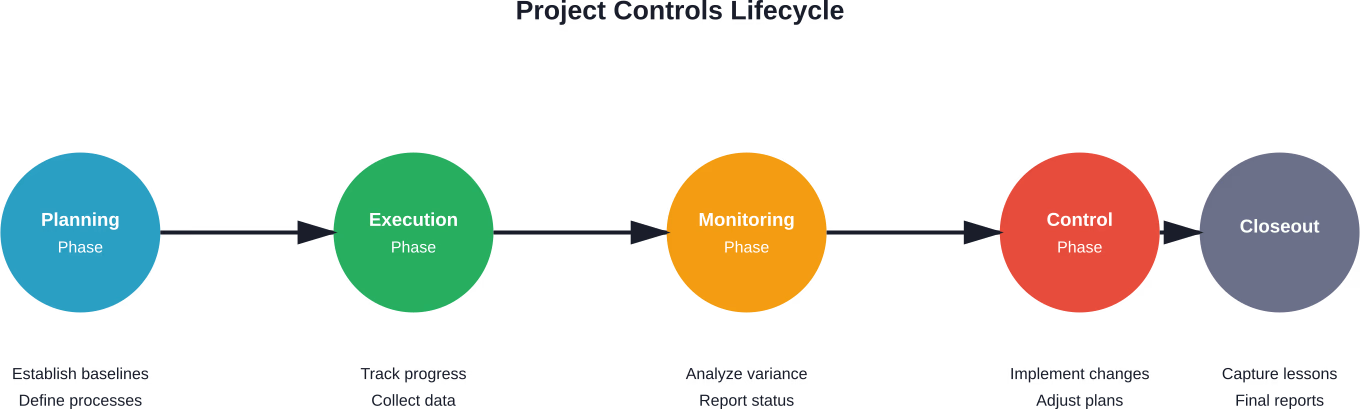
- Planning Phase: Teams establish cost and schedule baselines, define control processes, set reporting cadences, and identify initial risks. This foundation determines how effectively controls function throughout the project.
- Execution Phase: Work begins on site. Controls teams collect actual performance data—costs incurred, activities completed, resources consumed. Regular data collection feeds analysis and reporting.
- Monitoring Phase: Continuous comparison of actual performance against baselines. Variance analysis identifies deviations and investigates causes. Performance reports communicate status to stakeholders.
- Control Phase: When variances exceed acceptable thresholds, corrective actions get implemented. This might involve reallocating resources, revising schedules, or adjusting scope. Updated forecasts reflect the new trajectory.
- Closeout Phase: Final performance reports document actual versus planned outcomes. Lessons learned sessions capture what worked and what didn’t, informing future projects.
Common Challenges in Project Controls
Despite its value, project controls face persistent challenges. Understanding these obstacles helps organizations strengthen their approach:
- Data Quality and Timeliness: Controls depend on accurate, current data. When field teams delay updates or submit incomplete information, analysis suffers. Real-time data access remains a challenge—47% of organizations lack timely key performance indicators.
- Software-Integration: Construction projects use multiple systems—accounting software, scheduling tools, document management platforms. Poor integration creates data silos and manual reconciliation work.
- Resource Constraints: Smaller contractors might lack dedicated controls staff, forcing project managers to handle controls alongside other duties. This divided attention can compromise effectiveness.
- Change Resistance: Some team members view controls as bureaucratic overhead rather than value-adding activity. Building buy-in requires demonstrating tangible benefits and minimizing administrative burden.
- Complexity Management: As projects grow more complex—involving multiple contractors, intricate sequencing, and global supply chains—controls systems must scale accordingly. Legacy processes often can’t handle this complexity.
Best Practices for Effective Project Controls
Organizations that excel at project controls share common practices. These approaches enhance effectiveness and stakeholder confidence:
- Establish Clear Baselines Early: Detailed, realistic baselines provide the foundation for meaningful variance analysis. Rushing through baseline development undermines all subsequent controls activities.
- Automate Data Collection: Manual data entry introduces errors and delays. Integrated systems that pull data directly from source systems improve accuracy and timeliness.
- Focus on Leading Indicators: Lagging indicators report what already happened. Leading indicators—like procurement delays or permit issues—signal future problems while there’s still time to respond.
- Maintain Regular Reporting Cadence: Consistent reporting builds stakeholder trust and keeps issues visible. Weekly or biweekly reports work for most projects, with monthly executive summaries.
- Invest in Training: Project controls expertise doesn’t develop overnight. Organizations should invest in training for controls staff and educate project teams on why controls matter.
- Standardize Processes: Consistent methodologies across projects enable comparison and facilitate knowledge transfer. Templates, checklists, and documented procedures support standardization.
- Close the Loop: Controls generate insights—but insights without action waste effort. Establish clear processes for translating analysis into decisions and tracking implementation of corrective actions.
Add Real Control To What Is Actually Being Built

Project controls usually track cost, schedule, and progress, but they don’t always show whether the project is being built the way it was intended. Powerkh works on that missing layer.
They connect design, coordination, and site reality, giving teams a clearer view of how the project is actually developing. Their work is less about reporting and more about checking what is happening in practice:
- Comparing design intent with installed conditions using real data
- Highlighting deviations that affect performance or coordination
- Reviewing critical areas where small issues can scale quickly
- Supporting decisions with evidence, not assumptions
👉 Contact Powerkh to add a level of control that shows what is really happening on your project, not just what is being reported.
The Future of Project Controls in Construction
Technology continues reshaping project controls. Several trends are accelerating this transformation:
- Artificial Intelligence and Machine Learning: AI analyzes historical project data to predict future performance, identify risk patterns, and recommend optimal resource allocation. Machine learning algorithms detect anomalies that might escape manual review.
- Real-Time Data Platforms: Cloud-based platforms with mobile access enable instant data capture and reporting. Field teams update progress from tablets, eliminating lag between work completion and data availability.
- Building Information Modeling Integration: BIM models contain rich data about quantities, sequencing, and relationships. Linking BIM to controls systems enhances accuracy and enables 4D visualization of schedule progress.
- Predictive Analytics: Rather than just reporting current status, advanced analytics forecast likely outcomes based on current trends. Predictive models answer questions like “Will we finish on time given current productivity?”
- Digital Twins: Virtual replicas of construction projects mirror real-world conditions and performance. Digital twins support scenario planning and optimization throughout the project lifecycle.
That said, technology enhances project controls—it doesn’t replace professional judgment. The most effective implementations combine powerful tools with experienced practitioners who understand construction realities.
Taking Control of Construction Project Success
Project controls have evolved from a specialized back-office function into a strategic necessity for construction success. As projects grow more complex and stakeholder expectations intensify, the discipline provides the structure and visibility needed to navigate uncertainty.
The core principle remains straightforward: measure what matters, compare reality to plans, and act on the insights. Whether using sophisticated enterprise platforms or simpler tools, the goal stays constant—delivering projects that meet cost, schedule, and quality objectives.
Organizations that invest in project controls capabilities—through skilled people, effective processes, and appropriate technology—position themselves for competitive advantage. They complete projects more predictably, preserve margins more effectively, and build reputations as reliable partners.
Construction will always involve challenges and surprises. Project controls won’t eliminate them, but it equips teams to handle them confidently and competently. In an industry where margins are thin and expectations are high, that capability makes all the difference.
Ready to strengthen project controls on upcoming construction projects? Start by assessing current capabilities, identifying gaps, and developing a roadmap for enhancement. The investment in stronger controls pays dividends through improved project outcomes and reduced firefighting.
Häufig gestellte Fragen
What’s the difference between project controls and project management?
Project management covers overall leadership, planning, and coordination, while project controls focuses on tracking performance through cost, schedule, and risk analysis to support decision-making.
Do small construction projects need project controls?
Yes. Even small projects benefit from basic controls like budget tracking, schedule monitoring, and documenting changes, though simpler tools are usually sufficient.
What skills do project controls professionals need?
They need a mix of technical and business skills, including scheduling, cost analysis, data interpretation, communication, and understanding of construction processes.
How much does project controls software cost?
Costs vary widely depending on features and scale. Enterprise systems require significant investment, while mid-range tools offer more accessible pricing for smaller teams.
Can project controls prevent all project problems?
No. Project controls cannot eliminate all risks, but they help identify issues early and support better decision-making to reduce impact.
What certifications exist for project controls professionals?
Certifications include programs from AACE International such as Certified Cost Professional and Planning and Scheduling Professional, as well as PMI credentials like Risk Management Professional.
How do project controls integrate with lean construction principles?
Project controls support lean construction by providing data on resource use, identifying inefficiencies, and helping teams measure improvements and optimize processes.

Unsere Fallstudien
Wir haben mehr als 200 BIM- und VDC-Projekte für Gewerbe, Industrie und Wohnungsbau durchgeführt.
Unsere Arbeit umfasst:
Automatisierung der Schalungsplanung
Our client from
California, USA
Automatisierung von abgehängten Decken
Our client from
New York, USA
Automatisierung von Wandkonstruktionen
Our client from
California, USA