Haben Sie noch Fragen? Kontaktieren Sie uns!
Kommen Sie in unser Team!
Kostenloses Angebot oder Beratung anfordern

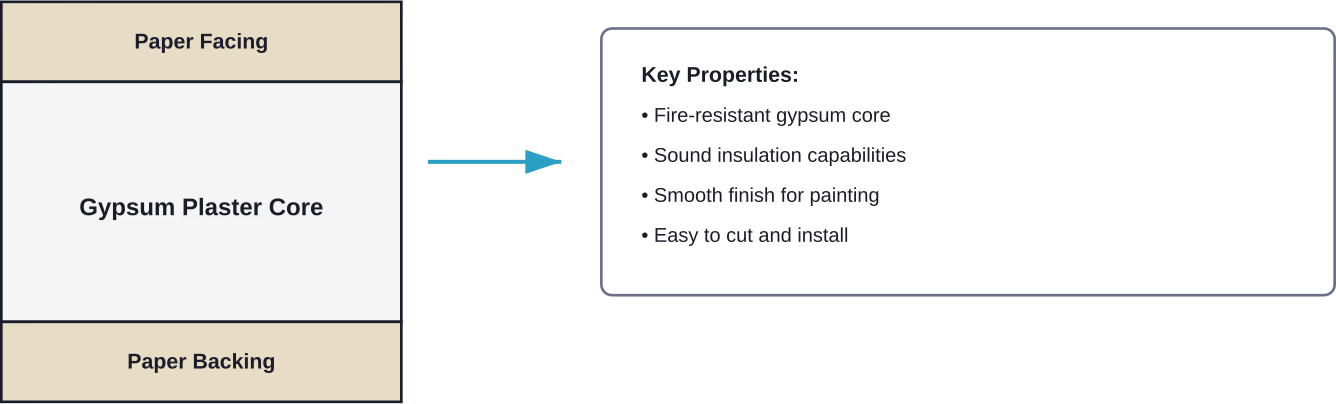
GWB stands for Gypsum Wallboard, also commonly known as drywall or gypsum board. It’s a flat panel material made from a gypsum plaster core pressed between two layers of paper, used extensively in construction to create interior walls and ceilings. GWB is favored for its fire resistance, sound insulation properties, and ease of installation.
Walk onto any construction site, and chances are someone’s mentioning GWB. But what exactly does this acronym mean? And why does it matter?
GWB stands for Gypsum Wallboard—the flat panel material that’s become the backbone of modern interior construction. It’s the stuff that creates smooth walls and ceilings in virtually every residential and commercial building project.
Here’s the thing though—many people use different names interchangeably. Drywall, gypsum board, sheetrock. They’re all referring to the same basic material, though Sheetrock is technically a brand name that’s become genericized.
What Exactly is Gypsum Wallboard?
Gypsum wallboard consists of a gypsum plaster core sandwiched between two layers of heavy paper or fiberglass matting. The gypsum itself is a naturally occurring mineral (calcium sulfate dihydrate) that’s mined, then processed into a fine powder.
During manufacturing, this powder gets mixed with water and additives, spread between the paper layers, then cut into standard panels. The panels dry and harden into the rigid boards contractors install on building frames.
Get Help With BIM Models and Drawings

Powerkh focuses on producing BIM models and project documentation that can be used directly in construction workflows. The company supports projects with modeling, Scan to BIM, coordination, and detailing.
Need Support With BIM Deliverables?
Talk with Powerkh to:
- produce BIM models and technical drawings
- convert scans into structured project data
- support coordination and documentation
👉 Contact Powerkh for a project review and consultation.
Common Applications in Construction
GWB dominates interior construction for good reasons. Contractors use it to build partition walls, cover ceiling joists, and create smooth surfaces ready for finishing.
The material works particularly well for curved surfaces when special flexible gypsum board gets specified. Architects design curved walls and architectural details knowing gypsum board can accommodate these forms.
Beyond standard walls and ceilings, GWB appears in:
- Fire-rated assemblies (special Type X gypsum board)
- Moisture-resistant installations (green board or purple board)
- Abuse-resistant areas (high-impact gypsum panels)
- Soundproofing applications (multiple layers with dampening)
Why Builders Choose GWB
Cost-effectiveness ranks high. Gypsum wallboard installation costs significantly less than traditional plaster while delivering comparable results.
Fire resistance matters too. Gypsum contains water molecules within its crystalline structure. When exposed to fire, this water releases as steam, slowing heat transfer and providing crucial fire protection. That’s why building codes often mandate specific gypsum board thicknesses and types.
| Advantage | Description | Impact |
|---|---|---|
| Fire Resistance | Non-combustible gypsum core with crystalline water | Meets building code requirements |
| Sound Insulation | Dense material dampens noise transmission | Improves acoustic comfort |
| Installation Speed | Large panels cover area quickly | Reduces labor costs |
| Smooth Finish | Factory-made flat surfaces | Minimal prep for paint |
Sound insulation represents another key benefit. The dense gypsum core dampens sound transmission between rooms, especially when installed with proper techniques.
Installation Basics
Contractors typically attach gypsum board panels to wood or metal studs using screws or nails. Standard panel sizes are 4 feet wide by 8, 10, or 12 feet long, though dimensions vary by region and application.
After installation, joints between panels get taped and covered with joint compound. This process, called finishing or taping, creates seamless wall surfaces. Multiple coats of joint compound get applied, sanded smooth, then primed for painting or other finishes.
But wait. Installation requires specific techniques for different applications. Moisture-prone areas need moisture-resistant board. Fire-rated walls demand Type X panels installed according to tested assemblies.
Common Misconceptions Cleared Up
Many people think all gypsum board is identical. Not true. Various types exist for specific purposes—standard, moisture-resistant, fire-rated, mold-resistant, and impact-resistant versions all serve different needs.
Another myth? That drywall and plaster are interchangeable terms. While both create wall surfaces, traditional plaster involves wet application of multiple coats directly onto lath. Drywall (GWB) comes as pre-manufactured panels requiring only joint finishing.
Some assume thicker always means better. Generally speaking, thickness depends on application. Standard walls use half-inch panels, while ceilings often get five-eighths inch for reduced sagging. Fire-rated assemblies specify exact thicknesses based on testing.
The Bottom Line
GWB—Gypsum Wallboard—represents the standard material for interior walls and ceilings across modern construction. Its combination of affordability, fire resistance, sound insulation, and installation efficiency explains why it’s specified for countless building projects.
Understanding this fundamental construction term helps anyone involved in building projects communicate effectively. Whether reviewing construction plans, discussing renovation options, or managing a building project, knowing what GWB means keeps everyone on the same page.
Ready to start your next construction project? Consult with qualified contractors about the right gypsum board specifications for your specific application and local building requirements.
Häufig gestellte Fragen
What does GWB stand for in construction drawings?
GWB stands for Gypsum Wallboard. It refers to gypsum panels used for interior walls and ceilings in construction drawings and specifications.
Is GWB the same as drywall?
Yes, GWB and drywall refer to the same material. “Drywall” is the common term, while “GWB” is the technical abbreviation used in construction documents.
What’s the difference between GWB and Sheetrock?
Sheetrock is a brand name for gypsum wallboard. All Sheetrock products are GWB, but GWB can come from many different manufacturers.
Can GWB be used in bathrooms?
Standard GWB is not suitable for wet areas. Bathrooms typically require moisture-resistant gypsum board or cement board, especially in areas exposed to water.
How thick should gypsum board be for walls?
Most interior walls use 1/2 inch gypsum board. Ceilings often use 5/8 inch panels to reduce sagging, and fire-rated assemblies may require thicker or multiple layers.
Why is gypsum board fire-resistant?
Gypsum contains water within its structure. When exposed to heat, the water turns into steam and slows the spread of fire by absorbing heat energy.
Can gypsum wallboard get wet?
Gypsum wallboard can handle small amounts of moisture, but prolonged exposure causes damage. Wet panels often lose strength and may develop mold, requiring replacement.

Unsere Fallstudien
Wir haben mehr als 200 BIM- und VDC-Projekte für Gewerbe, Industrie und Wohnungsbau durchgeführt.
Unsere Arbeit umfasst:
Automatisierung der Schalungsplanung
Our client from
California, USA
Automatisierung von abgehängten Decken
Our client from
New York, USA
Automatisierung von Wandkonstruktionen
Our client from
California, USA