Haben Sie noch Fragen? Kontaktieren Sie uns!
Kommen Sie in unser Team!
Kostenloses Angebot oder Beratung anfordern

Quick Summary: ASI (Architect’s Supplemental Instruction) in construction is a formal document issued by the architect to clarify, correct, or provide minor changes to the original construction plans without affecting the project cost or schedule. It serves as a communication tool to resolve small issues, answer questions, and ensure project teams work from accurate information throughout the construction phase.
Construction projects involve hundreds of decisions, multiple stakeholders, and countless details. Even with thorough planning, questions arise during the building process. Plans need clarification. Small errors get discovered. Information requires updating.
That’s where the Architect’s Supplemental Instruction comes in.
Also known as an ASI, this document helps architects communicate minor adjustments without triggering formal change orders. It keeps construction moving forward when small issues would otherwise create bottlenecks. But how exactly does an ASI work? When should teams use one? And how does it differ from other construction documents?
Here’s what architects, contractors, and construction teams need to understand about ASIs.
What Does ASI Stand For in Construction?
ASI stands for Architect’s Supplemental Instruction. This formal document allows the architect to issue clarifications, corrections, or minor changes to the construction documents after the contract has been signed.
The key word here is “supplemental.” An ASI supplements the original plans and specifications without replacing them. It fills gaps, answers questions, and resolves ambiguities that surface during construction.
Most importantly, ASIs handle minor issues that don’t impact the project cost or schedule. When a change affects budget or timeline, different documents come into play—typically change orders or construction change directives.
When Architects Use ASIs in Construction Projects
Architects issue supplemental instructions for specific situations during construction. Understanding when an ASI is appropriate helps teams use this tool effectively.
Common scenarios include:
- Clarifying ambiguous details in the original drawings or specifications
- Correcting minor errors discovered in the construction documents
- Interpreting inconsistencies between different sections of the plans
- Providing additional information that wasn’t included in the original documents
- Addressing field conditions that require minor adjustments to the design
- Responding to contractor questions about intent or methodology
The critical factor is impact. If the instruction affects project cost or schedule, it shouldn’t be an ASI. Instead, it needs to go through the formal change order process where all parties agree to the financial and timeline implications.
Reduce ASIs Before They Reach Site

ASIs are usually issued when the design doesn’t fully hold up during construction – unclear details, coordination gaps, or conditions on site that weren’t accounted for. Powerkh works alongside design and delivery teams to keep those gaps from forming in the first place. They stay close to the design as it moves through coordination and into construction, checking where intent is being misinterpreted or pushed off track. Instead of dealing with instructions after the fact, teams get early visibility into the areas that typically trigger ASIs. That means fewer last-minute clarifications, fewer disruptions on site, and fewer changes that need to be managed under pressure.
Avoid Late Design Clarifications During Construction
Here’s how Powerkh helps reduce the need for ASIs:
- Resolve coordination issues in constrained and high-risk areas before they reach site
- Check models against real conditions to avoid design assumptions breaking down
- Flag unclear details and missing information before construction starts
- Support design teams with constructability-focused reviews
- Verify what’s installed to prevent repeated instructions and corrections
Reach out to Powerkh to reduce ASIs and keep construction moving without interruptions.
Key Elements Every ASI Should Include
A properly structured ASI contains specific information to ensure clarity and documentation. These elements create a clear record and prevent future disputes.
Standard ASI components include:
- ASI number: Sequential numbering for tracking and reference
- Project identification: Name, address, and relevant contract numbers
- Issue date: When the architect created and distributed the document
- Description of instruction: Clear explanation of what needs clarification or correction
- Reason for issuance: Context explaining why this instruction is necessary
- Reference to affected documents: Specific drawing numbers, specification sections, or detail references
- Distribution list: All parties receiving the ASI
- Architect’s signature: Authorization from the issuing architect
The Contractor shall promptly proceed with the instructions. If the Contractor believes that the instructions involve a change in the Contract Sum or Contract Time, the Contractor shall notify the Architect before proceeding with the Work.
ASI vs Change Order vs Construction Change Directive
Construction projects use multiple document types to manage adjustments. Understanding the differences between these tools prevents confusion and ensures proper documentation.
Here’s how these three common construction documents compare:
| Document Type | Zweck | Cost Impact | Schedule Impact | Who Approves |
|---|---|---|---|---|
| ASI | Minor clarifications or corrections | None | None | Architect only |
| Change Order | Changes affecting scope, cost, or time | Yes | Often yes | Owner, architect, contractor |
| Construction Change Directive (CCD) | Owner-directed changes without agreement | To be determined | Potentially | Owner and architect |
The fundamental distinction comes down to impact. ASIs handle administrative adjustments that don’t alter the fundamental contract terms. Change orders modify the contract when all parties agree. Construction change directives allow owners to proceed with changes even when agreement hasn’t been reached yet.
Using the wrong document type creates problems. If an architect issues an ASI for something that actually impacts cost, the contractor might rightfully request a change order later. That causes disputes, delays, and strained relationships.
Benefits of Using ASIs Effectively
When used properly, supplemental instructions provide several advantages for construction projects. They streamline communication and prevent small issues from becoming major obstacles:
- Clear documentation: ASIs create a formal record of clarifications and corrections. This documentation prevents misunderstandings and provides a reference if questions arise later.
- Faster resolution: Minor issues get resolved quickly without the lengthy approval process required for change orders. Work continues without waiting for owner approval and contractor pricing.
- Better communication: The formal ASI structure ensures all team members receive the same information simultaneously. Everyone works from the same updated understanding.
- Reduced disputes: By documenting the architect’s intent clearly, ASIs reduce the likelihood of interpretation disputes between contractors and design teams.
- Project continuity: Construction proceeds smoothly when small questions don’t create work stoppages. Teams can maintain momentum and meet schedule targets.
How to Implement the ASI Process
Successful ASI management requires clear procedures and consistent execution. Construction teams should establish protocols early in the project.
Establish Clear Criteria
Define what qualifies as an ASI versus a change order in the project contract documents. This prevents disagreements about which tool applies to specific situations.
By definition, an ASI must involve no change in the Contract Sum or the Contract Time. However, whatever the rules, document them clearly upfront.
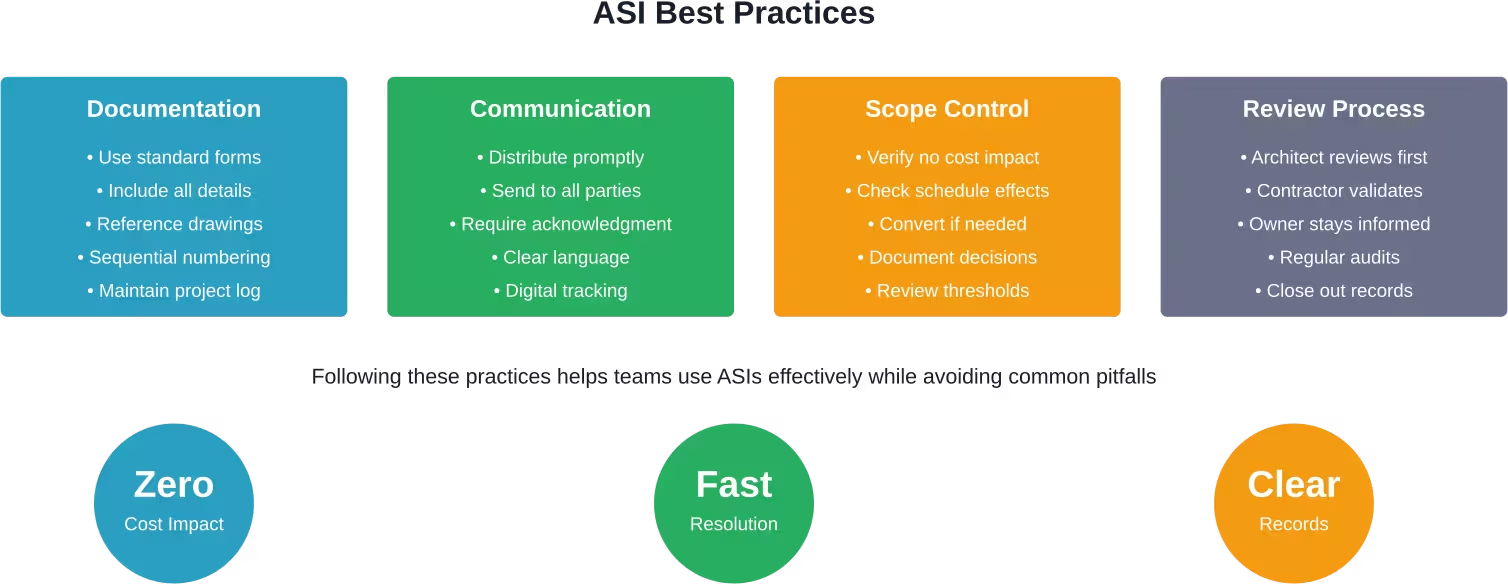
Use Standard Forms
Create or adopt a standard ASI template that includes all necessary information fields. AIA contracts and forms provide widely recognized templates that many construction professionals use as industry standards.
Consistency in format helps team members quickly locate information and reduces the chance of missing critical details.
Maintain Sequential Numbering
Number ASIs sequentially throughout the project (ASI-001, ASI-002, etc.). This creates a clear audit trail and makes it easy to reference specific instructions.
Track all ASIs in a project log that includes issue date, description, and affected drawing numbers.
Distribute Promptly
Send ASIs to all relevant parties immediately after issuance. The distribution list typically includes the owner, general contractor, affected subcontractors, and consultants.
Digital construction management platforms streamline this distribution and provide automatic notifications when new ASIs are issued.
Require Acknowledgment
Ask contractors to acknowledge receipt and confirm no cost or schedule impact. This confirmation creates mutual agreement and prevents surprises later.
If the contractor believes an ASI does affect cost or time, they can flag it immediately for conversion to a change order.
Common Mistakes to Avoid With ASIs
Even experienced construction professionals sometimes misuse supplemental instructions. Recognizing these common errors helps teams avoid them:
- Using ASIs for scope changes: The most frequent mistake is issuing an ASI when a change order is needed. If something affects cost or schedule, it requires proper change order documentation with owner approval.
- Poor documentation: Vague descriptions or missing reference information creates confusion. Each ASI should clearly identify what needs to change and why.
- Late distribution: Delayed ASIs cause contractors to work from outdated information. Distribute supplemental instructions promptly to prevent rework.
- Ignoring contractor feedback: If a contractor flags cost or schedule concerns about an ASI, address them immediately. Don’t assume the instruction is minor just because the architect considers it administrative.
- Incomplete distribution lists: Failing to send ASIs to all affected parties creates information gaps. Subcontractors working on the relevant scope must receive the instruction directly.
What Contractors Should Do When Receiving an ASI
Contractors play an active role in the ASI process. Simply receiving and filing these documents isn’t enough.
Review each ASI carefully as soon as it arrives. Understand what the architect is requesting and how it affects the work in progress.
Evaluate whether the instruction truly has no cost or schedule impact. Sometimes what seems minor to the architect requires significant effort in the field. If concerns exist, raise them immediately.
Document receipt and acknowledgment according to contract requirements. Many contracts require written confirmation within a specific timeframe.
Distribute the ASI to affected subcontractors and suppliers. The general contractor needs to ensure everyone working on the relevant scope receives the updated information.
Incorporate ASI information into ongoing work and update project records accordingly. ASIs become part of the contract documents and must be reflected in as-built drawings.
Digital Tools for Managing ASIs
Modern construction management software simplifies ASI tracking and distribution. Digital platforms provide several advantages over paper-based systems.
Automated distribution ensures all stakeholders receive ASIs simultaneously. No one gets left out of the communication loop.
Centralized storage makes it easy to search and reference previous ASIs. Teams can quickly find relevant instructions without sorting through filing cabinets.
Acknowledgment tracking shows who has received and reviewed each ASI. Project managers can follow up with team members who haven’t responded.
Integration with drawing management links ASIs directly to affected drawings and specifications. Users can see exactly which documents the instruction modifies.
Audit trails document when ASIs were issued, distributed, and acknowledged. This creates accountability and provides evidence if disputes arise.
Frequently Asked Questions About ASIs in Construction
Does an ASI require owner approval?
No. ASIs typically do not require owner approval because they should not affect cost or schedule. They are issued by the architect to clarify or interpret contract documents, though owners are usually copied for awareness.
Can a contractor reject an ASI?
If a contractor believes an ASI impacts cost or schedule, they must notify the architect and should not proceed until the issue is clarified. In such cases, the instruction may require a formal change order.
How long does a contractor have to respond to an ASI?
Response timelines vary by contract, but typically range from 3 to 7 business days. Contractors should respond quickly to avoid delays and address any concerns.
Are ASIs legally binding?
Yes. ASIs become part of the contract documents and must be followed by all parties, as they clarify or supplement the original design documents.
What happens if an ASI ends up costing money?
If an ASI results in additional cost or time, the contractor should document the impact and request a change order. The owner and architect will review and decide on adjustments.
Who keeps the official ASI log?
The architect typically maintains the official ASI log, tracking all issued instructions, including dates and descriptions. Contractors and owners often keep their own records as well.
Can ASIs be issued during the design phase?
No. ASIs are issued during the construction phase. During design, changes are handled through revisions to drawings and specifications, not supplemental instructions.
Final Thoughts on Using ASIs in Construction
Architect’s Supplemental Instructions serve as essential communication tools for construction projects. They provide a formal mechanism to clarify plans, correct errors, and resolve ambiguities without triggering lengthy change order processes.
The key to effective ASI use is understanding scope limits. These documents work well for minor adjustments that don’t affect project cost or schedule. When impacts exist, change orders provide the appropriate documentation path.
Clear communication remains critical throughout the ASI process. Architects should issue comprehensive instructions promptly. Contractors should review them carefully and raise concerns immediately. Owners should stay informed even when their approval isn’t required.
With proper procedures and digital tools, ASIs help construction teams maintain momentum and resolve issues quickly. They prevent small questions from becoming major obstacles that delay projects and strain relationships.
For construction professionals looking to improve their project documentation processes, establishing clear ASI protocols represents a practical starting point. Define criteria, use standard forms, maintain thorough logs, and ensure all stakeholders understand when and how to use these valuable tools.

Unsere Fallstudien
Wir haben mehr als 200 BIM- und VDC-Projekte für Gewerbe, Industrie und Wohnungsbau durchgeführt.
Unsere Arbeit umfasst:
Automatisierung der Schalungsplanung
Our client from
California, USA
Automatisierung von abgehängten Decken
Our client from
New York, USA
Automatisierung von Wandkonstruktionen
Our client from
California, USA