Haben Sie noch Fragen? Kontaktieren Sie uns!
Kommen Sie in unser Team!
Kostenloses Angebot oder Beratung anfordern

A construction project manager oversees construction projects from start to finish, coordinating budgets, schedules, teams, and resources to ensure timely completion within budget. According to the Bureau of Labor Statistics, construction managers earned a median annual wage of $106,980 in 2024. These professionals typically need a bachelor’s degree in construction-related fields and strong leadership, communication, and problem-solving skills.
Walk onto any active construction site and you’ll find one person who serves as the central nervous system of the entire operation. That person is the construction project manager.
They’re not just overseeing workers or checking blueprints. They’re coordinating dozens of moving parts, managing budgets that can stretch into millions, and ensuring everything from concrete deliveries to safety protocols happens exactly when it should.
But what exactly does this role entail? And how does someone become qualified to manage these complex projects?
Understanding the Construction Project Manager Role
A construction project manager is the professional responsible for planning, coordinating, budgeting, and supervising construction projects from initial concept through final completion. According to the Bureau of Labor Statistics, these managers ensure projects meet deadlines, stay within budget, and comply with building codes and safety regulations.
The role sits at the intersection of technical knowledge, business acumen, and people management. Construction project managers don’t just understand how buildings are constructed—they understand how to orchestrate the people, materials, equipment, and processes that bring those buildings to life.
Here’s the thing though—the title can vary across the industry. Common job titles include Construction Manager, Project Manager, Construction Superintendent, Field Superintendent, and Site Manager. While there are nuanced differences between some of these roles, they all share core responsibilities around project oversight and delivery.
Construction Project Manager vs. Project Manager
Not all project managers work in construction, and that distinction matters.
General project managers coordinate resources and timelines across various industries—software development, marketing campaigns, product launches. Construction project managers specialize specifically in building projects, which means they need deep knowledge of construction methods, materials, building codes, and safety regulations.
They’re dealing with physical materials that can be delayed by weather, equipment that breaks down, and safety considerations that can shut down an entire site. That’s fundamentally different from managing a software release or marketing initiative.
Core Responsibilities of a Construction Project Manager
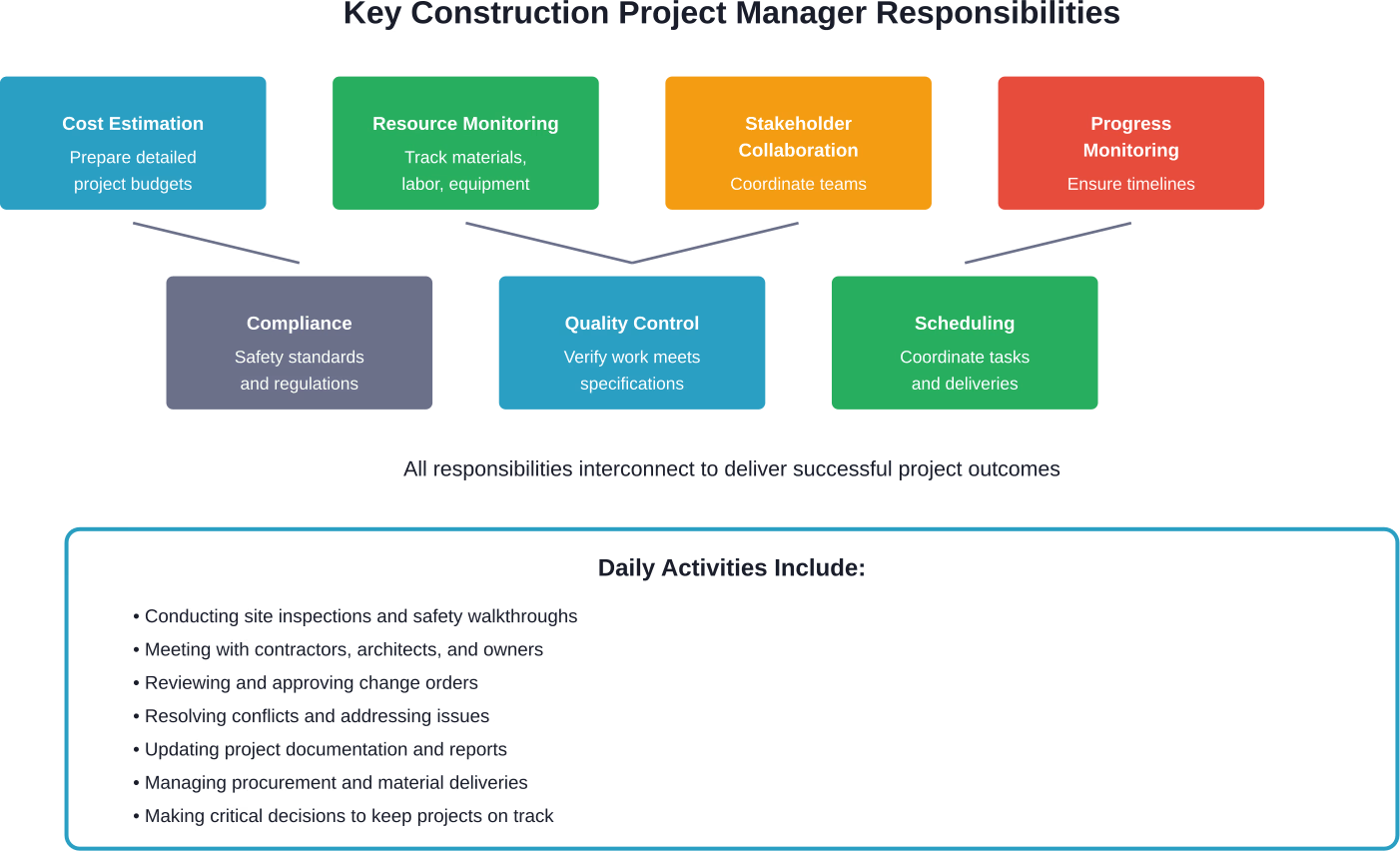
The Bureau of Labor Statistics identifies several primary responsibilities that define this role. These aren’t optional tasks—they’re the essential functions that construction project managers perform daily.
Budget Management and Cost Control
Construction project managers prepare detailed cost estimates before projects begin. This involves calculating material costs, labor expenses, equipment rentals, and contingency funds for unexpected issues.
But budgeting doesn’t stop at the planning phase. Throughout the project, managers track spending against estimates, identify cost overruns early, and make adjustments to keep finances on target. When materials arrive outside specification or unexpected site conditions emerge, the construction project manager determines how to address these issues without blowing the budget.
Schedule Coordination and Timeline Management
Every construction project operates on a timeline—and delays cost money. Construction project managers develop detailed schedules that sequence tasks logically. Concrete must cure before framing begins. Electrical and plumbing rough-ins happen before drywall goes up.
They coordinate multiple subcontractors, ensuring each team arrives when needed and has the resources to work efficiently. When weather delays the concrete pour or a material shipment runs late, the project manager reconfigures the schedule to minimize downtime.
Quality Assurance and Compliance
Buildings must meet strict quality standards, building codes, and safety regulations. Construction project managers verify that work complies with approved plans and specifications.
They conduct regular inspections, coordinate with building inspectors, and address any deficiencies before they become major problems. This oversight protects both the project owner and the construction firm from liability and ensures the finished building performs as intended.
Team Leadership and Communication
Construction projects involve numerous stakeholders: project owners, architects, engineers, contractors, subcontractors, suppliers, and regulatory officials. The construction project manager serves as the central communication hub.
According to construction industry professionals, responsiveness ranks as the top trait that construction teams want from project managers. Clear, timely communication prevents misunderstandings that lead to costly mistakes and delays.
Strengthen Those Project Management That Drives The Build

A construction project manager coordinates people, timelines, and budgets, but the outcome of the project often depends on something less visible – how well design decisions carry through into actual construction.
Powerkh focuses on that part of the process. They support project teams by working through BIM modelling, coordination, and verification, making sure information stays consistent as the project moves forward. This includes checking how different systems fit together, reviewing model readiness before construction, and using real data to confirm what is being built matches what was planned.
👉 Bring Powerkh into your project when you need a clearer link between what is planned and what is actually delivered on site.
Essential Skills for Construction Project Managers
Technical knowledge alone won’t make someone an effective construction project manager. The role demands a combination of hard and soft skills.
Technical Competencies
Construction project managers need solid understanding of construction methods, materials, and processes. They should be able to read and interpret blueprints, understand structural systems, and recognize potential construction challenges before they arise.
Knowledge of building codes, zoning regulations, and safety requirements is essential. Managers must ensure projects comply with all applicable standards—ignorance isn’t an excuse when violations can halt work and trigger fines.
Modern construction increasingly relies on technology. Familiarity with project management software, building information modeling, scheduling tools, and cost estimation programs has become standard. Some firms now use drones for site surveys and wearable technology for safety monitoring.
Leadership and People Management
Construction project managers lead diverse teams, often including workers from multiple companies and trades. They need to motivate teams, resolve conflicts, and maintain productive working relationships even when problems arise.
Leadership in construction requires decisiveness. When issues emerge on site, someone needs to make the call—and that someone is typically the project manager. Indecision leads to delays, which lead to cost overruns.
Problem-Solving and Adaptability
No construction project goes exactly according to plan. Unexpected site conditions, material shortages, weather delays, and design changes require quick thinking and creative solutions.
Effective construction project managers assess problems systematically, consider multiple solutions, and implement fixes that minimize impact on schedule and budget. They remain calm under pressure and focus on solutions rather than blame.
Communication and Negotiation
Construction project managers spend significant time communicating—in meetings, phone calls, emails, and written reports. They must explain technical issues to non-technical stakeholders and translate owner requirements into actionable construction plans.
Negotiation skills come into play when managing change orders, resolving disputes between subcontractors, or discussing project modifications with owners. The ability to find mutually acceptable solutions keeps projects moving forward.
Education and Qualifications
How does someone actually become qualified for this role? The path varies, but certain credentials and experiences are common.
Educational Background
According to the Bureau of Labor Statistics, large construction firms typically prefer candidates who have both construction experience and a bachelor’s degree in a construction-related field. Common degree programs include construction management, construction science, civil engineering, and architecture.
These programs cover topics like project management, construction methods, building materials, cost estimation, scheduling, and contract administration. Many programs include internships that provide hands-on experience before graduation.
For those with construction degrees, median wages reached $90,000 in 2023, with 68% employed in occupations requiring at least a bachelor’s degree.
Work Experience and On-the-Job Training
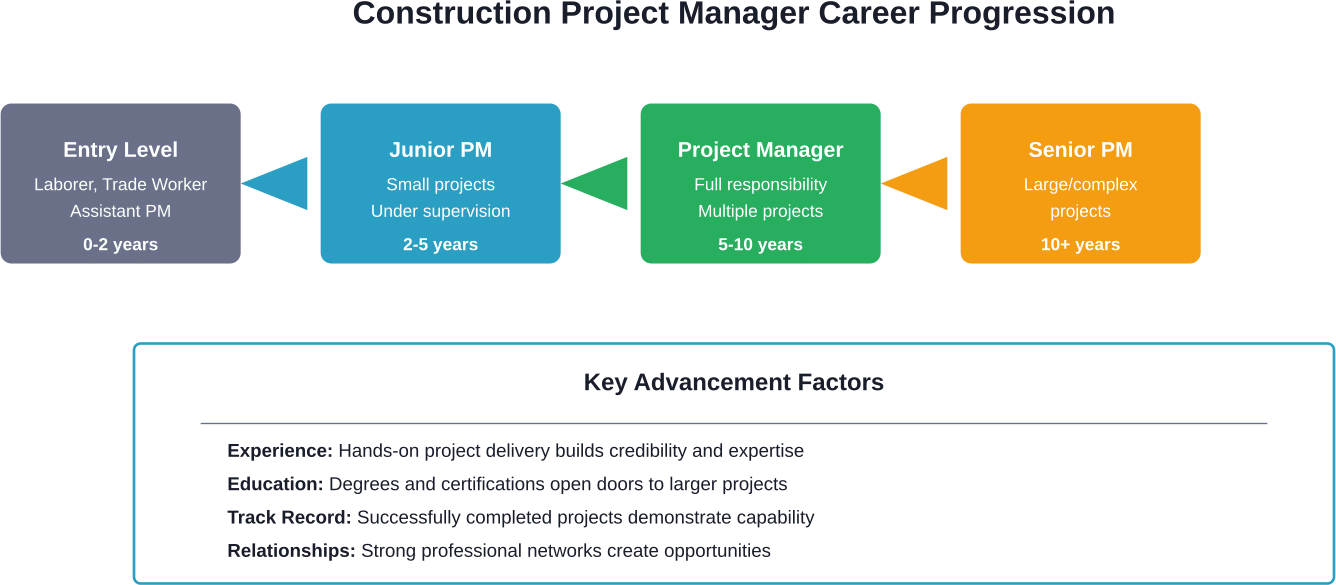
Education provides foundation, but experience builds expertise. Many construction project managers start in entry-level construction positions—laborers, trade workers, or assistant project managers—and work their way up.
This career progression provides practical knowledge that formal education can’t fully replicate. Understanding how trades actually work on site, what can go wrong, and how different building systems interact comes from being there.
Some professionals enter the field through structured training programs that combine classroom instruction with supervised project work. These programs can provide faster paths to project management roles than traditional degree programs.
Professionelle Zertifizierungen
While not always required, professional certifications can enhance credentials and demonstrate expertise. Organizations like the Associated General Contractors of America offer specialized training programs for construction project managers.
These programs cover advanced topics like contract documents, risk management, financial controls, and leadership skills. Completing recognized certification programs can differentiate candidates in competitive job markets.
| Qualification Type | Einzelheiten | Typical Timeline
|
|---|---|---|
| Bachelor’s Degree | Construction management, civil engineering, or related field | 4 years |
| Work Experience | Entry-level construction roles progressing to management | 3-8 years |
| Professional Certification | AGC courses, specialized training programs | Varies (weeks to months) |
| On-the-Job Training | Mentorship under experienced project managers | Ongoing throughout career |
Salary and Compensation Outlook
Construction project managers command competitive salaries that reflect the responsibility and expertise the role requires.
According to the Bureau of Labor Statistics, the median annual wage for construction managers was $106,980 in May 2024, equivalent to $51.43 per hour. This represents the midpoint—half of construction managers earned more, half earned less.
Actual compensation varies based on several factors. Experience level significantly impacts earnings, with senior project managers on large commercial projects typically earning more than those managing smaller residential projects.
Geographic location matters too. Construction managers in major metropolitan areas or regions with high construction activity often command premium salaries. Project complexity and scope also influence compensation—managing a $100 million commercial development pays differently than overseeing a $5 million renovation.
Many construction project managers receive additional compensation beyond base salary, including performance bonuses, profit sharing, vehicle allowances, and benefits packages.
Career Outlook and Job Growth
The employment outlook for construction managers remains strong. Employment of project management specialists is projected to grow 6 percent from 2024 to 2034, faster than the average for all occupations, with an employment change of 58,700 new positions.
In some regions, growth projections are even stronger. Washington state, for example, projects 18% growth in construction management positions from 2022 to 2032, reflecting robust construction activity in that market.
Several factors drive this demand. Infrastructure needs continue growing as existing systems age and require replacement or upgrading. Population growth creates demand for new residential and commercial construction. Sustainability initiatives drive renovation and retrofitting projects.
The construction industry also faces a skilled labor shortage as experienced professionals retire. This creates opportunities for qualified individuals to advance into project management roles.
Work Environment and Daily Realities
Construction project management isn’t a desk job. The work environment combines office time with extensive on-site presence.
Construction project managers typically split time between their office and active construction sites. Office work involves planning, budgeting, scheduling, and documentation. Site visits allow managers to inspect work quality, monitor progress, address problems, and communicate with on-site teams.
The work schedule often extends beyond standard business hours. Construction sites open early, and managers may need to be present for critical activities like concrete pours or crane operations. Project deadlines can require evening and weekend work.
Physical demands exist too. Site visits require walking across uneven terrain, climbing stairs and ladders, and working outdoors in various weather conditions. Safety gear—hard hats, safety glasses, steel-toed boots, and high-visibility vests—is standard attire on construction sites.
The role involves stress. Managing budgets worth millions, coordinating dozens of workers, and solving unexpected problems creates pressure. Effective construction project managers develop stress management strategies and maintain focus under demanding conditions.
Tools and Technology in Modern Construction Management
Technology has transformed how construction project managers work. Modern projects leverage various tools to improve efficiency, accuracy, and communication.
Project Management Software
Specialized construction project management platforms help managers plan, schedule, track costs, and coordinate teams. These systems centralize project information, making it accessible to all stakeholders and reducing miscommunication.
Cloud-based platforms enable real-time updates from the field. When a site superintendent notes an issue, the project manager can see it immediately and respond without delay.
Modellierung von Gebäudedaten
BIM technology creates detailed 3D models that integrate design, scheduling, and cost data. Construction project managers use BIM to visualize projects before construction begins, identify potential conflicts between building systems, and plan construction sequences more effectively.
This technology reduces errors and rework by catching problems during planning rather than after construction begins.
Drones and Wearable Technology
Drones perform site surveys, inspect hard-to-reach areas, and document construction progress. The drone industry for construction applications represents a $10 billion market, reflecting widespread adoption.
Wearable technology, including smart hard hats and exosuits, provides real-time project information and enhances worker safety and productivity. These innovations give construction project managers better visibility into site conditions and worker wellbeing.
Mobile Applications
Mobile apps allow construction project managers to access project information, approve change orders, and communicate with teams while on site. This mobility eliminates delays caused by needing to return to the office to access information or approve decisions.
| Technology Category | Primary Applications | Key Benefits
|
|---|---|---|
| Project Management Software | Scheduling, budgeting, document management | Centralized information, real-time updates |
| Modellierung von Gebäudedaten | 3D visualization, clash detection, planning | Reduced errors, better coordination |
| Drones | Site surveys, inspections, progress tracking | Enhanced safety, detailed documentation |
| Mobile Apps | Field communication, approvals, data access | Increased responsiveness, faster decisions |
| Wearable Tech | Safety monitoring, productivity tracking | Improved worker safety, real-time data |
Challenges Facing Construction Project Managers
While rewarding, construction project management comes with significant challenges that professionals must navigate.
Managing Multiple Stakeholders
Construction projects involve numerous parties with different priorities. Project owners want maximum quality at minimum cost. Architects focus on design integrity. Contractors prioritize efficient execution. Subcontractors manage their own schedules and profitability.
Balancing these competing interests while keeping projects moving forward requires diplomatic skill and firm decision-making.
Handling Unexpected Issues
Construction sites generate surprises. Unexpected soil conditions, hidden structural problems in renovation projects, material defects, weather delays, labor shortages—the list goes on.
Each unexpected issue requires assessment, solution development, and implementation—often under time pressure. Construction project managers who can’t adapt quickly struggle in this environment.
Maintaining Safety Standards
Construction remains one of the more hazardous industries. Construction project managers bear responsibility for maintaining safe work environments and ensuring compliance with safety regulations.
This involves not just policies and procedures, but creating a safety culture where workers feel empowered to stop work if conditions become unsafe.
Controlling Costs and Schedules
Budget overruns and schedule delays damage reputations and profitability. Market volatility in material costs, labor availability, and supply chains makes cost and schedule control increasingly challenging.
Successful construction project managers build contingencies into plans and monitor progress closely to catch potential problems before they escalate.
The Future of Construction Project Management
The construction industry continues evolving, and construction project management evolves with it.
Sustainability has moved from optional to essential. Construction project managers increasingly need knowledge of green building practices, sustainable materials, and energy-efficient systems. Standards like ASCE/COS 73-23 now define sustainability requirements for infrastructure projects.
Prefabrication and modular construction methods are growing. These approaches shift more work from the construction site to controlled factory environments, changing how projects are sequenced and managed.
Artificial intelligence and machine learning are beginning to impact construction management. These technologies can analyze project data to predict potential delays, optimize schedules, and identify cost-saving opportunities.
The construction labor shortage will likely persist, making efficient labor management and productivity enhancement critical skills for future construction project managers.
How to Break Into Construction Project Management
For those interested in pursuing this career, several paths can lead to construction project management roles.
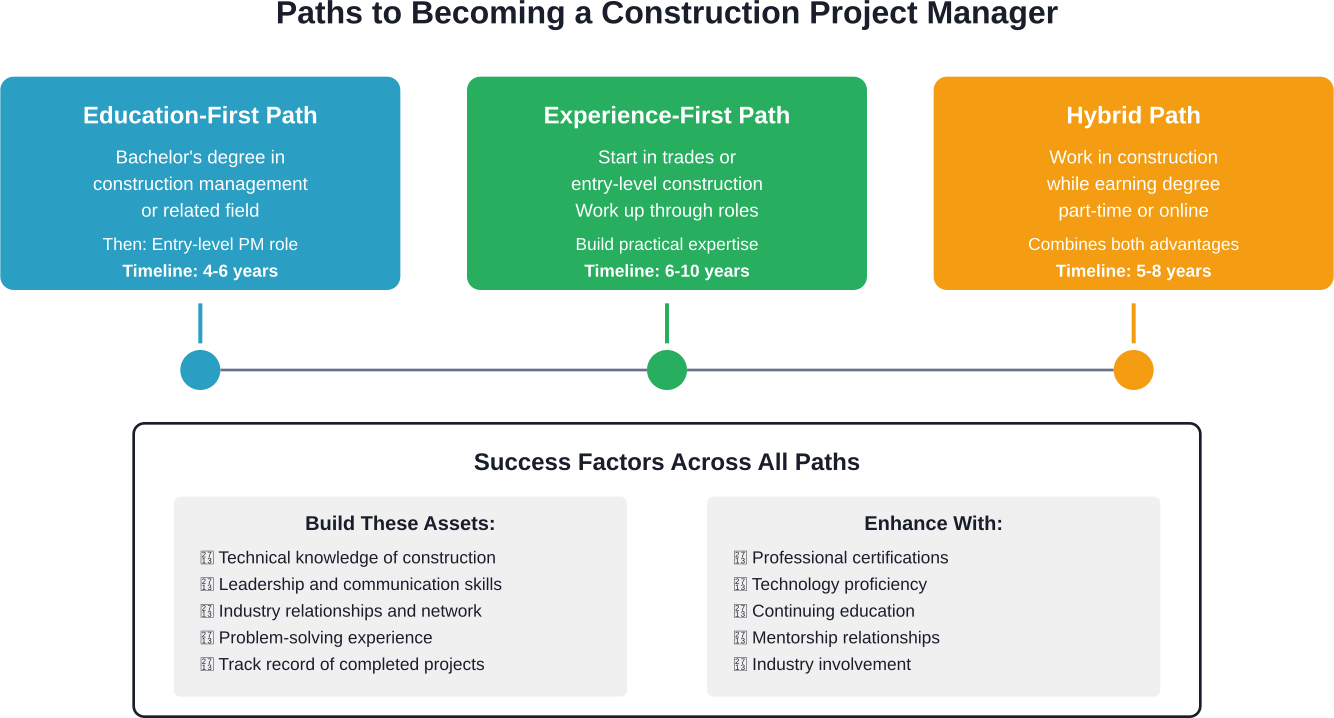
Traditional Education Route
Earning a bachelor’s degree in construction management, civil engineering, or a related field provides a strong foundation. These programs combine technical knowledge with business skills and often include internships that provide industry connections.
Many universities offer both on-campus and online programs, allowing students to pursue degrees while working in construction.
Work Experience Path
Starting in entry-level construction positions and learning the trades provides practical knowledge that formal education can’t match. Workers who demonstrate leadership ability, problem-solving skills, and reliability often get opportunities to move into supervisory and eventually project management roles.
This path takes longer but builds deep expertise in how construction actually happens on the ground.
Hybrid Approach
Many successful construction project managers combine work experience with education. They might start working in construction, then pursue a degree part-time or online while continuing to work. This approach builds both practical and theoretical knowledge.
Networking and Mentorship
Construction remains a relationship-driven industry. Building professional networks through industry associations, attending construction events, and seeking mentorship from experienced project managers can accelerate career development.
Mentors provide guidance, share knowledge from their experiences, and often open doors to opportunities.
Taking the Next Step
Construction project management offers a challenging, rewarding career for individuals who enjoy problem-solving, leadership, and seeing tangible results from their work. Every completed building, bridge, or infrastructure project represents months or years of coordinated effort—and the construction project manager orchestrated it all.
The role demands diverse skills, from technical construction knowledge to business acumen to people management. But for those who build these capabilities, the career provides strong compensation, job security, and professional satisfaction.
Whether someone enters through formal education, work experience, or a combination of both, the construction industry needs qualified project managers. Infrastructure continues aging. Populations keep growing. Buildings require construction, renovation, and replacement.
That means construction project managers will remain essential—the professionals who transform architectural plans and client visions into physical reality.
For those considering this career path, the best approach is to start building relevant experience and knowledge now. Work in construction if possible. Pursue education in construction-related fields. Build relationships with construction professionals. Develop both technical and leadership skills.
The construction industry rewards those who deliver results. Construction project managers who can bring projects in on time, within budget, and to specification will always find opportunities.
Häufig gestellte Fragen
What’s the difference between a construction manager and a construction project manager?
The terms are often used interchangeably. Both roles oversee construction projects, though some companies distinguish between field-focused construction managers and coordination-focused project managers.
Can you become a construction project manager without a degree?
Yes. Many professionals advance through field experience, though this path typically takes longer than earning a degree and requires strong practical knowledge.
How long does it take to become a construction project manager?
It usually takes 4 to 10 years depending on whether you follow a degree-based path, gain experience in the field, or combine both approaches.
What software do construction project managers use?
They use project management platforms, BIM tools, scheduling software, and mobile apps for communication and field coordination.
Is construction project management a stressful career?
Yes. The role involves managing budgets, deadlines, and teams under pressure, though many find it rewarding due to the tangible results of completed projects.
What’s the job outlook for construction project managers in 2026?
The outlook is strong, with steady growth driven by infrastructure demand, population growth, and ongoing construction activity.
Do construction project managers work on holidays and weekends?
Sometimes. Work outside standard hours can be required during critical project phases, though schedules vary depending on project demands.

Unsere Fallstudien
Wir haben mehr als 200 BIM- und VDC-Projekte für Gewerbe, Industrie und Wohnungsbau durchgeführt.
Unsere Arbeit umfasst:
Automatisierung der Schalungsplanung
Our client from
California, USA
Automatisierung von abgehängten Decken
Our client from
New York, USA
Automatisierung von Wandkonstruktionen
Our client from
California, USA