Haben Sie noch Fragen? Kontaktieren Sie uns!
Kommen Sie in unser Team!
Kostenloses Angebot oder Beratung anfordern

A construction contractor is an individual or company hired to execute a defined scope of work on a construction project under a contractual agreement. They can range from general contractors who oversee entire projects to specialized subcontractors who perform specific trades like electrical, plumbing, or HVAC work.
Walk past any construction site and there’s a good chance someone is coordinating dozens of moving parts—workers, materials, timelines, budgets, safety protocols. That person or entity is typically the construction contractor.
But what does that role actually entail? And how does it differ from other construction professionals?
According to the U.S. Bureau of Labor Statistics, the construction sector comprises establishments primarily engaged in the construction of buildings or engineering projects. According to Bureau of Labor Statistics data, construction employment was 10.8 million in 2020 as a result of the COVID-19 pandemic. Construction contractors form the backbone of this workforce.
This guide breaks down what construction contractors are, what they do, and why they’re essential to virtually every building project.
Defining a Construction Contractor
A construction contractor is an individual or company hired to complete a specific scope of work on a construction project. Unlike regular employees, contractors work under contractual agreements that define their responsibilities, timeline, and compensation.
According to California Code of Regulations Title 18, Section 1521, a construction contract includes agreements on various bases—lump sum, time and material, cost plus, or other arrangements—to erect, construct, alter, or repair buildings, structures, or improvements on real property.
Here’s the thing though—not all contractors handle the same work.
Some oversee entire projects from foundation to final walkthrough. Others specialize in specific trades like electrical systems or concrete work. The scope determines the type of contractor hired.
Types of Construction Contractors
The construction industry recognizes several distinct contractor categories, each serving different project needs.
General Contractors
General contractors (GCs) manage entire construction projects. They coordinate all trades, schedule work sequences, procure materials, ensure code compliance, and serve as the primary point of contact between the project owner and everyone on site.
A GC typically doesn’t perform the specialized work themselves. Instead, they hire and supervise subcontractors who handle specific trades.
General contractor salaries in the U.S. vary widely based on geography, experience, and business structure, with salary ranges varying significantly by region and project type.
Subcontractors
Subcontractors specialize in specific trades or construction aspects. Electricians, plumbers, HVAC technicians, roofers, and concrete finishers typically work as subcontractors hired by general contractors.
They bring specialized expertise the general contractor may lack. A residential builder might hire a plumbing subcontractor for all water and sewer line installations rather than employing full-time plumbers.
Specialty Contractors
Some contractors focus on niche construction areas like seismic retrofitting, historic restoration, or green building certifications. These specialty contractors often work on complex projects requiring specific technical knowledge.
According to Stronghold Engineering, their California-based portfolio includes historic renovations, substantial seismic upgrades, and large-scale infrastructure projects—work requiring specialized contractor expertise beyond standard construction.
Design-Build Contractors
Design-build contractors offer combined architectural design and construction services. This integrated approach can streamline project delivery since one entity handles both design and execution.
Work With a BIM and VDC Partner

If a construction contractor needs clearer models, better coordination, or more accurate documentation, Powerkh is relevant here. The company provides BIM modeling, BIM coordination, Scan to BIM, BIM automation, prefabrication support, and structural detailing. Their team works on commercial, industrial, and residential projects, helping contractors move from drawings and site data to usable models and project documentation.
Need BIM Support for a Construction Project?
Talk with Powerkh to:
- build BIM models from LOD 100 to LOD 400/500
- coordinate models and resolve clashes earlier
- convert point cloud data into BIM and as-built drawings
👉 Contact Powerkh to review your drawings, scope, and BIM needs.
Key Responsibilities of Construction Contractors
What does a contractor actually do day-to-day? The responsibilities vary based on contractor type, but some core duties remain consistent.
Projektplanung und Terminplanung
Contractors develop detailed project schedules that sequence all work activities. They determine when the concrete foundation needs completion before framing begins, when electrical rough-in happens before drywall installation, and how weather delays affect the critical path.
Effective scheduling prevents costly delays and keeps subcontractors working efficiently.
Budget Management
Contractors estimate costs, submit bids, and manage project budgets. They track expenses against projections, process subcontractor payments, handle change orders, and ensure the project stays financially viable.
Payment visibility and streamlined paperwork help ensure everyone receives compensation on time—a common challenge in construction where payment flows from owner to general contractor to subcontractors to workers.
Subcontractor Coordination
General contractors hire, schedule, and supervise specialized subcontractors. They verify subcontractor licensing and insurance, coordinate work sequences to prevent conflicts, and ensure quality standards.
According to OSHA regulations under 1926.16, prime contractors and subcontractors may make their own arrangements regarding obligations that might be more appropriately treated on a jobsite basis rather than individually.
Material Procurement
Contractors order materials, manage deliveries, and ensure supplies arrive when needed. This involves maintaining relationships with suppliers, negotiating pricing, and solving logistics challenges.
Running out of concrete mid-pour or waiting weeks for custom windows can derail schedules. Smart procurement prevents these disruptions.
Sicherheit und Compliance
Construction contractors must maintain safe worksites complying with OSHA standards and local building codes. They implement safety programs, conduct toolbox talks, provide personal protective equipment, and document safety incidents.
OSHA’s construction regulations (Part 1926) set comprehensive safety standards for construction work. The controlling contractor—typically the general contractor—bears primary responsibility for site safety coordination.
Quality Control
Contractors inspect work to ensure it meets specifications and code requirements. They identify deficiencies, require corrections, and verify repairs before authorizing payment or allowing subsequent work phases.
Client Communication
Contractors serve as the primary contact between project owners and the construction team. They provide progress updates, address concerns, explain technical issues in accessible terms, and manage expectations.
Clear communication prevents misunderstandings that lead to disputes or dissatisfaction.
| Responsibility Area | Primary Tasks | Key Stakeholders
|
|---|---|---|
| Planning & Scheduling | Timeline development, work sequencing, critical path management | Project owners, subcontractors, suppliers |
| Budget Management | Cost estimation, bid preparation, expense tracking, payment processing | Project owners, subcontractors, lenders |
| Subcontractor Coordination | Hiring, scheduling, supervision, quality verification | Subcontractors, workers, inspectors |
| Safety & Compliance | OSHA compliance, safety programs, code adherence, inspections | Workers, OSHA, local authorities |
| Quality Control | Work inspection, deficiency identification, correction verification | Project owners, architects, inspectors |
Construction Contractor vs. Construction Manager
People often confuse construction contractors with construction managers. While the roles overlap, they serve distinct functions.
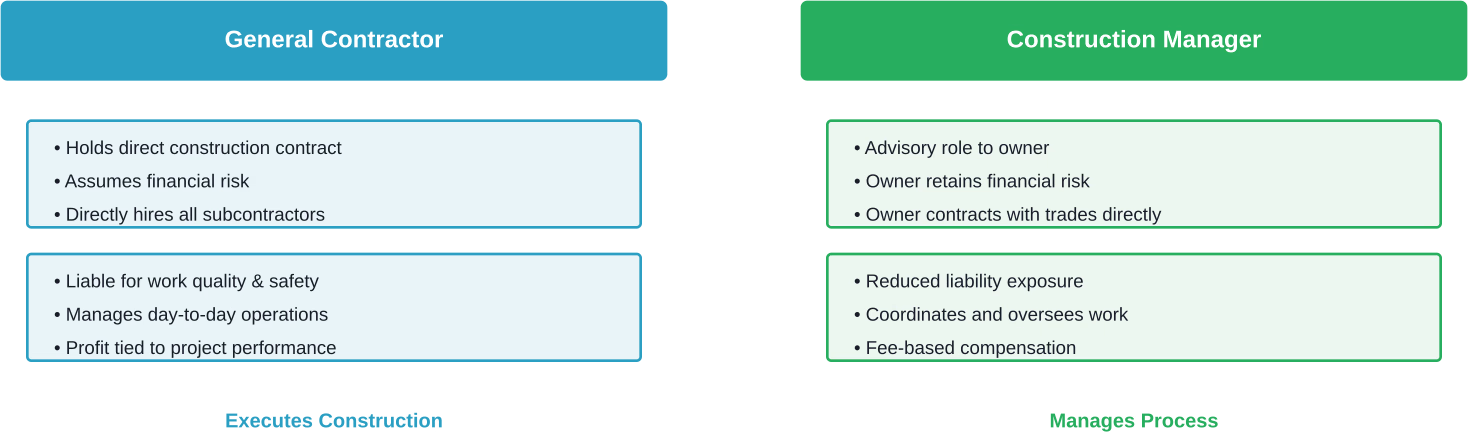
A general contractor typically holds a contract directly with the project owner to complete the work. They assume financial risk—if costs exceed estimates, the contractor absorbs losses (in fixed-price contracts). They also directly employ or subcontract all labor.
A construction manager, by contrast, often acts as the owner’s representative. They provide professional project management services but don’t typically hold construction contracts themselves. The owner contracts directly with multiple trade contractors, and the construction manager coordinates them.
Texas A&M University’s Department of Architecture notes that construction managers focus on oversight, planning, and coordination, while general contractors bear contractual responsibility for actual construction execution.
That said, roles blur. Some construction managers take on construction contracts (called “construction manager at risk”), essentially functioning as general contractors with enhanced preconstruction involvement.
Risk and Liability
General contractors assume significant project risk. They’re liable for work quality, schedule delays, budget overruns, and safety incidents involving their workers or subcontractors.
Construction managers typically carry less direct liability since they advise rather than execute. However, they can still face claims for negligent project oversight.
How Construction Contracts Work
Construction contractors operate under various contract structures, each distributing risk and compensation differently.
Lump Sum (Fixed Price)
The contractor agrees to complete defined work for a set price. The owner knows the total cost upfront. The contractor profits if actual costs run below the contract price but loses money if costs exceed it.
This arrangement incentivizes contractor efficiency but can lead to disputes over what’s included in the scope.
Cost Plus
The owner reimburses all legitimate project costs plus a fee (either fixed amount or percentage). This reduces contractor financial risk and provides flexibility for scope changes.
However, cost-plus contracts offer less cost certainty for owners and can reduce contractor motivation to control expenses.
Zeit und Material
The contractor bills for actual labor hours and materials used, often with negotiated hourly rates and material markups. This works well for projects with uncertain scopes or repair work where conditions aren’t fully known upfront.
Owners face cost uncertainty, so time and materials contracts often include not-to-exceed caps.
Unit Price
The contractor and owner agree on prices for specific work units (per cubic yard of concrete, per square foot of flooring, per linear foot of pipe). Final cost depends on actual quantities installed.
This approach works well for projects where exact quantities can’t be determined until work progresses, like earthwork or utility installation.
Licensing and Regulation
Most jurisdictions require construction contractors to hold licenses demonstrating competence and financial responsibility.
Requirements vary significantly by state and municipality. California requires contractors to pass technical exams and maintain minimum insurance coverage. Some states distinguish between residential and commercial contractor licenses, while others recognize specialty trade licenses.
Working without required licenses can result in fines, project shutdowns, contract voidability, and criminal penalties in severe cases.
The Small Business Administration defines size standards that determine whether construction businesses qualify as small for government contracting purposes. Most non-manufacturing businesses with average annual receipts under $7.5 million qualify as small, though exceptions exist by industry.
Becoming a Construction Contractor
Paths into contracting vary, but most follow similar patterns.
Education and Training
While formal education isn’t always required, many contractors hold construction management or engineering degrees. Although formal education is not typically required for construction laborers and helpers, some employers may prefer to hire candidates who have a high school diploma or the equivalent. Apprenticeships and on-the-job training provide practical experience in specific trades. Electricians, plumbers, and HVAC technicians typically complete multi-year apprenticeships before working independently.
Licensing Requirements
Aspiring contractors must research their jurisdiction’s licensing requirements. This typically involves:
- Meeting experience requirements (often 2-5 years in the trade)
- Passing written examinations covering trade knowledge and business practices
- Providing proof of insurance and bonding
- Paying licensing fees
- Completing continuing education for license renewal
Business Setup
Contractors must establish business entities, obtain tax identification numbers, secure appropriate insurance, and register with relevant authorities.
For government contracting, businesses need a Unique Entity Identifier (UEI)—a unique 12-character, alpha-numeric value obtained when registering in the System for Award Management (SAM) at SAM.gov.
Building Experience and Reputation
New contractors often start with smaller residential projects, building portfolios and client references. Reputation matters enormously in construction—word-of-mouth referrals drive much of the business.
Delivering quality work on time and within budget builds the credibility needed to win larger, more profitable contracts.
Challenges Facing Construction Contractors
The construction industry presents unique operational challenges.
Labor Shortages
About 649,300 openings are projected each year, on average, in construction and extraction occupations from 2024 to 2034 due to employment growth and the need to replace workers who leave the occupations permanently. Overall employment in these occupations is projected to grow faster than the average for all occupations. Despite this growth, many contractors struggle finding skilled workers.
The industry faces an aging workforce with fewer young people entering trades, creating significant labor supply challenges.
Payment Delays
Cash flow challenges plague construction. Payment flows from owners to general contractors to subcontractors, often with 30-60 day payment terms at each level. Meanwhile, contractors must pay workers weekly or biweekly.
Mechanics liens and payment bond claims provide some protection, but contractors still face working capital challenges.
Komplexität der Projekte
Modern construction involves increasingly complex systems, stringent codes, and demanding schedules. Contractors must coordinate multiple specialized trades, manage sophisticated building systems, and navigate evolving regulations.
Risikomanagement
Construction presents inherent risks—worker injuries, property damage, design defects, environmental hazards. Contractors need comprehensive insurance and proactive risk management to protect their businesses.
Economic Volatility
Construction activity fluctuates with economic cycles. The COVID-19 pandemic demonstrated this volatility—construction employment dropped significantly in 2020 according to Bureau of Labor Statistics data, though the industry subsequently recovered.
| Herausforderung | Impact | Mitigation Strategies
|
|---|---|---|
| Labor Shortages | Project delays, increased costs, quality concerns | Apprenticeship programs, competitive wages, efficient scheduling |
| Payment Delays | Cash flow problems, inability to pay workers/suppliers | Payment bonds, mechanics liens, contractual protections |
| Safety Risks | Worker injuries, OSHA penalties, project shutdowns | Comprehensive safety programs, training, proper equipment |
| Regulatory Complexity | Code violations, permit delays, legal liabilities | Staying current on regulations, expert consultants, thorough documentation |
Technology in Modern Contracting
Construction technology has evolved dramatically in recent years.
Project management software helps contractors schedule work, track budgets, and communicate with stakeholders. Building Information Modeling (BIM) creates detailed 3D models identifying conflicts before construction begins. Drones survey sites and monitor progress. Mobile apps enable real-time field reporting.
These tools improve efficiency, reduce errors, and enhance collaboration across project teams.
Public-Private Partnership Roles
According to the Associated General Contractors of America (AGC), contractors play evolving roles in public-private partnerships (P3s). Traditional public works financing had owners handling preconstruction activities like permitting and differing site conditions.
However, P3s have evolved to shift more risk to developers, who in turn try shifting more risk to contractors. A contractor’s P3 role could range from low-bid subcontractor to design-build contractor or various other traditional contractor roles.
This risk redistribution affects contractor bidding strategies, insurance requirements, and project approaches.
Environmental and Sustainability Considerations
Modern contractors increasingly address environmental concerns. Green building certifications like LEED require specific materials, construction practices, and waste management approaches.
Contractors must understand sustainable construction methods, energy-efficient systems, and environmentally responsible material sourcing. These capabilities open market opportunities as owners prioritize sustainability.
Schlussfolgerung
Construction contractors form the backbone of the building industry. Whether general contractors orchestrating entire projects or specialized subcontractors bringing technical expertise to specific trades, contractors transform architectural visions into physical reality.
Their responsibilities span far beyond simply building—they manage budgets, coordinate teams, ensure safety, navigate regulations, and solve countless daily challenges.
The construction industry continues evolving. Technology changes how contractors work. Sustainability requirements influence material choices and methods. Public-private partnerships create new risk-sharing models. Labor demographics shift.
But the fundamental role remains constant: contractors bring the expertise, organization, and execution capability that turns plans into completed structures.
Understanding what construction contractors do—and how they differ from other construction professionals—helps project owners make informed hiring decisions and helps those considering construction careers identify the right path forward.
Ready to start your construction project? Research licensed contractors in your area, request multiple bids, check references thoroughly, and verify licenses and insurance before signing any agreements. The right contractor makes all the difference between a successful project and a costly nightmare.
Häufig gestellte Fragen
What’s the difference between a contractor and a subcontractor?
A contractor manages the entire project and holds the main contract with the owner, while subcontractors are hired to perform specialized tasks like electrical or plumbing work.
Do construction contractors need licenses?
Yes, most jurisdictions require contractors to be licensed. Requirements typically include exams, experience, insurance, and fees.
How much do general contractors make?
Earnings vary widely depending on location, experience, and project size, with significant differences across regions and specialties.
What’s the difference between a general contractor and a construction manager?
General contractors manage construction work and take on financial risk, while construction managers coordinate the project and often act as the owner’s representative.
What does a construction contract include?
It includes scope of work, timeline, payment terms, change procedures, quality standards, warranties, insurance requirements, and dispute resolution.
Can anyone become a construction contractor?
No. Becoming a contractor requires meeting licensing requirements, including experience, exams, insurance, and fees.
What are the biggest challenges for construction contractors?
Key challenges include labor shortages, cash flow issues, project coordination, regulatory compliance, cost control, and maintaining safety standards.

Unsere Fallstudien
Wir haben mehr als 200 BIM- und VDC-Projekte für Gewerbe, Industrie und Wohnungsbau durchgeführt.
Unsere Arbeit umfasst:
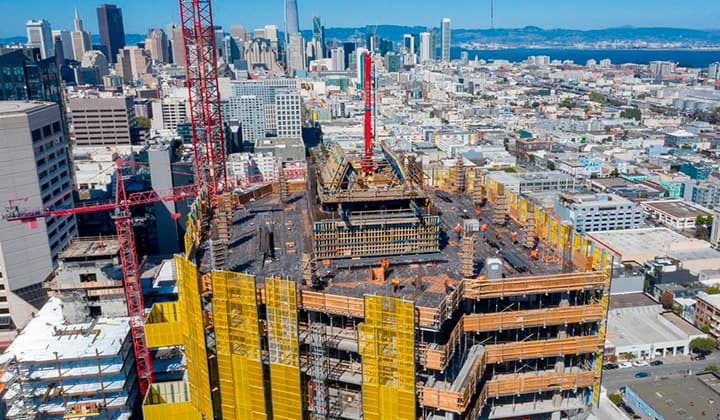
Automatisierung der Schalungsplanung
Our client from
California, USA
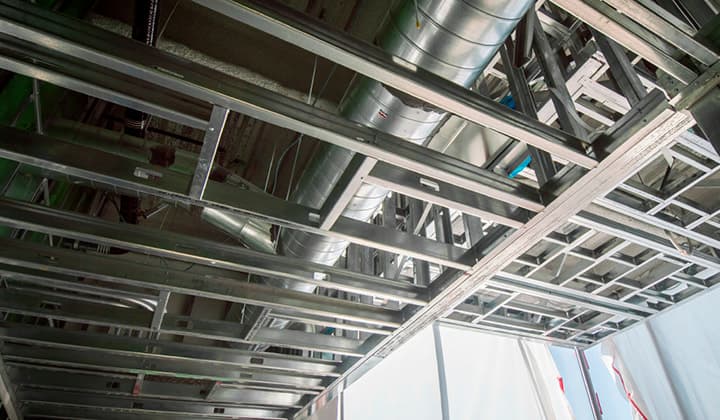
Automatisierung von abgehängten Decken
Our client from
New York, USA
Automatisierung von Wandkonstruktionen
Our client from
California, USA