Haben Sie noch Fragen? Kontaktieren Sie uns!
Kommen Sie in unser Team!
Kostenloses Angebot oder Beratung anfordern

Revit still sits in the middle of a lot of BIM workflows, but it’s not always the easiest tool to work with. Licensing, performance, team setup – sooner or later, most companies start looking around to see what else is out there.
This isn’t a guide or a step-by-step comparison. It’s more of a grounded look at the alternatives people actually consider when they want something different. Some tools focus on flexibility, others on coordination or cost, and a few just fit better depending on how your projects are structured. The point is – there’s no single replacement, but there are options that make more sense in the right context.
Keep Your BIM Workflow Consistent Without Switching Tools
If you’re exploring alternatives to Autodesk Revit, the issue is often not just the software – it’s what happens between design, coordination, and construction. That’s where Powerkh fits in. They work alongside your existing setup to keep design intent consistent through coordination and into site delivery, using BIM and reality-based checks to catch where things start to drift.
Work with Powerkh to:
- Support structural and MEP design with coordination-ready BIM models
- Resolve critical zones before they become site issues
- Monitor design vs built deviations using real project data
- Verify actual progress instead of relying on assumptions
Contact Powerkh to keep your BIM workflow aligned from design to delivery.
1. Archicad

| Website | www.graphisoft.com |
|---|---|
| [email protected] | |
| www.facebook.com/archicad | |
| x.com/Archicad | |
| www.linkedin.com/company/graphisoft | |
| www.instagram.com/graphisoft | |
| Adresse | 1601 Trapelo Road, Suite 162 Waltham, Massachusetts United States of America, 02451 |
| Telefon | 1800-238-3992 |
Archicad is a BIM platform built around architectural design workflows, with a clear focus on keeping things readable while models grow in complexity. The software moves quite naturally from early sketches and massing to detailed models, and that transition does not feel forced. A small thing that stands out is how drawings stay linked to the model in real time, so when something changes, documentation updates without much manual fixing.
The platform also leans heavily on open workflows. It supports standard formats like IFC and BCF, and connects with external tools without too much friction. Collaboration is handled through BIMcloud, where multiple users can work on the same project with live updates. It is not perfect in larger coordination-heavy environments, but for design-led teams, the balance between modeling, documentation, and coordination feels fairly steady.
Wichtigste Highlights:
- Real-time link between 3D models and documentation
- OpenBIM support with IFC and BCF workflows
- Built-in collaboration through BIMcloud
- Parametric object libraries available out of the box
- Integrated clash detection and issue tracking
Who It’s Best For:
- Architectural teams focused on design and documentation in one environment
- Practices that rely on openBIM workflows across different tools
- Teams working in mixed OS setups (macOS and Windows)
- Projects where early design iterations and visual clarity matter
2. Vectorworks Architekt

| Website | www.vectorworks.net |
|---|---|
| [email protected] | |
| www.facebook.com/vectorworks | |
| x.com/vectorworks | |
| www.linkedin.com/company/vectorworks-inc | |
| www.instagram.com/vectorworks | |
| Telefon | 443-542-0411 |
Vectorworks Architect approaches BIM a bit differently. The software keeps traditional drawing and modeling close together, which makes it feel less rigid compared to more structured BIM platforms. It allows users to move from sketching to full BIM models without forcing a strict workflow too early. That flexibility can be useful during concept stages, especially when layouts are still shifting and nothing is fully locked in.
Vectorworks Architect supports cost estimation, energy analysis, and scenario testing early in the process, which can influence design decisions before they become expensive to change. File compatibility is broad, with support for open standards and direct connections to tools like SketchUp or Rhino.
Wichtigste Highlights:
- Flexible workflow from sketching to BIM modeling
- Strong support for multiple file formats and integrations
- Built-in tools for cost estimation and energy analysis
Who It’s Best For:
- Design teams that want more flexibility during early project stages
- Architects working across multiple tools and file formats
- Studios that combine conceptual design with technical documentation
- Projects where visualization and presentation play a big role
3. BricsCAD BIM
| Website | www.bricsys.com |
|---|---|
| [email protected] | |
| www.facebook.com/OctaveBricsCAD | |
| x.com/OctaveBricsCAD | |
| www.linkedin.com/company/bricsys | |
| www.instagram.com/octave_bricscad | |
| Adresse | 301 Cochran Rd SW, Huntsville, AL 35824, USA |
| Telefon | +1 770 709 9240 |
BricsCAD BIM is built on a DWG-based CAD platform, which makes it feel familiar for teams coming from traditional CAD environments. Instead of forcing a full shift to BIM from day one, the software allows users to gradually introduce BIM elements into existing 2D or 3D workflows. That step-by-step transition tends to reduce friction, especially in offices where not everyone is ready to move fully into BIM.
The platform combines drafting, modeling, and documentation in a single environment. It also includes tools for working with point clouds and converting scan data into BIM elements, which is useful in renovation or retrofit projects. AI-driven detailing helps with generating model elements and improving consistency, though it still requires user control to avoid over-automation.
Wichtigste Highlights:
- DWG-based platform combining CAD and BIM workflows
- Gradual transition from 2D drafting to full BIM modeling
- Native support for point cloud processing and scan-to-BIM
- AI-assisted detailing for model generation
- IFC compatibility for data exchange
Who It’s Best For:
- Teams transitioning from CAD to BIM without a full workflow reset
- Projects involving existing buildings and scan data
- Smaller offices that rely heavily on DWG workflows
- Users who prefer combining 2D and 3D work in one tool
4. OpenBuildings Designer

| Website | www.bentley.com |
|---|---|
| www.facebook.com/BentleySystems | |
| x.com/bentleysystems | |
| www.linkedin.com/company/bentley-systems | |
| www.instagram.com/bentleysystems | |
| Adresse | Bentley Systems, Incorporated 685 Stockton Drive Exton, PA 19341, United States |
| Telefon | 1 800 236 8539 |
OpenBuildings Designer is a BIM platform built for multidisciplinary work, where architectural, structural, and MEP inputs sit in the same environment. The software focuses on creating information-rich models that can be used not just for design, but also for analysis and simulation. One thing that stands out is how it brings energy evaluation into the workflow early, so performance checks are not left until the end when changes are harder to make.
The platform also includes computational design tools through its generative components, which makes it easier to explore different design options without rebuilding everything from scratch. Collaboration is handled through a federated model, allowing distributed teams to work on the same project.
Wichtigste Highlights:
- Multidiscipline BIM environment for architecture, structure, and MEP
- Integrated energy analysis for performance evaluation
- Parametric and computational design through generative tools
- Federated data model for team collaboration
Who It’s Best For:
- Large projects involving multiple engineering disciplines
- Teams that need energy analysis during early design stages
- Infrastructure or transit-related building design workflows
5. Tekla-Strukturen

| Website | www.tekla.com |
|---|---|
| [email protected] | |
| www.facebook.com/people/Trimble-Construction/61567430646121 | |
| x.com/TrimbleConst | |
| www.linkedin.com/company/tekla | |
| Adresse | Hatsinanpuisto 8 02600 Espoo Finland |
| Telefon | +358 30 661 10 |
Tekla Structures is a BIM platform focused on constructible models rather than conceptual design. The software is used to create highly detailed structural models that reflect how elements will actually be built. This means connections, reinforcements, and fabrication details are handled directly in the model, not added later as separate documentation.
The platform is commonly used across the construction phase, especially when coordination between engineers, fabricators, and contractors becomes critical. Model sharing allows multiple users to work on the same project without constant file conflicts, which is useful in distributed teams. It is not the kind of tool typically used for early-stage design, but once a project moves toward detailing and construction, the level of control becomes more relevant.
Wichtigste Highlights:
- Detailed structural modeling with constructible elements
- Support for steel, concrete, and reinforcement workflows
- Integrated model sharing for team collaboration
Who It’s Best For:
- Structural engineers and detailing teams
- Contractors and fabricators working with BIM data
- Projects requiring high accuracy before construction starts
- Teams involved in steel and reinforcement modeling
6. Snaptrude

| Website | www.snaptrude.com |
|---|---|
| [email protected] | |
| x.com/snaptrude | |
| www.linkedin.com/company/snaptrude | |
| www.instagram.com/snaptrude | |
| Adresse | 16192 Costal Highway, Lewes, Delaware, 19958 – USA |
Snaptrude is a cloud-based platform that connects early design stages with BIM in a single workspace. Instead of splitting site analysis, programming, and modeling across different tools, the software keeps everything linked. A small but practical detail is how program data – like room areas or counts – updates the 3D model instantly, which helps avoid the usual mismatch between spreadsheets and geometry.
The platform also integrates AI into the workflow, mainly to speed up early-stage tasks such as generating layouts or analyzing site constraints. At the same time, manual control is still available, so the model can be refined without relying entirely on automation. Export options to other tools are included, which makes it easier to continue work in more traditional BIM environments if needed.
Wichtigste Highlights:
- Cloud-based workspace combining site analysis, programming, and BIM
- Live connection between data tables and 3D models
- AI-assisted generation of layouts and building programs
- Real-time collaboration in a shared environment
- One-click conversion from massing to BIM elements
Who It’s Best For:
- Teams working on early-stage design and feasibility studies
- Architects who want to connect data and geometry in one place
- Smaller teams experimenting with AI-supported workflows
- Projects where quick iteration and testing are important
7. Allplan

| Website | allbim.pl |
|---|---|
| [email protected] | |
| www.facebook.com/allplan.software | |
| www.linkedin.com/company/allplan | |
| Adresse | ul. Ciepłownicza 23, 31-574 Kraków |
| Telefon | +370-318-42440 |
Allplan is a BIM platform that connects design, engineering, and construction planning in one environment. It is not limited to building design, which becomes obvious once infrastructure and fabrication workflows come into play. The software supports structural engineering, bridge design, and precast detailing alongside architectural work, so projects do not need to be split across too many tools.
Another part of the setup is BIMplus, a separate collaboration platform that sits next to the core modeling tools. It allows teams to review models, track issues, and share updates without relying only on local files. It is not the lightest system to get into, and new users usually need some time to understand how everything connects.
Wichtigste Highlights:
- BIM platform covering building and infrastructure workflows
- Support for structural engineering and bridge design
- Integrated approach from design to construction planning
Who It’s Best For:
- Engineering teams working across building and infrastructure projects
- Projects involving precast or fabrication workflows
- Teams that need coordination beyond architectural design
8. Chief Architect
| Website | www.chiefarchitect.com |
|---|---|
| [email protected] | |
| www.facebook.com/ChiefArchitect | |
| x.com/chiefsoftware | |
| www.linkedin.com/company/chief-architect-inc- | |
| www.instagram.com/chiefarchitect | |
| Adresse | 6500 N Mineral Dr Coeur d’Alene, ID 83815, USA |
| Telefon | 208-292-3400 |
Chief Architect is a design platform focused mainly on residential projects, and it shows in how the tools behave. Instead of building everything manually, the software generates elements like roofs, walls, and framing automatically as the plan develops.
The platform also combines 2D drafting and 3D modeling in a way that feels quite immediate. As walls are drawn, the 3D model updates without needing separate steps, and material lists adjust along the way. It is not really aimed at large BIM coordination or multidisciplinary projects, but for residential design workflows, it keeps things moving without too much setup or configuration.
Wichtigste Highlights:
- Automatic generation of building elements like roofs and framing
- Real-time connection between 2D plans and 3D models
- Built-in material lists and schedules
- Tools tailored for residential and interior design
Who It’s Best For:
- Residential designers and home builders
- Interior designers working with detailed layouts
- Remodelers needing quick design iterations
9. Rhino

| Website | www.rhino3d.com |
|---|---|
| [email protected] | |
| www.facebook.com/McNeelRhinoceros | |
| www.linkedin.com/groups/75313 | |
| Adresse | Carrer de Roger de Flor, 32, Sant Martí, 08018 Barcelona, Spain |
| Telefon | +34 933 199 002 |
Rhino is a general-purpose 3D modeling platform rather than a traditional BIM tool, but it often appears in BIM workflows, especially at the early design stage. The software is known for handling complex geometry without much restriction, which makes it useful when standard BIM tools start to feel limiting. It is often used for forms that are difficult to model elsewhere, like curved facades or custom structures.
A big part of Rhino’s workflow comes from Grasshopper, its visual scripting environment. It allows users to build parametric models without writing code, which is why it is common in computational design setups. At the same time, Rhino does not manage BIM data in the same structured way as dedicated BIM platforms, so it usually works alongside other tools rather than replacing them completely.
Wichtigste Highlights:
- Flexible 3D modeling for complex and freeform geometry
- Grasshopper integration for parametric and computational design
- Wide ecosystem of plugins and extensions
- Supports import and export across multiple formats
- Suitable for concept modeling and advanced geometry
Who It’s Best For:
- Architects working on complex or non-standard forms
- Teams using parametric or computational design methods
- Early-stage design workflows before BIM structuring
10. MicroStation

| Website | www.bentley.com |
|---|---|
| www.facebook.com/BentleySystems | |
| x.com/bentleysystems | |
| www.linkedin.com/company/bentley-systems | |
| www.instagram.com/bentleysystems | |
| Adresse | Bentley Systems, Incorporated 685 Stockton Drive Exton, PA 19341, United States |
| Telefon | 1 800 236 8539 |
MicroStation is a CAD platform that often sits underneath larger infrastructure workflows rather than replacing BIM tools directly. The software is used to create both 2D drawings and 3D models, with a strong emphasis on handling large, complex projects without slowing down. One detail that tends to matter in practice is its ability to work with different file formats, including legacy data and point clouds, without constant conversion steps.
The platform can pull real-world data into the design environment, which helps when working on roads, urban layouts, or site-heavy projects. It is less focused on structured BIM data compared to dedicated BIM platforms, but it works well as a foundation layer where precision drafting and data integration are needed before or alongside BIM workflows.
Wichtigste Highlights:
- 2D and 3D CAD tools for infrastructure design
- Native support for DGN and compatibility with DWG and point clouds
- Integration of geospatial data for real-world context
- Visualization and analysis based on model attributes
Who It’s Best For:
- Infrastructure and civil engineering teams
- Projects requiring strong CAD foundations alongside BIM
- Workflows involving GIS or geospatial data
- Teams dealing with large datasets and legacy drawings
11. FreeCAD

| Website | www.freecad.org |
| www.facebook.com/FreeCAD | |
| x.com/FreeCADNews | |
| www.linkedin.com/groups/4295230 |
FreeCAD is an open-source parametric modeling platform that can be adapted to a wide range of use cases, including architecture and BIM-like workflows. The software is built around parametric design, meaning changes can be made by editing earlier steps in the model history.
The platform is structured into different workbenches, each focused on a specific task such as modeling, BIM, or simulation. It also supports a broad range of file formats, which makes it easier to connect with other tools when needed. It does not offer the same level of polish as commercial platforms, and some features feel experimental, but the flexibility and open nature make it a workable option in certain setups.
Wichtigste Highlights:
- Open-source parametric 3D modeling platform
- Model history allows easy design modifications
- Multiple workbenches for BIM, simulation, and design tasks
- Supports formats like STEP, IFC, STL, and DXF
- Customizable and extensible through plugins
Who It’s Best For:
- Users looking for a free and adaptable modeling platform
- Teams experimenting with custom BIM workflows
- Students or smaller studios exploring parametric design
12. SketchUp Pro
| Website | sketchup.trimble.com |
|---|---|
| www.facebook.com/sketchup | |
| x.com/sketchup | |
| www.linkedin.com/company/sketchup | |
| www.instagram.com/sketchup_official |
SketchUp Pro is a 3D modeling platform that is often used at the early stages of design, where speed matters more than structure. The interface is simple enough that new users can start modeling quickly, which is why it tends to show up in concept development and client presentations. It is not unusual to see rough building layouts created in a matter of minutes, especially when multiple design options are being tested.
The platform extends its capabilities through plugins and integrations, which is where more advanced workflows usually come in. Tools for documentation, rendering, or BIM-like data can be added depending on the project needs. At the same time, SketchUp does not enforce strict BIM rules, so models can become inconsistent if not managed carefully.
Wichtigste Highlights:
- Fast and intuitive 3D modeling environment
- Large library of extensions for custom workflows
- Integration with cloud collaboration tools
- Import and export across multiple formats
Who It’s Best For:
- Early-stage design and concept development
- Architects presenting ideas to clients
- Small teams needing quick iteration cycles
13. Navisworks

| Website | www.autodesk.com |
| www.facebook.com/autodesk | |
| x.com/autodesk | |
| www.linkedin.com/company/autodesk | |
| www.instagram.com/autodesk | |
| Adresse | One Market, Ste. 400 San Francisco, CA 94105 USA |
| Telefon | +1 415 507 5000 |
Navisworks is not a full design platform but more of a coordination and review environment built around combining models from different sources. The software brings together files from tools like AutoCAD and Autodesk Revit into a single view, which makes it easier to see how everything fits together across disciplines. It is often used when multiple teams are working in different tools and someone needs to check the overall picture without rebuilding models.
The platform focuses on navigation and model inspection rather than editing. Users can walk through models, review object properties, and leave comments or markups. It is fairly straightforward to open large files without much setup, which is useful on projects where models come in from different sources and need to be checked quickly.
Wichtigste Highlights:
- Combines models from multiple CAD and BIM tools
- Supports viewing of NWD and 3D DWF files
- Includes navigation tools like walk, orbit, and fly
- Displays object properties and model hierarchy
Who It’s Best For:
- Coordination teams reviewing models from different disciplines
- Projects with multiple software environments
- Stakeholders who need access without editing models
14. Revizto

| Website | revizto.com |
|---|---|
| [email protected] | |
| www.facebook.com/REVIZTO | |
| x.com/revizto | |
| www.linkedin.com/company/revizto | |
| Telefon | +54(9)3543 559545 |
Revizto is built around coordination, but it takes a slightly different approach by keeping everything in one shared workspace. The platform connects 2D drawings and 3D models in a single environment, so issues can be tracked directly in context. Instead of switching between tools, users can move from a plan view to a model view and see the same problem from both sides.
A noticeable part of the workflow is how issue tracking is handled. Comments, clashes, and coordination tasks are linked to specific locations in the model, which makes follow-ups more structured. The platform also includes dashboards and data views, though in practice, most teams use it mainly for coordination and communication rather than deep analytics.
Wichtigste Highlights:
- Unified 2D and 3D coordination workspace
- Issue tracking linked to exact model locations
- Clash detection with grouping and filtering options
- Real-time collaboration across teams
- Supports AR and VR model exploration
Who It’s Best For:
- Teams managing coordination across disciplines
- Projects with frequent design changes and updates
- Contractors and engineers tracking issues on site
15. Solibri

| Website | www.solibri.com |
|---|---|
| [email protected] | |
| www.facebook.com/solibri | |
| x.com/solibri | |
| www.linkedin.com/company/solibri-inc- | |
| Adresse | Tammasaarenkatu 5 HTC Santa Maria 00180 Helsinki, Finland |
| Telefon | +1 (480) 305 2120 |
Solibri focuses on something that often gets overlooked until problems appear – model quality. The platform is built around checking BIM data against rules, which can include geometry, classification, or compliance requirements. Instead of relying on visual checks, it applies structured validation so issues can be found earlier in the process.
The software works across the entire project lifecycle, not just during coordination. Models can be reviewed during design, checked again before construction, and verified at handover. It does require some setup, especially when defining rules and standards, but once that is in place, it becomes more of a continuous checking process rather than a one-time review. It is not a modeling tool, but it plays a role in making sure models stay usable.
Wichtigste Highlights:
- Rule-based validation of BIM models
- Checks geometry, data consistency, and classification
- Supports compliance and quality assurance workflows
- Works across design, construction, and handover stages
Who It’s Best For:
- Teams focused on BIM quality and compliance
- Projects with strict data and classification requirements
- Organizations standardizing model validation processes
Schlussfolgerung
At some point, most teams realize that replacing Autodesk Revit is not really about finding a perfect equivalent. It is more about figuring out what part of the workflow is causing friction and fixing that piece first. For some, it is early design flexibility. For others, it is coordination, detailing, or just the way models behave under pressure when deadlines get tight.
What becomes clear after looking at these alternatives is that no single platform covers everything equally well. Some tools are better at shaping ideas, others are built for construction-level accuracy, and a few sit somewhere in between. In real projects, it often ends up being a mix rather than a clean switch. The practical approach is to choose tools that match how your team actually works, not how the software expects you to work. That gap, small as it sounds, is usually where most of the time gets lost or saved.

Unsere Fallstudien
Wir haben mehr als 200 BIM- und VDC-Projekte für Gewerbe, Industrie und Wohnungsbau durchgeführt.
Unsere Arbeit umfasst:
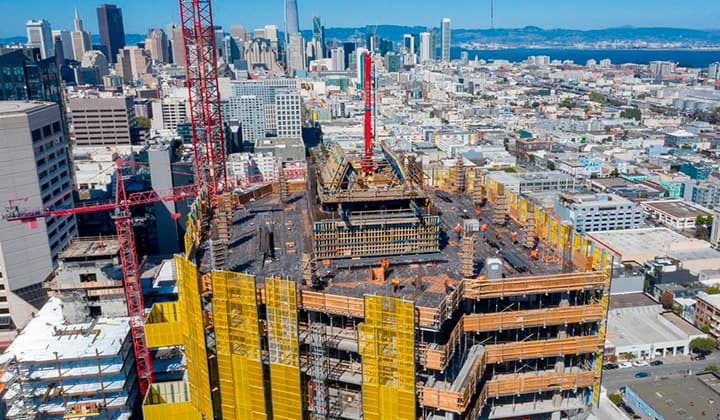
Automatisierung der Schalungsplanung
Our client from
California, USA
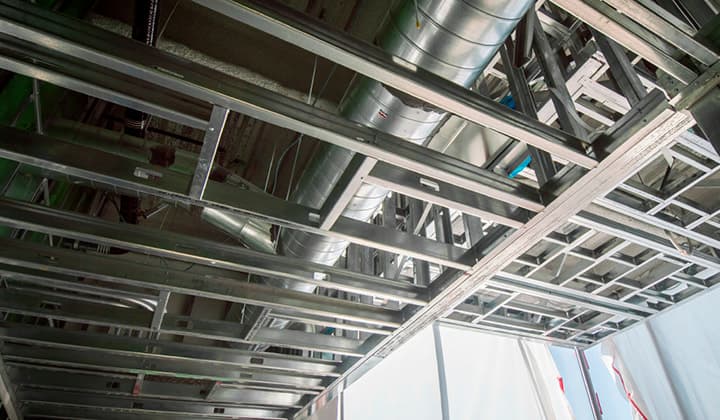
Automatisierung von abgehängten Decken
Our client from
New York, USA
Automatisierung von Wandkonstruktionen
Our client from
California, USA