Haben Sie noch Fragen? Kontaktieren Sie uns!
Kommen Sie in unser Team!
Kostenloses Angebot oder Beratung anfordern

Mastic in construction is a thick, adhesive sealant used to fill gaps, seal joints, and bond materials. It’s a flexible, durable material typically made from asphalt, resin, or synthetic polymers that remains pliable after curing, making it ideal for waterproofing and sealing applications in buildings, roads, and infrastructure projects.
Walk onto any construction site and there’s a material quietly holding everything together. Mastic—a viscous sealant and adhesive—shows up in more places than most people realize.
From sealing bathroom tiles to preserving pavement joints, this flexible material has become indispensable in modern construction. But what exactly is mastic, and why do builders reach for it so often?
What Is Mastic?
Mastic is a thick, paste-like sealant or adhesive that fills gaps, bonds surfaces, and creates waterproof barriers. The term covers several material formulations, but all share common characteristics: high viscosity, flexibility after curing, and strong adhesion to various surfaces.
The material’s roots trace back centuries. Historical records suggest that ancient builders used natural mastic resin from Pistacia trees to seal structures. According to one historical account, Noah used asphalt as a sealant in construction. Today’s construction mastic has evolved considerably from those early applications.
Modern mastic formulations typically contain asphalt, synthetic polymers, or resin-based compounds mixed with fillers and additives. These components create a material that stays flexible over time, accommodates movement in joints, and resists moisture penetration.
According to ASTM C920-18 standards for elastomeric joint sealants, non-traffic (NT) sealants should maintain hardness readings between 15 and 50 after proper curing and lose no more than 7% of original weight during testing. These specifications ensure mastic products perform consistently across different applications.
Get Help With BIM Models and Drawings

Powerkh focuses on producing BIM models and project documentation that can be used directly in construction workflows. The company supports projects with modeling, Scan to BIM, coordination, and detailing.
Need Support With BIM Deliverables?
Talk with Powerkh to:
- produce BIM models and technical drawings
- convert scans into structured project data
- support coordination and documentation
👉 Contact Powerkh for a project review and consultation.
Types of Mastic Used in Construction
Not all mastic products are created equal. Different formulations serve specific purposes.
Asphalt Mastic
Asphalt-based mastic combines high-performance asphalt binder with engineered aggregates. This type excels in pavement preservation, crack sealing, and joint filling for roads and parking lots. The material remains flexible enough to accommodate thermal expansion and contraction in concrete and asphalt surfaces.
Recent research on synthetic aggregates shows that stone dust can replace traditional fillers in bituminous mastic formulations, supporting more sustainable construction practices.
Silicone-Based Mastic
Silicone mastic sealants offer superior flexibility and weather resistance. They’re common in wet areas like bathrooms and kitchens, where constant moisture exposure demands durable waterproofing. These formulations bond well to glass, ceramic, metal, and most plastics.
Acrylic Mastic
Acrylic-based versions provide paintable surfaces and good adhesion to porous materials like wood and drywall. They’re less flexible than silicone variants but work well for interior applications where movement is minimal.
Polymer-Modified Mastic
Advanced polymer additives enhance traditional mastic formulations, improving durability, flexibility, and adhesion properties. These hybrid materials bridge the gap between standard sealants and specialized adhesives.
Where Is Mastic Used in Construction?
The versatility of mastic sealants makes them valuable across numerous construction scenarios.
Building Envelope Sealing
Mastic creates airtight and watertight seals in exterior walls, window frames, and door installations. It prevents moisture intrusion that can lead to structural damage and mold growth. The material’s flexibility accommodates building movement from settling, wind loads, and temperature changes.
Bathroom and Kitchen Applications
Wet environments demand reliable waterproofing. Mastic sealant forms watertight barriers around bathtubs, showers, sinks, and countertops. Mastic serves as a reliable solution for preventing water damage behind fixtures in wet environments.
Pavement and Road Infrastructure
Asphalt mastic fills and seals cracks in roadways, parking lots, and airport runways. This application extends pavement life by preventing water infiltration that causes freeze-thaw damage and base deterioration. The material bonds to both asphalt and concrete surfaces.
Tile Installation
Mastic is suitable as an adhesive for ceramic tiles, but is not recommended for large-format porcelain tiles.
HVAC and Ductwork
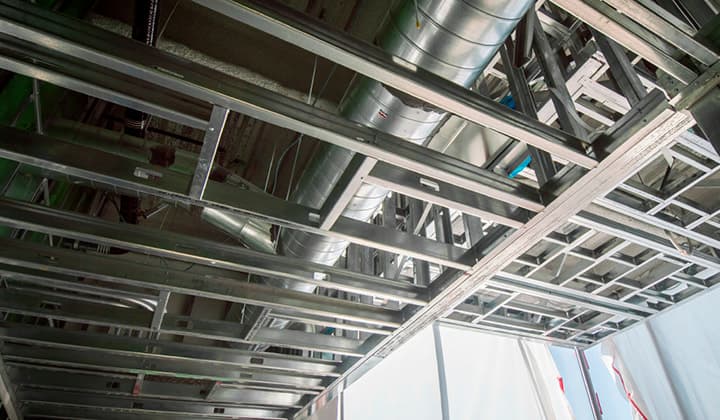
Sealing air ducts with mastic prevents energy loss from leakage. This application improves heating and cooling efficiency while reducing utility costs.
| Application Area | Primärer Zweck | Recommended Type |
|---|---|---|
| Exterior Joints | Weather Sealing | Silicone or Polymer-Modified |
| Bathrooms | Waterproofing | Silicone Mastic |
| Pavement | Crack Sealing | Asphalt Mastic |
| Interior Trim | Gap Filling | Acrylic Mastic |
| Tile Installation | Adhesive/Sealant | Polymer-Modified |
Benefits of Using Mastic Sealants
Why do construction professionals consistently choose mastic over other options?
The material’s thick consistency allows for easy application without excessive running or dripping. This makes it particularly useful for vertical surfaces and overhead applications where thinner sealants would sag.
Mastic maintains flexibility after curing, unlike rigid sealants that crack under stress. This elasticity helps joints accommodate structural movement without losing their seal. Buildings naturally shift slightly due to temperature fluctuations, ground settling, and wind pressure—mastic moves with them.
Strong adhesion to diverse materials means one product works across multiple substrates. Most mastic formulations bond effectively to wood, metal, concrete, glass, ceramic, and various plastics without requiring primers.
The material creates durable barriers against moisture, air, dust, and insects. Properly applied mastic seals can last for years with minimal maintenance, protecting structures from the elements.
Application Considerations
Getting the best performance from mastic requires proper technique. Surface preparation matters significantly—clean, dry surfaces ensure optimal adhesion. Loose debris, old sealant, and moisture can compromise bond strength.
Temperature affects both application and curing. Most mastic products specify ideal temperature ranges for installation. Cold weather can make material stiff and difficult to work with, while excessive heat may cause premature skinning before tooling is complete.
Joint design influences sealant performance. Width-to-depth ratios, backing materials, and movement capacity all factor into successful installations. Professional applicators follow manufacturer guidelines for these specifications.
Curing time varies by formulation. Some mastic products skin over quickly but require days or weeks to fully cure. Understanding these timelines prevents premature exposure to stress or moisture that could damage the seal.
Mastic vs. Other Sealants
How does mastic compare to alternatives like caulk or silicone?
The distinction between mastic and caulk can be confusing—the terms are sometimes used interchangeably, though they’re not identical. Generally speaking, mastic refers to thicker, more adhesive products, while caulk tends to be thinner and more flexible.
Pure silicone sealants offer superior flexibility and weather resistance compared to basic mastic but typically cost more and can’t be painted. Acrylic caulks are paintable and easy to clean up but lack the durability of mastic in high-stress applications.
Polyurethane sealants provide excellent adhesion and durability but often require more skill to apply and tool properly. They’re common in commercial construction where performance outweighs ease of use.
The best choice depends on specific project requirements: location, substrate materials, expected movement, and environmental exposure all influence which sealant type performs optimally.
Schlussfolgerung
Mastic remains one of construction’s most versatile materials for good reason. Its combination of adhesion, flexibility, and durability makes it the preferred solution for sealing gaps, bonding materials, and protecting structures from moisture and air infiltration.
From pavement preservation to bathroom waterproofing, this thick, paste-like sealant performs reliably across diverse applications. Understanding the different types and their specific strengths helps ensure the right product gets matched to each job.
For construction projects requiring durable, flexible seals that accommodate movement while resisting the elements, mastic delivers consistent performance. Proper surface preparation and application technique maximize its protective capabilities and extend service life.
Häufig gestellte Fragen
Can mastic be used outdoors?
Yes, but only if the product is rated for exterior use. Outdoor mastics need UV resistance and weather durability. Silicone and polymer-based mastics generally perform better outside than basic acrylic types.
How long does mastic take to cure?
Curing time varies by product and conditions. A surface skin may form within minutes to hours, but full curing can take from 24 hours to several weeks depending on temperature and humidity.
Is mastic the same as adhesive?
Not exactly. Mastic can act as an adhesive in some cases, but it is primarily a sealant. Adhesives are designed for bonding strength, while mastic focuses on flexibility and sealing gaps.
Can you paint over mastic?
Some mastics can be painted, especially acrylic or latex types. Silicone mastics usually cannot be painted. Always check if the product is labeled as paintable before applying paint.
What’s the difference between mastic and grout?
Grout is a rigid material used to fill joints between tiles, while mastic is flexible and used as a sealant or adhesive. Grout handles compression, while mastic accommodates movement.
How do you remove old mastic?
Old mastic can be removed by scraping with a blade or putty knife. Chemical removers or heat may help with stubborn material. Surfaces should be cleaned before applying new product.
Does mastic work on wet surfaces?
Most mastics require dry surfaces for proper adhesion. Some specialized products are designed for damp conditions, but standard mastic will not bond well on wet surfaces.

Unsere Fallstudien
Wir haben mehr als 200 BIM- und VDC-Projekte für Gewerbe, Industrie und Wohnungsbau durchgeführt.
Unsere Arbeit umfasst:
Automatisierung der Schalungsplanung
Our client from
California, USA
Automatisierung von abgehängten Decken
Our client from
New York, USA
Automatisierung von Wandkonstruktionen
Our client from
California, USA