Haben Sie noch Fragen? Kontaktieren Sie uns!
Kommen Sie in unser Team!
Kostenloses Angebot oder Beratung anfordern

A construction schedule is a detailed timeline that outlines all tasks, milestones, resources, and dependencies required to complete a building project from start to finish. It serves as the roadmap for coordinating teams, materials, equipment, and subcontractors while managing costs and deadlines. Construction schedules use methodologies like Critical Path Method (CPM) and Gantt charts to visualize workflows, identify potential delays, and keep projects on track and within budget.
Construction projects fail for predictable reasons. Materials arrive late. Subcontractors overlap. Weather disrupts foundations. Budgets spiral out of control.
But here’s the thing—most of these problems trace back to one root cause: poor scheduling. A construction schedule isn’t just a calendar with dates scribbled in. It’s the central nervous system of every successful build, coordinating dozens of moving parts into a synchronized operation.
According to ASCE’s Critical Path Method (CPM) Scheduling course, construction engineers who don’t understand what’s happening inside their scheduling software risk making poorly informed decisions that directly affect their clients’ bottom line. The stakes are high.
This guide breaks down everything about construction schedules: what they are, why they matter, the methods professionals use, and how to build one that actually works. No fluff, just practical information backed by industry standards.
What Is a Construction Schedule?
A construction schedule is a comprehensive timeline that maps out every phase of a building project from groundbreaking to final inspection. It documents when tasks start and finish, who’s responsible for each activity, which resources are needed, and how different work elements depend on each other.
Think of it as a detailed roadmap. But instead of showing highways and exits, it shows the sequence of work—excavation before foundation, framing before electrical, drywall before painting. Each task connects to others in a logical flow.
The schedule includes several critical components:
- Task sequences: The order in which construction activities must occur
- Duration estimates: How long each task takes to complete
- Resource allocation: Labor, equipment, and materials assigned to specific activities
- Milestones: Key project checkpoints that mark significant progress
- Dependencies: Relationships between tasks that determine what can start when
- Float time: Flexibility in non-critical tasks without delaying project completion
According to GSA project schedule management guidance, project schedules should serve as living tools that communicate and track project delivery with enough detail to address scope and complexity while remaining flexible enough to adapt as conditions change.
Construction schedules differ from simple to-do lists because they account for constraints. A concrete foundation needs three days to cure before framing can begin—that’s not negotiable. Electrical inspections must happen before walls close up. These dependencies create a web of relationships that scheduling methodologies help untangle.
Why Construction Scheduling Matters
Poor scheduling doesn’t just cause minor inconveniences. It cascades through projects, multiplying costs and eroding profits.
The most obvious benefit is time management. When every team knows exactly when they’re needed on site, labor productivity increases. Crews aren’t standing around waiting for the previous trade to finish. Equipment rentals align with actual usage periods instead of sitting idle. Materials arrive just as they’re needed rather than cluttering the site for weeks.
Cost control follows directly. According to academic research on baseline schedules, they demonstrate the project execution strategy, key project deliverables, activity planned dates and milestones before work starts. This upfront planning prevents expensive surprises. When teams identify potential conflicts during scheduling rather than during construction, solutions cost far less.
Real talk: construction projects are complex beasts. Multiple contractors, subcontractors, suppliers, and inspectors all need to coordinate. A detailed schedule becomes the single source of truth that everyone references. It answers the constant question: “When can we start our work?”
Schedules also manage expectations. Owners want to know when they can move into their new building. Lenders need completion dates to plan financing. Marketing teams build campaigns around opening dates. A realistic schedule, properly communicated, keeps stakeholders informed and reduces pressure from unrealistic demands.
Then there’s risk management. Good schedules identify potential bottlenecks before they occur. If the critical path runs through specialized equipment with limited availability, project managers can reserve it months in advance. If weather typically disrupts outdoor work in certain months, the schedule can front-load those tasks or build in contingency time.
Make Your Construction Schedule Work on Site

A construction schedule only works if it reflects real design conditions and what can actually be built. Powerkh helps keep that alignment by supporting coordination, resolving critical design issues early, and tracking where site execution starts to diverge, so your schedule doesn’t fall apart under pressure.
Remove Schedule Risks Early
Here’s how Powerkh help keep your programme realistic:
- Check if the design is ready before construction begins
- Resolve coordination issues in critical areas early
- Review constructability to avoid late changes on site
- Track where site conditions diverge from the design
- Provide verified progress based on actual installation
Contact Powerkh to make your schedule reflect real build conditions before delays start compounding.
Construction Scheduling Fundamentals
Before diving into specific methods, understanding core scheduling concepts prevents confusion later.
Work Breakdown Structure (WBS)
The WBS organizes project scope into manageable chunks. It starts with the overall project goal and breaks it into progressively smaller pieces until reaching individual tasks that can be assigned, estimated, and tracked.
| WBS Level | Definition | Beispiel
|
|---|---|---|
| Project | The overall construction goal | “Construct new office building” |
| Phase | Key stages organized chronologically | “Site Preparation,” “Foundation,” “Superstructure” |
| Deliverable | Major outputs within each phase | “Excavation complete,” “Concrete poured” |
| Activity | Specific tasks with assigned resources | “Install HVAC ductwork,” “Frame interior walls” |
This hierarchical structure helps estimate durations more accurately. Estimating how long “construction” takes is impossible. Estimating how long “install twenty interior doors” takes is straightforward.
Project Milestones
Milestones mark significant points in the schedule but consume no time themselves. They’re checkpoints: “Foundation inspection approved,” “Mechanical rough-in complete,” “Certificate of occupancy received.”
These serve multiple purposes. They create natural review points where teams assess progress. They often trigger payments in construction contracts. And they help communicate progress to stakeholders who don’t need task-level details.
Task Dependencies
Dependencies define the relationships between activities. Four types exist:
- Finish-to-Start (FS): Task B can’t begin until Task A finishes (most common—foundation must finish before framing starts)
- Start-to-Start (SS): Task B can’t start until Task A starts (plumbing and electrical rough-in can start together)
- Finish-to-Finish (FF): Task B can’t finish until Task A finishes (commissioning cannot finish until testing finishes)
- Start-to-Finish (SF): Task B can’t finish until Task A starts (a new security system must start operating before the old guard patrol task can finish)
Understanding these relationships is crucial because they determine the critical path—the sequence of tasks that controls total project duration.
Float and Critical Path
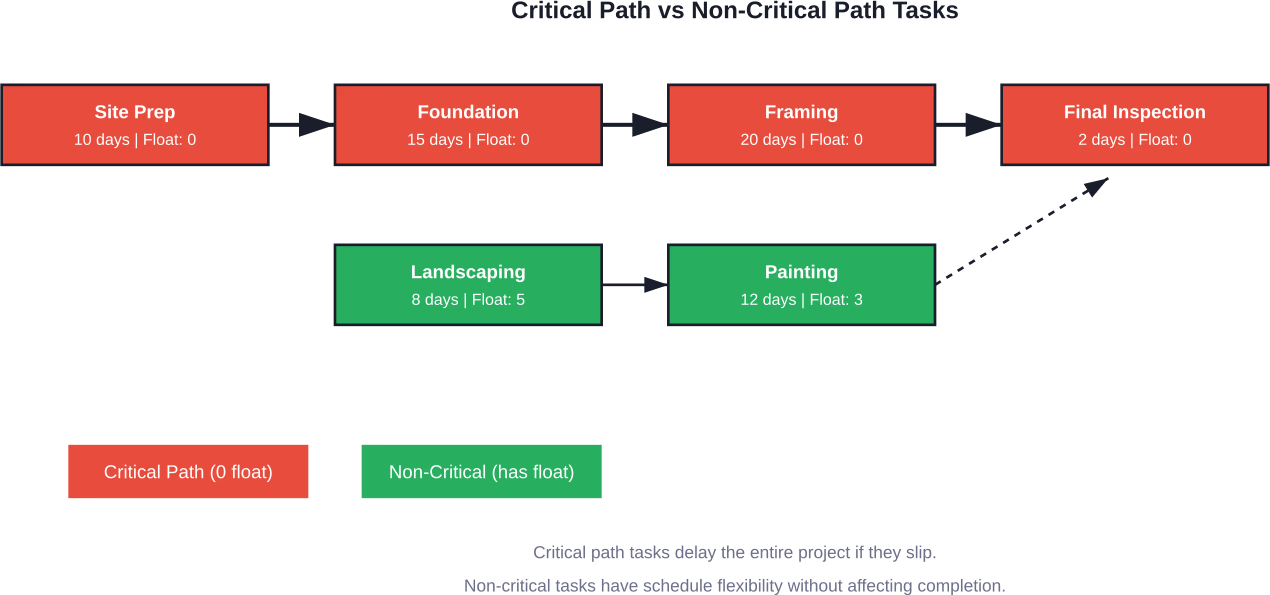
Float (or slack) represents how much a task can delay without pushing back the project completion date. Tasks on the critical path have zero float. Any delay in critical tasks directly delays the entire project.
Non-critical tasks have positive float. If installing landscaping has five days of float, it can start up to five days late without impacting the completion date—assuming nothing else changes.
According to ASCE’s Critical Path Method (CPM) Scheduling course, understanding what’s happening on the critical path versus non-critical activities prevents poorly informed decisions. Resources should focus on critical tasks when schedule pressure mounts.
Types of Construction Schedules
Different projects and project phases require different scheduling approaches. Here’s what works when.
Master Schedule
The master schedule provides a high-level overview of the entire project. It shows major phases, key milestones, and overall duration but omits detailed task-level information.
This schedule type works best for executive reporting and stakeholder communication. Owners don’t need to know when specific electrical circuits get installed—they want to know when the building will be ready for occupancy. The master schedule answers that question without overwhelming them with detail.
Typically spanning the full project duration, master schedules might break a two-year project into monthly or quarterly phases rather than individual tasks.
Milestone Schedule
Milestone schedules focus exclusively on significant events: permits approved, foundation poured, roof weather-tight, mechanical systems commissioned, final inspection passed.
These schedules work well in contracts because they tie payments to tangible progress. When the electrical rough-in milestone is reached and verified, the corresponding payment releases. This creates clear accountability and reduces payment disputes.
Milestone schedules also help identify whether projects are truly on track. Missing a milestone signals problems that require immediate attention.
Detailed Schedule
The detailed schedule (or working schedule) contains every task, every resource assignment, every dependency. It’s the comprehensive plan that superintendents and foremen use to coordinate daily work.
This schedule shows that electricians need access to the second floor on Tuesday, the HVAC subcontractor needs the crane on Wednesday, and inspections are scheduled for Thursday afternoon. It coordinates the dozens of micro-decisions that happen on active construction sites.
Detailed schedules require constant updating. As conditions change—weather delays, material shortages, design changes—the schedule adjusts to reflect the new reality.
Look-Ahead Schedule
Look-ahead schedules zoom in on the next two to six weeks of work. They take relevant portions of the detailed schedule and add even more specificity about near-term activities.
These schedules facilitate weekly coordination meetings. Subcontractors review what’s coming, identify potential conflicts, and commit to their work windows. If the plumber realizes they’ll need an extra day, that’s caught and adjusted before it becomes a problem.
The look-ahead approach comes from Lean construction methodologies. It emphasizes collaborative planning and continuous adjustment rather than rigid adherence to outdated plans.
Construction Scheduling Methods
Now for the actual methodologies—the frameworks that turn task lists into functional schedules.
Critical Path Method (CPM)
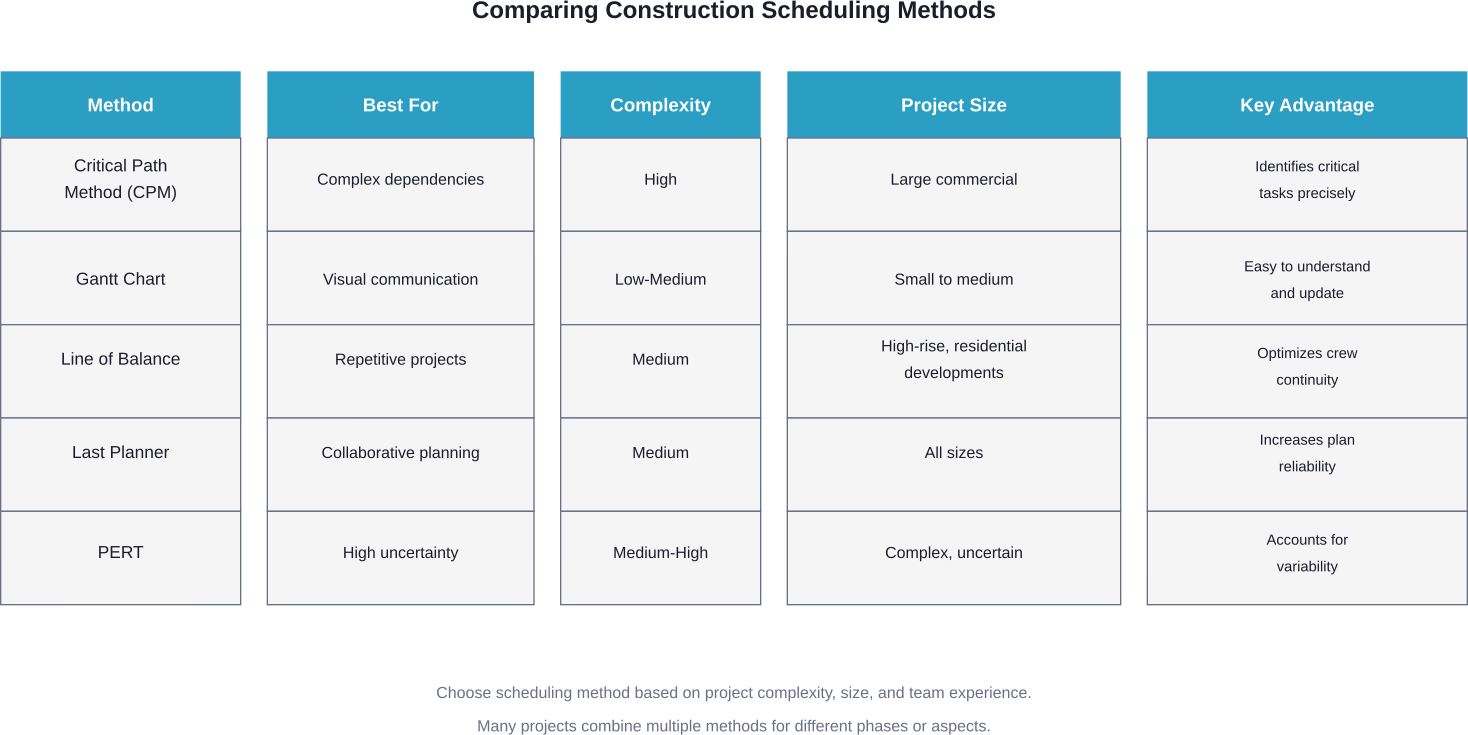
CPM is the gold standard for complex construction projects. It maps all tasks, durations, and dependencies, then calculates which sequence of activities controls the overall timeline.
The method works through network analysis. Each task becomes a node, and dependencies become arrows connecting them. Forward pass calculations determine the earliest each task can start. Backward pass calculations determine the latest each task can start without delaying completion.
The difference between early start and late start is the float. Tasks where early start equals late start form the critical path.
According to ASCE’s Critical Path Method (CPM) Scheduling course, construction engineers who understand the fundamentals of CPM network analysis can make better-informed decisions about resource allocation and schedule compression.
CPM works exceptionally well for projects with complex dependencies and multiple parallel work streams. Large commercial buildings, infrastructure projects, and industrial facilities benefit most from this approach.
The downside? CPM requires significant upfront planning and sophisticated software. Small projects might not justify the effort.
Gantt Charts
Gantt charts visualize schedules as horizontal bars on a timeline. Each bar represents one task, with its length proportional to duration. Tasks stack vertically, creating a visual picture of what happens when.
This method excels at communication. Even people unfamiliar with construction can quickly grasp the overall project flow. Bars that overlap indicate simultaneous work. Gaps reveal idle periods. Color coding can distinguish different trades or work phases.
Gantt charts work well for small to medium projects with relatively straightforward sequences. Residential construction, small commercial renovations, and tenant improvements often use Gantt-based schedules.
The limitation is dependency management. While modern Gantt software can link tasks, complex dependency networks become visually cluttered. For projects where understanding the critical path is essential, CPM provides better analytical capabilities.
Program Evaluation and Review Technique (PERT)
PERT addresses uncertainty by using three duration estimates for each task: optimistic, most likely, and pessimistic. The method calculates weighted averages to produce more realistic timelines.
For construction, this works well with tasks that have high variability. Weather-dependent exterior work, permitting processes, and activities requiring new or unproven techniques benefit from PERT’s probabilistic approach.
The formula weighs the estimates: (Optimistic + 4×Most Likely + Pessimistic) ÷ 6. This produces durations that account for uncertainty without being overly pessimistic.
PERT works best when combined with CPM. Use PERT to estimate task durations more accurately, then use CPM to analyze the resulting network.
Line of Balance (LOB)
LOB specializes in repetitive construction—think high-rise buildings where the same sequence repeats on each floor, or residential developments where identical units march down a street.
The method plots work activities as diagonal lines on a graph. The vertical axis represents units (floors, houses), while the horizontal axis represents time. Each activity’s line slope indicates its production rate.
When lines are properly spaced and parallel, crews work continuously without interfering with each other. If lines converge, it indicates a resource conflict that needs resolution.
LOB works brilliantly for projects with 10+ repetitive units. Below that threshold, simpler methods often suffice.
Last Planner System
Last Planner fundamentally changes how schedules are created. Instead of planners dictating schedules from above, the people actually doing the work collaborate to create realistic commitments.
The system operates in phases. Master planning establishes overall milestones. Phase planning breaks those into major chunks. Look-ahead planning identifies the next 4-6 weeks of work. Weekly work planning gets specific commitments from each trade.
Crucially, foremen and crew leaders—the “last planners”—only commit to what they believe they can actually accomplish. This increases plan reliability because the people making promises are the ones who have to keep them.
Research on Last Planner implementation shows it increases schedule reliability and reduces waste from coordination failures. But it requires cultural change—moving from command-and-control to collaborative planning.
Resource-Oriented Scheduling
This approach optimizes resource utilization rather than just minimizing project duration. It’s particularly useful when specific resources are constrained—a single crane, specialized crews, or expensive equipment.
The method balances task sequences against resource availability. If tasks compete for the same resources, the schedule delays lower-priority tasks even if the critical path would allow them to proceed.
Construction projects with expensive equipment rentals or limited specialized labor benefit most from resource-oriented approaches.
Q Scheduling
Q Scheduling simplifies complex projects by focusing on work queues rather than detailed task networks. It works well for projects with high uncertainty where detailed planning proves futile.
Tasks organize into queues, and crews pull the next task when ready. This eliminates detailed dependency mapping while maintaining logical work sequences. It’s particularly effective for renovation and remodeling where existing conditions create constant surprises.
How to Create a Construction Schedule
Theory matters, but execution determines success. Here’s the practical process for building a functional construction schedule.
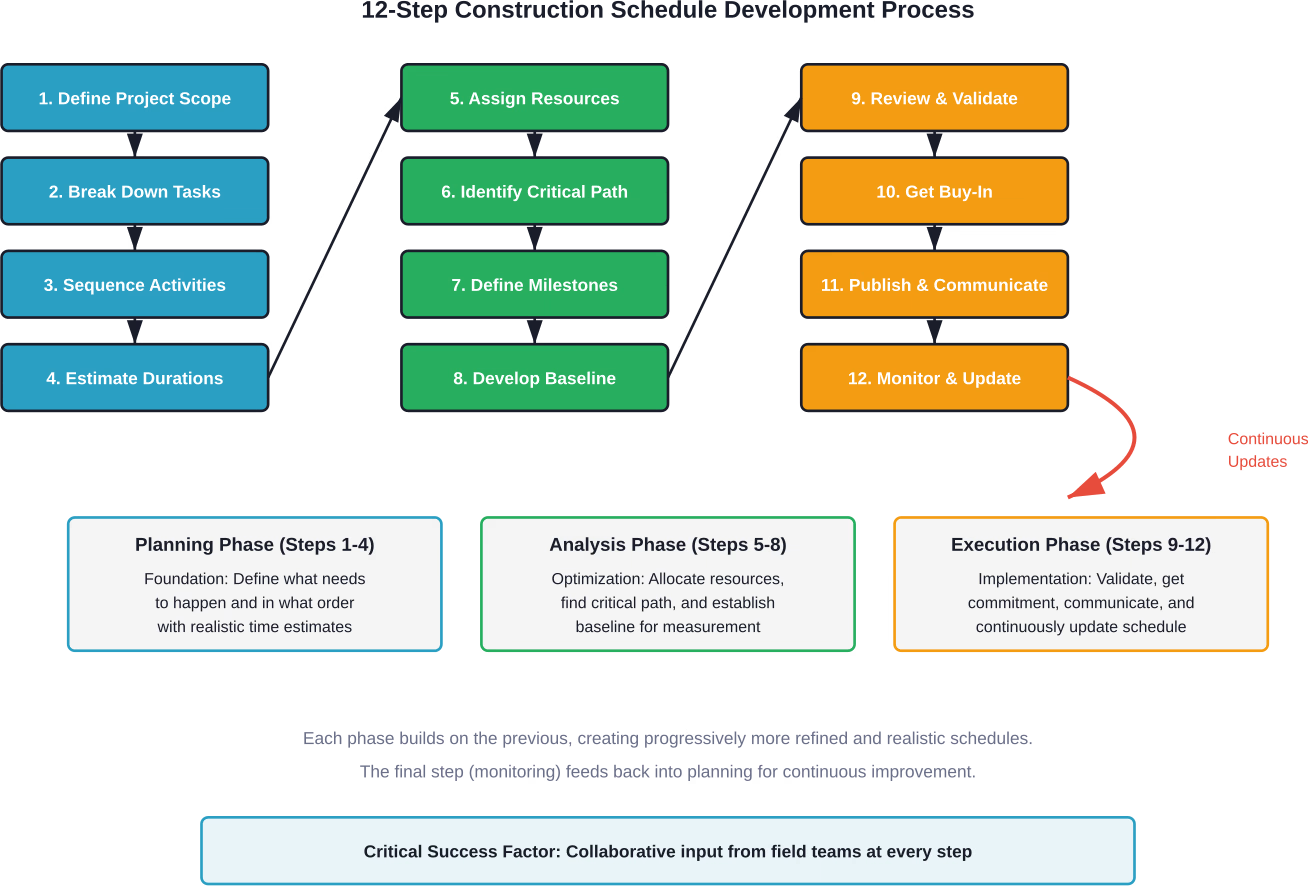
Step 1: Define Project Scope
Start with crystal-clear scope definition. What exactly is being built? What’s included and—just as importantly—what’s excluded?
Gather contract documents, drawings, specifications, and scope statements. Review them thoroughly. Ambiguity in scope leads directly to schedule problems later.
If uncertainties exist, resolve them now. Is the owner supplying certain equipment? Are off-site improvements included? Nail down these details before scheduling begins.
Step 2: Break Down Work Into Tasks
Create the Work Breakdown Structure. Start at the highest level—major project phases—then progressively decompose them into smaller pieces.
Stop breaking down work when tasks reach a manageable size. Generally, tasks lasting between one day and two weeks work well. Anything shorter becomes administrative overhead. Anything longer lacks sufficient detail for tracking.
Involve the people who’ll actually perform the work. Superintendents and trade foremen know the realistic task divisions better than office-based planners.
Step 3: Sequence Activities
Determine the logical order of tasks. What must happen before what? Which activities can run in parallel?
Consider both technical dependencies (physical constraints like concrete curing) and resource dependencies (the same crew can’t work two locations simultaneously).
OSHA requirements also affect sequencing. For steel erection projects, the controlling contractor must ensure specific conditions are met before authorizing commencement, including concrete strength verification and proper site access.
Don’t force artificial sequences to make scheduling easier. If tasks can truly overlap, schedule them that way. But don’t pretend dependencies don’t exist—they’ll assert themselves during construction, usually at the worst possible moment.
Step 4: Estimate Durations
How long will each task actually take? This is where experience and historical data become invaluable.
Consider productivity rates for different trades. A framing crew might install 500 square feet of wall framing per day. Concrete cures at rates determined by mix design and ambient conditions. Equipment operates at documented capacities.
Build estimates from the bottom up. Calculate quantities from drawings, apply productivity rates, and add realistic buffers for normal inefficiencies.
Weather impacts certain tasks significantly. Exterior concrete work in November (in cold climates) takes longer than the same work in June due to heating requirements and slower curing.
If uncertainty is high, consider using three-point PERT estimates to capture the range of possible outcomes.
Step 5: Assign Resources
Identify what each task needs: labor (how many workers of which trades), equipment (what type, how long), and materials (what quantities arriving when).
Check resource availability. If the project needs a tower crane for 12 weeks starting in May, verify that it’s available now—popular equipment books up months in advance.
Consider resource leveling. The schedule might show 15 electricians needed on Tuesday but only three on Wednesday. That’s unrealistic. Smooth resource demands to create consistent crew sizes, even if it slightly extends some non-critical tasks.
Step 6: Identify Critical Path
Calculate the critical path using forward and backward pass analysis. Scheduling software automates this, but understanding the logic remains important.
The critical path determines minimum project duration. It also shows where schedule compression efforts should focus. Adding workers to non-critical tasks won’t accelerate completion—only critical path improvements matter.
Review the critical path for reasonableness. Sometimes the calculation identifies unexpected critical sequences that reveal planning problems.
Step 7: Define Milestones
Establish key project milestones: permit approvals, major deliverables complete, inspection points, owner decision dates, and contractual completion dates.
Milestones create natural progress checkpoints and often trigger contract payments. They also help stakeholders understand project status without wading through detailed task lists.
Step 8: Develop Baseline Schedule
The baseline schedule becomes the reference point for all future progress measurements. According to academic research on baseline schedules, they demonstrate the project execution strategy, key project deliverables, activity planned dates and milestones before work starts.
Save this version. It’s the plan against which actual performance will be measured. According to academic research on Earned Value Management, EVM combines scope, schedule, and cost baselines to determine the project’s well-being and to decide whether action is required.
Step 9: Review and Validate
Before finalizing, review the schedule with all stakeholders. Walk through it with superintendents, major subcontractors, suppliers, and the owner.
Test the schedule’s logic. Are dependencies correctly defined? Do durations reflect realistic productivity? Are resources actually available when scheduled?
The GSA emphasizes collaboration with contractors to develop, adjust, and finalize detailed schedules that identify known dates and agency milestones. This collaborative approach catches problems that individual planners miss.
Step 10: Get Buy-In
Schedules only work when everyone commits to them. Hold a schedule review meeting where each stakeholder confirms their commitments.
Document any concerns or contingencies. If a subcontractor says they can meet their dates “assuming materials arrive on time,” that’s now a tracked risk requiring proactive management.
Step 11: Publish and Communicate
Distribute the schedule to everyone who needs it. Post it in the field office. Include relevant portions in subcontract packages. Send updates to owners and other stakeholders.
Different audiences need different views. Field crews need the next two weeks in detail. Owners want monthly milestone updates. Tailor communication to the audience.
Step 12: Monitor and Update Regularly
Schedules aren’t static documents. Update them regularly—weekly for active projects—to reflect actual progress and changing conditions.
Track what’s complete, what started but isn’t finished, and what hasn’t begun when planned. Reforecast durations for in-progress tasks based on actual productivity.
When delays occur, immediately assess impact. Does it affect the critical path? If so, what recovery strategies are available? The sooner problems are identified, the more options exist for resolution.
Academic research on earned value methods notes that traditional approaches work well for cost monitoring but often present inconsistencies when measuring schedule status. Various refinements address these issues, including methods that focus on critical path tasks and report variances in time units rather than cost proxies.
Schedule Visualization Methods
How schedules are displayed affects how well they communicate. Different formats serve different purposes.
Bar Charts
Bar charts (Gantt charts) display tasks as horizontal bars along a timeline. They’re intuitive and widely understood, making them excellent for general communication.
Color coding enhances bar charts. Different colors can represent different trades, work phases, or status (complete, in progress, not started). This visual differentiation helps readers quickly parse complex schedules.
Network Diagrams
Network diagrams show tasks as boxes (or nodes) connected by arrows representing dependencies. They explicitly visualize the logical relationships between activities.
These diagrams make the critical path obvious—often shown in red or highlighted. They help identify parallel work paths and potential bottlenecks.
The downside is visual complexity. Large projects produce network diagrams too dense to comprehend without zooming into specific sections.
Milestone Charts
Milestone charts show only key events, stripping away task-level detail. They work well for executive reporting and owner communication.
These typically display as timelines with milestone markers—diamonds, flags, or other symbols—at specific dates. Labels indicate what each milestone represents.
Time-Location Diagrams
For projects with linear geography—highways, pipelines, high-rises—time-location diagrams plot progress along two axes: time (horizontal) and location/floor (vertical).
Each activity becomes a diagonal line across the diagram. The line’s slope indicates production rate. Parallel lines show activities progressing together. Intersecting lines reveal conflicts requiring resolution.
This format makes spatial coordination visible in ways traditional schedules miss.
Flowline Diagrams
Similar to time-location diagrams, flowline diagrams work particularly well for repetitive construction. Multiple activities flow across multiple units, with lines showing the continuous movement of crews.
Properly spaced flowlines indicate balanced production where crews maintain steady work without interference. Converging lines signal problems needing adjustment.
Common Construction Scheduling Challenges
Even well-planned schedules encounter problems. Recognizing common challenges helps mitigate them.
Unrealistic Duration Estimates
Optimistic estimates plague construction schedules. Teams underestimate how long work takes, either from genuine optimism or pressure to produce aggressive schedules.
Combat this by basing estimates on historical data rather than aspirational thinking. Track actual productivity on past projects and use those rates. Add realistic buffers for coordination, rework, and normal inefficiency.
Incomplete Scope Definition
Vague scope leads to schedule chaos. When teams discover additional work wasn’t included in the schedule, delays cascade through dependent activities.
Detailed scope review before scheduling prevents this. If scope remains genuinely uncertain, identify those areas explicitly and include contingency time.
Poor Dependency Mapping
Missing or incorrect dependencies cause schedules to show impossible scenarios—tasks starting before prerequisites finish, or artificially serial sequences that could actually overlap.
Have multiple people review dependency logic. Field personnel often catch relationships that office planners miss.
Resource Conflicts
Schedules showing the same crew in two places simultaneously obviously don’t work. But subtler resource conflicts—needing more equipment than exists, or exceeding site capacity for workers—also derail plans.
Resource-loading the schedule reveals these conflicts during planning rather than during construction.
Weather and External Factors
External factors beyond anyone’s control impact schedules. Weather delays exterior work. Permitting processes take unpredictable time. Supply chains experience disruptions.
Build weather days into schedules for climate-appropriate amounts. Track permitting separately with regular follow-up. Identify long-lead materials early and order with buffer time.
Änderungsanträge
Scope changes affect schedules. A simple change might seem minor but could require rerouting the critical path through different activities.
Process every change order through schedule impact analysis before approval. Understand both immediate effects and downstream consequences.
Lack of Updates
Schedules quickly become obsolete without regular updates. Teams start ignoring outdated schedules, eliminating their coordinating value.
Establish updated discipline from day one. Weekly updates work for most projects. Assign responsibility explicitly—someone must own schedule maintenance.
Communication Failures
The best schedule in the world doesn’t help if nobody looks at it. Communication failures leave subcontractors unaware of their work windows or changes to the sequence.
Distribute schedules widely. Hold weekly coordination meetings. Post look-ahead schedules prominently. Over-communicate rather than under-communicate.
Inadequate Contingency
Schedules with zero float and no contingency time guarantee delays. When everything must go perfectly for on-time completion, something won’t.
Build appropriate contingency into schedules. The amount depends on project risk and complexity, but 10-15% for moderately complex work is reasonable.
Software Complexity
Sophisticated scheduling software offers powerful capabilities but requires training. Teams that don’t understand their tools produce garbage despite using expensive software.
According to ASCE’s Critical Path Method (CPM) Scheduling course, construction engineers need to be able to understand what is and isn’t going on inside the “black box” of their preferred scheduling software, or they run the risk of making poorly informed decisions which affect their clients’ bottom line. Invest in training, not just software licenses.
Best Practices for Schedule Management
Beyond avoiding problems, certain practices make schedules more effective.
Start Early
Begin scheduling during preconstruction, not after mobilization. The earlier the schedule exists, the more valuable it becomes for coordination and procurement.
Involve the Right People
Schedulers shouldn’t work in isolation. Involve superintendents, foremen, and major subcontractors in schedule development. Their practical knowledge produces more realistic plans.
Keep It Current
Schedule updates must reflect reality. If a task is 50% complete, record that accurately. If durations are proving longer than planned, reforecast based on actual productivity.
Outdated schedules lose credibility fast. Teams stop referencing them and coordination suffers.
Track Commitments
When subcontractors commit to dates, document those commitments. Hold teams accountable to their promises while providing support when problems arise.
Focus on Critical Path
Resource allocation should prioritize critical path activities. If schedule pressure mounts, accelerating non-critical tasks accomplishes nothing.
This doesn’t mean ignoring non-critical work, but recognizing where compression efforts actually matter.
Build Appropriate Detail
Too little detail provides insufficient coordination. Too much detail creates maintenance overhead that teams can’t sustain.
Generally, tasks ranging from one day to two weeks in duration provide good granularity. Adjust based on project complexity and team sophistication.
Use Multiple Views
Don’t rely on a single schedule format. Maintain detailed working schedules for coordination, milestone schedules for owners, and look-ahead schedules for near-term planning.
Each view serves different audiences and purposes. Extract what’s needed from the master schedule rather than forcing everyone to use the same view.
Integrate Cost and Schedule
Cost-loaded schedules connect financial management with time management. They enable earned value analysis and cash flow forecasting.
According to academic research on Earned Value Management, EVM combines scope, schedule, and cost baselines to determine the project’s well-being and to decide whether action is required. Integrating these elements provides comprehensive visibility into project status.
Learn From History
Capture lessons learned at project completion. Which tasks took longer than estimated? Where did unexpected delays occur? What worked well?
Feed this information back into estimating for future projects. Organizations that systematically learn from experience produce progressively better schedules.
Technology and Scheduling Software
Modern construction scheduling depends heavily on specialized software. These tools automate calculations, visualize plans, and facilitate updates.
Capabilities to Expect
Quality scheduling software provides critical path calculation, resource leveling, multiple view options (Gantt, network, milestone), and integration with other project management tools.
Look for collaboration features that let multiple team members access and update schedules. Cloud-based platforms enable field teams to reference current schedules from mobile devices.
Reporting capabilities matter. Software should generate progress reports, look-ahead schedules, and variance analysis without manual data manipulation.
Common Scheduling Platforms
Several software platforms dominate construction scheduling. Each has strengths for different project types and team sizes.
Features and pricing vary, so check official documentation for current capabilities rather than relying on outdated information. Software evolves rapidly, with vendors constantly adding features and adjusting pricing models.
Einschränkungen der Software
Even the best software can’t fix bad inputs. Garbage in, garbage out applies fully to scheduling. Software automates calculations but doesn’t replace the judgment required to build realistic plans.
Don’t let software complexity obscure schedule logic. The tool should clarify understanding, not obscure it behind features nobody comprehends.
The Future of Construction Scheduling
Construction scheduling continues evolving as technology and methodologies advance.
Artificial Intelligence and Machine Learning
AI applications are beginning to analyze historical project data to improve duration estimates and identify risk patterns. Machine learning algorithms can flag schedule anomalies that human reviewers miss.
These technologies remain emerging rather than mature, but their trajectory points toward increasingly intelligent scheduling assistance.
Integration der Gebäudedatenmodellierung (BIM)
Linking 3D building models with schedules creates 4D BIM—three spatial dimensions plus time. This visualization shows how buildings will progress through construction phases.
4D BIM helps identify spatial conflicts and coordination issues during planning rather than in the field. It also creates compelling visual schedules for stakeholder communication.
Real-Time Progress Tracking
Sensors, drones, and computer vision increasingly enable automated progress tracking. Instead of manual schedule updates based on foreman reports, systems can directly measure work completion.
This real-time feedback accelerates the planning cycle and improves accuracy.
Lean and Pull Planning
Lean construction principles, particularly Last Planner System, continue gaining adoption. These approaches emphasize collaborative planning and work-ready definitions that improve schedule reliability.
The shift from push scheduling (planners dictate) to pull planning (crews commit) represents a fundamental change in how construction projects coordinate work.
Vorfertigung und modulares Bauen
As more building components are manufactured off-site, scheduling evolves to coordinate parallel shop fabrication with on-site preparation. This increases schedule complexity in some ways while reducing weather dependence and site congestion.
Effective schedules must now integrate off-site manufacturing timelines, transportation logistics, and on-site assembly sequences.
Schedule Quality Indicators
How do teams know if their schedule is actually good? Several quality metrics provide objective assessment.
Reasonable Task Durations
Tasks should generally fall between one day and two weeks. Schedules with many one-hour tasks or three-month tasks lack appropriate granularity.
Logical Relationships
Dependencies should make physical sense. Review relationships to ensure they reflect actual construction constraints rather than artificial sequencing.
Appropriate Level of Detail
Schedules should contain enough detail for coordination without becoming unmanageable. A $10 million project might have 500-1000 activities. Significantly fewer suggests insufficient detail; significantly more might be over-detailed.
Reasonable Total Float
Healthy schedules have multiple paths with various float amounts. If everything is critical or near-critical, the schedule likely lacks contingency. If nothing is critical, dependencies might be missing.
Identifiable Critical Path
The critical path should be clear and logical. If it jumps erratically between unrelated work areas, the schedule probably has logic errors.
Resource Loading
Quality schedules assign resources to tasks. Unloaded schedules can’t identify resource conflicts or support cash flow forecasting.
Milestone Alignment
Milestones should align with contractual requirements and natural work breakpoints. Missing key milestones or having too many meaningless ones indicates poor schedule development.
Contractual and Legal Aspects
Construction schedules aren’t just planning tools—they’re often contractual documents with legal implications.
Schedule Provisions in Contracts
Many construction contracts specify schedule requirements: submission timing, level of detail, update frequency, and approval processes.
Contractors must comply with these contractual obligations. Failure to submit or update schedules can breach contract terms and jeopardize payment.
Time Is Money
Delays cost money—both in direct costs (extended general conditions, equipment rental) and indirect costs (lost business opportunities, carrying costs).
Contracts often include liquidated damages for late completion. These predetermined penalties compensate owners for delay costs without requiring proof of actual damages.
Conversely, many contracts offer early completion bonuses to incentivize faster delivery.
Delay Analysis
When projects run late, schedule analysis determines responsibility. Was the delay caused by the contractor, the owner, or external factors?
Forensic schedule analysis examines the baseline schedule, as-built progress, and change impacts to allocate delay responsibility. This often involves detailed critical path analysis to determine which delays actually extended project duration versus those with available float.
Documentation matters enormously. Regular schedule updates create the historical record needed for delay analysis.
Acceleration and Schedule Compression
When delays occur, owners may demand acceleration—working faster to regain schedule. Acceleration costs extra: overtime labor, expedited materials, additional shifts.
Who pays for acceleration depends on who caused the delay. If contractor delays require acceleration to meet contractual dates, the contractor typically bears costs. If owner changes or delays necessitate acceleration, the owner should pay.
Constructive acceleration occurs when owners refuse time extensions for legitimate delays but demand on-time completion anyway. This creates claims and disputes.
Industry Standards and Guidelines
Several organizations provide scheduling standards and best practices.
American Society of Civil Engineers (ASCE)
ASCE offers training programs on CPM scheduling and project controls. Their courses emphasize understanding scheduling fundamentals beyond simply operating software.
Associated General Contractors (AGC)
AGC provides construction management training including scheduling methodologies. Their Project Management Course covers planning, scheduling, and project administration.
AACE International
AACE publishes recommended practices for planning and scheduling, including guidelines for schedule quality assessment and earned value management.
Project Management Institute (PMI)
PMI’s Project Management Body of Knowledge (PMBOK) includes comprehensive sections on project schedule management applicable across industries including construction.
Schlussfolgerung
Construction schedules are far more than administrative paperwork—they’re the central coordination mechanism for complex projects involving dozens of moving parts. A well-crafted schedule aligns teams, manages resources, controls costs, and provides the roadmap from empty site to completed building.
The fundamentals remain consistent across methodologies: break work into manageable tasks, sequence them logically, estimate durations realistically, identify the critical path, and update constantly as work progresses. Whether using CPM, Gantt charts, Last Planner, or hybrid approaches, these principles apply.
Technology continues advancing, offering more sophisticated tools for planning, analyzing, and communicating schedules. But technology amplifies good practices—it doesn’t replace them. The best scheduling software in the world produces garbage with bad inputs or poor logic.
Success comes from combining sound methodology with collaborative planning. Involve the people doing the work in schedule development. They understand the realities that office-based planners miss. Get buy-in through participation rather than imposing schedules from above.
Maintain discipline around updates. Schedules only coordinate work when they reflect current conditions. Outdated schedules lose credibility and teams stop referencing them.
According to GSA project schedule management guidance, project schedules should serve as living tools that communicate and track project delivery with enough detail to address scope and complexity. This practical definition captures the essence—schedules are tools for action, not paperwork exercises.
For construction professionals new to scheduling, start with fundamentals. Understand critical path concepts, learn one scheduling method well, and practice on progressively complex projects. For experienced schedulers, continue refining skills through training like the ASCE courses on CPM and project controls.
The construction industry faces constant pressure to deliver faster, cheaper, and better. Effective scheduling directly addresses all three. Better schedules compress timelines by identifying opportunities for parallel work and eliminating coordination delays. They control costs by optimizing resource usage and preventing expensive surprises. And they improve quality by providing adequate time for proper work execution.
Start planning your next project schedule today. Review past projects to understand actual productivity rates. Involve your team early in planning discussions. Choose scheduling approaches appropriate for your project’s complexity. And commit to maintaining the discipline required for effective schedule management.
Construction scheduling isn’t glamorous, but it’s absolutely essential. Master these principles and watch project outcomes improve—on time, on budget, and with fewer coordination headaches.
Häufig gestellte Fragen
What’s the difference between a construction schedule and a project plan?
A project plan is comprehensive—it covers scope, budget, quality standards, communication protocols, risk management, and schedule. The construction schedule is specifically the time-based component showing when tasks happen. Think of the schedule as one critical part of the broader project plan.
How often should construction schedules be updated?
Weekly updates work for most active construction projects. This frequency keeps schedules current without creating excessive administrative burden. Some projects update more frequently during critical phases, while simpler projects might update bi-weekly. The key is consistency—whatever frequency is chosen, maintain it throughout the project.
Who is responsible for creating the construction schedule?
Responsibility varies by contract type. On design-bid-build projects, the general contractor typically creates and maintains the schedule. On construction management projects, the CM often coordinates schedule development with input from trade contractors. Design-build teams develop schedules collaboratively. Regardless of who formally owns it, effective schedules require input from everyone performing the work.
Can construction projects succeed without formal schedules?
Very small, simple projects can sometimes proceed with informal planning—a handyman remodeling a bathroom might work from a mental checklist. But as complexity increases—multiple trades, long duration, significant budget—formal scheduling becomes essential. Projects without proper schedules typically experience coordination failures, budget overruns, and delays. The question isn’t whether to schedule, but how much detail the project warrants.
What’s the most common construction scheduling method?
Critical Path Method combined with Gantt chart visualization dominates commercial and industrial construction. CPM provides the analytical rigor to manage complex dependencies, while Gantt charts communicate the schedule effectively. Smaller residential projects often use simpler Gantt charts without full CPM analysis. Last Planner System is growing rapidly in adoption, particularly on projects emphasizing collaborative planning.
How long does it take to create a construction schedule?
This varies dramatically with project size and complexity. A small commercial renovation might require a few days to develop a solid schedule. A major hospital or infrastructure project could take weeks or months of planning with input from multiple parties. Generally, allocate 1-3% of total project labor hours to scheduling and schedule management activities. Rush scheduling typically produces poor results—invest the time upfront.
What happens when construction schedules and reality diverge?
They always diverge to some degree—no schedule perfectly predicts reality. The question is how teams respond. Good project management notices variances quickly through regular monitoring, analyzes impacts, and adjusts plans accordingly. Schedules should be living documents that evolve as conditions change. Problems arise when teams either ignore variances (continuing with obsolete plans) or overreact to minor deviations (constant panic and rework).

Unsere Fallstudien
Wir haben mehr als 200 BIM- und VDC-Projekte für Gewerbe, Industrie und Wohnungsbau durchgeführt.
Unsere Arbeit umfasst:
Automatisierung der Schalungsplanung
Our client from
California, USA
Automatisierung von abgehängten Decken
Our client from
New York, USA
Automatisierung von Wandkonstruktionen
Our client from
California, USA