Haben Sie noch Fragen? Kontaktieren Sie uns!
Kommen Sie in unser Team!
Kostenloses Angebot oder Beratung anfordern

Creating a construction schedule involves breaking down the project into phases and tasks, establishing dependencies, estimating durations, allocating resources, and visualizing the timeline using methods like Gantt charts or the Critical Path Method (CPM). A well-structured schedule helps coordinate teams, manage budgets, track progress, and minimize delays throughout the construction lifecycle.
Construction projects fail or succeed based on one critical factor: scheduling. A construction schedule isn’t just a calendar with dates—it’s the operational blueprint that coordinates hundreds of moving parts, from material deliveries to subcontractor availability to weather contingencies.
According to ASCE course materials on Critical Path Method scheduling, construction engineers need to understand the processes within their scheduling software, or they risk making poorly informed decisions that affect their clients’ bottom line. The Critical Path Method (CPM) and network analysis form the foundation of modern construction scheduling techniques.
But here’s the thing—creating an effective construction schedule requires more than just software proficiency. It demands a deep understanding of construction processes, resource constraints, dependency relationships, and risk management. This guide breaks down key principles and processes for building construction schedules.
What Is a Construction Schedule?
A construction schedule is a detailed timeline that outlines all activities required to complete a construction project from start to finish. It specifies when each task begins and ends, which resources are needed, how tasks relate to one another, and when key milestones must be achieved.
The schedule serves multiple critical functions. It coordinates different trades and subcontractors so they’re not competing for the same workspace. It helps procurement teams order materials with proper lead times. It enables project managers to track progress against baselines and identify delays before they cascade through the entire project.
More importantly, the construction schedule becomes a communication tool. Stakeholders from owners to subcontractors rely on it to understand their responsibilities and deadlines. When disputes arise about project delays, the schedule provides objective documentation of what was planned versus what actually occurred.
Key Components of Construction Schedules
Every effective construction schedule contains several essential elements:
- Project Milestones: Specific points in time that indicate important stages of the project
- Activities and Tasks: Individual work items that must be completed
- Duration: The time required to complete each task, usually measured in days or weeks
- Dependencies: Relationships between tasks that dictate sequence and timing
- Resources: Labor, equipment, and materials allocated to each activity
- Float Time: Flexibility in the schedule before a delay impacts the completion date
- Critical Path: The sequence of tasks that determines the minimum project duration
Understanding these components is fundamental before diving into schedule creation.
Why Construction Scheduling Matters
Construction scheduling directly impacts project success across multiple dimensions. Poor scheduling leads to resource conflicts, budget overruns, safety hazards, and damaged business relationships.
Real talk: project delays are a constant threat to construction success. Academic research on construction scheduling indicates that determining parameters like activity duration, dependency relationships, and probability of occurrence presents challenges due to inherent uncertainty in construction processes. Traditional methods like PERT, CPM, and Precedence Diagramming Method (PDM) provide frameworks, but they require accurate input data and regular updates.
Effective scheduling enables proactive problem-solving. When the schedule shows a potential delay three weeks out, teams can mobilize additional resources, adjust sequencing, or negotiate timeline expectations with owners. Without that visibility, problems only surface when they’re already causing damage.
The financial implications are significant too. Construction contracts often include liquidated damages clauses that penalize late completion. Conversely, early completion bonuses reward efficient scheduling and execution. The schedule becomes a tool for protecting profit margins.
Build Schedules That Hold Up on Site

Most construction schedules break when design intent shifts during coordination or doesn’t match site reality. Powerkh works across design and construction to keep those gaps visible, so the schedule is based on what can actually be built, not just what’s planned.
They focus on coordination, constructability, and design-to-site alignment. By resolving critical areas before construction and tracking where site conditions deviate from the design, they help teams avoid delays caused by rework, access conflicts, and late design fixes.
Keep Your Timeline Moving Without Surprises
Here’s how Powerkh support more reliable schedules:
- Resolve coordination issues in critical zones before they affect site work
- Review constructability, tolerances, and interfaces before construction
- Highlight design gaps that can lead to rework and delays
- Monitor design vs site deviations during construction
Contact Powerkh to reduce delay risks and keep your construction schedule aligned with real site conditions.
Construction Scheduling Methods and Techniques
Different scheduling methodologies suit different project types and complexities. Understanding these approaches helps project teams select the right tool for their specific situation.
Critical Path Method (CPM)
The Critical Path Method remains the most widely used scheduling technique in construction. CPM identifies the longest sequence of dependent tasks that determines the minimum project duration. Any delay to activities on the critical path directly extends the project completion date.
According to ASCE course materials, CPM uses network analysis to map task dependencies and calculate early start, early finish, late start, and late finish dates for each activity. This reveals which tasks have float (scheduling flexibility) and which are critical.
The methodology works like this: First, all project activities are identified and their durations estimated. Second, dependencies between activities are established (which tasks must finish before others can start). Third, the network diagram is drawn showing these relationships. Fourth, forward and backward passes through the network calculate the critical path.
CPM excels at complex projects with many interdependent activities. It provides clear visibility into schedule risk and helps prioritize management attention on critical activities.
Gantt Charts
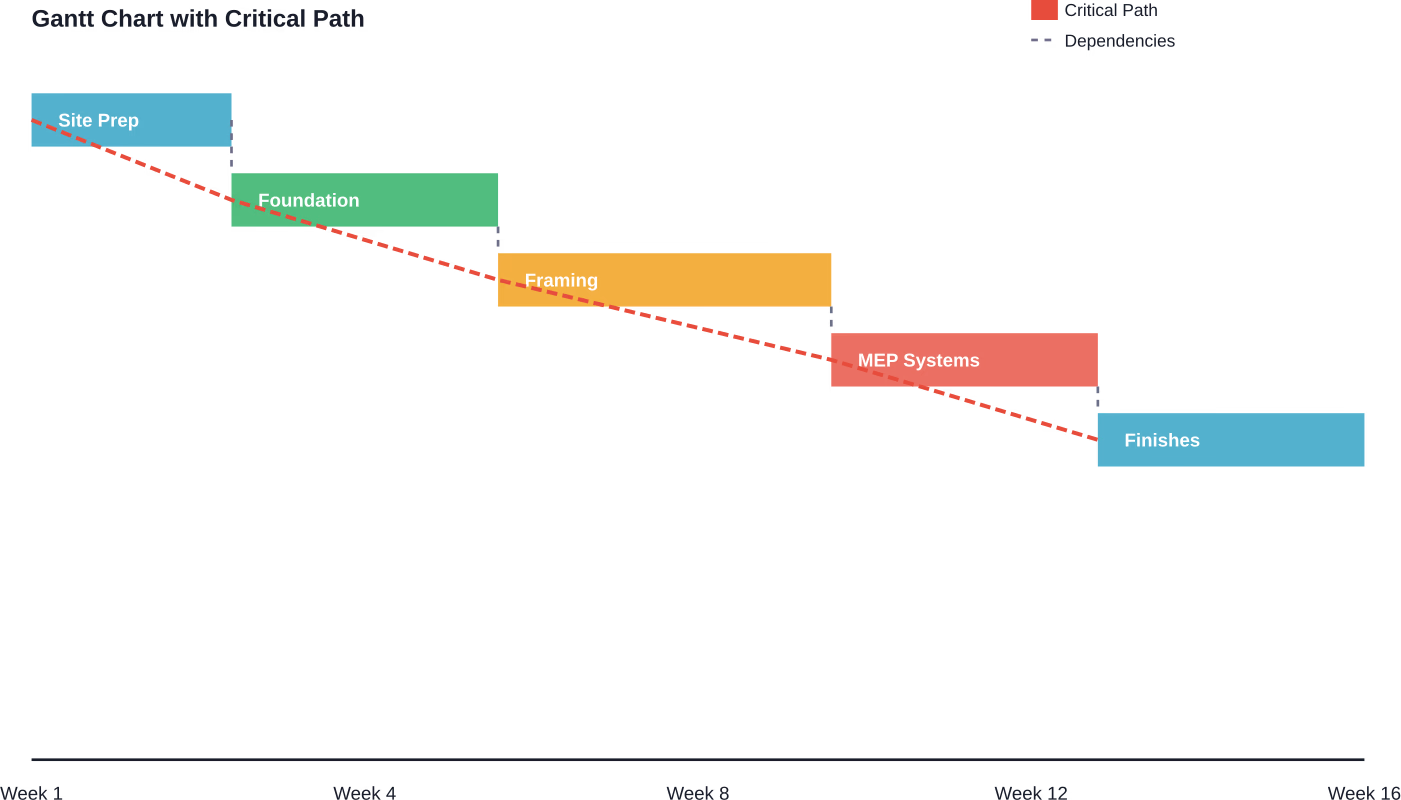
Gantt charts visualize the schedule as horizontal bars plotted against a calendar timeline. Each bar represents a task, with its length corresponding to duration and its position showing start and end dates.
The visual format makes Gantt charts extremely accessible to stakeholders who aren’t scheduling experts. They quickly show what’s happening when, which tasks overlap, and how the project progresses over time.
Modern Gantt chart software links bars to show dependencies, marks milestones, and color-codes tasks by trade or status. This combines CPM logic with intuitive visualization.
Gantt charts work well for smaller projects or for presenting high-level schedules to owners and executives. For large projects with hundreds of activities, they can become cluttered and difficult to read.
Line of Balance (LOB)
Line of Balance scheduling suits repetitive construction projects like residential developments, high-rise buildings with identical floors, or pipeline installations. The method visualizes production rates and crew movements across multiple units.
Stanford University research (Morkos, 2014) found that CPM construction durations for the case studies were on average 49% shorter than the fastest schedules generated by the Tri-Constraint Method (TCM). This occurs in project configurations where CPM does not model spatial requirements, allowing crews to be scheduled in the same space simultaneously. For comparison, the fastest TCM schedules were on average 45% shorter than the fastest Line of Balance (LOB) schedules.
LOB plots activities as diagonal lines on a graph where the x-axis represents time and the y-axis represents units (floors, houses, segments). The slope of each line shows production rate. When lines converge, it signals potential resource conflicts that need resolution.
This method optimizes crew productivity by maintaining steady work flow across units and minimizing downtime between tasks.
Program Evaluation and Review Technique (PERT)
PERT addresses uncertainty in task duration estimates by using three time estimates for each activity: optimistic, most likely, and pessimistic. The method calculates weighted average durations and provides probability ranges for completion dates.
PERT works best for projects with high uncertainty, such as first-of-kind construction or experimental building methods. The probabilistic approach helps stakeholders understand schedule risk more realistically than single-point estimates.
However, PERT requires more effort to develop and maintain than deterministic methods like CPM. Teams must justify three separate estimates for each activity and update them as work progresses.
Last Planner System
The Last Planner System integrates scheduling with lean construction principles. It involves the people actually doing the work (the “last planners”) in short-term schedule development and commitment-making.
The approach uses pull planning, where teams work backward from milestones to identify required activities and handoffs. Weekly work plans are developed collaboratively, with crews committing only to tasks they can realistically complete.
Last Planner improves schedule reliability by surfacing constraints before they cause delays and fostering accountability among trade partners. It complements master schedules developed with CPM or other methods.
How to Create a Construction Schedule: Step-by-Step Process
Building an effective construction schedule follows a logical sequence. Each step builds on previous work, creating a comprehensive project roadmap.
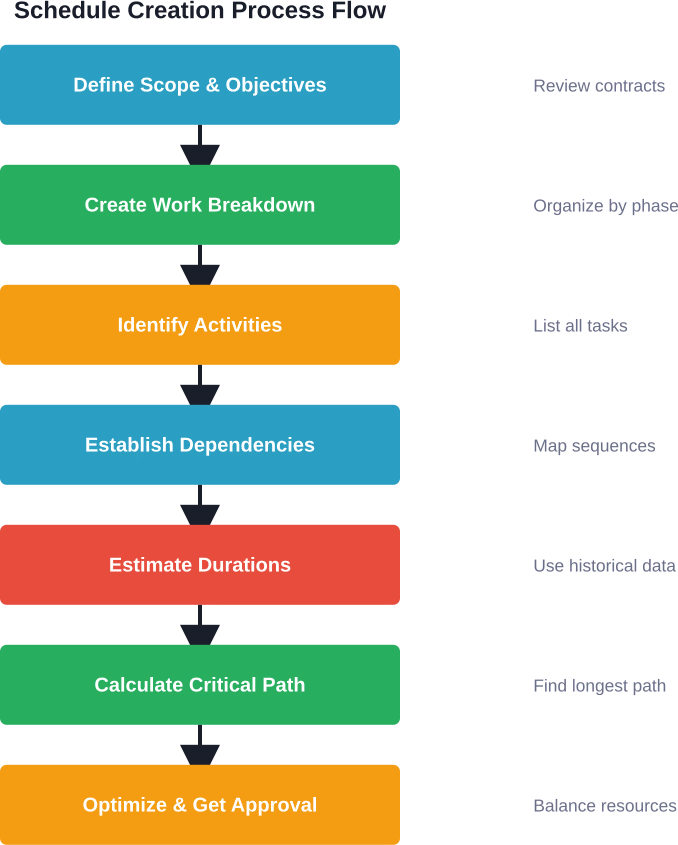
Step 1: Define Project Scope and Objectives
Start by clearly understanding what the project entails. Review contract documents, architectural drawings, specifications, and scope definitions. Identify the overall project goal and any constraints or special requirements.
Document key parameters like project start date, required completion date, budget limitations, and quality standards. These become the framework within which the schedule must operate.
Clarify milestone requirements from the owner. Many contracts specify interim milestones like “building envelope weathertight by November 1” or “substantial completion by March 15.” These fixed points anchor the schedule development.
Step 2: Develop the Work Breakdown Structure (WBS)
The Work Breakdown Structure decomposes the project into manageable components. It organizes the work hierarchically from broad phases down to specific tasks.
A typical WBS structure looks like this:
| WBS Level | Definition | Beispiel
|
|---|---|---|
| Project | The overall construction goal | Construct New Office Building |
| Phase | Key stages organized chronologically | Site Preparation, Foundation, Superstructure |
| Work Package | Major deliverables within each phase | Excavation, Concrete Pour, Steel Erection |
| Activity | Specific tasks that can be scheduled | Install Forms, Place Rebar, Pour Slab |
The WBS ensures nothing gets overlooked and provides the activity list that feeds into the schedule. For complex projects, this might involve hundreds or thousands of individual activities.
Involve team members with field experience during WBS development. Superintendents and trade foremen know the actual work sequences and can identify activities that office-based planners might miss.
Step 3: Identify Activities and Tasks
Transform the WBS into a detailed activity list. Each activity should represent a discrete work package with a clear start and finish.
Good activity definition is specific enough to manage but not so granular that the schedule becomes unwieldy. For most commercial projects, activities ranging from 3-10 days duration work well. Shorter tasks create scheduling overhead; longer tasks reduce schedule control.
Include all work types: demolition, site work, structural systems, building envelope, MEP systems, interior finishes, and closeout activities. Don’t forget submittal reviews, permit approvals, inspections, and other non-construction activities that consume time.
Step 4: Sequence Activities and Establish Dependencies
Determine the logical order in which activities must occur. Some sequences are physically mandatory—concrete must cure before formwork removal. Others reflect resource decisions or best practices.
Four types of dependencies exist:
- Finish-to-Start (FS): The predecessor must finish before the successor starts (most common)
- Start-to-Start (SS): The successor can start when the predecessor starts
- Finish-to-Finish (FF): The successor finishes when the predecessor finishes
- Start-to-Finish (SF): The predecessor starts before the successor can end
Map these dependencies in your scheduling software or network diagram. This creates the logic that drives the schedule calculations.
Be careful not to over-constrain the schedule with unnecessary dependencies. Each dependency reduces scheduling flexibility and can create artificial constraints.
Step 5: Estimate Activity Durations
Duration estimation combines historical data, productivity rates, resource availability, and professional judgment. The goal is realistic timeframes—not optimistic or pessimistic extremes.
Several estimation approaches work:
- Historical data from similar completed projects
- Productivity rates applied to quantities (e.g., square feet of wall framing per crew-day)
- Subcontractor input based on their crew sizes and methods
- Industry standard references like RS Means
Account for site-specific factors. Difficult access, congested urban sites, extreme weather exposure, or limited laydown areas all reduce productivity compared to ideal conditions.
Document assumptions behind duration estimates. When schedules are challenged later, this backup justifies the original plan.
Step 6: Allocate Resources
Assign the labor, equipment, and materials required for each activity. Resource allocation serves multiple purposes: it validates duration estimates, identifies resource conflicts, and enables cost loading.
For labor, specify crew sizes and composition. A concrete placement activity might require 6 laborers, 2 finishers, 1 pump operator, and 1 superintendent. The crew size directly affects productivity and duration.
Equipment resources include cranes, excavators, concrete pumps, scaffolding, and temporary utilities. Some equipment has long lead times for rental or limited availability, creating schedule constraints.
Material assignments track major procurements like structural steel, curtain wall systems, mechanical units, and engineered wood products. Lead time for these items often drives early procurement and can impact the critical path.
Step 7: Determine the Critical Path
With activities, durations, and dependencies defined, calculate the critical path using forward and backward pass analysis. The forward pass determines early start and finish dates; the backward pass calculates late start and finish dates.
Activities where early dates equal late dates have zero float—they’re on the critical path. Any delay to these activities directly extends project completion.
The critical path isn’t static. As work progresses and durations adjust, different activity sequences may become critical. Regular critical path analysis keeps management focused on the right priorities.
Near-critical paths—activity sequences with minimal float—also deserve attention. A near-critical path can quickly become critical if tasks slip slightly.
Step 8: Add Milestones and Constraints
Milestones mark significant project achievements: groundbreaking, topping out, substantial completion, final completion. They provide progress checkpoints and often trigger payments or contractual obligations.
Constraints represent external restrictions on scheduling flexibility. A constraint might be “roof installation must be completed before November 1 to avoid winter weather” or “foundation work cannot start until April 15 due to permit restrictions.”
Weather-related constraints are common. Concrete placement, asphalt paving, and exterior painting all have temperature or precipitation limits that restrict when they can occur in certain climates.
Step 9: Optimize and Balance the Schedule
The first schedule draft rarely represents the best plan. Optimization involves adjusting activity sequences, resource allocations, and work methods to improve the schedule.
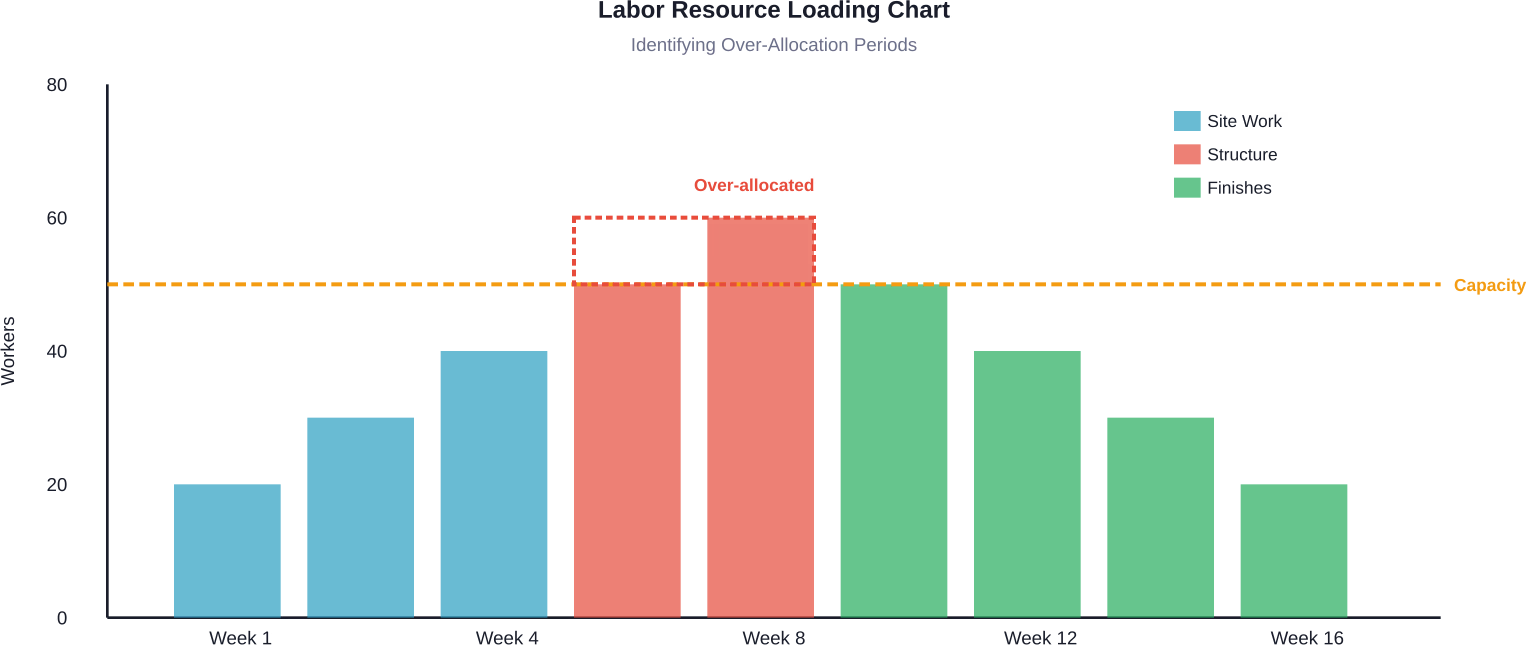
Resource leveling smooths resource demand over time, avoiding peaks that require excessive crew sizes or equipment. This often extends duration slightly but creates a more executable plan.
Time-cost trade-off analysis evaluates crashing activities—shortening durations by adding resources. This might help meet aggressive deadlines but increases costs.
Look for opportunities to shift non-critical work into periods with excess capacity. This maintains crew productivity and can sometimes reduce overall duration.
Step 10: Create Schedule Visualizations
Different audiences need different scheduled presentations. Field crews work from short-term look-ahead schedules. Owners want milestone summaries. Project managers need detailed Gantt charts.
Common visualization formats include:
- Gantt charts showing all activities over time
- Milestone charts highlighting key dates
- Network diagrams displaying logic relationships
- Three-week look-ahead schedules for field coordination
- Recovery schedules showing acceleration plans
Schedule software can generate multiple views from the same underlying data, tailoring presentations to specific needs.
Step 11: Get Stakeholder Buy-In
The schedule only works if everyone commits to it. Present the schedule to key stakeholders—owners, designers, subcontractors, suppliers—and solicit feedback.
Subcontractors need to confirm they can meet assigned durations with available crews. Suppliers must verify material lead times match schedule assumptions. The owner should validate that milestone dates meet their occupancy or business requirements.
Address concerns and adjust the schedule as needed. This collaborative process builds commitment and surfaces issues before they derail execution.
Step 12: Establish Baseline and Update Procedures
Once approved, save the schedule as the baseline. This becomes the measuring stick for evaluating progress and analyzing delays.
Establish update protocols: Who updates the schedule? How frequently? What information is required? Monthly updates are standard for many commercial projects, but complex or fast-paced work might require weekly updates.
Updates should capture actual start and finish dates, percent complete for in-progress activities, and revised forecasts for upcoming work. Compare current status against the baseline to identify variances and trends.
Essential Tools and Software for Construction Scheduling
Technology has transformed construction scheduling from manual bar charts to sophisticated digital platforms. Selecting the right tools depends on project complexity, team capabilities, and integration requirements.
Industry-Standard Scheduling Software
Several software platforms dominate professional construction scheduling:
- Primavera P6 is the enterprise-standard for large, complex projects. It handles thousands of activities, sophisticated resource management, and multi-project portfolios. The learning curve is steep, but capabilities are comprehensive.
- Microsoft Project offers robust scheduling features in a familiar Microsoft environment. It integrates well with other Microsoft tools and costs significantly less than Primavera. For small to medium projects, it provides sufficient functionality.
- Procore combines scheduling with broader construction management capabilities including document control, field reporting, and financial tracking. The integrated approach appeals to general contractors managing multiple project functions.
Check official websites for current pricing and feature availability, as subscription tiers and capabilities change frequently.
Excel and Google Sheets Templates
Spreadsheet-based schedules work for smaller projects or preliminary planning. Templates provide structure for activity lists, Gantt chart visualizations, and resource tracking.
Advantages include low cost, familiar interfaces, and easy customization. Limitations include manual updating, limited logic capabilities, and no automatic critical path calculation.
For projects with fewer than 50 activities or straightforward sequences, spreadsheet schedules can be adequate. Beyond that complexity, dedicated scheduling software becomes necessary.
Collaborative Planning Platforms
Cloud-based platforms enable real-time collaboration among distributed project teams. Subcontractors can update their activity status directly. Changes sync automatically across all users.
These tools reduce administrative overhead for schedule updates and improve data accuracy by capturing information at the source. Mobile access allows field personnel to interact with schedules on tablets or smartphones at the job site.
Common Construction Scheduling Challenges
Even well-developed schedules face obstacles during execution. Understanding common challenges helps teams prepare mitigation strategies.
Inaccurate Duration Estimates
Overly optimistic durations create schedules that were never achievable. This erodes credibility and makes the schedule useless as a management tool.
Estimators sometimes face pressure to show aggressive schedules to win competitive bids. But fictional schedules cause more problems than they solve.
Solution: Build estimates from reliable productivity data and include realistic contingencies. Document assumptions so they can be validated during preconstruction.
Incomplete Activity Definition
Missing activities create false confidence in schedule feasibility. Forgotten tasks like mock-ups, shop drawing reviews, or special inspections suddenly appear during construction, causing unexpected delays.
Solution: Use comprehensive WBS templates from similar projects. Conduct planning workshops with experienced field personnel who understand actual construction sequences.
Resource Constraints and Conflicts
Schedules often assume unlimited resource availability. In reality, crane availability, specialty trade crews, and inspection capacity all have constraints.
Multiple activities might require the same tower crane simultaneously. Mechanical and electrical trades might compete for ceiling space. These conflicts surface during execution if not addressed in planning.
Solution: Perform resource analysis during scheduling development. Identify conflicts early and adjust sequences or add resources to resolve them.
Poor Communication and Buy-In
Schedules developed in isolation without stakeholder input rarely reflect field realities. Subcontractors who weren’t consulted may reject assigned durations or sequences.
Solution: Involve key trade partners in schedule development. Conduct collaborative planning sessions where subs commit to durations and sequences. This builds ownership and surfaces concerns early.
Inadequate Schedule Updates
Schedules become obsolete quickly without regular updates. But updating takes time and discipline that busy project teams struggle to maintain.
When updates lag, the schedule no longer reflects current conditions. Teams stop referring to it, and it becomes a contract obligation rather than a management tool.
Solution: Establish clear update responsibilities and hold teams accountable. Use software features that streamline data collection. Consider dedicated scheduling staff for complex projects.
Weather and Unforeseen Conditions
Weather delays, concealed conditions, and site surprises disrupt even the best schedules. The question isn’t whether disruptions will occur, but how teams respond to them.
Solution: Build contingency into schedules for predictable risks. Develop recovery strategies that can be mobilized quickly when delays occur. Update schedules promptly to show revised completion dates based on current conditions.
Change Orders and Scope Changes
Owner-initiated changes add work that wasn’t in the baseline schedule. The schedule impact is often as significant as the cost impact, but harder to quantify.
Solution: Analyze schedule impacts before accepting change orders. Document how changes affect the critical path and completion date. Use schedule analysis to support time extension requests.
Best Practices for Effective Construction Scheduling
Certain practices consistently improve schedule quality and project outcomes.
Start Early and Involve the Right People
Schedule development should begin during preconstruction, not after mobilization. Early planning allows time for thorough analysis and stakeholder collaboration.
Involve people with construction experience—superintendents, trade foremen, and experienced schedulers. Their practical knowledge creates more realistic and executable plans.
Keep It Realistic
Aggressive schedules that ignore constraints set projects up for failure. Better to show an honest 18-month duration than promise 15 months that was never possible.
Include realistic productivity assumptions, adequate crew sizes, and reasonable work hours. Account for site-specific challenges like limited access or urban congestion.
Build in Buffers Strategically
Some contingency time is prudent, but padding every activity creates bloated schedules. Strategic buffers work better.
Place buffers before major milestones or at phase transitions where delays commonly accumulate. This protects critical dates without inflating overall duration excessively.
Focus on the Critical Path
Management attention is finite. Prioritize critical and near-critical activities where delays directly impact completion.
Activities with substantial float can tolerate some slippage without project impact. Don’t waste resources accelerating non-critical work.
Update Regularly and Honestly
Schedule updates should reflect actual conditions, not wishful thinking. If activities are behind, show it. If the completion date is at risk, communicate it.
Honest updates enable proactive problem-solving. Hiding problems only makes them worse and damages credibility.
Use the Schedule as a Communication Tool
Distribute relevant schedule views to all stakeholders. Conduct weekly schedule reviews with field teams. Discuss upcoming work, resource needs, and coordination requirements.
The schedule should drive project conversations, not sit unused in the project manager’s office.
Track and Learn from Actuals
Capture actual durations, productivity rates, and resource consumption. Compare actuals against estimates to identify patterns.
This data improves future estimates and helps organizations build institutional knowledge about what actually works.
| Best Practice | Benefit | Implementation Tip
|
|---|---|---|
| Early stakeholder involvement | Realistic durations and buy-in | Hold planning workshops with trades |
| Regular schedule updates | Accurate project status visibility | Assign update responsibility and deadlines |
| Critical path focus | Efficient resource allocation | Highlight critical activities in reports |
| Realistic contingencies | Achievable completion dates | Add buffers at phase transitions |
| Actual data tracking | Improved future estimates | Capture productivity in daily logs |
Work Breakdown Structure in Detail
The WBS deserves special attention because it forms the foundation for all scheduling work. A well-structured WBS makes scheduling straightforward; a poor WBS creates confusion and gaps.
Industry standards suggest organizing construction WBS by CSI MasterFormat divisions or by project phases. Phase-based structures work well for linear projects; system-based structures suit complex buildings with many overlapping trades.
A typical commercial building WBS might include these major branches:
- Project mobilization and logistics
- Site preparation and earthwork
- Foundations and below-grade construction
- Superstructure (concrete, steel, or wood framing)
- Building envelope (roofing, walls, windows)
- Interior rough-ins (MEP systems, framing, blocking)
- Interior finishes (drywall, flooring, ceilings, paint)
- Site improvements (paving, utilities, landscaping)
- Commissioning and closeout
Each branch then subdivides into specific work packages and schedulable activities. The lowest WBS level should represent work that can be assigned to a single responsible party and tracked as a unit.
Resource Management and Allocation
Resource allocation transforms the schedule from a time model into a comprehensive project plan. Proper resource management prevents overallocation, optimizes crew productivity, and enables cost tracking.
Labor Resources
Labor allocation specifies crew compositions and sizes for each activity. A “pour foundation slab” activity might require 8 laborers, 3 finishers, 1 pump operator, and 1 foreman for a 2-day duration.
Labor resources drive costs and often represent the most flexible resource for schedule adjustments. Adding workers can accelerate some activities, though productivity doesn’t scale linearly—doubling crew size rarely halves duration.
Equipment Resources
Major equipment like cranes, excavators, and concrete pumps must be scheduled carefully. These resources often have limited availability and high costs, making efficient utilization critical.
Tower crane schedules become particularly complex on high-rise projects where multiple trades compete for hoisting capacity. Detailed lift schedules coordinate crane usage and prevent bottlenecks.
Material Resources
Long-lead materials like structural steel, precast concrete, curtain wall systems, and major mechanical equipment require early procurement. Material delivery schedules must align with construction schedules, or delays result.
Just-in-time delivery reduces on-site storage requirements but demands precise schedule coordination. Early delivery creates storage and cash flow issues; late delivery stops work.
Schedule Analysis and Delay Management
Projects rarely proceed exactly as planned. Schedule analysis helps identify delays, assess impacts, and determine responsibility.
Baseline Comparison
Regular comparison of current schedule against the approved baseline reveals variances. Activities starting late, finishing late, or taking longer than planned all signal potential problems.
Variance analysis should distinguish between delays that affect project completion and those absorbed by float. A non-critical activity finishing three days late might not matter if it had ten days of float.
Forensic Schedule Analysis
When disputes arise over project delays, forensic schedule analysis determines causes and assigns responsibility. According to ASCE course materials, comprehensive approaches to analyzing CPM schedules help measure delays on construction projects.
Common forensic methods include:
- As-Planned vs. As-Built: Compares original schedule to actual performance
- Windows Analysis: Examines schedule in time periods to isolate delay causes
- Impacted As-Planned: Inserts delay events into baseline to show impact
- Collapsed As-Built: Removes delay events from actual schedule to show what should have happened
These analyses support claims for time extensions and help resolve disputes about delay responsibility.
Recovery Schedules
When projects fall behind, recovery schedules outline strategies to get back on track or minimize completion delay. Recovery options include adding crews, working overtime, improving productivity, or resequencing work.
Each recovery strategy has cost implications. The schedule analysis helps owners decide whether acceleration costs are justified or accepting a later completion date is more economical.
Integration with Other Project Functions
Construction schedules don’t exist in isolation. They integrate with cost control, procurement, quality management, and safety programs.
Cost Loading
Cost-loaded schedules assign budget values to activities, enabling earned value analysis and cash flow forecasting. As activities complete, their budget values are earned, showing project financial progress.
This integration helps identify cost variances early. If the schedule shows 40% complete but only 30% of the budget is earned, the project is over-running costs.
Procurement Integration
Material procurement schedules must align with construction schedules. Procurement lead times feed back into the schedule as constraints—if structural steel requires 16 weeks, the schedule must accommodate that reality.
Submittal schedules also integrate with construction schedules. Shop drawings must be reviewed and approved before fabrication begins, creating a chain of dependent activities.
Sicherheitsplanung
Construction site layout planning—the identification and placement of temporary facilities—directly impacts efficiency and safety according to ASCE research. The schedule drives when different site areas are active and what safety measures are needed.
Phased occupancy creates additional safety complexity, as active construction continues adjacent to occupied spaces. The schedule must show these transitions clearly.
Advanced Scheduling Considerations
Complex projects require sophisticated scheduling approaches beyond basic CPM.
Multi-Project Scheduling
Organizations managing multiple simultaneous projects need portfolio-level scheduling. This identifies resource conflicts across projects and optimizes allocation of shared resources like key personnel or specialized equipment.
Portfolio scheduling helps executive teams make strategic decisions about project priorities and resource investments.
Probabilistic Scheduling
Monte Carlo simulation runs thousands of schedule iterations with varying activity durations to generate probability distributions for completion dates. Instead of a single completion date, the analysis shows “80% probability of completing by May 15.”
This approach provides more realistic risk assessment than deterministic schedules and helps owners make informed decisions about contingencies.
Location-Based Scheduling
For linear projects like highways or pipelines, location-based scheduling tracks progress spatially rather than just temporally. The schedule shows which activities are happening at which locations over time.
This visualization helps identify spatial conflicts and optimize crew movements along the project alignment.
4D-Planung
4D scheduling links the CPM schedule to 3D building information models (BIM). As the schedule progresses, the model animates construction sequences, showing how the building evolves over time.
This powerful visualization helps identify constructability issues, plan site logistics, and communicate construction sequences to stakeholders who struggle with traditional schedule formats.
Industry-Specific Scheduling Considerations
Different construction sectors have unique scheduling requirements.
Commercial Building Construction
Commercial projects balance multiple overlapping trades in confined spaces. The schedule must carefully sequence MEP rough-ins, coordinate crane usage for material hoisting, and manage the transition from base building to tenant improvements.
Phased occupancy is common, where early floors are turned over while upper floors continue construction. This requires meticulous scheduling to maintain safety and avoid disrupting occupied spaces.
Infrastruktur-Projekte
Roads, bridges, and utilities face weather constraints, right-of-way restrictions, and traffic management requirements. Seasonal limitations often compress work windows significantly.
Utility coordination becomes critical, as schedules must accommodate relocations or protections of existing infrastructure before new construction proceeds.
Industrial and Process Plants
Industrial construction involves complex interdependencies between civil, structural, mechanical, electrical, and process systems. Long procurement lead times for specialized equipment often drive the critical path.
Commissioning and startup phases require particularly detailed scheduling as systems are tested individually and then integrated.
Wohnungsbau
Production homebuilding uses repetitive scheduling where the same activity sequence repeats across multiple units. Line of Balance scheduling optimizes crew flow and minimizes idle time.
Weather protection is less comprehensive than commercial construction, making schedules more vulnerable to weather delays.
Training and Professional Development
Construction scheduling is a professional discipline requiring ongoing education and skill development.
The American Society of Civil Engineers offers courses on project planning and scheduling, including CPM fundamentals and network analysis. These programs satisfy ABET’s Credential Recognition Standards for quality and are estimated to require approximately 4.5 hours of study time.
The Associated General Contractors provides Construction Supervision Fundamentals courses for aspiring front-line leaders learning entry-level management skills, including construction supervision techniques.
Professional certifications like the PMI Scheduling Professional (PMI-SP) validate scheduling expertise and enhance career prospects.
Continuous learning keeps schedulers current with evolving software capabilities, emerging methodologies like Last Planner System, and integration technologies like BIM.
The Future of Construction Scheduling
Technology continues transforming how schedules are developed, analyzed, and communicated.
Artificial intelligence and machine learning are beginning to assist with duration estimation by analyzing vast databases of historical project performance. These systems identify patterns that improve forecast accuracy.
Cloud-based collaboration platforms enable real-time schedule updates from field personnel using mobile devices. This reduces lag between when changes occur and when they’re reflected in the schedule.
Integration between scheduling software, BIM platforms, and reality capture technologies creates closed-loop systems where actual progress automatically updates schedule models.
Advanced analytics and data visualization make schedule information more accessible to non-experts, improving communication and decision-making across project teams.
Despite technological advances, the fundamental principles remain constant: understand the work, sequence it logically, estimate realistically, allocate resources effectively, and update honestly. Technology enhances these processes but doesn’t replace sound planning judgment.
Schlussfolgerung
Creating effective construction schedules requires balancing technical methodology with practical construction knowledge. The process starts with thorough planning—defining scope, breaking work into manageable activities, establishing logical sequences, and estimating realistic durations.
Methodology matters. Whether using CPM for complex projects, Gantt charts for visual communication, or specialized techniques like Line of Balance for repetitive work, the approach should match project characteristics and team capabilities.
But methodology alone doesn’t ensure success. Schedules work when they reflect field realities, incorporate stakeholder input, and receive regular honest updates. They fail when developed in isolation, padded with unrealistic contingencies, or allowed to become outdated contract artifacts rather than living management tools.
Technology continues advancing what’s possible—from sophisticated CPM software to 4D BIM integration to AI-assisted forecasting. Yet the fundamentals remain unchanged: understand the work sequence, estimate realistically, allocate resources wisely, communicate clearly, and track honestly.
The investment in solid scheduling pays dividends throughout project execution. Schedules coordinate complex operations, prevent resource conflicts, enable proactive problem-solving, and provide objective documentation when disputes arise. For construction professionals, mastering scheduling techniques is essential to delivering projects on time and within budget.
Start developing scheduling expertise today. Whether tackling a first project or refining techniques on complex builds, the principles and processes outlined here provide a roadmap for creating schedules that actually work in the field. Construction success depends on it.
Häufig gestellte Fragen
What is the difference between a construction schedule and a construction plan?
A construction plan is the broader strategy for how a project will be executed, covering safety, quality, procurement, and logistics. The construction schedule is one component of the plan—specifically the time-based roadmap showing when activities occur. The schedule implements the timing aspects of the overall construction plan.
How detailed should a construction schedule be?
Schedule detail depends on project complexity and the audience. Master schedules for owner reporting might show 100-200 summary activities for a major project. Detailed working schedules for project management might contain 500-2000 activities. Short-term look-ahead schedules might break the next 3-6 weeks into daily tasks. The right level shows enough detail for effective control without becoming unmanageable.
What is float time and why does it matter?
Float (also called slack) is the amount of time an activity can be delayed without impacting project completion or subsequent milestones. Activities on the critical path have zero float—any delay directly affects completion. Activities with floats provide scheduling flexibility and buffer against minor disruptions. Understanding float helps prioritize resources toward critical activities and provides negotiating leverage when discussing schedule impacts.
How often should construction schedules be updated?
Monthly updates are standard for most commercial construction projects, typically coinciding with monthly progress meetings and payment applications. Fast-paced or complex projects may require bi-weekly or weekly updates. The schedule should be updated whenever significant changes occur—major delays, change orders affecting sequencing, or revised milestone dates. Regular updates keep the schedule relevant as a management tool rather than an outdated contract document.
Who is responsible for creating the construction schedule?
Responsibility varies by project delivery method. In design-bid-build projects, the general contractor typically develops the schedule, often with input from a professional scheduler. Design-build teams create integrated schedules covering both design and construction. Construction managers may develop schedules collaboratively with multiple prime contractors. Regardless of who leads, effective schedules require input from all stakeholders—subcontractors, suppliers, designers, and owners.
Can construction schedules account for weather delays?
Schedules should include reasonable weather contingencies based on historical climate data for the project location and season. For example, a project in the northern U.S. might include non-work days for snow and cold temperatures during winter months. However, schedules cannot predict specific weather events. When unusual weather occurs beyond normal contingencies, schedule updates document the impact and support time extension requests.
What is the critical path and how do I find it?
The critical path is the longest sequence of dependent activities through the project network, determining the minimum completion duration. It’s found through forward and backward pass calculations: the forward pass determines the earliest possible start and finish dates for each activity; the backward pass calculates the latest allowable dates. Activities where early dates equal late dates (zero float) form the critical path. Most scheduling software calculates this automatically using CPM algorithms.

Unsere Fallstudien
Wir haben mehr als 200 BIM- und VDC-Projekte für Gewerbe, Industrie und Wohnungsbau durchgeführt.
Unsere Arbeit umfasst:
Automatisierung der Schalungsplanung
Our client from
California, USA
Automatisierung von abgehängten Decken
Our client from
New York, USA
Automatisierung von Wandkonstruktionen
Our client from
California, USA


