Haben Sie noch Fragen? Kontaktieren Sie uns!
Kommen Sie in unser Team!
Kostenloses Angebot oder Beratung anfordern

There’s no shortage of BIM and CAD platforms out there, but once you move into enterprise-level projects, the list quietly gets a lot shorter. Not because others are bad, but because large-scale work has very specific demands – coordination across teams, data consistency, and the ability to handle messy, real-world constraints without breaking the workflow.
This list pulls together software that actually shows up in enterprise environments. Some are strong in design, others lean into coordination or data management, and a few try to cover everything at once. It’s not about picking a single “best” tool – it’s more about understanding where each one fits, and where it starts to struggle.
Keep Your BIM Models Aligned with What Gets Built
If your team is already using enterprise BIM software but still dealing with coordination gaps or unclear site reality, this is where Powerkh fits in. They don’t replace your tools – they work around them, focusing on design continuity from early models through coordination and into construction. The idea is simple: make sure the design intent survives handovers, pressure, and on-site changes.
Work with Powerkh to:
- Support structural and MEP design with coordination-ready BIM models
- Resolve critical zones like plant rooms, risers, and tight interfaces
- Track design vs site deviations using scan data and engineering review
- Verify actual progress with evidence-based reporting
- Check as-built models before handover to avoid surprises
Contact Powerkh to keep your design intent intact from model to site.
1. Autodesk
| Website | www.autodesk.com |
|---|---|
| www.facebook.com/autodesk | |
| x.com/autodesk | |
| www.linkedin.com/company/autodesk | |
| www.instagram.com/autodesk | |
| Adresse | One Market, Ste. 400 San Francisco, CA 94105 USA |
| Telefon | +1 415 507 5000 |
Autodesk is usually the first ecosystem teams run into when they move from basic CAD into full BIM workflows. The software set covers different parts of the project lifecycle rather than trying to force everything into one tool. For example, the platform often shows up as a mix of AutoCAD for drafting, Revit for BIM, and Civil 3D for infrastructure work. In practice, teams don’t always use all of them at once, but they tend to stay within the same environment because the files and workflows connect without too much friction.
What stands out is how the platform keeps expanding into cloud-based coordination and data management. Tools like Forma introduce shared environments where teams can work on models and project data at the same time, which becomes relevant once multiple disciplines are involved. That said, the setup can feel a bit fragmented if you’re managing several tools together, especially when different teams prefer different parts of the ecosystem.
Wichtigste Highlights:
- Combination of CAD and BIM tools within one ecosystem
- Revit used for building modeling and documentation
- Civil 3D focused on infrastructure design workflows
- Cloud-based collaboration through Forma and related tools
Who It’s Best For:
- Teams already working with AutoCAD or Revit and expanding into BIM
- Mixed-discipline projects where architecture, MEP, and civil overlap
- Companies that need both desktop tools and cloud coordination
2. Graphisoft

| Website | www.graphisoft.com |
|---|---|
| [email protected] | |
| www.facebook.com/archicad | |
| x.com/Archicad | |
| www.linkedin.com/company/graphisoft | |
| www.instagram.com/graphisoft | |
| Adresse | 1601 Trapelo Road, Suite 162 Waltham, Massachusetts United States of America, 02451 |
| Telefon | 1800-238-3992 |
Graphisoft takes a slightly different approach, centering most of its workflow around Archicad rather than splitting functionality across multiple core tools. The software is often associated with architectural design, but it also connects to a broader ecosystem through tools like BIMcloud for collaboration and BIMx for model presentation.
There’s also a growing focus on assistance features inside the software, including an AI-based assistant that aims to simplify repetitive tasks and support decision-making during design. It’s still evolving, but it shows where the platform is heading. In real projects, teams tend to appreciate the smoother collaboration flow, although integration with external tools sometimes requires a bit more setup than expected.
Wichtigste Highlights:
- Archicad as the central BIM design platform
- BIMcloud enables real-time team collaboration
- BIMx used for model viewing and sharing
- Integrated tools for MEP design within the same environment
- Built-in AI assistant to support workflows and design tasks
Who It’s Best For:
- Architecture-focused teams working primarily in BIM
- Smaller to mid-sized teams that prefer a more contained setup
- Projects where collaboration and model sharing are frequent
3. Bentley Systems

| Website | www.bentley.com |
|---|---|
| www.facebook.com/BentleySystems | |
| x.com/bentleysystems | |
| www.linkedin.com/company/bentley-systems | |
| www.instagram.com/bentleysystems | |
| Adresse | Bentley Systems, Incorporated 685 Stockton Drive Exton, PA 19341, United States |
| Telefon | 1 800 236 8539 |
Bentley Systems is more common in infrastructure-heavy projects rather than typical building design workflows. The platform covers a wide range of engineering use cases, from road and rail design to geotechnical analysis and asset management. Tools like MicroStation act as a core modeling environment, while others like ProjectWise handle data management across large projects.
One thing that becomes clear fairly quickly is that Bentley leans heavily into lifecycle thinking. It’s not just about design or coordination but also how data is used later during construction and operation. Digital twins and asset analytics play a bigger role here compared to more design-focused platforms. The trade-off is that the system can feel complex at first, especially for teams coming from simpler CAD setups.
Wichtigste Highlights:
- MicroStation used for CAD modeling across disciplines
- ProjectWise supports data management and project delivery
- Wide range of tools for infrastructure and engineering analysis
Who It’s Best For:
- Infrastructure and civil engineering projects
- Teams working on roads, rail, utilities, or large-scale assets
- Organizations managing long-term asset data beyond design
4. Trimble

| Website | www.trimble.com |
|---|---|
| [email protected] | |
| www.facebook.com/TrimbleCorporate | |
| x.com/TrimbleCorpNews | |
| www.linkedin.com/company/trimble | |
| www.instagram.com/trimble_official | |
| Adresse | 10368 Westmoor Drive Westminster, CO 80021 USA |
| Telefon | +1 (720) 887-6100 |
Trimble sits a bit outside the typical “software-only” BIM category. The platform is built around connecting field data, hardware, and digital models rather than focusing purely on design tools. In practice, it often shows up on projects where surveying, positioning, and on-site verification matter just as much as the model itself.
A lot of the value comes from how data moves between physical and digital environments. Layout tools, scanning equipment, and modeling workflows are tied together, which helps reduce the usual gap between design and site conditions. That said, teams usually need some time to align workflows, especially if they are used to working only in traditional CAD or BIM software without field integration.
Wichtigste Highlights:
- Combines hardware, software, and field data workflows
- Strong focus on positioning, surveying, and site accuracy
- Supports 3D modeling and data analytics across projects
- Connects design, construction, and operational data
Who It’s Best For:
- Projects where site accuracy and layout control are critical
- Teams working across both office and field environments
5. Vectorworks

| Website | www.vectorworks.net |
| [email protected] | |
| www.facebook.com/vectorworks | |
| x.com/vectorworks | |
| www.linkedin.com/company/vectorworks-inc | |
| www.instagram.com/vectorworks | |
| Telefon | 443-542-0411 |
Vectorworks takes a more flexible approach compared to larger BIM ecosystems. Instead of separating tools by discipline, the platform keeps design, modeling, and presentation within a single environment. That makes it easier to move between sketching, drafting, and BIM without constantly switching software, which some teams find more natural, especially in early design phases.
It also leans into specific industries like landscape and entertainment design, which gives it a slightly different user base compared to more engineering-heavy platforms. In day-to-day work, the software feels adaptable rather than rigid, though that flexibility sometimes means teams need to define their own structure instead of relying on strict workflows built into the system.
Wichtigste Highlights:
- Integrated 2D drafting, 3D modeling, and BIM in one platform
- Supports multiple industries including architecture and landscape
- Built-in tools for visualization and presentation
- Customizable workflows depending on project needs
Who It’s Best For:
- Designers who want one tool for both concept and documentation
- Smaller teams or studios with mixed project types
- Projects that involve presentation and visualization early on
6. BricsCAD BIM
| Website | www.bricsys.com |
|---|---|
| [email protected] | |
| www.facebook.com/OctaveBricsCAD | |
| x.com/OctaveBricsCAD | |
| www.linkedin.com/company/bricsys | |
| www.instagram.com/octave_bricscad | |
| Adresse | 301 Cochran Rd SW, Huntsville, AL 35824, USA |
| Telefon | +1 770 709 9240 |
BricsCAD BIM is often considered by teams looking for a more familiar CAD-like environment while still moving toward BIM. The platform keeps a workflow that feels close to traditional drafting, which makes the transition easier for users who have spent years working in standard CAD tools.
There’s also a noticeable focus on automation and AI-assisted tools, especially for tasks like drawing cleanup or repetitive detailing. It’s not trying to compete directly with larger ecosystems feature-for-feature, but rather offers a more controlled setup where teams can gradually build BIM capabilities without changing everything at once.
Wichtigste Highlights:
- Combines 2D CAD, 3D modeling, and BIM in one environment
- Familiar workflow for users transitioning from traditional CAD
- AI-assisted tools for automation and drawing optimization
- Multiple editions depending on project needs
Who It’s Best For:
- Teams moving from CAD to BIM gradually
- Users who prefer a familiar drafting-style workflow
- Smaller engineering or contracting teams
- Companies looking for a more controlled transition to BIM
7. Revizto

| Website | revizto.com |
|---|---|
| [email protected] | |
| www.facebook.com/REVIZTO | |
| x.com/revizto | |
| www.linkedin.com/company/revizto | |
| Telefon | +54(9)3543 559545 |
Revizto is not a design tool in the usual sense. The platform sits on top of existing BIM and CAD workflows and focuses on coordination, issue tracking, and model review. Teams typically bring models from tools like Revit or Navisworks into Revizto, then use it as a shared space where everyone – designers, engineers, contractors – can see the same context and discuss issues without switching platforms all the time.
One thing that tends to stand out is how everything is tied to location in the model. Issues, comments, and clashes are not just listed somewhere in a spreadsheet – they live directly in 2D drawings or 3D views. On projects with a lot of moving parts, this reduces back-and-forth. At the same time, it depends heavily on how well teams maintain the workflow, otherwise it can turn into just another layer on top of existing tools.
Wichtigste Highlights:
- Combines 2D drawings and 3D models in one workspace
- Built-in issue tracking linked to model locations
- Clash detection with automation and grouping options
- Supports AR, VR, and model-based review workflows
Who It’s Best For:
- Large projects with multiple disciplines working in parallel
- Teams struggling with coordination and issue tracking across tools
- Contractors and BIM managers overseeing model review
8. Solibri

| Website | www.solibri.com |
|---|---|
| [email protected] | |
| www.facebook.com/solibri | |
| x.com/solibri | |
| www.linkedin.com/company/solibri-inc- | |
| Adresse | Tammasaarenkatu 5 HTC Santa Maria 00180 Helsinki, Finland |
| Telefon | +1 (480) 305 2120 |
Solibri focuses on one specific problem that often gets overlooked – checking whether the model is actually reliable. Instead of creating geometry, the platform analyzes BIM models using rule-based validation. That includes checking for clashes, missing information, or inconsistencies in how elements are classified. It’s the kind of tool that usually appears after a few coordination issues have already happened.
In practice, teams use it as a quality control layer before models move further into coordination or construction. It can run structured checks across large datasets, which helps standardize how quality is handled across projects.
Wichtigste Highlights:
- Rule-based validation of BIM models
- Detection of geometry conflicts and data inconsistencies
- Supports classification and compliance checks
Who It’s Best For:
- Teams responsible for BIM quality and model validation
- Projects with strict data and compliance requirements
- Large organizations standardizing model checking processes
9. Allplan

| Website | allbim.pl |
|---|---|
| [email protected] | |
| www.facebook.com/allplan.software | |
| www.linkedin.com/company/allplan | |
| Adresse | ul. Ciepłownicza 23, 31-574 Kraków |
| Telefon | +370-318-42440 |
Allplan is often associated with detailed engineering work rather than general design workflows. The platform covers architecture, structural engineering, and infrastructure, but it tends to be used where precision matters – things like reinforcement detailing, precast elements, or fabrication-level models. It shows up quite a bit in European projects, especially where construction planning is closely tied to the model.
Tools for precast and steel fabrication are part of the same environment, which reduces the need to export models into separate systems later. That said, it’s not always the first choice for early-stage design, and teams sometimes pair it with other software depending on the project phase.
Wichtigste Highlights:
- BIM platform covering architecture, engineering, and infrastructure
- Strong focus on structural detailing and fabrication workflows
- Tools for precast and steel design within the same system
- Supports bridge and infrastructure modeling
Who It’s Best For:
- Structural engineers and detailing teams
- Projects involving prefabrication or production-level modeling
- Infrastructure and bridge design workflows
10. BIMcollab

| Website | www.bimcollab.com |
|---|---|
| [email protected] | |
| www.linkedin.com/company/bimcollab | |
| Adresse | Stuiverstraat 100 5611 TC Eindhoven The Netherlands |
| Telefon | +31 (0)40 213 1950 |
BIMcollab is built around coordination and data control rather than design itself. The platform combines issue management with a model-based common data environment, so teams can track problems, approvals, and decisions in one place instead of spreading them across emails and separate tools. It tends to come into play once projects get large enough that simple coordination methods stop working.
What makes it a bit different is the focus on keeping data structured over time, not just solving clashes. Model checking, issue tracking, and approvals are tied together, which helps maintain consistency across project phases. In practice, it works best when teams actually commit to using it as a central hub – otherwise it risks becoming just another coordination layer alongside everything else.
Wichtigste Highlights:
- Combines model quality checking with a common data environment
- Centralized issue tracking and approval workflows
- Open platform with support for multiple file formats and integrations
Who It’s Best For:
- Projects with multiple teams using different BIM tools
- Organizations trying to standardize BIM data and coordination
- BIM managers handling large volumes of issues and model checks
11. Snaptrude

| Website | www.snaptrude.com |
|---|---|
| [email protected] | |
| x.com/snaptrude | |
| www.linkedin.com/company/snaptrude | |
| www.instagram.com/snaptrude | |
| Adresse | Address: 16192 Costal Highway, Lewes, Delaware, 19958 – USA |
Snaptrude takes a different angle compared to most BIM platforms by focusing heavily on early-stage design. The software brings site analysis, programming, massing, and BIM into one environment, which means teams can move from a rough idea to a structured model without switching tools. It’s still relatively new compared to more established platforms, so it feels more experimental in some areas.
AI plays a noticeable role here, especially in generating initial layouts or programs from prompts or uploaded project briefs. At the same time, the platform doesn’t lock users into automated decisions – manual editing is still a core part of the workflow.
Wichtigste Highlights:
- Combines site analysis, programming, and BIM in one workspace
- AI-assisted design generation from prompts or project inputs
- Live-linked data tables connected to the 3D model
- One-click conversion from massing to BIM elements
Who It’s Best For:
- Architects working on early-stage concepts and feasibility
- Teams exploring multiple design options quickly
- Projects where programming and space planning are complex
12. Dassault Systèmes

| Website | www.3ds.com |
|---|---|
| www.facebook.com/dassaultsystemesfrance | |
| x.com/dassault3ds | |
| www.linkedin.com/company/dassaultsystemes | |
| www.instagram.com/dassaultsystemes | |
| Adresse | 175 Wyman Street Waltham, MA, 02451 United States |
| Telefon | +1 (781) 810-3000 |
Dassault Systèmes approaches BIM and CAD from a broader enterprise perspective. The 3DEXPERIENCE platform is not limited to building design – it connects design, engineering, simulation, and business processes in a single environment. On construction or infrastructure projects, it often appears as part of a larger digital ecosystem rather than a standalone BIM tool.
The platform is built around the idea of a unified data model, where different teams work on the same dataset instead of passing files back and forth. That includes design, simulation, and even operational data.
Wichtigste Highlights:
- Unified platform connecting design, data, and business processes
- Supports real-time collaboration across teams and departments
- Centralized data model acting as a single source of truth
- Includes simulation and virtual twin capabilities
Who It’s Best For:
- Large enterprises managing complex, multi-disciplinary projects
- Organizations integrating design with manufacturing or operations
- Teams working across different locations and departments
13. Tekla Structures

| Website | www.tekla.com |
|---|---|
| [email protected] | |
| www.facebook.com/people/Trimble-Construction/61567430646121 | |
| x.com/TrimbleConst | |
| www.linkedin.com/company/tekla | |
| Adresse | Hatsinanpuisto 8 02600 Espoo Finland |
| Telefon | +358 30 661 10 |
Tekla Structures is a BIM platform built around structural design and construction workflows rather than general modeling. The software focuses on creating models that match how elements are actually fabricated and assembled. That means connections, reinforcements, and detailing are handled directly inside the model instead of being added later as separate drawings.
The platform also connects different roles across a project. Structural engineers, detailers, and contractors can work with the same model and exchange information without constantly rebuilding geometry. Collaboration is supported through model sharing and integration with connected tools, so work does not need to stay in one office or on one machine. It is not the most flexible option for early concept design, but once a project moves into detailed engineering and construction planning, the level of control becomes more noticeable.
Wichtigste Highlights:
- Structural BIM modeling with fabrication-level detail
- Support for steel, concrete, and reinforcement workflows
- Integrated model sharing for distributed teams
- Accurate quantity takeoffs and construction documentation
Who It’s Best For:
- Structural engineers working on detailed building models
- Fabricators and contractors handling construction data
- Projects where precision matters before work reaches site
Schlussfolgerung
If you look across all these platforms side by side, one thing becomes pretty obvious – there isn’t a single tool that comfortably covers everything an enterprise project needs. Some are strong in design, others in coordination, and a few are built more around data or infrastructure than buildings themselves. In real projects, teams end up combining tools rather than committing to just one, even if they didn’t plan it that way at the start.
What usually makes the difference is not the software itself, but how it fits into the way a team actually works. A platform can look solid on paper and still fall apart once multiple disciplines, deadlines, and site realities get involved. So the better question isn’t “which one is best,” but “where does this tool hold up under pressure, and where does it need support.” That’s where most decisions quietly get made.

Unsere Fallstudien
Wir haben mehr als 200 BIM- und VDC-Projekte für Gewerbe, Industrie und Wohnungsbau durchgeführt.
Unsere Arbeit umfasst:
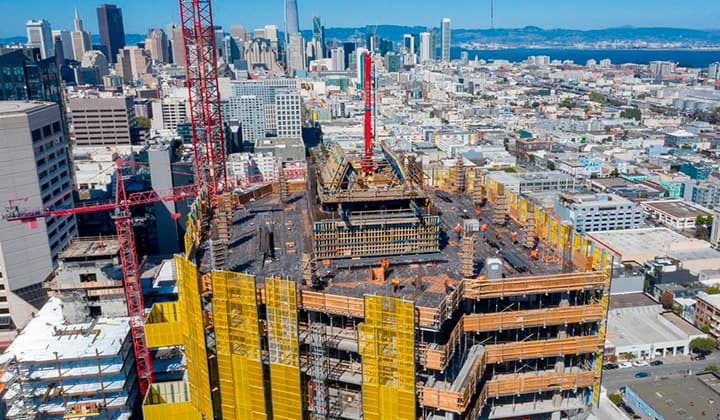
Automatisierung der Schalungsplanung
Our client from
California, USA
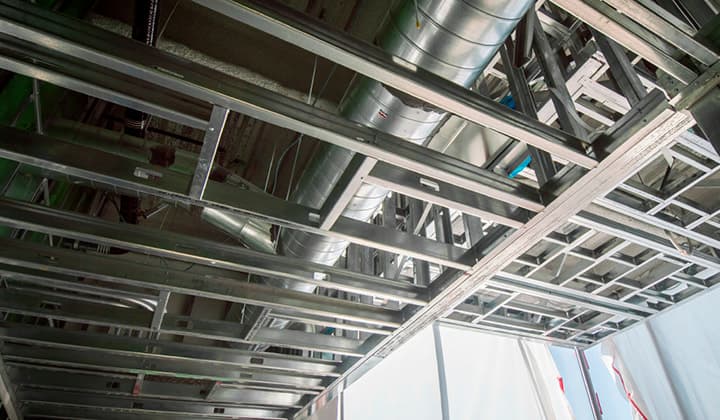
Automatisierung von abgehängten Decken
Our client from
New York, USA
Automatisierung von Wandkonstruktionen
Our client from
California, USA