Have any questions? Contact us!
Join our team!
Request a free quote or consultation

Architects looking at BIM software usually end up comparing more than technical features. The real question is which tools actually fit the way architectural work moves – from early planning and model development to drawings, updates, and coordination with the wider project team.
This list brings together BIM software that stays relevant for architectural practice, not just in theory but in day-to-day use. Some tools lean more toward design flexibility, others are stronger in documentation, teamwork, or model control. What matters here is how they support real project work and where they tend to make things easier – or slower.
Get Professional BIM Support

Choosing BIM software is only part of the job. The harder part is getting reliable output from it inside a real architectural workflow. Powerkh supports teams with Revit modeling, BIM coordination, clash detection, Scan to BIM, Revit family creation, and Dynamo automation when better structure or extra delivery support is needed.
This is usually most useful when teams are spending too much time on model cleanup, repetitive tasks, coordination issues, or late fixes. Powerkh helps with 2D-to-3D modeling, Revit workflow improvement, cross-discipline coordination, and BIM automation tied to actual project delivery.
Talk Through Your BIM WorkflowPowerkh can help with:
- turning 2D drawings into BIM models
- cleaning up Revit-based workflows
- coordinating architectural, structural, and MEP models
- creating Revit content and automating repetitive BIM tasks
Discuss the project with Powerkh and figure out what kind of BIM support is actually needed.
1. Revit

| Website | www.autodesk.com |
| www.instagram.com/autodesk | |
| www.facebook.com/autodesk | |
| www.linkedin.com/company/1879 | |
| x.com/autodesk | |
| Address | One Market, Ste. 400, San Francisco, CA 94105, USA |
| Phone | +1 415 507 5000 |
Revit is a BIM platform built around a shared building model that carries design, documentation, and coordination in one place. For architects, that usually means fewer jumps between separate files and a more connected way to move from early planning into developed drawings. Model changes flow through views, sheets, and schedules, which makes the software useful for projects where design revisions happen often and need to stay aligned across the set.
Architectural teams tend to use Revit when the work depends on structured modeling, consultant coordination, and consistent documentation output. Clash review, model sharing, and building data management sit close to the core workflow, so Revit fits offices that need control as a project grows in detail. Environmental thinking and site-related design studies can be folded into the process as well, which makes it more than a drafting tool with 3D added on top.
Key Highlights:
- Central BIM model for design, documentation, and coordination
- Linked project data across views, sheets, and model elements
- Strong fit for drawing production and change management
- Works well in multi-discipline project workflows
- Supports clash review and model-based coordination
- Can connect early design studies with later BIM development
Who It Is Best For:
- Architects working on detailed building models and full documentation sets
- Teams that coordinate closely with engineers and consultants
- Offices that need one model to drive multiple project outputs
- Practices handling projects with frequent revisions and technical updates
2. Archicad

| Website | www.graphisoft.com |
| [email protected] | |
| www.instagram.com/graphisoft | |
| www.facebook.com/archicad | |
| www.linkedin.com/company/graphisoft | |
| x.com/Archicad | |
| Address | 1601 Trapelo Road, Suite 162, Waltham, Massachusetts, United States of America, 02451 |
| Phone | 1800-238-3992 |
Archicad is BIM software shaped around architectural design work from concept through documentation. Early-stage modeling feels closely tied to later project development, so massing, space planning, drawings, and model data stay part of the same system instead of splitting into disconnected steps. That makes it easier to carry an idea forward without rebuilding everything once the project becomes more defined.
OpenBIM workflows are a big part of how Archicad works in practice. Coordination, issue tracking, and data exchange are built into the software in a way that suits teams working with different tools and outside partners. Visualization, documentation, and model checking sit alongside everyday design tasks, so Archicad tends to suit architects who want a BIM environment that stays readable while still handling serious project work.
Key Highlights:
- BIM workflow that connects concept design and documentation
- Good support for OpenBIM collaboration and file exchange
- Real-time drawing updates tied to the model
- Built-in tools for clash detection and issue tracking
- Centralized teamwork options through BIMcloud
- Solid mix of modeling, data handling, and presentation tools
Who It Is Best For:
- Architects who want a design-led BIM workflow
- Teams working with consultants through open standards
- Practices that need both modeling and presentation in one environment
- Offices looking for a clear path from sketch-level ideas to coordinated drawings
3. Vectorworks Architect

| Website | www.vectorworks.net |
| [email protected] | |
| www.instagram.com/vectorworks | |
| www.facebook.com/vectorworks | |
| www.linkedin.com/company/vectorworks-inc | |
| x.com/vectorworks | |
| Address | 8621 Robert Fulton Drive, Suite 200, Columbia, MD 21046 |
| Phone | 410-290-5114 |
Vectorworks Architect combines drafting, modeling, and BIM in a way that gives architects more room to shape geometry without locking every step into a rigid process. Concept work, schematic design, development, and documentation can all happen inside the same environment, which helps when a project moves back and forth between loose design thinking and more exact building information.
File exchange is one of its stronger practical points. Vectorworks supports a wide range of formats and connects with other common design tools, so it can sit comfortably in mixed workflows where not everyone uses the same platform. Information can be measured, scheduled, and analyzed early, while rendering and presentation tools stay close to the design model. That balance makes it useful for architects who care as much about visual control as technical output.
Key Highlights:
- Integrated workflow for drafting, modeling, and BIM
- Flexible 3D modeling suited to design exploration
- Supports many file formats and openBIM exchange
- Useful for both design development and documentation
- Built-in reporting, scheduling, and analysis tools
- Strong connection between graphics, model data, and presentation
Who It Is Best For:
- Architects who want more modeling freedom inside a BIM workflow
- Studios moving between concept design and technical drawings in one tool
- Teams working with varied file types and outside software
- Practices that value both visual presentation and project data
4. ALLPLAN

| Website | www.allplan.com |
| www.facebook.com/allplan.software | |
| www.linkedin.com/company/allplan |
ALLPLAN is BIM software that leans toward structured project development, technical clarity, and control across design phases. For architects, it supports the move from early concept work into detailed design and execution planning without forcing a break between those stages. Existing model data continues to develop instead of being restarted again and again, which helps on projects where detail builds steadily over time.
Project organization is a major part of the software’s logic. Drawing files, model areas, attributes, layouts, and data views are handled in a way that suits larger or more layered jobs. Model checking, material-based planning, room and unit management, and documentation all sit inside that broader framework. ALLPLAN tends to make sense for architects who need a BIM tool that stays disciplined when a project becomes more technical and harder to manage casually.
Key Highlights:
- Structured BIM workflow from concept to execution planning
- Model data can be refined through each project phase
- Strong handling of project organization and drawing files
- Integrated support for documentation and quantity-related output
- Built-in model checking within the design environment
- Useful for multi-material design and detailed planning work
Who It Is Best For:
- Architects working on technically demanding or larger projects
- Teams that need strong control over model structure and documentation
- Practices moving from design into execution-level detail
- Offices that want BIM workflows with clear organization and checking tools
5. Snaptrude

| Website | www.snaptrude.com |
Snaptrude is a newer BIM-focused design platform that connects site analysis, programming, massing, model development, and presentation in one workspace. Instead of splitting early planning across several tools, Snaptrude keeps those steps close together and uses AI to speed up setup, research, and initial design generation. Manual editing still stays central, so the software works less like an automatic design engine and more like a guided environment for moving faster at the front end.
One of its more practical strengths is the way program data stays linked to the model. Space requirements, room counts, adjacencies, and area studies can update alongside the design, which is helpful in projects where planning logic matters as much as form. Massing can turn into BIM elements without a full restart, and export paths to Rhino and Revit make it easier to continue work in more established production tools when needed.
Key Highlights:
- One workspace for site analysis, programming, massing, BIM, and presentation
- AI-supported setup and research for early project stages
- Live-linked program tables connected to the model
- Fast transition from massing into BIM elements
- Real-time collaboration in a shared environment
- Export support for Rhino and Revit workflows
Who It Is Best For:
- Architects who want to shorten the gap between briefing and early BIM work
- Teams exploring site, program, and massing in parallel
- Studios open to AI-assisted design setup with manual control
- Practices that start in a lighter planning tool and continue in Revit or Rhino
6. OpenBuildings Designer

| Website | www.bentley.com |
| www.instagram.com/bentleysystems | |
| www.facebook.com/BentleySystems | |
| www.linkedin.com/company/bentley-systems | |
| x.com/bentleysystems | |
| Address | Bentley Systems, Incorporated, 685 Stockton Drive, Exton, PA 19341, United States |
| Phone | 1 800 236 8539 |
OpenBuildings Designer is a multidisciplinary BIM application built for building design, analysis, simulation, and documentation inside one system. Architectural work sits alongside structural, mechanical, and electrical coordination, so the software fits projects where model depth and consultant integration matter from an early stage. Energy analysis and performance review are part of the environment rather than separate add-ons, which helps when design decisions need to be tested against building behavior.
Computational and parametric workflows are another important part of the platform. OpenBuildings Designer supports option development, complex geometry, and information-rich modeling without treating documentation as a separate phase at the end. Reality model references, federated collaboration, and visualization tools add to that broader setup. In practice, it tends to suit architects working on larger, more technical buildings where design quality depends on simulation, coordination, and disciplined data handling.
Key Highlights:
- Multidiscipline BIM environment for design, analysis, and documentation
- Integrated energy analysis for performance-based design work
- Supports computational and parametric design workflows
- Federated collaboration for distributed teams
- Good fit for information-rich models and complex building systems
- Includes visualization and simulation within the design process
Who It Is Best For:
- Architects working on complex or highly coordinated building projects
- Teams that need design and performance analysis in one workflow
- Practices collaborating closely with engineering disciplines
- Offices using parametric methods and model-based simulation as part of design
7. VisualARQ
| Website | www.visualarq.com |
| [email protected] | |
| www.instagram.com/visualarq3d | |
| www.facebook.com/visualarq | |
| www.linkedin.com/showcase/visualarq | |
| x.com/VisualARQ | |
| Phone | +34 933 196 868 |
VisualARQ is a BIM layer for Rhino that gives architects a more flexible way to build and document models without leaving Rhino’s modeling environment. Instead of forcing design work into a rigid system from the start, it lets freeform geometry stay part of the process and turns that geometry into informed architectural objects when needed. That makes it useful for projects where shape, variation, and custom geometry matter early on.
Documentation and automation are a big part of how VisualARQ works in practice. Floor plans, sections, quantities, and BIM data can come out of the same model, while Grasshopper support opens the door to scripted workflows and custom parametric objects. IFC exchange is built in as well, so VisualARQ fits architects who want Rhino-level freedom but still need a BIM structure that can move into wider project coordination.
Key Highlights:
- BIM workflow built directly inside Rhino
- Good fit for freeform and custom geometry
- Converts Rhino geometry into informed BIM objects
- Supports Grasshopper-based automation and parametric design
- Creates plans, sections, and quantity outputs from the model
- Built-in IFC import and export for coordination
Who It Is Best For:
- Architects who already work heavily in Rhino
- Teams handling complex forms and non-standard geometry
- Studios that want BIM without giving up modeling freedom
- Practices using Grasshopper in day-to-day design work
8. FreeCAD

| Website | www.freecad.org |
| www.facebook.com/FreeCAD | |
| www.linkedin.com/groups/4295230 | |
| x.com/FreeCADNews |
FreeCAD is an open-source parametric modeler that can be used for architectural work alongside many other design tasks. Its main strength is the way model history and parameters stay editable, which helps when a project needs steady revision instead of one-off drafting. Sketch-based modeling, 2D constraints, and object-based workflows make it possible to move between drawings and 3D models without starting from scratch each time.
Architecture work in FreeCAD sits within a broader ecosystem of workbenches, add-ons, and open formats. IFC support, customization options, and scripting flexibility give users room to shape the software around their own workflow rather than follow a fixed path. That said, FreeCAD usually makes more sense for architects who are comfortable learning a modular tool and building their process step by step.
Key Highlights:
- Open-source parametric 3D modeling
- Editable model history for ongoing design changes
- Can move between 2D sketches and 3D objects
- Supports many open file formats, including IFC
- Customizable through add-ons and scripting
- Includes BIM-related tools within a wider design platform
Who It Is Best For:
- Architects who prefer open-source software
- Small studios building a flexible custom workflow
- Users who want strong control over model parameters
- Designers comfortable working with a modular toolset
9. Chief Architect

| Website | www.chiefarchitect.com |
| [email protected] | |
| www.instagram.com/chiefarchitect | |
| Address | 6500 N Mineral Dr Coeur d’Alene, ID 83815 |
| Phone | 208-292-3400 |
Chief Architect is a BIM-oriented design platform focused mainly on residential work. It handles walls, roofs, floors, framing, openings, schedules, and materials in a way that reduces a lot of repetitive setup for house design and remodel projects. As the model develops, drawings and related building information stay tied to it, which helps keep documentation aligned with design changes.
Residential planning is where Chief Architect feels most at home. Interior layouts, kitchens, baths, elevations, sections, site plans, and construction drawings all sit inside the same workflow, so it can cover a full home design process without much switching between tools. For architects working beyond housing or light commercial, it may feel narrower than broader BIM platforms, but in its own lane it stays practical and direct.
Key Highlights:
- BIM-based workflow focused on residential design
- Automatic generation of roofs, framing, dimensions, and schedules
- Connects model changes with drawings and material output
- Handles interior and exterior home design in one system
- Useful for remodels, kitchens, baths, and full house planning
- Includes 3D viewing and presentation support
Who It Is Best For:
- Residential architects and home designers
- Remodel and renovation-focused practices
- Teams producing full drawing sets for houses and light commercial work
- Designers who want more automation in everyday residential tasks
10. Tekla Structures

| Website | www.tekla.com |
| www.facebook.com/people/Trimble-Construction | |
| www.linkedin.com/company/tekla | |
| x.com/TrimbleConst | |
| Address | Hatsinanpuisto 8, 02600 Espoo, Finland |
| Phone | +358 30 661 10 |
Tekla Structures is a structural BIM platform built around highly detailed, constructible 3D models. Its core use is not architectural concept design, but it becomes relevant to architects when a project depends on close coordination with structural systems, fabrication logic, and model accuracy at later stages. Instead of staying at the level of general building geometry, Tekla pushes deeper into how elements are assembled, connected, scheduled, and delivered.
Coordination is one of its stronger roles in mixed-discipline projects. Model data can be shared across teams and linked with other software through open exchange formats, which helps when architectural design needs to stay in step with structural detailing and construction planning. For most architecture studios, Tekla would not replace a main design BIM tool, but it can be highly useful on complex projects where structure drives a large part of the building logic.
Key Highlights:
- Structural BIM centered on detailed constructible models
- Strong model depth for fabrication and construction planning
- Supports coordination with other project tools through IFC
- Handles scheduling, drawings, and information-rich structural data
- Suitable for distributed teamwork and shared model workflows
- Useful where buildability matters early and in detail
Who It Is Best For:
- Architects working on structure-heavy or technically complex projects
- Teams coordinating closely with structural engineers and fabricators
- Practices involved in late-stage BIM coordination
- Projects where detailed constructible data affects design decisions
Conclusion
Choosing BIM software for architectural work usually comes down to a pretty simple question – which tool actually fits the way a project moves from idea to drawing set without turning every revision into extra work. Some platforms feel better for early design freedom, some are stronger in documentation, and some make more sense when coordination starts getting heavy. There is no single right answer for every office, which is probably the most useful thing to admit from the start.
A smaller studio may care more about flexibility and ease of use. A larger team might need tighter structure, cleaner collaboration, and fewer surprises once consultants step in. In the end, the best BIM software for architects is the one that supports real project work day after day – not just the one that looks good in a feature list. That is usually where the difference shows.

Our Case Studies
We have handled 200+ BIM & VDC projects for commercial, industrial, and residential sectors.
Our work includes:
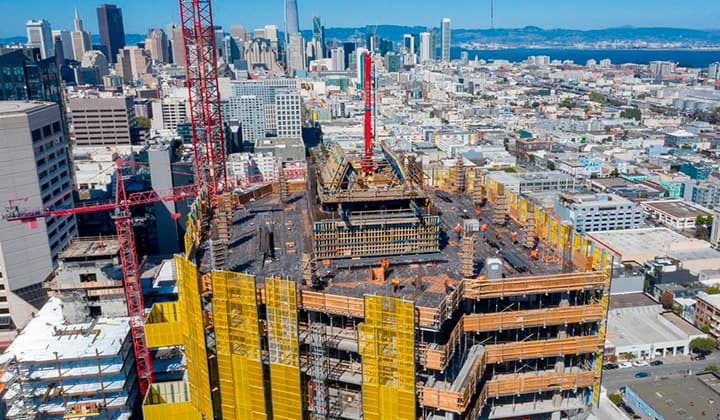
Formwork design automation
Our client from
California, USA
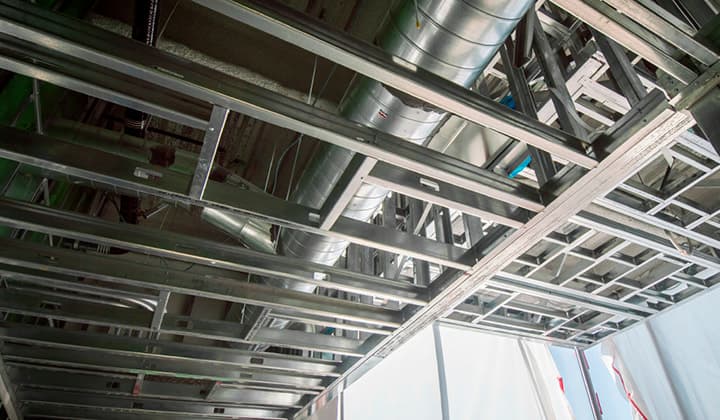
Suspended ceiling design automation
Our client from
New York, USA
Wall framing design automation
Our client from
California, USA