Have any questions? Contact us!
Join our team!
Request a free quote or consultation

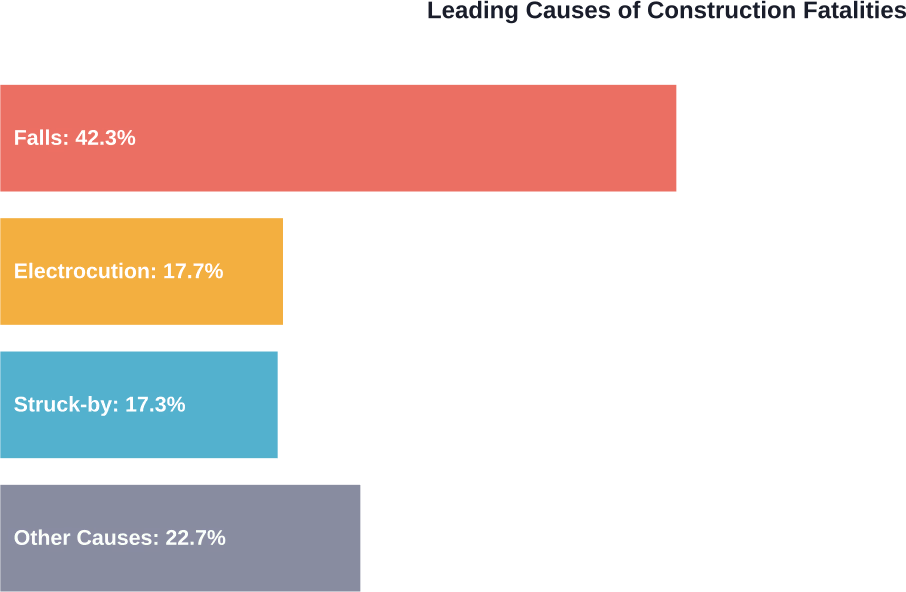
Construction site accidents can be prevented through proper safety training, use of personal protective equipment, regular site inspections, implementation of fall protection systems, effective communication protocols, and maintaining a culture of safety-first thinking. According to the CDC, falls are the leading cause of death in construction, accounting for 42.3% of fatalities, making prevention measures absolutely critical for worker safety.
Construction sites are among the most hazardous work environments. In 2023, roughly one in five workplace deaths occurred in the construction industry, with falls accounting for 38.5% of these fatalities according to the Bureau of Labor Statistics.
But here’s the thing—most construction site accidents are preventable. With proper planning, training, and safety protocols, companies can dramatically reduce injuries and save lives.
Understanding the Most Common Construction Hazards
Before diving into prevention strategies, it’s essential to understand what causes construction accidents in the first place.
According to research from the CDC’s Construction FACE Database, falls accounted for 42.3% of construction fatalities analyzed. Contact with electricity came in second at 17.7%, while being struck by objects, equipment, or vehicles accounted for 17.3% of deaths.
The data reveals something troubling: one in five workers who died on construction sites had been on the job for less than two months. New workers face significantly higher risks, which makes proper training absolutely critical from day one.
Falls remain the most significant threat. Small employers with fewer than 20 employees accounted for 75% of fatal falls between 2015 and 2017, despite making up only 39% of construction payroll employment according to the CDC.
Implement Comprehensive Fall Protection Systems
Since falls represent the leading cause of construction deaths, fall protection deserves top priority.
OSHA regulations under 29 CFR 1926.20 require contractors to implement safety programs for all construction work. OSHA regulations under 29 CFR 1926.501 require employers to provide fall protection for each employee on a walking-working surface with an unprotected side or edge which is 6 feet (1.8 m) or more above a lower level.
Yet the CDC data found that more than half of fall victims didn’t have access to PFAS.
Essential Fall Protection Measures
Guardrails should be installed on any elevated platform, scaffold, or work surface. These provide passive protection that doesn’t require workers to take action.
Personal fall arrest systems—including harnesses, lanyards, and anchor points—must be provided when guardrails aren’t feasible. But equipment alone isn’t enough. Workers need training on proper inspection, donning, and use of these systems.
Safety nets offer another layer of protection for certain applications, particularly when work occurs at heights where guardrails and personal fall arrest systems prove impractical.
Prioritize Safety Training From Day One
Training emerged as the most common recommendation in the CDC’s analysis of construction fatalities. Safety training was identified as a critical prevention measure in construction fatality investigations.
Real talk: training can’t be a one-time checklist item. It needs to be ongoing, specific to job tasks, and reinforced regularly.
What Effective Training Covers
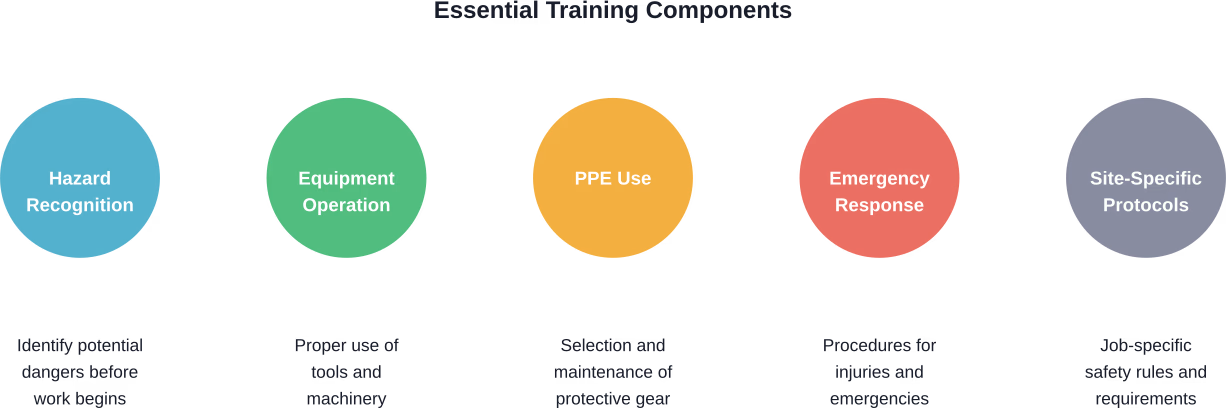
Hazard recognition training helps workers identify potential dangers before incidents occur. This includes recognizing unstable surfaces, electrical hazards, and struck-by risks from equipment or materials.
Equipment-specific training ensures workers know how to properly operate tools, machinery, and safety equipment. According to OSHA standards, operators must receive training on the specific equipment they’ll use.
Emergency response procedures give workers clear protocols for responding to injuries, fires, or other emergencies. Every worker should know evacuation routes, assembly points, and how to report incidents.
Enforce Proper Use of Personal Protective Equipment
Personal protective equipment serves as the last line of defense against injuries. But equipment only works when workers actually wear it—and wear it correctly.
Hard hats protect against head injuries from falling objects or bumps. They’re required on virtually all construction sites under OSHA regulations.
Safety glasses or goggles shield eyes from dust, debris, and chemical splashes. High-visibility vests ensure workers remain visible to equipment operators and vehicle drivers.
For specific tasks, additional PPE becomes necessary. Respiratory protection for dust or fumes. Steel-toed boots for foot protection. Gloves appropriate to the task at hand.
Companies must provide PPE at no cost to workers according to OSHA standards. Just as important: supervisors need to enforce consistent use through regular monitoring and accountability.
Conduct Regular Site Inspections and Hazard Assessments
Conditions on construction sites change constantly. What was safe yesterday might present new hazards today.
Daily site inspections allow supervisors to identify and address hazards before workers are exposed. These walkthroughs should examine scaffolding, ladders, excavations, electrical systems, and fall protection equipment.
Job hazard analysis breaks down specific tasks to identify potential dangers at each step. This proactive approach allows teams to implement controls before work begins rather than reacting after someone gets hurt.
According to the CDC analysis, conducting job safety analysis was recommended more frequently for smaller businesses, suggesting these companies may benefit most from structured hazard assessment processes.
Maintain Equipment and Tools in Safe Working Condition
Defective equipment contributes to numerous construction accidents. Regular maintenance and inspection protocols keep tools and machinery operating safely.
Pre-use inspections should be standard practice. Workers need training to recognize signs of damage or wear that could compromise safety—frayed cords, cracked handles, worn brake pads, or hydraulic leaks.
Damaged equipment must be removed from service immediately and clearly tagged to prevent use until repairs are completed. This simple step prevents well-intentioned workers from using dangerous tools.
Establish Clear Communication Protocols
According to the Bureau of Labor Statistics, construction workers have the highest rate of nonfatal struck-by injuries compared to any other industry, at 2.7 per 10,000 full-time equivalent workers.
Many struck-by accidents result from communication failures. Equipment operators who don’t know workers are nearby. Workers who don’t realize equipment is about to move.
Effective communication systems include hand signals standardized across the site, two-way radios for crews spread across large sites, and pre-shift meetings to review the day’s work plan and potential hazards.
Signage plays a critical role too. OSHA standards under 29 CFR 1910.145 specify requirements for accident prevention signs and tags to warn of specific hazards.
Keep Work Areas Clean and Organized
Cluttered work sites create tripping hazards and make it difficult to respond quickly in emergencies.
Materials should be stored properly, not scattered across walkways. Debris needs regular removal, not allowed to accumulate. Cords and hoses should be routed to avoid creating trip hazards.
Good housekeeping also reduces struck-by hazards. Properly stored materials won’t fall on workers. Organized tool storage means workers don’t need to reach into unstable piles to retrieve what they need.
Address Vehicle and Equipment Safety
According to the CDC, preventing worker injuries from backing construction vehicles requires specific procedures and controls at construction sites.
Designated traffic routes separate vehicles from pedestrian work areas where possible. When separation isn’t feasible, spotters should guide equipment operators through areas where workers are present.
Backup alarms and cameras help operators detect workers in blind spots. But technology can’t replace proper procedures—workers need training to maintain safe distances from moving equipment.
Foster a Safety-First Culture
The most effective prevention programs go beyond checking compliance boxes. They create cultures where safety becomes a core value, not an inconvenient requirement.
This starts at the top. When leadership consistently prioritizes safety—even when it costs time or money—workers notice. When supervisors face consequences for safety violations just like workers do, the message becomes clear.
Encouraging workers to report hazards without fear of punishment creates a more responsive safety program. Near-miss reporting helps identify problems before they cause actual injuries.
Some companies implement safety incentive programs, though these need careful design to avoid discouraging injury reporting. The goal is recognizing safe behaviors, not just the absence of reported incidents.
Reduce Accidents By Fixing Problems Before Work Starts

Most site accidents don’t come out of nowhere – they build up from small gaps in design, coordination, and execution that go unnoticed until work is already underway. Powerkh works on that earlier stage, following design intent through BIM and coordination and checking how it holds up once construction begins. Instead of reacting to incidents, they help teams see where risk is forming and deal with it before it reaches site.
What Do They Focus on?
Their primary goals include:
- Keeping design intent consistent from design through construction
- Using real site data to compare what is built against what was planned
- Focusing on high-risk zones where issues tend to concentrate
- Providing engineering-led reviews, not just model checks
Talk to Powerkh if you want a second set of eyes on your project that looks beyond drawings and focuses on what will actually be built.
Taking Action to Prevent Construction Accidents
Construction site accidents aren’t inevitable. The combination of proper fall protection, comprehensive training, PPE enforcement, regular inspections, equipment maintenance, clear communication, and a safety-first culture can dramatically reduce injuries and save lives.
The data is clear: most construction fatalities result from preventable hazards. Falls, electrocutions, and struck-by incidents account for the majority of deaths—and proven solutions exist for each.
Companies that invest in safety programs don’t just protect workers. They reduce workers’ compensation costs, avoid project delays, and build reputations that attract skilled workers and clients.
Start by assessing current practices against the strategies outlined here. Identify gaps. Prioritize high-risk areas. Then implement changes systematically, training workers on new procedures and following up to ensure consistent application.
Construction work will always involve hazards. But with proper precautions, workers can complete projects and go home safe every day.
Frequently Asked Questions
What is the leading cause of death on construction sites?
Falls are the leading cause of death in construction, accounting for a significant share of fatalities. Proper fall protection systems, including guardrails and personal fall arrest systems, can prevent most of these incidents.
How often should construction safety training be conducted?
Safety training should occur before workers begin a job, whenever new hazards are introduced, and regularly throughout employment. Many companies also conduct daily toolbox talks to reinforce safety practices.
Who is responsible for providing personal protective equipment?
Employers are responsible for providing personal protective equipment at no cost to workers. They must also ensure proper fit and train workers on correct use and maintenance.
What should be included in a daily construction site inspection?
Daily inspections should cover fall protection, scaffolding, ladders, excavations, electrical systems, equipment condition, housekeeping, and emergency access. Any hazards identified must be addressed before work continues.
How can small construction companies improve safety with limited resources?
Small companies can improve safety by focusing on training, daily toolbox talks, job hazard analysis, regular inspections, and open communication about risks. These low-cost measures provide strong impact.
What are struck-by hazards and how can they be prevented?
Struck-by hazards occur when workers are hit by falling objects, debris, or moving equipment. Prevention includes securing materials, using protective barriers, maintaining safe distances, and wearing high-visibility clothing.
Are construction site accidents increasing or decreasing?
Construction continues to account for a large share of workplace fatalities. While safety knowledge has improved, consistent implementation remains a challenge across the industry.

Our Case Studies
We have handled 200+ BIM & VDC projects for commercial, industrial, and residential sectors.
Our work includes:
Formwork design automation
Our client from
California, USA
Suspended ceiling design automation
Our client from
New York, USA
Wall framing design automation
Our client from
California, USA