Have any questions? Contact us!
Join our team!
Request a free quote or consultation

Engineering-led design support is one of those project costs that people underestimate until they actually need it. It doesn’t pour concrete or install equipment, so it can feel abstract. But this is the work that makes sure everything fits together, performs as intended, and can actually be built without chaos on site.
The price varies a lot. A small renovation might only need a few targeted reviews and coordination checks. A complex facility can require continuous involvement from concept through commissioning. Scope, risk, and responsibility matter far more than square footage alone.
If you’re trying to budget early, the key is understanding what you’re paying for. Engineering-led support isn’t just drawings. It includes technical oversight, constructability input, coordination with contractors, and problem-solving when real-world conditions don’t match the plans. In many cases, it ends up saving more money than it costs by preventing rework, delays, and expensive mistakes.
What Engineering-Led Design Support Actually Means
Before discussing cost, it helps to define the service clearly. Engineering-led design support is not the same as hiring a drafter or a consultant for isolated calculations. It involves experienced engineers guiding technical decisions throughout the project lifecycle.
This typically includes:
- Reviewing concepts for feasibility
- Coordinating structural, architectural, and MEP systems
- Advising on materials and construction methods
- Producing or validating technical documentation
- Supporting procurement decisions
- Assisting during construction when issues arise
- Verifying that systems perform as intended
In integrated delivery models, their involvement can extend from early planning through commissioning, providing continuous oversight that reduces risk but increases the scope of work. In practice, this is less about buying drawings and more about bringing technical leadership into the project.
Powerkh’s Approach to Engineering-Led Design Support

Powerkh is a UK-based company with offices in the USA and Ukraine, specializing in Virtual Design and Construction and BIM services for residential, commercial, and industrial projects. Our work focuses on improving coordination between architectural, structural, and MEP systems through detailed modeling, analysis, and construction-ready documentation. Our expertise includes BIM modeling (LOD 100–500), BIM coordination, BIM content (Revit families), scan to BIM, and BIM automation. We deliver specialized structural detailing (steel, rebar, precast, facade), prefabrication & fabrication workflows, and advanced clash detection to manage complex tasks effectively.
From a cost perspective, engineering-led design support becomes most valuable when projects involve multiple systems, tight tolerances, or limited room for error. By integrating disciplines into coordinated digital models and resolving conflicts before construction begins, we help reduce the risk of rework, delays, and unexpected site issues that often drive costs up. We also produce shop drawings and fabrication-ready documentation that contractors can use directly, which improves predictability during procurement and construction. With a portfolio of 400+ completed projects, Powerkh’s role is not only technical but also financial, helping clients control project costs by making sure decisions are based on accurate, coordinated information derived from extensive real-world experience.
Factors That Influence Engineering-Led Design Support Costs
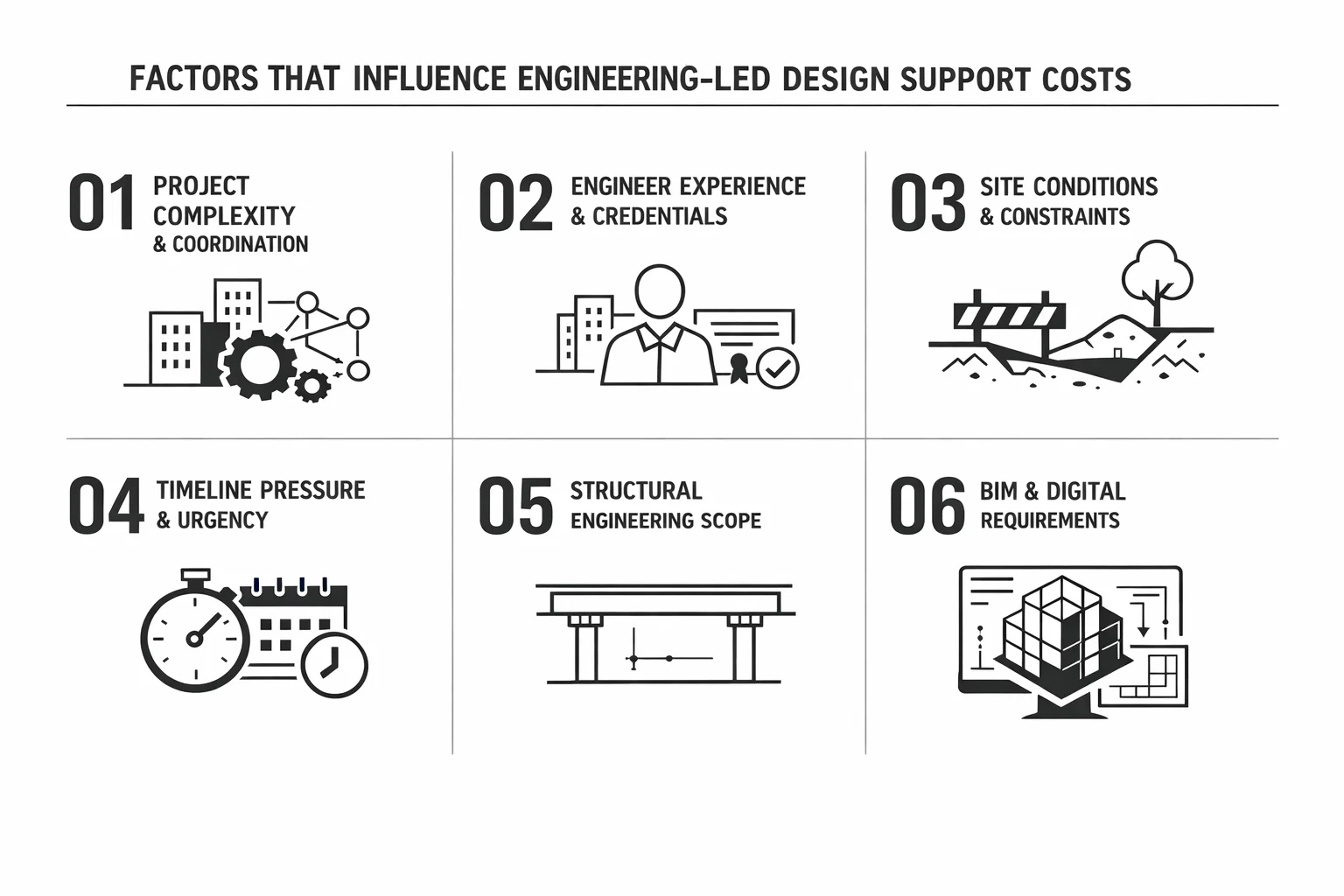
Engineering-led design support fees can vary significantly between projects, even when buildings are similar in size. Costs are driven mainly by complexity, risk, coordination demands, and uncertainty rather than square footage. A simple extension may require limited input, while a complex renovation can demand intensive integration, compliance, and oversight.
1. Project Complexity and Coordination Requirements
As project complexity increases, so does the level of engineering involvement needed to ensure all systems function together properly. Factors such as the complexity of building systems, risk and liability exposure, the extent of interdisciplinary coordination, documentation requirements, regulatory constraints, and the qualifications of the engineering team all play a role. Projects with significant unknowns typically require additional analysis, modeling, and review, since resolving uncertainties early helps prevent costly issues during construction.
2. Engineer Experience and Professional Credentials
Fees also reflect the expertise and responsibility carried by the engineers involved. Work related to safety, permitting, or legal compliance often requires licensed professionals with specialized knowledge. Experience level, professional credentials, technical specialization, reputation, and geographic location can all influence rates. Although senior engineers may cost more initially, their input often reduces overall risk and helps avoid expensive mistakes.
3. Site Conditions and Existing Constraints
Difficult site conditions can substantially expand the scope of engineering work. Existing structural damage, poor soil quality, limited site access, dense urban surroundings, heritage protections, hazardous materials, or extreme climate conditions may require additional investigation and coordination. Each constraint introduces uncertainty that must be addressed through analysis, testing, or design adjustments before construction can proceed confidently.
4. Timeline Pressure and Urgency
Compressed schedules almost always increase costs because engineers must prioritize the project, adjust workloads, or accelerate review processes to meet deadlines. Urgency often arises from permit deadlines, contractors waiting for approvals, late design changes, emergency repairs, or legal and compliance pressures. Planning ahead is one of the most effective ways to maintain cost control.
5. Structural Engineering Scope
Structural considerations are often the most visible component of engineering-led support, particularly when modifying existing buildings or introducing new loads. Structural engineers assess safety, stability, and constructability while preparing documentation required for approvals and construction. The scope of this work depends largely on how significantly the project alters the existing structure or introduces new performance requirements.
6. BIM and Digital Engineering Requirements
Modern projects increasingly depend on digital coordination tools to improve buildability and reduce conflicts. BIM-led support requires additional effort during design but helps prevent costly issues during construction. Tasks such as modeling building systems, detecting clashes, coordinating disciplines, preparing prefabrication data, and developing construction-level details demand time, specialized expertise, and ongoing coordination. Higher levels of model detail further increase the overall scope of engineering support.
Typical Pricing Structures for Engineering-Led Design Support
Engineering-led design support can be priced in several ways depending on project scope, clarity, duration, and delivery model. Some structures suit early planning with evolving requirements, while others work better when tasks and outcomes are clearly defined.
Hourly Rates
Hourly billing is common when scope is flexible or likely to change. Many commercial projects begin this way during feasibility or early design stages.
- $25 – $80 per hour – junior engineer or technical specialist
- $100 – $200 per hour – licensed engineer
- $200 – $350+ per hour – senior engineer or consultant
Administrative support or drafting assistance is usually billed at lower rates. Hourly pricing offers flexibility but can make budgeting less predictable if revisions or coordination issues arise.
Fixed-Fee Packages
For clearly defined tasks, firms may offer a fixed price. This approach is common for residential projects or limited scopes.
- $500 – $2,500 – small residential support
- $2,500 – $10,000 – moderate residential or light commercial
- $10,000+ – complex design packages
Fixed fees provide cost certainty but often exclude unexpected changes or extended involvement.
Percentage of Construction Cost
On large or complex projects, engineering-led support may be priced as a percentage of the overall construction budget.
- 1% – 3% – basic support role
- 3% – 8% or more – full integrated engineering involvement
Higher percentages usually reflect broader responsibility, including coordination during construction and commissioning.
Per Square Foot Pricing
Per-area pricing is common for system-intensive or BIM-driven projects where effort correlates with building size and complexity.
- $0.50 – $3.00 per square foot – standard MEP engineering support
- $3.00 – $15.00+ per square foot – complex facilities such as data centers or hospitals
This model works best when building type and system density are known early.
Typical Costs for Specialized Engineering Support
Specialized engineering services often represent a significant portion of engineering-led design support, especially on projects involving structural changes or advanced digital coordination. Costs vary depending on project complexity, scope, and required level of detail.
Structural Engineering Services
Structural work is often a major component of support, particularly for renovations or load-bearing modifications.
$500 – $2,500 – residential structural design
Up to $10,000+ – complex residential projects
$5,000 – $100,000+ – commercial structural support (depending on scope)
Legal or forensic structural services can cost significantly more due to higher liability and reporting requirements.
BIM and Digital Engineering Services
BIM-based coordination adds upfront cost but helps prevent expensive conflicts during construction.
$2,500 – $5,000 – small residential or renovation projects
$10,000 – $30,000+ – standard commercial projects
Significantly higher – complex facilities
Higher levels of detail require more modeling time, coordination, and specialized expertise, which increases overall cost.
Real-World Cost Ranges by Project Type
To make this more concrete, here are typical ranges across common scenarios.
Residential Projects
Homeowners often need engineering support for structural changes, extensions, or renovations.
$200 – $1,500 – basic inspection or consultation
$500 – $5,000 – structural design and calculations
$5,000 – $20,000+ – full support for major renovation
Projects involving complex foundations, multi-story additions, or seismic upgrades can exceed these ranges.
Small Commercial Projects
Examples include retail spaces, small offices, or restaurant build-outs.
$5,000 – $15,000 – limited advisory role
$15,000 – $50,000 – coordination and documentation
$50,000+ – integrated engineering involvement
Regulatory requirements often drive costs higher than in residential work.
Large Commercial and Institutional Projects
Hospitals, airports, manufacturing plants, and large mixed-use developments fall into this category.
$100,000 – $500,000+ – engineering-led advisory team
potentially millions – full lifecycle support on very large projects
These figures reflect extensive coordination, risk management, and technical complexity.
Why Engineering-Led Design Support Delivers Long-Term Value
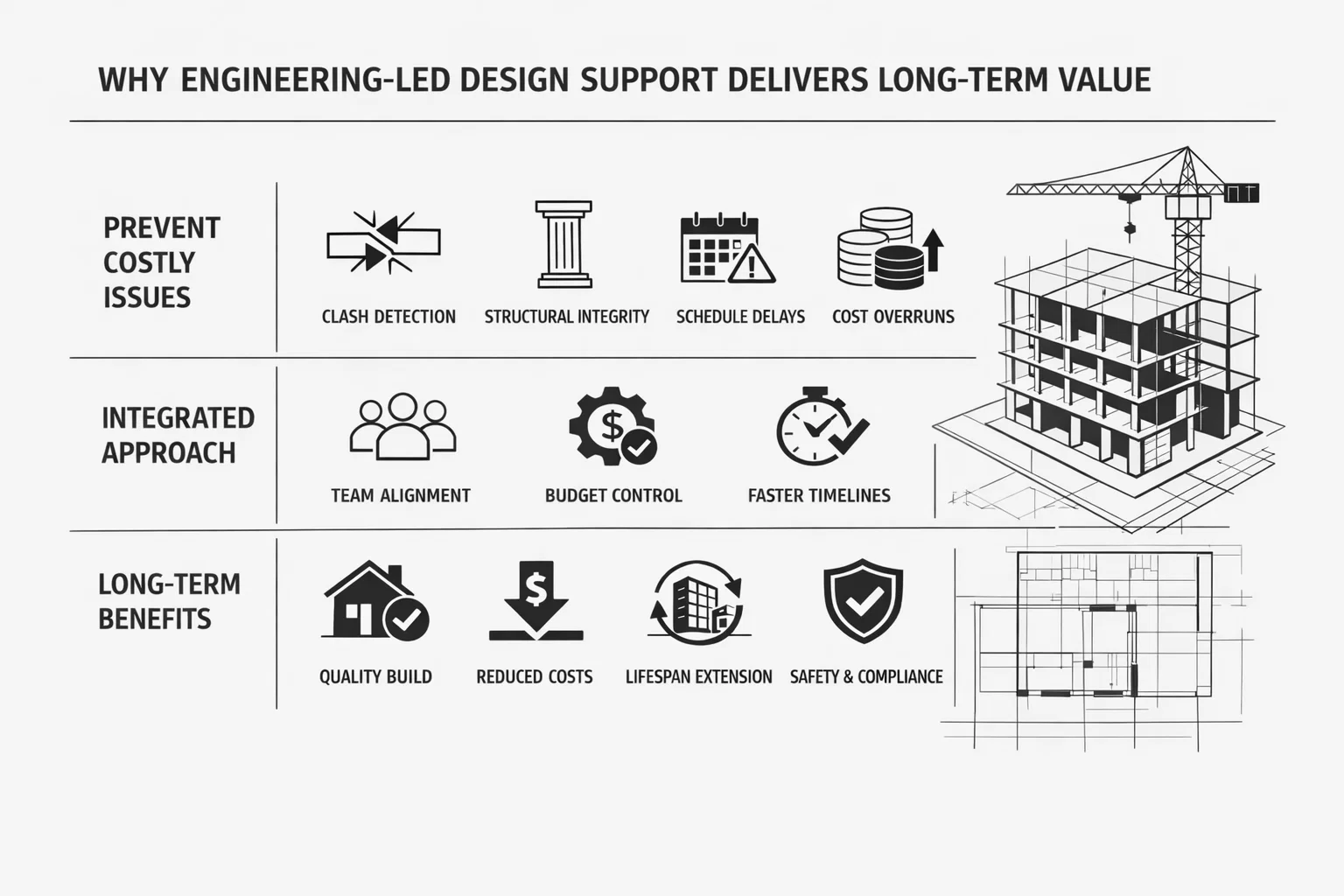
Engineering-led support is sometimes perceived as paperwork or theoretical work, but its real purpose is to prevent problems that would be far more expensive to fix later. Many construction failures, delays, and cost overruns originate from poor coordination or insufficient technical oversight during the design phase.
Preventing Costly Problems During Construction
By identifying conflicts and risks early, engineering-led support helps projects avoid issues that can disrupt schedules, increase costs, or compromise safety. This includes reducing the likelihood of structural failures, minimizing delays, preventing rework, optimizing material use, improving system performance, ensuring regulatory compliance, and lowering long-term operating costs. Addressing these factors before construction begins allows teams to maintain progress on site rather than reacting to problems after they occur.
Advantages of Integrated Engineering-Led Delivery
When engineers collaborate with designers and contractors from the outset, initial support costs may be higher, but total project costs often decrease. Integrated delivery improves alignment between design intent and construction methods, leading to more accurate budgeting, fewer change orders, faster schedules, and a clearer distribution of responsibility. In contrast, traditional approaches can push costs downstream, where they appear as redesign efforts, delays, or contractual disputes.
Long-Term Impact on Project Outcomes
The value of engineering support is best understood in relation to the risks it helps avoid. Compared with the potential expense of design errors, construction setbacks, or performance failures, engineering fees usually represent a relatively small portion of the overall budget. Effective technical guidance can reduce total project costs, improve build quality, extend the lifespan of the asset, enhance safety, and support smoother approvals and inspections. In many cases, early engineering involvement has a disproportionately positive effect on final outcomes, making it a strategic investment rather than an optional expense.
How to Control Costs and Choose the Right Engineering Provider
Selecting an engineering partner and managing costs go hand in hand. While not every variable can be controlled, clear communication and careful evaluation can make pricing more predictable and reduce the risk of unexpected expenses.
How to Keep Costs Predictable
Providing complete and accurate information early allows engineers to define scope properly and produce realistic estimates.
Practical steps include:
- Provide clear project information upfront
- Share drawings, surveys, and site data early
- Define scope precisely
- Ask what deliverables are included
- Clarify revision policies
- Confirm whether construction support is covered
- Discuss timelines honestly
Vague requests often lead to wide price ranges or additional fees later as the scope becomes clearer.
Questions to Ask Before Hiring
A reliable engineering firm should be clear about how fees are structured and what services are actually included. Before making a decision, it is important to understand whether pricing is fixed or hourly, what deliverables will be provided, and whether site visits are part of the scope. Clients should also confirm if stamped documents can be issued when required, how revisions will be handled, whether support continues during construction, and whether travel expenses are included. It is equally important to understand the assumptions behind the quote, since these often define what is and is not covered. Clarifying these details early helps prevent misunderstandings, unexpected costs, and disputes later in the project.
Why the Lowest Price Is Not Always the Best Choice
Selecting the cheapest proposal can introduce significant risk, especially for work that affects safety, regulatory compliance, or long-term performance. A low price may indicate a limited scope of services, minimal involvement during construction, insufficient experience, outsourced work with reduced oversight, or incomplete documentation. Because engineering decisions influence the entire lifecycle of a project, cutting costs at this stage can lead to far greater expenses later if problems emerge during construction or operation.
Final Thoughts
Engineering-led design support has no universal price because it scales with complexity, risk, and responsibility. A small residential change may need limited input, while a large facility can require continuous technical oversight. What you are paying for is not paperwork but decisions that keep the project buildable, compliant, and stable as real conditions evolve.
The cost is usually minor compared to the price of fixing mistakes late. Uncoordinated systems, structural surprises, or redesign during construction can escalate expenses quickly. Early engineering involvement reduces that uncertainty, improves budget accuracy, and keeps work moving instead of stopping to solve preventable problems. In most cases, the real question is not how much it costs, but how much it can save.
FAQ
1. How much does engineering-led design support cost?
It depends on scope and complexity. Small projects may cost hundreds or thousands, while large commercial developments can require six-figure budgets. The level of coordination and duration of involvement are the main drivers.
2. Why do prices vary so much between projects?
Because engineering effort follows risk and uncertainty, not size. Site conditions, regulations, existing structures, and schedule pressure can all increase the amount of analysis and coordination required.
3. Is it necessary for smaller projects?
Not always, but it becomes important when structural changes, system integration, or compliance issues are involved. Even limited input can prevent expensive errors.
4. Does early engineering involvement really reduce total cost?
Yes in many cases. Problems solved during design are far cheaper than fixes during construction, when materials, labor, and schedules are already committed.
5. What does engineering-led design support typically include?
It can cover feasibility review, coordination of disciplines, technical documentation, constructability input, and problem-solving during construction, depending on the agreement.
6. How can costs be kept predictable?
Clear scope, accurate project information, and realistic timelines help engineers estimate effort properly. Uncertainty and late changes are the main reasons budgets expand.

Our Case Studies
We have handled 200+ BIM & VDC projects for commercial, industrial, and residential sectors.
Our work includes:
Formwork design automation
Our client from
California, USA
Suspended ceiling design automation
Our client from
New York, USA
Wall framing design automation
Our client from
California, USA