Have any questions? Contact us!
Join our team!
Request a free quote or consultation

If you’ve ever priced out mechanical BIM, you know there’s no single answer. The cost can swing quite a bit depending on what you’re building, how detailed the model needs to be, and how fast you need it delivered. A small office retrofit with basic HVAC layouts will not be in the same ballpark as a hospital project requiring LOD 400 fabrication models.
Mechanical BIM brings real value by spotting clashes, improving coordination, and keeping construction costs under control, but it comes with its own investment. Understanding how providers calculate fees and what factors tip the scale can save you from surprises later. In this guide, we’ll break down the main cost drivers, common pricing structures, and what you should expect to budget in today’s market.
Why Mechanical BIM Costs Matter
Mechanical systems are some of the most complex parts of a building. They weave through ceilings, walls, and floors, often competing for space with structural and electrical elements. If a duct run or pipe is not coordinated properly, it can trigger expensive rework and schedule delays.
Mechanical BIM reduces those risks by providing:
- Early clash detection across disciplines
- More accurate quantity takeoffs and material planning
- Better scheduling through 4D models
- Cost forecasting with 5D BIM
- Sustainable system design when energy analysis is built in
That value is clear, but it also comes with investment. Understanding what influences the price helps teams budget realistically and avoid underestimating the work required.
Typical Pricing Models in 2025
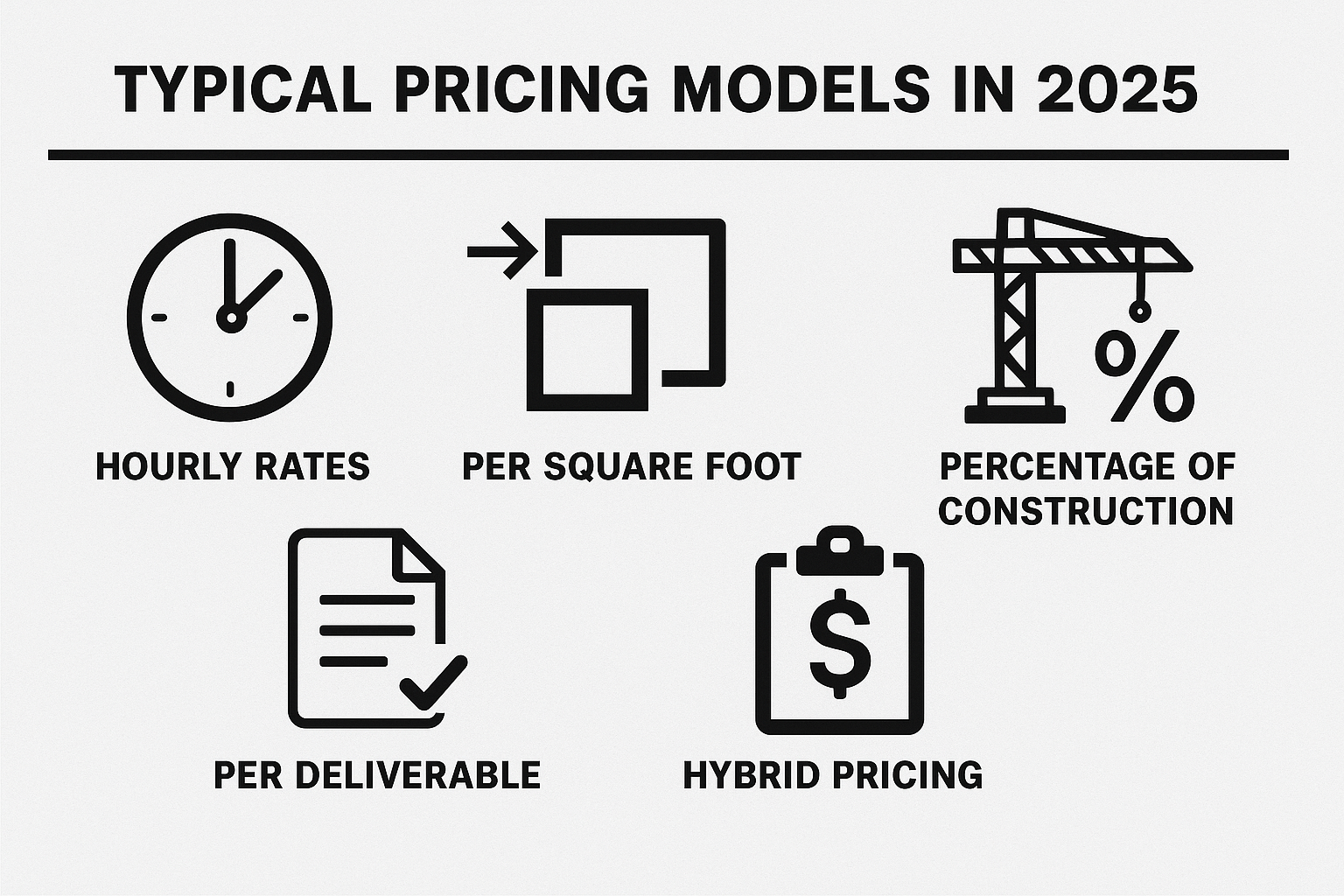
Mechanical BIM services are billed in different ways, and each method has pros and cons.
Hourly Rates
Industry averages put BIM consultants in the $33 to $43 per hour range, with $39 per hour as a national midpoint. Senior specialists or firms with strong track records may charge higher, while offshore providers may be more affordable.
Per Square Foot
Some firms price by building area. For example:
- White model: $0.30 per square foot
- Material model: $0.60 per square foot
- Full BIM model: $0.90 per square foot
This approach works well for straightforward projects where the model’s scope matches the building size.
Per Deliverable
Certain tasks like shop drawings, clash reports, or spools may be priced separately. A provider might charge a setup fee plus a per-sheet or per-view cost.
Percentage of Construction Cost
In some cases, BIM services are billed as a percentage of the overall project value, particularly for large-scale mechanical packages.
Hybrid Pricing
Many firms use a mix, such as a flat setup fee plus per-square-foot charges, or hourly for complex tasks with per-sheet rates for deliverables.
Mechanical BIM Cost Ranges by Project Type
The following ranges are based on market data, industry case studies, and typical pricing structures in 2025. They are not hard rules but useful benchmarks for planning. Actual costs will always depend on scope, detail level, and delivery requirements.
- Small commercial office (basic HVAC at LOD 300): $5,000 – $15,000. A straightforward office project with limited HVAC scope is on the lower end of the spectrum. The model usually covers duct layouts, main equipment, and air distribution without fabrication-level detail.
- Mid-size school or retail building (HVAC and plumbing at LOD 350): $20,000 – $60,000. Schools, shopping centers, and similar facilities require both HVAC and plumbing coordination. At LOD 350, the model includes accurate dimensions and construction-ready documentation, so the workload is heavier.
- Hospital or data center (multi-trade LOD 400 models with shop drawings): $100,000+. Healthcare and mission-critical projects push costs significantly higher. Hospitals and data centers are packed with ducts, pipes, equipment rooms, and specialty systems that must all fit together with millimeter accuracy.
- As-built verification (LOD 500, including scan-to-BIM): 20-30% more than design-phase modeling. When a project requires LOD 500 models verified against actual site conditions, costs rise further. Scan-to-BIM workflows involve processing point cloud data, converting it into accurate models, and checking it against design intent.
In short, the bigger and more complex the building, the steeper the price of mechanical BIM. Small offices may only need basic modeling, while large hospitals or industrial facilities require an entire team working full-time for months. These figures highlight why clear scoping and realistic expectations are so important before signing a contract.
Powerkh: Supporting Projects with BIM and VDC Expertise

At Powerkh, we believe construction runs smoother when everyone works from the same, accurate source of information. That is why we specialize in Building Information Modeling (BIM) and Virtual Design and Construction (VDC). With more than 200 successful projects behind us, we have learned how to bridge the gap between traditional 2D drawings and intelligent 3D models that guide an entire project lifecycle.
What we do goes beyond building models. Our team helps architects, engineers, contractors, and consultants coordinate better, reduce rework, and deliver faster. We provide services such as BIM modeling at every LOD, clash detection and coordination, scan-to-BIM from point cloud data, automation of repetitive workflows, prefabrication modeling for CNC manufacturing, and detailed shop drawings. Each of these services is tailored to improve efficiency, accuracy, and communication on site.
Why Clients Choose Powerkh:
- Proven track record with 200+ BIM and VDC projects
- End-to-end services from modeling to shop drawings and automation
- Flexible workflows that adjust to changing project demands
- Strong communication and reliable client support throughout every stage
- Fast turnaround enabled by BIM automation and advanced tools
We see ourselves as partners rather than just service providers. From the moment we define the scope to ongoing support during construction, we stay in close contact with clients to make sure their requirements are met. Our established workflows and use of advanced software mean we can adapt quickly when schedules shift or project demands change.
Whether it is a residential complex, a commercial high-rise, or a healthcare facility, our goal is the same: to help our clients rethink how they plan, design, and build. With Powerkh by your side, you can expect reliable expertise, innovative solutions, and a team that is committed to making your project a success.
Core Factors That Shape Mechanical BIM Costs
Several elements influence the final price tag. Knowing these ahead of time helps you have informed conversations with consultants or in-house BIM managers.

1. Level of Development (LOD)
The LOD you choose is one of the biggest cost drivers. Each step adds detail and effort:
- LOD 100: Concept design with simple symbols and massing
- LOD 200: Basic schematic layouts with approximate sizes
- LOD 300: Detailed designs with accurate dimensions and positions
- LOD 350: Construction-ready drawings including supports and connections
- LOD 400: Fabrication-level detail for ducts, pipes, and fittings
- LOD 500: As-built models verified against field installation
Moving from LOD 200 to LOD 400 can easily double costs because the modeling effort is so much greater.
2. Scope of Work
The scope of mechanical BIM can vary widely. At its most basic, it may cover just the HVAC system, focusing on ductwork and air handling layouts. But many projects extend well beyond that, pulling in plumbing networks, fire suppression systems, and other mechanical services. Every trade that gets added to the scope increases the modeling hours required and the coordination effort.
On top of that, some clients ask for extras like spooling for prefabrication, detailed fabrication-level models, or full shop drawings. These deliverables go deeper than schematic layouts, requiring precise dimensions, fittings, and annotations. The broader and more detailed the scope, the more resources your BIM provider will need to dedicate, and that directly impacts the final cost.
3. Project Type and Complexity
Not all buildings are created equal. Modeling mechanical systems in a two-story office with open floor plates is a very different task from modeling them in a hospital or laboratory. In complex facilities, the mechanical zones are crowded with ducts, pipes, and equipment that must share space with structural, electrical, and architectural elements.
Hospitals, data centers, and research labs are prime examples of projects that demand more from a mechanical BIM model. These environments are dense with mechanical infrastructure, and a single clash or oversight can cause major setbacks. The level of precision required is far higher than in a straightforward commercial office or retail space, and that added complexity is reflected in the cost.
4. Time Constraints
Deadlines always play a role in pricing. When a BIM provider is asked to deliver in just a few days, it usually means bringing in a larger team, working nights, or paying overtime. That extra effort drives up the price.
On the other hand, projects with longer, more reasonable timelines allow BIM specialists to spread out the workload. That often leads to more predictable costs and a lower hourly premium. Essentially, the tighter the schedule, the more you can expect to pay for the same scope of work.
5. Contract Model
How the work is contracted also shapes the final cost. Hourly billing offers flexibility, especially if the scope is uncertain, but it can make it harder to predict the total budget. Square-foot pricing gives a clear per-area cost, which works well for straightforward projects but may not capture unusual complexities.
Lump sum contracts provide predictability but usually include built-in contingencies to protect the provider if problems arise. This can make them appear more expensive upfront. Time-and-material agreements, on the other hand, can be cost-efficient if everything goes smoothly but riskier if unexpected issues crop up. Choosing the right contract type depends on your project’s risk tolerance and how clearly the scope is defined.
6. Information Quality
The quality of the input documents has a big impact on cost. When BIM teams are given complete Revit models, detailed floor plans, and clean specifications, they can move quickly and efficiently. But when all they have are partial sketches, old PDFs, or point cloud scans, much of the early effort goes into cleaning, converting, and organizing data before modeling even starts.
Low-quality or incomplete inputs don’t just slow things down, they can also introduce errors that lead to rework later. The clearer and more accurate the design information you provide, the smoother the BIM process runs and the less you end up paying in extra hours.
Why Costs Keep Rising in 2025
BIM adoption is no longer in its early stages. Across the industry, it has moved from being an optional add-on to a standard expectation, especially for large and complex projects. As demand grows, so does the cost of delivering high-quality models and services. Several trends stand out in 2025 that explain why prices are climbing.
- Tighter project schedules: Owners and contractors want deliverables faster than ever. Instead of months, many expect complete models in weeks. To meet these deadlines, BIM providers often need larger teams, longer working hours, and more resources, which naturally raises the cost.
- Higher expectations for LOD 400 models: Fabrication-heavy projects are increasingly asking for shop drawing-level detail. Moving from LOD 300 coordination to LOD 400 fabrication is a significant jump in effort. Every pipe, fitting, and hanger needs to be modeled precisely, and that precision takes time.
- Growing use of 5D and 6D BIM: More owners now want models that include not just geometry and time scheduling, but also cost estimation (5D) and sustainability data (6D). These added dimensions bring tremendous value, but they also require additional expertise, software, and integration work, all of which add to the overall budget.
- Remote collaboration shaping the market: Cloud-based platforms have made it easy to outsource BIM tasks across borders. This global talent pool creates competition, sometimes lowering rates in certain regions, but it also raises expectations for 24/7 availability and seamless coordination. Meeting those expectations often means investing in better software, secure data sharing, and management systems, which again contributes to higher costs.
In short, BIM costs in 2025 reflect the fact that the technology is no longer about simply drawing in 3D. It is about delivering rich, data-driven models under tighter timelines, with more layers of information, and in a global, always-on environment. The investment is higher, but so are the potential savings and efficiencies on the construction side.
How to Control Mechanical BIM Costs
Mechanical BIM can be a smart investment, but without the right approach, budgets can quickly spiral. The good news is that there are practical steps you can take to keep costs under control while still getting the quality you need.
Define the Scope Clearly
Ambiguity is one of the fastest ways to drive up costs. If you only need HVAC ductwork at LOD 300, say so. If you want plumbing and fire suppression included, make that clear from the start. A well-defined scope prevents change orders and helps providers give accurate estimates.
Match the LOD to Actual Project Needs
It is tempting to ask for the highest detail level just to be safe, but over-specifying LOD adds significant cost. A school renovation may not need LOD 400 fabrication detail, while a hospital might. Align the model’s detail with how it will actually be used.
Share Clean Design Documents
Incomplete or messy inputs force BIM specialists to spend time fixing errors before modeling even begins. The more complete your floor plans, specifications, and background models are, the smoother (and cheaper) the process will be.
Choose the Right Contract Model
Lump sum contracts offer predictability but often come at a higher upfront cost. Hourly or time-and-materials agreements can be cheaper if the project runs smoothly but riskier if there are surprises. Understanding which model fits your project helps avoid financial shocks later.
Plan Realistic Timelines
Rushed work almost always costs more. When deliverables are needed in days instead of weeks, providers often charge premiums for overtime or reallocation of resources. Building in a realistic schedule saves money and often results in higher-quality outputs.
Ask for Sample Deliverables
Reviewing past models, drawings, or reports from a provider gives you a sense of the quality you can expect. It also helps set standards up front, so you know you are paying for the right level of accuracy and detail.
Final Thoughts
Mechanical BIM is no longer optional on many projects. It has become the standard for coordination, prefabrication, and cost control. While the price can vary widely depending on scope, LOD, and complexity, understanding the factors behind the numbers helps project owners and contractors make better choices.
In 2025, expect to pay anywhere from a few thousand dollars for simple mechanical BIM models to six figures for large, multi-trade facilities. The important part is not just how much it costs, but how much it saves. A well-executed mechanical BIM process prevents errors, accelerates schedules, and improves system performance for years to come.
Frequently Asked Questions
What is mechanical BIM and why is it more expensive?
It creates intelligent 3D models of HVAC, plumbing, and fire systems. The extra detail and coordination features take more time and expertise than standard 2D drafting.
How much does mechanical BIM cost in 2025?
Small offices with basic HVAC can cost $5,000-$15,000. Mid-size schools or retail buildings run $20,000-$60,000. Large hospitals or data centers often exceed $100,000. As-built models may add 20-30%.
What factors influence the price the most?
Level of detail (LOD), number of trades, project complexity, schedule, quality of input documents, and contract type all affect cost.
Is BIM charged by the hour or by the project?
Both. Hourly rates average $33-$43. Some providers charge per square foot or by deliverable, while others use lump sum or hybrid models.
Does outsourcing mechanical BIM save money?
Often yes, since you avoid software, hardware, and training costs. But it requires clear communication and quality checks to avoid mistakes.
Why are BIM costs rising in 2025?
Clients want faster delivery, more detailed LOD 400 models, and added cost or sustainability data. These increase effort and resources.
Our Case Studies
We have handled 200+ BIM & VDC projects for commercial, industrial, and residential sectors.
Our work includes:
Formwork design automation
Our client from
California, USA
Suspended ceiling design automation
Our client from
New York, USA
Wall framing design automation
Our client from
California, USA